@Flayra@Subnautica From NS1 to Zen of Sudoku, NS2, Subnautica, Below Zero, and now Subnautica 2! What an incredible journey. You've been an inspiration to me over my career and I feel so happy and proud of you and your team.
I've been rooting for you all along. ❤️
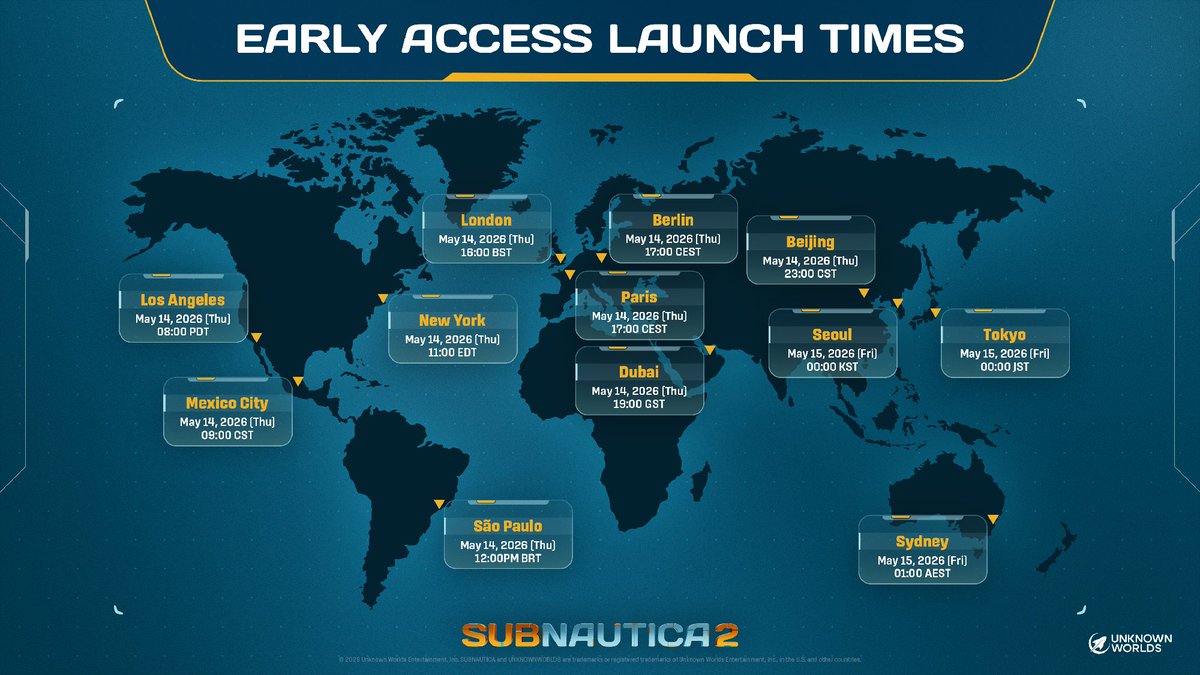
Subnautica 2 is releasing into Early Access on May 14, 2026 at 8AM PDT! Check our map to find out what time it will be for you, across the globe 🥳
Read more about the Early Access launch here ➡️ https://t.co/LM6UTOBncZ
@trq212 But, for digesting down some complex algorithm / code / research I agree, a webpage can definitely be better (hint: tell claude to use the observable runtime!).
I do recommend having it write jsx rather than html, though. 🙂
@trq212 I would argue, they both have their place. Markdown docs are still less tokens which means more can fit in context so you get less context rot. For building up knowledge / plans, this is key.
@fortelabs I've basically got my own markdown editor running as part of my nanoclaw setup. Agents can host documents there, and I can edit them from anywhere.
@fortelabs Have Claude make one for you... I had success with the TipTap extension but there are a couple other open source editors. Then it's just a basic docker container node server setup (fastify).
@OpenAI should really rename ChatGPT something easier to use in conversation. I think this is a small component to the rise of Claude.
SO, I propose that ChatGPT be renamed Chappie!
@bartbuilder@asaio87 The weekly was really my problem too. I kept red lining on daily but it was manageable... But getting that close to limit each day was driving up weekly usage too fast
We no longer have to write the software by hand. We write the test that we expect to pass and the computer generates. Well actually we don't write the test by hand. We write the spec and the computer generates the tests from that. Well actually we don't write the spec by hand. We write the design brief and the computer generates the spec based on the constraints. Well actually we don't write the design brief by hand, we just figure out what the next feature should be and the computer generates the brief. Well actually we don't figure out what the next feature should be manually, we observe desire paths from the users and the computer generates the feature request. Well actually the computer observes the users and detects their desire paths. Well actually the user is also a computer. Well actually the the computer is detecting the desire paths of the computer and building the software for the computer. Well actually we're not sure where the software is, we can't see it being built anymore. We can just tell because the machines are all working really really hard.