दिलीप गवित और मोहम्मद बासिल: ट्रैक पर भारत का जलवा!
ग्लासगो 2026 कॉमनवेल्थ गेम्स के ट्रैक पर भारतीय पैरा एथलीट्स ने कमाल कर दिया। दिलीप गवित ने गोल्ड और मोहम्मद बासिल ने सिल्वर जीतकर T47 कैटेगरी में भारत का 1-2 फिनिश दर्ज किया।
शुरुआत से ही दोनों ने धावा बोला। दिलीप ने धमाकेदार रेस दौड़ाई और मोहम्मद भी कंधे स��� कंधा मिलाकर आगे रहे। फिनिश लाइन पार करते ही पूरा स्टेडियम तालियों से गूंज उठा।
रेस के बाद दोनों भारतीय झंडा लेकर ट्रैक पर दौड़े, एक-दूसरे को गले लगाया। थकान के बावजूद चेहरों पर गर्व की मुस्कान साफ दिख रही थी।
यह सिर्फ दो मेडल नहीं, मेहनत और जुनून की कहानी है। ऐसे हीरो देश का मान बढ़ाते हैं।
जय हिंद! 🇮🇳
You won’t believe what the Taliban did to two ancient giants just because their religion said so.
Picture this: for over 1,400 years, two massive Buddha statues stood carved into a cliff in Afghanistan’s Bamiyan Valley. One was as tall as a 18-story building. Travelers, kings, armies—Muslim and non-Muslim alike—had passed them for centuries. Nobody touched them.
Then in early 2001 the Taliban took over. Their leader, Mullah Omar, decided these statues were idols, pure and simple. In his version of Islam, anything that looked like a human figure people might respect or pray near was forbidden. So on February 26 he ordered every statue in the country destroyed. No discussion. No exceptions.
A few days later the work started. Taliban fighters blasted the statues with artillery and anti-aircraft guns for days. When that wasn’t enough, they stuck anti-tank mines at the bottom and finally lowered guys down the cliff on ropes to pack explosives into the rock. It took weeks. Chunks of ancient stone crashed down. Local people were forced to help in some cases. When the dust settled, both Buddhas were gone—just empty holes in the mountain.
The Taliban said it was a religious duty. “We’re only waging war on stones,” Omar shrugged. The rest of the world, including plenty of Muslims, called it a crime against culture and history. Earlier Muslim rulers had left the statues alone for more than a thousand years. This was the Taliban’s own hard-line reading of the faith, not some universal rule.
Today the empty niches are still there, staring out over the valley like open wounds. Two giants that survived empires, invasions, and time itself… wiped out in a few weeks because one regime decided their religion demanded it.
You won’t believe what the Taliban did to two ancient giants just because their religion said so.
Picture this: for over 1,400 years, two massive Buddha statues stood carved into a cliff in Afghanistan’s Bamiyan Valley. One was as tall as a 18-story building. Travelers, kings, armies—Muslim and non-Muslim alike—had passed them for centuries. Nobody touched them.
Then in early 2001 the Taliban took over. Their leader, Mullah Omar, decided these statues were idols, pure and simple. In his version of Islam, anything that looked like a human figure people might respect or pray near was forbidden. So on February 26 he ordered every statue in the country destroyed. No discussion. No exceptions.
A few days later the work started. Taliban fighters blasted the statues with artillery and anti-aircraft guns for days. When that wasn’t enough, they stuck anti-tank mines at the bottom and finally lowered guys down the cliff on ropes to pack explosives into the rock. It took weeks. Chunks of ancient stone crashed down. Local people were forced to help in some cases. When the dust settled, both Buddhas were gone—just empty holes in the mountain.
The Taliban said it was a religious duty. “We’re only waging war on stones,” Omar shrugged. The rest of the world, including plenty of Muslims, called it a crime against culture and history. Earlier Muslim rulers had left the statues alone for more than a thousand years. This was the Taliban’s own hard-line reading of the faith, not some universal rule.
Today the empty niches are still there, staring out over the valley like open wounds. Two giants that survived empires, invasions, and time itself… wiped out in a few weeks because one regime decided their religion demanded it.
And the pilgrims returned to kissing and touching it, believing the hadith that on the Day of Judgment Allah will raise the stone with eyes and a tongue so that it can testify for those who touched it in sincerity. 🤣
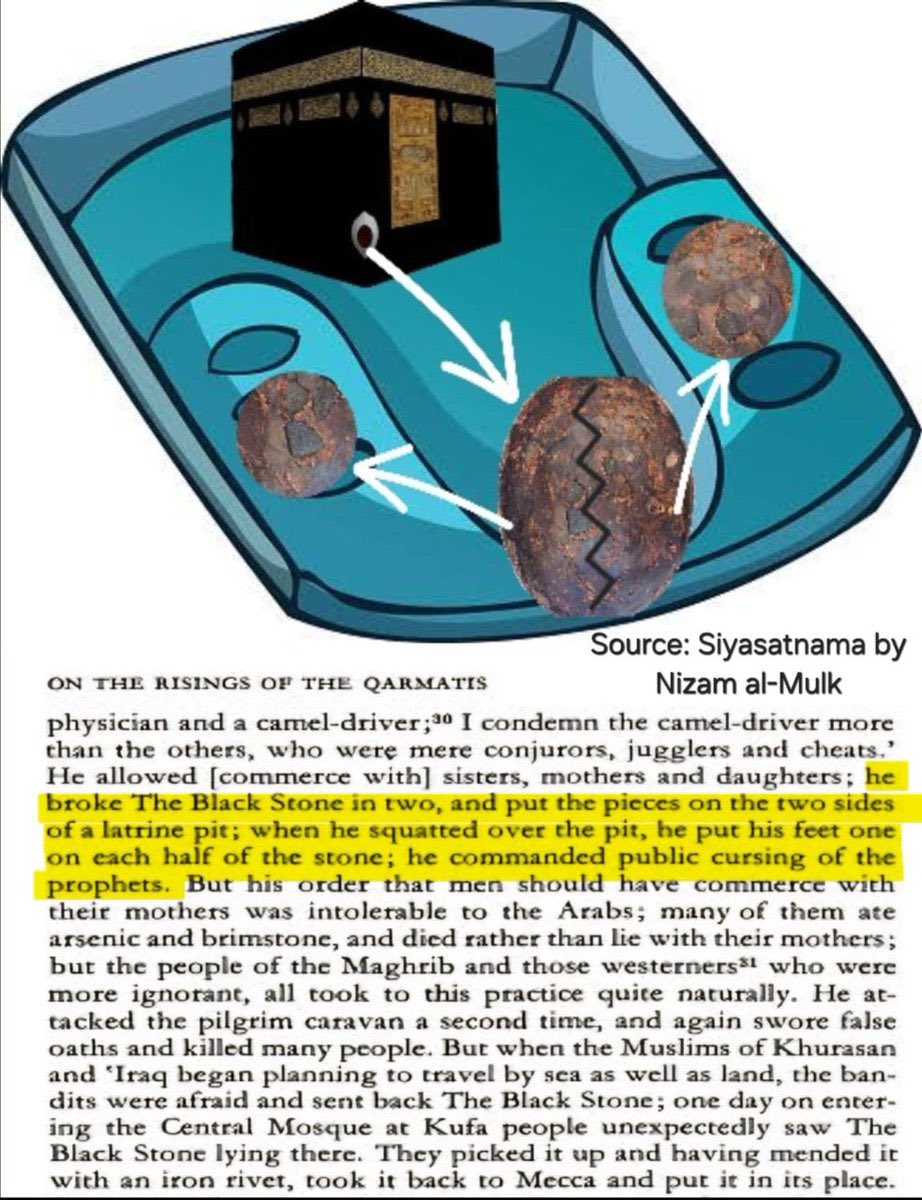
After twenty-one years the fragments were brought back to Mecca. The Muslims cleaned them, covered them heavily in perfume so no one would remember where they had been, set them into a hard base, and framed them in silver. Then they placed the Black Stone back in the Kaaba.