@deb_fillman ✊🏽✊🏽✊🏽✊🏽✊🏽✊🏽✊🏽✊🏽✊🏽✊🏽✊🏽✊🏽✊🏽✊🏽✊🏾✊🏾✊🏾✊🏾✊🏾✊🏾✊🏾✊🏾✊🏾✊🏾✊🏾✊🏿✊🏿✊🏿✊🏿✊🏿✊🏿✊🏿✊🏿✊🏿✊🏿✊🏿✊🏿✊🏿✊🏿✊🏿✊🏿✊🏿
And don’t you fuckin forget it!!!!
You don’t get to make comments and talk down on our kids!
Find something safe to do.
Stop playing with my family: this tv shit cool but when it comes to my kids and safety I'll set this whole bitch on fire! So play with someone else! Scarface all you bitches! Cuz I'm on all that about mine!
Every time the door bell rings, it’s Door Dash delivering something to one of the kids 😐 …… just be ordering away
…this new generation thing is weird 🫨😵💫
@shaTIRED He look like he’s white. Is his family even true Israelis?? Probably not. His white daddy probably TOOK a native and had this weirdo🙄 now they think they’re in charge.
White people always trynna take over somebody’s shit! Fuckin colonizers!
Heavy on the "Thank you God" & not for materialistic or tangible things but for always making a way for me, for always keeping my head above water, and for always counting me in when people thought they had the power to count me out!!
Josephine Baker was described as "The most sensational woman anybody ever saw. Or ever will."
Born in St. Louis, Missouri, in 1906, Josephine experienced poverty in childhood, living in cardboard shelters in the slums and dancing on the street to make money. However, the street dancing turned into performing in a vaudeville act, as she pestered a show manager for a role. For that show, she traveled to New York, and her career had begun.
While performing in New York was a good start, her big break came in Paris, where she moved in her late teens to leave the racism of America. In Paris, she thrived. Her dancing life found much success. And it was also while living in Europe that Josephine evolved her artistic career into singing and acting.
Josephine continued to live in Europe. Even as World War II involved France, she chose to stay, joining the French Military Intelligence Agency. In her role with the agency, she used her entertainer status to travel around Europe. And with charm, she engaged others, collecting valuable information, often keeping notes in invisible ink on sheet music.
After the war, Josephine took a more active role in the U.S. Civil Rights movement. She wrote articles about segregation, worked closely with NAACP, spoke at the 1963 March on Washington, and refused to perform in segregated venues - a stance that helped drive integration. It was also during her years of working in the Civil Rights movement that Josephine began adopting children, calling her family the "Rainbow Tribe," as her children were of different races and ethnicities.
Josephine passed away in Paris in 1975. France honored her with a state funeral; she is the only American-born woman to receive this honor.
🖋️if you love our content, please consider supporting our page via donations on https://t.co/16fHyPFENu
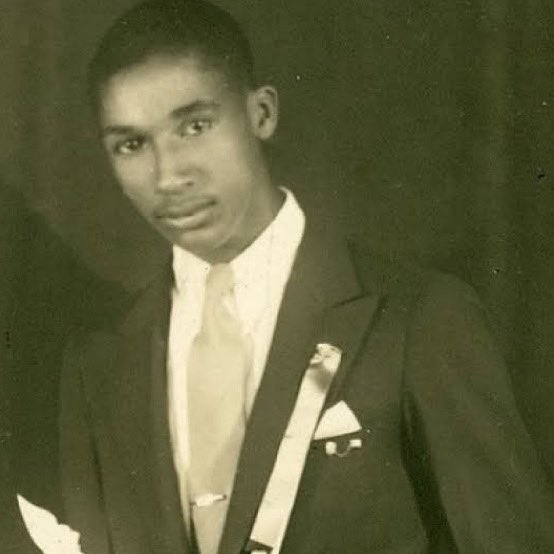
In 1938, Lloyd Gaines filed a lawsuit after being denied admission to the University of Missouri Law School in 1935 because he was black.
The Court ruled in his favor & required Missouri to admit him or set up a black law school.
He disappeared 3 months later never to be found.
—Lloyd Lionel Gaines was born to the Gaines family in northern Mississippi in 1911. One of eleven children, seven of whom survived illness and accident, he moved with his widowed mother and siblings to St. Louis after the premature death of their father. They found a better, although not easy, life for themselves in Missouri. Gaines excelled in his studies graduating as valedictorian in 1931 from Vashon High School. At Lincoln University in Jefferson City, he graduated with honors and was President of the senior class, while participating in many extra-curricular activities and working to pay for his schooling.
Despite his outstanding scholastic record, the University of Missouri School of Law denied Gaines admittance in 1936 solely on the grounds that Missouri's Constitution called for "separate education of the races." By state law, Missouri would have been required to pay for Gaines to attend the Universities in Iowa, Kansas and Nebraska, but Gaines was determined to fight for the right to attend law school in his own state university. He sought legal assistance from the National Association for the Advancement of Colored People (NAACP), which had been working systematically to overturn the ignominious precedent of "separate but equal" established in Plessy v. Ferguson in 1896. Together, they challenged the University of Missouri's admissions policies. In 1938, Gaines won his case before the United States Supreme Court in State of Missouri ex rel Gaines v. Canada, paving the way for a series of cases that would lead to Brown v. Board of Education's outlawing segregation in public education. In March 1939, only three months after his Supreme Court victory, Lloyd Gaines was last seen in Chicago. He disappeared at age 28 with his promise of attending law school in Missouri unfilfilled. Lloyd Gaines was never to be seen or heard from again.
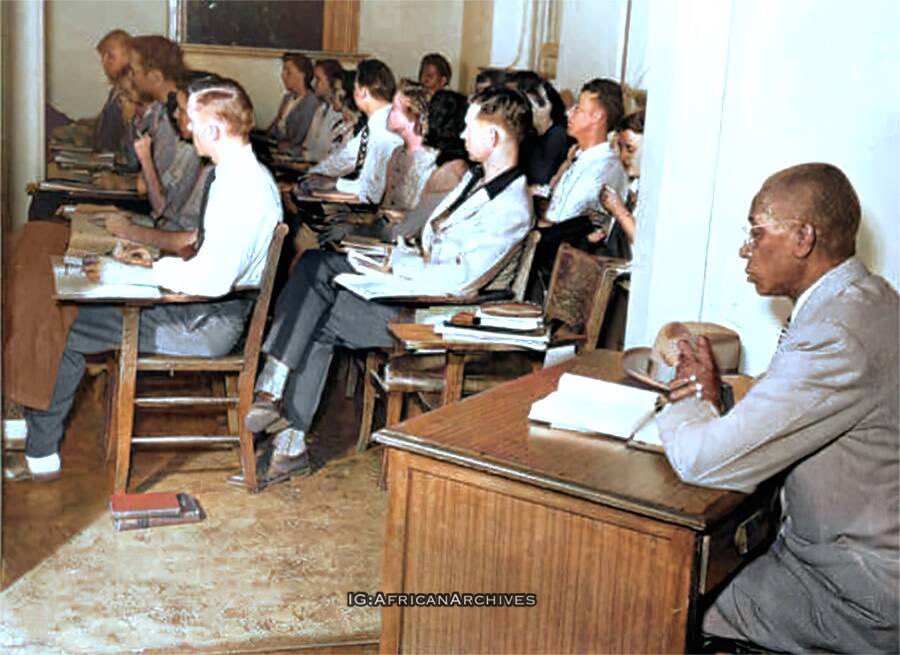
George McLaurin, the first black man admitted to the University of Oklahoma in 1948 was forced to sit in a corner far from his classmates.
When he first applied he was denied based on his race. He went to court & it ruled that denying him was unconstitutional.
George W. McLaurin provided the Oklahoma civil rights case that irreparably damaged the "separate but equal" legal position established in Plessy v. Ferguson in 1896.
Plessy v. Ferguson was a landmark U.S. Supreme Court decision in which the Court ruled that racial segregation laws did not violate the U.S. Constitution
The justices affirmed that McLaurin’s 14th Amendment rights means he must receive the same educational experience as OU’s white students.
He earned a master's degree from the University of Kansas and taught at Langston University, an all-black institution, until 1968.
Did you know the desire to escape slavery, was once classified as a mental illness called Drapetomania in 1851.
Black people were considered mentally ill for refusing to live in bondage.