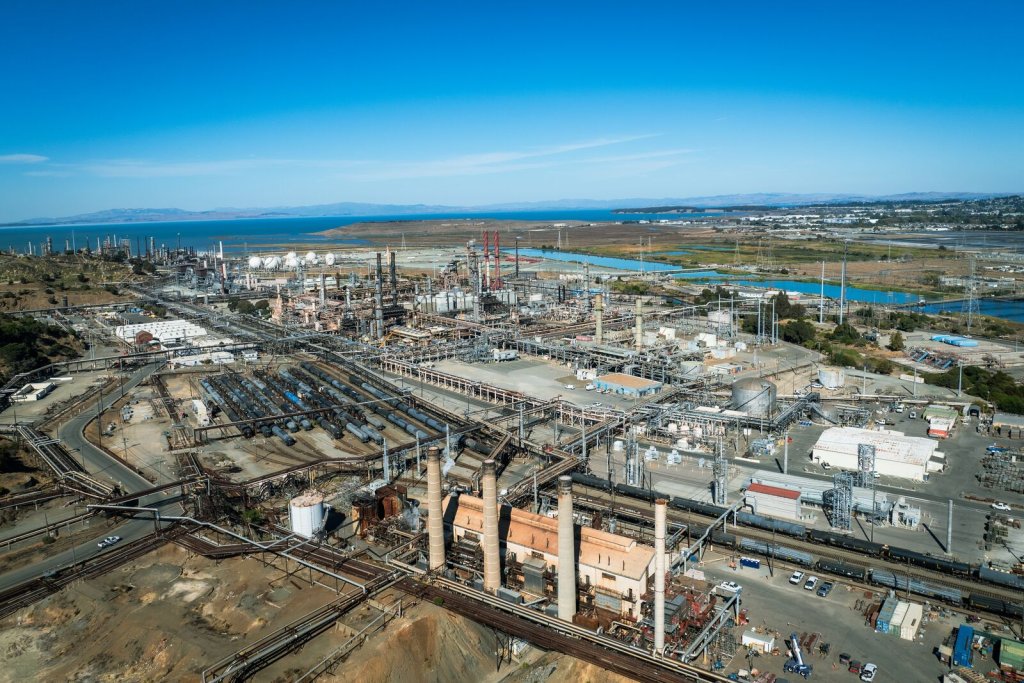
Chevron ($CVX) posted strong Q2 with record production levels, upstream earnings surge, and solid cash returns to shareholders. Shares reacted positively premarket.
3-step check:
Execution – Higher utilization, Hess integration benefits, and reliable operations are showing up in the numbers.
Price tailwind – Geopolitical premium in oil prices is amplifying the beat.
Forward look – Management guiding CapEx to the lower end of range while returning capital. This is a quality cash-flow story in energy.
Research only.
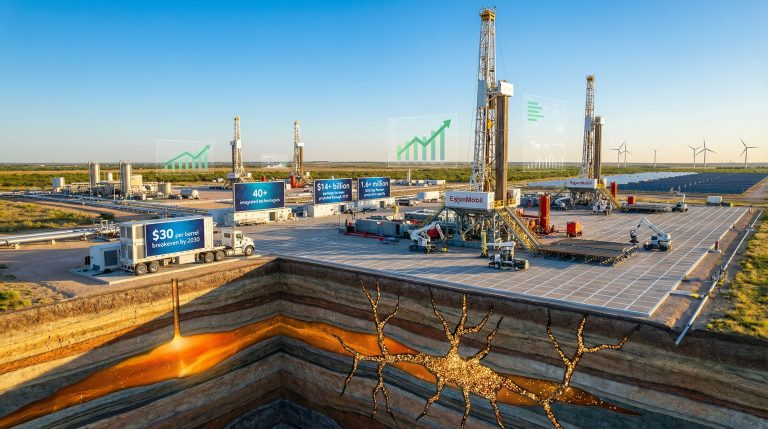
ExxonMobil ($XOM) reports Q2 today with strong cash flow from operations and solid adjusted earnings amid higher commodity prices linked to geopolitical tensions.
3-step framework:
Operational strength – Production and cash generation remain robust. Permian and other key assets continue to deliver.
Commodity leverage – Energy prices are still the biggest swing factor. Any sustained higher oil/gas environment amplifies results.
Capital return – Consistent shareholder returns (dividends + buybacks) are the long-term signal. Watch production guidance and CapEx discipline.
Not financial advice. Do your own work.
Apple ($AAPL) beat Q3 revenue ($109.4B) and EPS ($2.02), but the stock dropped 6-7% on weak September guidance driven by chip supply constraints and a China miss.
3-step view:
Business health – Hardware (especially Mac +29%) and Services still delivered. The beat was real.
Guidance risk – Chip shortages and higher costs are the near-term ceiling. This is a supply-side issue, not demand collapse.
Leadership transition – Tim Cook steps to executive chairman in September. Markets are pricing execution risk under new leadership plus the supply bottleneck.
Public data analysis. Not a recommendation.
Amazon ($AMZN) just delivered strong Q2 results with AWS cloud growth accelerating for a fifth straight quarter. Shares jumped ~9-10% after hours / premarket.
My 3-step framework:
Core engine – AWS remains the profit engine. Acceleration shows AI-related demand is converting into real revenue, not just CapEx stories.
Near-term risk – Retail margins and overall spending environment still matter. High AI investment needs to keep proving returns.
Positioning – This is the clearest “AI spend is paying off” signal among the big three this week. Watch next-quarter AWS growth and free cash flow for confirmation.
Research only. Not advice.
Vertiv ($VRT) just got crushed ~13% despite beating EPS and raising full-year guidance. Revenue came in light on supply-chain and complex AI deployment delays.
My 3-step framework:
Business reality – AI data-center power and liquid cooling demand is still structural. Raised outlook to $13.8–14.2B sales shows management confidence.
Near-term risk – Execution hiccups on large AI projects can create temporary air pockets even when the secular trend is intact.
Positioning – Stock had run hard into earnings. This is a classic “good company, bad short-term print” setup. Watch order backlog and next-quarter guidance for confirmation.
Research only. Not advice.
Microsoft ($MSFT) reports FY26 Q4 earnings tomorrow (July 29). The market is laser-focused on one thing: whether the massive AI CapEx (Azure + OpenAI-related) is starting to show accelerating returns.
3-step pre-earnings checklist:
Cloud growth – Azure growth rate vs. CapEx intensity is the key number.
Margin path – Can they absorb the AI spend without crushing operating leverage?
Guidance – Any slowdown signal or stronger AI monetization will move the entire mega-cap complex.
Prepare your levels before the print. Not advice.
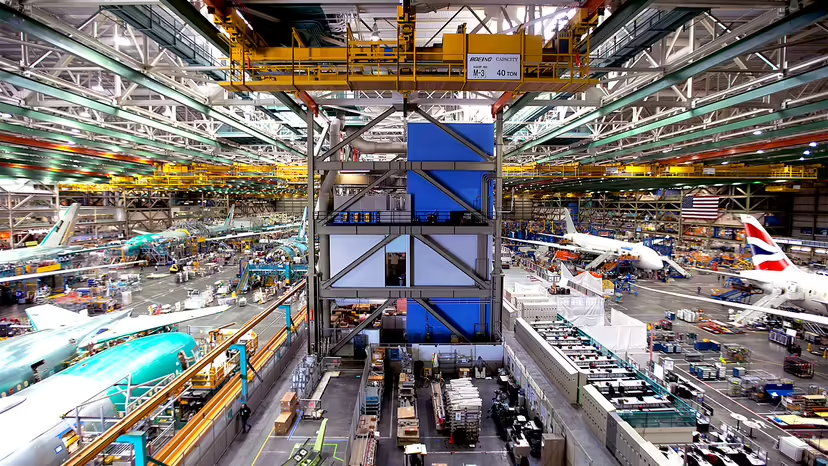
Boeing ($BA) reported a wider-than-expected Q2 loss today (Air Force One charge), but revenue rose 8% to $24.56B, free cash flow turned positive, deliveries up 14%, and backlog hit a record $715 billion.
3-step framework:
Operational progress – Higher deliveries and record backlog show the production recovery is real.
Near-term drag – One-time charges and execution risk still keep the stock volatile.
Long-term signal – Institutional focus is shifting to whether the company can sustain the rate increases without quality issues.
This is analysis of public data, not a recommendation.
Micron ($MU) just got hit hard in the chip sell-off, trading well off recent highs even after record fiscal Q3 results (revenue $41.46B, massive free cash flow).
3-step check:
Fundamentals – High-bandwidth memory demand from AI is still structural. Record numbers prove it.
Cycle risk – Memory is cyclical. China competition and any slowdown in AI CapEx can compress multiples fast.
Opportunity filter – YTD still up ~185% and 1-year return over 600%. This is a “buy the quality dip or wait for confirmation” decision, not a momentum chase.
Research only. Do your own due diligence.
Tesla ($TSLA) is down over 30% from the year’s highs and testing the $300 zone. Q2 deliveries beat, but margins and CapEx guidance keep the pressure on.
3-step view:
Core auto business – Price cuts delivered volume, but profitability is still under fire from Chinese competition.
Future optionality – Robotaxi / autonomy is the real narrative. The market is currently pricing almost zero near-term contribution.
Risk management – High valuation multiples + heavy spending mean any disappointment hits hard. Decide your exit levels before you buy the dip.
NVIDIA ($NVDA) just slipped under $200. OpenAI funding talks + fresh China export pressure hit the stock hard.
My 3-step framework right now:
Business reality – Still the only real volume supplier of high-end AI GPUs. Demand has not disappeared.
Near-term risk – China restrictions and customer concentration (OpenAI-related financing questions) are real overhangs.
Positioning – Stock is only ~5% higher year-to-date while many memory and foundry names ran much harder. Institutions will decide the next move on the next big CapEx updates.
This is research, not advice. Always do your own work.
This week is a pure information dump: Fed decision + $MSFT + $META + $AAPL + $AMZN.
The common thread is capital allocation. After $GOOGL and $TSLA showed the cost of the AI buildout, the next four will tell us whether the biggest spenders can still grow while protecting (or restoring) free cash flow.
Portfolio implication is straightforward:
Reduce exposure to pure narrative AI names that cannot show a path to positive FCF.
Favor companies that combine growth with actual cash generation ($MSFT, $AAPL, $NVDA).
Keep energy ($XOM, $CVX) as a partial offset while geopolitical risk remains elevated.
The market is finally differentiating between “AI spenders” and “AI cash generators.” That differentiation will drive relative performance for the rest of the year.
$NVDA has been the relative underperformer among the major AI names for much of 2026.
While some semis and memory names ran hard earlier, $NVDA has been more range-bound. That creates an interesting setup into the rest of the Mag 7 earnings and the Fed decision. The company still generates the strongest free cash flow in the group and remains the primary beneficiary of hyperscaler spend.
The question the market is asking: is the pause just digestion after years of outperformance, or is competition from $AMD and custom silicon starting to matter more?
My approach:
Treat any weakness as a potential entry if the FCF and demand narrative stays intact.
Watch $MSFT and $META commentary for confirmation of continued GPU demand.
Size positions with the understanding that $NVDA remains the highest-quality AI infrastructure name, even if the multiple has compressed.
Relative underperformance often sets up the next leg when the broader AI spend thesis stabilizes.
$AMZN reports Thursday.
This is the last of the big four this week after $MSFT, $META and $AAPL. AWS growth and AI-related capital spending will dominate the conversation. Amazon has been quieter on the AI spend narrative than some peers, but the market will still demand the same clarity on returns.
What matters most:
AWS growth rate and operating margin.
Any commentary on AI infrastructure investment versus near-term profitability.
Retail margin stability as a secondary check on the broader consumer.
$AMZN sits in a different spot from pure AI hardware names. It is both a hyperscaler buyer and a cloud seller. That dual role makes the FCF and capex discussion especially important.
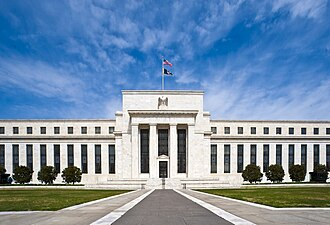
The Fed meets Tuesday-Wednesday. Decision comes Wednesday.
Markets currently price a low probability of a hike from the 3.50-3.75% range, but oil still elevated and inflation data remain sticky. A hawkish hold (or any surprise) would hit the highest-multiple names hardest — $NVDA, $MSFT, $META and the rest of the growth complex.
This is not about predicting the exact decision. It is about positioning for the path of least resistance after the statement and press conference.
Framework:
Rate-sensitive growth stocks first in line for volatility.
Quality balance sheets ($AAPL, $MSFT) hold up better than pure narrative names.
Keep dry powder ready for any over-reaction.
The Mag 7 earnings week and the Fed decision are colliding. That combination usually produces larger moves than either event alone.
$MSFT and $META report Wednesday after the close.
This is the next major test after $GOOGL and $TSLA both showed negative free cash flow and higher AI capex. The market is no longer giving blank checks for “investing in the future.” Investors want proof that Azure and Meta’s AI infrastructure spending is starting to convert into durable returns.
Key numbers I’ll watch:
Azure growth rate and margin trajectory for $MSFT.
Reality Labs losses vs core advertising strength for $META.
Any update on full-year capex guidance.
A clean beat with improving FCF commentary can stabilize the entire Mag 7. Soft numbers will extend the pressure that started last week.
The free-cash-flow question is now the dominant theme across the entire AI complex.
$GOOGL and $TSLA just showed negative FCF. $NVDA still prints enormous cash, but the hyperscalers that buy its chips are spending faster than they are generating. $AMD is investing heavily to close the gap.
This is the classic late-cycle AI pattern: the equipment sellers stay profitable while the buyers absorb the capital intensity. The market is starting to differentiate.
My ranking framework right now:
Companies with structural positive FCF and pricing power ($NVDA).
Companies that can show a credible path to FCF inflection while still growing ($AMD, select cloud names).
Companies burning cash with no clear near-term return timeline (higher risk).
Position sizing should reflect this hierarchy. Not every AI name deserves the same multiple.
While the Mag 7 debates free cash flow, the energy complex continues to trade on geopolitics.
Brent remains elevated above $90 on the back of ongoing U.S.-Iran exchanges and Hormuz risk. That keeps $XOM, $CVX and the refining group in a different regime from the tech names. Integrated majors are generating the cash flow that many AI spenders are currently consuming.
This divergence is useful. It gives portfolios a natural hedge without needing exotic instruments.
How I treat it:
Energy remains a tactical overweight only while physical supply risk stays elevated.
Prefer the large integrated names with fortress balance sheets.
Use any strength in $XOM/$CVX to rebalance risk away from the highest-multiple AI names if needed.
The market is running two parallel stories right now. One is AI capital intensity. The other is hard-asset cash generation. Both can be true at the same time.
The free-cash-flow question is now the dominant theme across the entire AI complex.
$GOOGL and $TSLA just showed negative FCF. $NVDA still prints enormous cash, but the hyperscalers that buy its chips are spending faster than they are generating. $AMD is investing heavily to close the gap.
This is the classic late-cycle AI pattern: the equipment sellers stay profitable while the buyers absorb the capital intensity. The market is starting to differentiate.
My ranking framework right now:
Companies with structural positive FCF and pricing power ($NVDA).
Companies that can show a credible path to FCF inflection while still growing ($AMD, select cloud names).
Companies burning cash with no clear near-term return timeline (higher risk).
Position sizing should reflect this hierarchy. Not every AI name deserves the same multiple.
While the Mag 7 debates free cash flow, the energy complex continues to trade on geopolitics.
Brent remains elevated above $90 on the back of ongoing U.S.-Iran exchanges and Hormuz risk. That keeps $XOM, $CVX and the refining group in a different regime from the tech names. Integrated majors are generating the cash flow that many AI spenders are currently consuming.
This divergence is useful. It gives portfolios a natural hedge without needing exotic instruments.
How I treat it:
Energy remains a tactical overweight only while physical supply risk stays elevated.
Prefer the large integrated names with fortress balance sheets.
Use any strength in $XOM/$CVX to rebalance risk away from the highest-multiple AI names if needed.
The market is running two parallel stories right now. One is AI capital intensity. The other is hard-asset cash generation. Both can be true at the same time.