I’ve spent most of my life believing Alberta’s problems could be fixed within Canada. Elect better governments. Make better arguments. Demand a fairer deal. Try again.
But at some point, I think we have to be willing to look at the results of all those decades of trying and ask whether the problem is bigger than the people sitting in government at any particular moment.
That’s a big part of why I support Option 2.
For me, October 19 isn’t about pretending there are no difficult questions ahead. Of course there are. Independence would be complicated. So is continuing down the road we’re already on.
Option 2 gives Alberta the opportunity to find out what is actually possible. It gives us leverage to negotiate from a position Canada has never had to take seriously before, while keeping the ultimate decision where it belongs: with Albertans.
And I’ll be open about where I stand. The more I have studied our history, our economy, our resources, and the constitutional structure we operate within, the more convinced I have become that Alberta could build something extraordinary as an independent country.
I’m a farmer. I look at these fields, the communities around them, the businesses, families, resources, and people who have built this province, and I have a hard time accepting that our best days have to depend on decisions made thousands of kilometres away by governments Alberta has very little ability to influence.
Maybe Canada responds to an Option 2 vote with something substantial enough to change my mind. I’m willing to see what they put on the table.
But I’m no longer willing to give away Alberta’s strongest option before we ever get the chance to explore it.
On October 19, I’m voting Option 2.
Not because I’m afraid of the questions that come next.
Because I think Alberta is finally ready to ask them.
#LetAlbertaDecide #Option2 #Alberta #AlbertaIndependence #ABpoli
Alberta votes first.
That’s the part of the Canada-U.S. trade fight Albertans should be paying attention to.
Ottawa may soon be under enormous pressure to protect Ontario’s manufacturing economy, and one of Canada’s strongest bargaining chips with Washington is Alberta energy.
So why would Albertans voluntarily weaken our own position before those negotiations reach their most difficult point?
You don’t have to support independence today to understand leverage.
A strong Option 2 vote keeps pressure on Ottawa. It tells them Alberta cannot simply be taken for granted and makes using our economy as somebody else’s bargaining chip politically much more dangerous.
The trade war is creating the pressure.
October 19 determines whether Alberta faces it from a position of strength.
Don’t surrender the leverage before we’ve even had the chance to use it. Vote Option 2.
#LetAlbertaDecide #Option2
Important information is emerging from American sources about the failed Canada–U.S. deal.
Washington apparently sought restrictions on Canada’s future trade agreements—likely aimed at China—and changes affecting Quebec’s French-language commercial rules.
BUT NO DRAFT TEXT has been released.
Claims that the U.S. wanted to prohibit all Canadian trade deals or eliminate French labels entirely remain UNVERIFIED.
Ottawa should RELEASE the proposed terms. Canadians deserve to know exactly what Washington demanded—and what it offered in return.
CANADIANS DESERVE TO SEE THE DEAL MARK CARNEY WALKED AWAY FROM. 🇨🇦
Release the FULL, UNREDACTED trade agreement that was on the table before Canada refused to finalize it.
Why?
Because Canadians are the ones who will pay the price for that decision.
Higher tariffs.
Lost business.
Lost investment.
Lost jobs.
Mark Carney represents Canadians. He does not get to make a decision this consequential behind closed doors and then tell the public to simply trust him.
Pierre Poilievre should demand the documents too.
The Conservatives were not at the negotiating table.
They had no vote on the deal.
They did not get to review what Canada was offered.
So demand it.
Release the terms.
Release the concessions.
Release what Canada would have received.
Then let CANADIANS decide whether walking away was brilliant strategy or a catastrophic mistake.
If Carney truly rejected a bad deal, he should have absolutely nothing to hide.
This is the part Canadians need to pay attention to. 🇨🇦
U.S. Trade Representative Jamieson Greer says Washington was prepared to CUT tariffs on some of the industries Canada cares most about steel, autos and lumber and Canada walked away. (ABC7 Chicago)
Ottawa tells Canadians the Americans changed the deal at the last minute.
Washington says Canada introduced new demands and backed away from commitments.
Those are two fundamentally different accounts of how a negotiation affecting hundreds of billions in trade collapsed.
And now the bill arrives:
50% U.S. tariffs on roughly $20 BILLION of Canadian goods.
Canadian retaliation.
Businesses caught in the middle.
Workers absorbing the uncertainty. (Reuters)
Forget the nationalism for a moment.
If both governments are blaming each other for blowing up the deal, Canadians deserve to know exactly what was on the table when Canada walked away.
Release the terms.
Because history should not have to guess who blew up one of the world’s most important trading relationships.
👇
Here are several. Enjoy!
Foreign Aid — Gone. No more billions shipped overseas while Canadians line up at food banks.
Arts & Culture subsidies — Gone. Taxpayers aren’t here to fund obscure grants and festivals.
Media handouts (including CBC and legacy journalism subsidies) — Gone. Let them survive on actual audiences, not government life support.
Corporate welfare — Gone. No more billions in handouts to big business and connected insiders.
Consultants & bureaucratic bloat — Gone. Fire the McKinsey-style grift and slash the endless studies.
Climate/green slush funds and pet projects — Gone.
Blanket grants to special interests — Gone.
Lavish cabinet retreats, perks, and junkets — Gone.
Immigration & entitlement reforms: Deport welfare recipients who aren’t Canadian citizens. Deport any non-Canadian convicted of a crime — immediately and permanently.
Require a minimum of 10 years of legal residence to access socialized healthcare at no cost.
No Old Age Security (OAS) or similar benefits for anyone who hasn’t contributed to the Canadian economy for at least 20 years.
Revenue idea: Launch a citizenship-by-investment program. Attract high-net-worth individuals who actually bring capital and create jobs, instead of low-skilled inflows that strain services.
Problem solved.
@lamphieryeg Epic stupidity. Canada should have been postioned to WIN BIG in the current market. Instead we are arguing about what lever to pull, slowing growth and blocking development.
Give me a break! The environment minister claiming CEOs want a predictable carbon tax is pure gaslighting. These leaders were crystal clear: the federal scheme isn’t competitive and needs to be scrapped. It’s not about "predictability." It's about survival. Ottawa needs to stop the spin and start listening to the industry actually paying the bills.
Hiking the GST to 7% while Canadians struggle with food prices and the "Hope Gap" in housing is economic malpractice. We’ve already got a massive infrastructure deficit; we can’t tax our way into global security by breaking the middle class. Cut the administrative bloat and red tape first—stop reaching into the pockets of hardworking taxpayers.
Poirier pointed to the United States and Mexico as examples of jurisdictions moving quicker on large infrastructure. He noted that TC Energy’s second subsea natural gas pipeline from Texas to Mexico — the Southeast Gateway Pipeline — went from permitting to in‑service in under three years after approval in 2025.
“We began construction eight months after filing permits and reached in‑service in under three years for a 700‑kilometre subsea pipeline,” he said.
https://t.co/JzUXZjN2cH
When the hypocrisy between words and actions is so very obvious, I have a hard time comprehending how anyone doesn’t see it.
We had an NDP convention handing out literal “privilege” cards literally ranking people and assigning value based on identity, putting white, straight men last, only to elect a white, straight man as their leader.
Alberta has elected a female premier, and for a period both provincial parties were led by women, yet Alberta is constantly portrayed as some hick, backward, repressed place.
The Liberals talk about transparency and accountability, yet reckless spending, and even unlawful actions, go unaccounted for. The players change, but the same game continues. Meanwhile, at the federal level, have they ever elected a female leader? The answer is no.
Protestors were called some of the worst things by so called “leaders” and legacy media, yet all they did was try to hold those in public office to account, which is exactly their role in a democracy. They did it on their own dime. Meanwhile, many of those claiming to act “for the public” won’t lift a finger unless they are paid handsomely to do so.
For generations, Indigenous communities faced decisions made about them, not with them. Now it has gone so far that people are walking on eggshells, so much so that land is taken, acknowledgements are made, yet nothing of substance has actually improved. Governments speak of reconciliation, but instead of fixing the underlying issues, the relationship just shifts from one broken version to another.
At some point, you have to see what is right in front of your eyes.
You can’t keep rewriting reality to fit your preferred narrative.
And more importantly, you can’t keep ignoring contradictions when they are this clear.
If we actually care about accountability, fairness, and truth, then those principles have to apply consistently, not only when they are convenient or politically useful.
Because once we start excusing hypocrisy depending on who it benefits, we are no longer standing on principle, we are just picking sides.
I AM Albertan, Mark Carney does NOT speak for me or hundreds of THOUSANDS of my fellow Albertans. We want nothing to do with China. We are loyal allies to the USA & as soon as we vote for Independence America will see this. We will always choose USA over China. ALWAYS
Interesting. Here is my take.
From Trump’s vantage point, Canada turning to China is not a betrayal but rather it’s leverage because it reinforces his argument that U.S. tariffs are forcing Canada into a weaker negotiating position. Trump likely interprets this not as China gaining influence but as validation that his pressure is working.
Experts note that Carney’s visit to China is “a test” of U.S. reaction and a way to pressure Trump into renegotiating CUSMA. Trump refusing to show concern is likely intentional as by acting indifferent, he avoids signaling that Canada has found geopolitical leverage.
This fits his pattern of projecting dominance through non‑reaction.
In other words, Trump cares about U.S.–China competition, not Canada–China cooperation. Trump has repeatedly suggested the U.S. doesn’t need Canada, emphasizing the U.S. economy’s independence and criticizing Canada’s reliance on American markets.
In the end, he will end up withdrawing from CUSMA in June and set up a bi-lateral trade agreement that will severely punish Canada, not intentionally, but simply because we don't matter and he can.
Let me translate Jason’s last paragraph for everyone: your democratic rights matter less than market comfort.
He wrote: “Folks that can’t even agree on what separation means, or its fundamental implications, have no business dragging us all into a months-long shouting match that will leave permanent divisions and undermine investor confidence in Alberta.”
The mask is off. He does not care about Albertans or Alberta. He is concerned about protecting investor sentiment, whether those investors live here or not. That explains a great deal about how this province has been governed and why his leadership failed.
Democracy is not something citizens have to earn by staying quiet or being convenient. When elected officials start treating public participation as a threat to economic optics, they are no longer serving the people, they are managing them.
That misplaced allegiance is exactly what needs to end. Public office exists to serve the public, not their own greedy pockets.
P.S. Alberta independence is going to take a lot of work. It will be messy. There will be debates, disagreements, and hard conversations. If that is too much for your sensibilities, you already had your chance to lead. This time, Albertans will.
Its Damn Well FREEZING In Ontario: Winter Came Early & Hard: Thank God For Natural Gas
I like my fat ass to be warm & toasty in this weather so I am very grateful to the Drillers, Pipefitters & the whole army of people who keep me warm
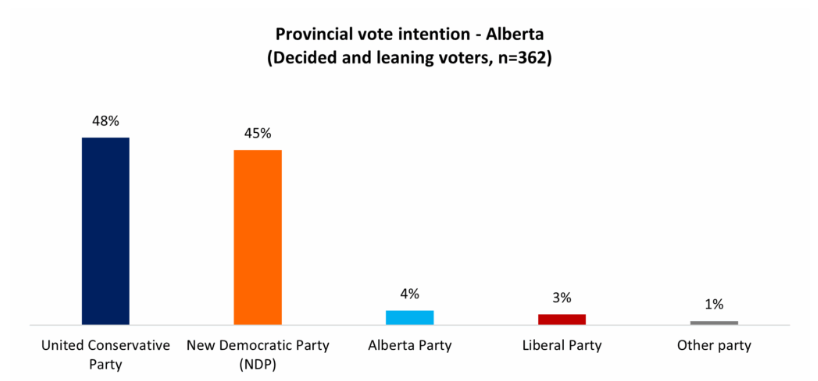
The latest Angus Reid poll shows that the NDP are gaining in Alberta because people perceive that Smith hasn't done a good job tackling the top two issues that face the entire country.
Cost of living and housing.
Those are two issues caused by Ottawa's bad policies, and I can easily show how Alberta leads every other province in dealing with those.
We have the highest wages, some of the lowest inflation, everyone is working, and we're building more housing than any other province.
What more do people want?
Who in their right mind believes that Nenshi would do a better job than Smith?
https://t.co/99hdI7nsvd
Brilliant. Scrap this whole tying carbon capture to output, bypass the west coast and build an export terminal through the US. Find a way to prevent any revenue from this going to Ottawa and cut them out altogether. https://t.co/NoJoiI0rPy
The following is the 2014 to 2024 combined federal tax, CPP, and EI contributions of Albertans for each year with Federal Transfer back to the Alberta Government in brackets.
• 2014: $25.5 Billion ($5.3 Billion)
• 2015: $28 Billion ($5.5 Billion)
• 2016: $28 Billion ($6.05 Billion)
• 2017: $28.5 Billion ($6.0 billion)
• 2018: $28.5 Billion ($6.3 billion)
• 2019: $31.5 Billion ($6.5 billion)
• 2020: $30.5 Billion ($10.5 billion)
• 2021: $31.5 Billion ($9.2 billion)
• 2022: $35.5 Billion ($8.1 billion)
• 2023: $37.5 Billon ($8.1 billion)
• 2024: $42 Billion ($8.8 billion)
The following is the total revenue of the Governement of Alberta from 2014 to 2024 for each year before Federal Transfer added:
• 2014: $44.7 billion
• 2015: $43.5 billion
• 2016: $38.95 billion
• 2017: $41.0 billion
• 2018: $41.7 billion
• 2019: $43.5 billion
• 2020: $37.5 billion
• 2021: $40.8 billion
• 2022: $68.7 billion
• 2023: $69.6 billion
• 2024: $71.9 billion
If government revenue obtained from Albertans remained the same but went directly to the Alberta Government alone, the revenue of that government between 2014 to 2024 would have been:
• 2014: $70.2 billion
• 2015: $71.5 billion
• 2016: $66.95 billion
• 2017: $69.5 billion
• 2018: $70.2 billion
• 2019: $75 billion
• 2020: $68 billion
• 2021: $72.2 billion
• 2022: $104.2 billion
• 2023: $107.1 billion
• 2024: $113.9 billion
In the Prairies, oil and gas is more than energy — it’s generations of families, jobs, and communities. From schools to hospitals, discover how energy builds Canada’s future by giving back.