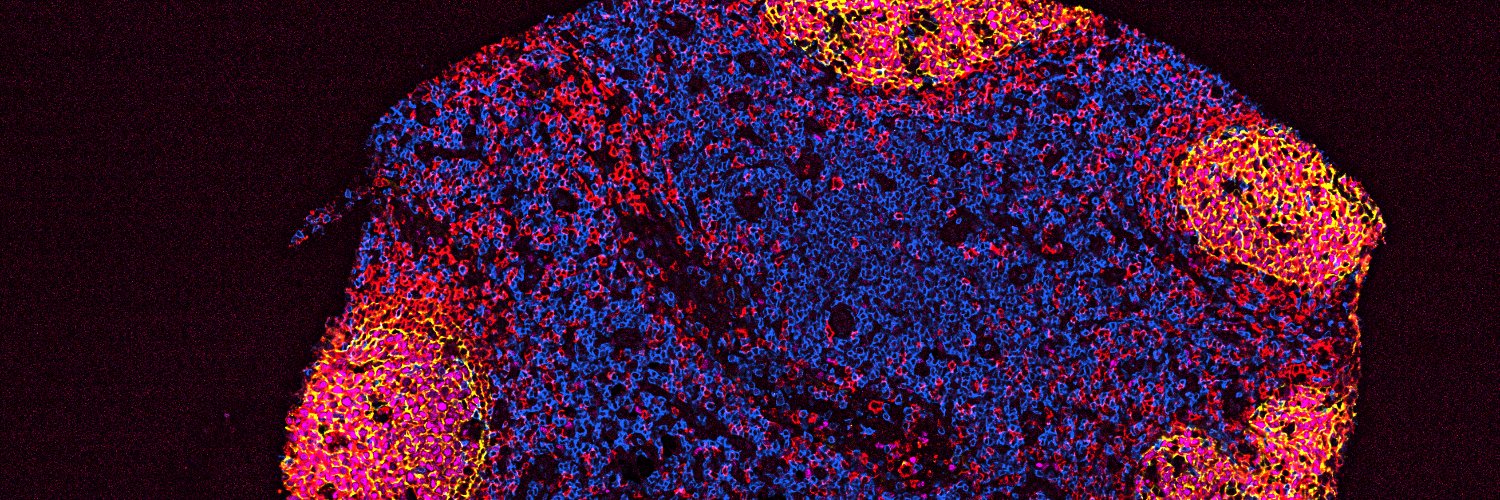
Can a person's T-cell repertoire from a blood draw diagnose disease? Many methods say yes, but each was developed on different cohorts, splits, and metrics.
Excited to present BenchRep-T, a benchmark comparing methods head-to-head, at #NeurIPS2026 Evaluations & Datasets 1/🧵
A few reasons I think the Washington state #H5N1 bird flu case is important.
1) I believe it would the first human death from B3.13 genotype (once this is confirmed) which was found in viruses transmitting from dairy cattle directly to humans. Will be important to look at whether there are any relevant genomic changes to pathogenicity or if this was more due to the host having underlying conditions.
2) Detection occurred after cows were already sick. We then saw multiple herds get affected quickly and now human spillover. They were not detected through the National Milk Testing Strategy (this is a state-level surveillance strategy w/ decreasing frequency of sampling once you are negative for long enough). This is different than the Daily Herd Status Program which is optional weekly bulk-sample testing at farms which I don't think was happening here. The trade-off of reducing surveillance when you don't have any detections makes sense from an operational/$ perspective but shows that you will then probably miss a new introduction.
3) It is not clear if the infected worker was utilizing PPE at the time of infection. In our research in Central California, PPE use (specifically eye protection) was minimal/none on surveys we did this year. @StanfordCIGH@Stanford_ID
This is basically a classical dangerous Gain of Function (dGoF) experiment. I wish the US government would shut it down.
A while ago, Stacey Schultz-Cherry and I wrote a commentary (https://t.co/sTyDTWBPcX), that ends with this sentence:
TCR specificity prediction is advancing rapidly. The central question is not only which TCR sequence recognizes an antigen, but also which TCR pairings make recognition possible & where is the binding boundary? Our new paper tackles this question. 🧵
https://t.co/mdjYFARlhu
Immunera (startup cofounded with @zazius & @ScottBoydLab) is hiring senior ML researchers and engineers in NYC. We’re building blood tests powered by sequencing and protein language models. See below for more details. Please RT. 1/
A Stanford immunologist reviews the 181 page document that RFK provides as evidence supporting his statements that harms of mRNA vaccines outweigh benefits attempting to justify his decision to cancel contracts. https://t.co/LPz9ev7Wwo
The HPV vaccine is CRUSHING cervical cancer and at this rate will eliminate it!!
An anti cancer vaccine. It's a medical miracle.
HHS Secretary RFK Jr is against it
Today, in collaboration w/ colleagues at the Institute of Science and Technology Austria (ISTA), we report the first-ever method for using light microscopy to comprehensively map all the neurons & their connections in a block of mouse brain tissue. More →https://t.co/i8wWRgPidU
The human immunoglobulin heavy chain constant gene locus is enriched for large complex structural variants and coding polymorphisms ... https://t.co/t10HARSynI #biorxiv_genomic
📢 Genome Research Update from MiLaboratories! 📢
We are happy to share that our latest research paper, "Ultrasensitive Allele Inference from Immune Repertoire Sequencing Data with MiXCR," is published in Genome Research.
Our team, in collaboration with @ScottBoydLab and @AMikelov , PhD from Stanford University, Corey Watson @ctwatson29 and Oscar L Rodriguez @olrodriguez_ from University of Louisville, Diego Ortmans and Souad Rahmouni from University of Liège, has developed a novel algorithm for highly sensitive and specific inference of variable (V) and joining (J) gene alleles. This breakthrough allows for the reconstruction of individual high-quality gene segment libraries, enhancing our understanding of allelic diversity in immunoglobulin (IG) and T cell receptor (TR) loci.
Check out our public database built using AIRR-seq data from 450 donors: https://t.co/F3yNiWDdGJ
Key highlights:
- Our algorithm is integrated into the MiXCR software, enabling high-throughput novel allele discovery.
- We assessed genetic diversity within IGH, TRA, and TRB loci across diverse populations using AIRR-seq data from 450 donors.
- A publicly accessible database of inferred alleles and their population frequencies has been established and made available at https://t.co/F3yNiWDdGJ .
A big thank you to all our colleagues and collaborators!
🔗 Read the full paper here: https://t.co/AtuqD3nFvW
Today the department's newly appointed lab head Dr Prasanti Kotagiri presented her work from @ScottBoydLab@Stanford - a fascinating talk about antigenic breadth in SARS‑CoV‑2 and Crohn's disease. What a terrific start to her time here, we can't wait to see what comes next!
To all budding compbio & ML folks interested in bio: Don't just only run behind the latest ML model hype train. The greatest long run impact will come by really assimilating prior bio/compbio literature with the goal of really understanding strategies for how to model biology. 1/
Antibodies are the product of evolution on two timescales: over millions of years in vertebrate populations, and within weeks of infection or 💉 in populations of B cells. We ask how those timescales interact in our paper out in @PLOSPathogens 🧵 1/n https://t.co/vRdGYYQwsU
@Plasmacellguy Thank you for this overview. We have seen evidence that the RNA and spike antigen from SARS-CoV-2 RNA vaccines can also be retained in germinal centers for many weeks after vaccination. https://t.co/glq1L4lGkL
I am so proud of this effort driven by @olrodriguez_ . This has been a long time coming and I'm so delighted to finally see this paper published. So grateful for a truly amazing team and great collaborators @SmithLab_UofL, @marasco_wayne, & @ScottBoydLab https://t.co/fjq80uTuB7