2023 is going to be a bloodbath. The lack of RevPAR will push housing into a 2008-like crash caused by post-2019 novice STR investors who bought marginally rentable homes at high prices that oversaturated markets. With no cash flow & high rates, who's buying those homes?📉🧨🏘️
Pillar 43 at Gobekli Tepe dates to 14,800 BCE.
Until we grasp this, we will not be able to comprehend the history of mankind and its relationship with the Holocene.
Star Axis is complete. Fifty years in the making, land artist Charles Ross has finished his monumental observatory on a mesa in New Mexico. A staircase, aligned with Earth's axis, climbs to a open lens that tracks Polaris and the 26,000-year cycle of Earth's gravitational wobble.
Read the beautiful feature in the NYT: https://t.co/vXco4bZcNB
On Isla de la Luna in Lake Titicaca stand the ruins of Iñaq Uyu, a major Inca acllahuasi tied to the chosen women and lunar cult. Tradition links the island to Viracocha commanding the moon to rise and to the origin myths of the sun, moon, and first Incas from the sacred lake.
Valid points — the Staff God motif does vary across cultures/periods, Raqchi has no clear examples, and colonial sources like Juan de Santa Cruz Pachacuti Yamqui blend perspectives.
That said, the specific elements in Pachacuti’s Susurpuquio vision (rayed/crystalline figure, serpents around arms/shoulders, felines) appear in earlier 16th-century chroniclers (Sarmiento de Gamboa, Betanzos, etc.).
The key minor issue for me is that Engl’s specific Paracas/Nazca parallel from the 1970 article (the one that started this thread) has seen virtually no scholarly follow-up, expansion, or critique in the 55 years since. Meanwhile, the highland Chavín → Wari–Tiwanaku → Cusco route (via documented Wari centers like Pikillacta right in the Inca heartland) has been actively researched and refined by decades of archaeology.
Thanks for the thoughtful engagement — I really enjoy your posts and this kind of deep dive.
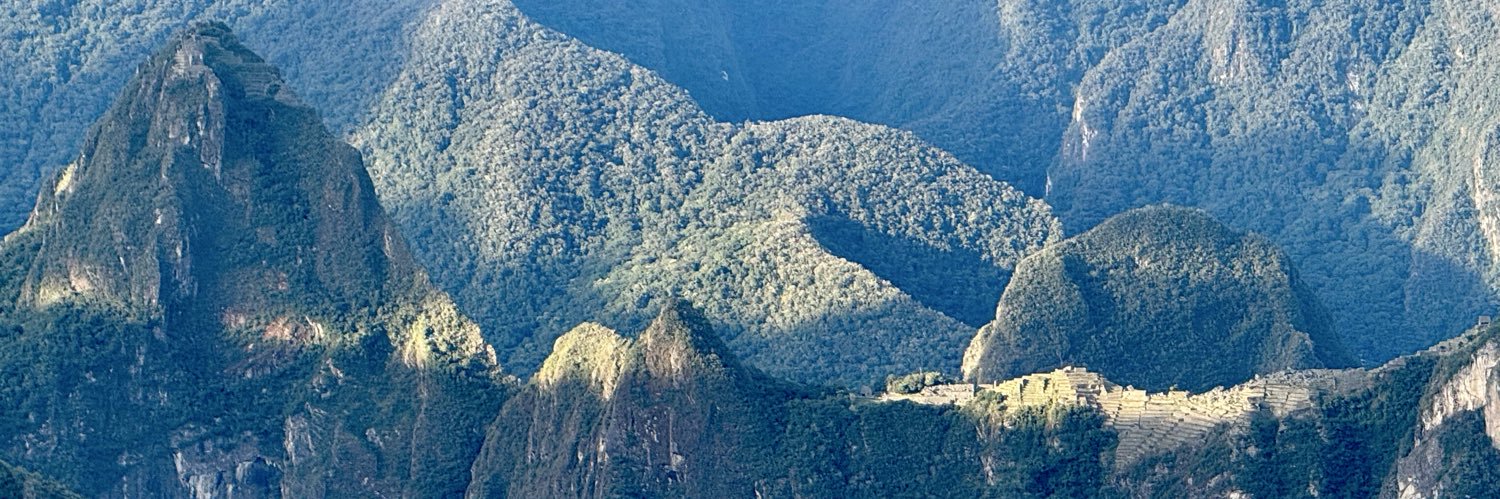
📹Un libro de 1544 reabre el debate sobre Machu Picchu. El documento incluye referencias tempranas a la ciudadela y testimonios del nieto de un inca, décadas antes de Hiram Bingham.
👉https://t.co/4ZbiKBdWs1
Valid points on the ~800-year gap and early Wari’s strong Nazca/Chakipampa influences — those are real complexities.
That said, Engl’s specific Paracas/Nazca parallel (the 1970 article you’re drawing from) has seen virtually no scholarly follow-up, expansion, or critique in the 55 years since it appeared. It remains an interesting but isolated observation.
Meanwhile, the highland Chavín → Wari–Tiwanaku → Cusco route for the Staff God motif (rayed frontal figure with serpents/felines) has been extensively studied and supported by decades of archaeology — especially Wari’s major center at Pikillacta, right in the Inca heartland.
For Pachacuti’s specific highland vision near Cusco, that documented highland transmission vector is still the more plausible bridge.
There has to be a reason in the 50+ years Engl wrote that no serious scholarly work directly revisits, expands, critiques, or builds upon Lieselotte Engl’s specific hypothesis.
I wonder if the Pachacuti/Susurpuquio vision is more plausibly rooted in the deep, pan-Andean Chavín Staff God tradition (transmitted via Wari) than in localized Paracas/Nazca iconography.
Do you really think that’s what they are saying? Or could it be more that the architecture they refer to is older than consensus academics say it is? And by default if that is what they are saying, then wouldn’t the people that came after be descendants of that advanced civilization? History is full of examples where this happened. Would it be so odd if it happened in South America?