AI SRE Platform to debug production issues! Scoutflo has context about your services, infrastructure, dependencies, and runbooks to troubleshoot accurately.
Here is what you can expect to get automated on Deploy 2.0 👇🏻
1. Production-ready app deployment:
- Identifying and fulfilling all requirements.
- Making sure all the tools for monitoring, costs, and networking are set up, integrated, and variable-configured.
2. Database integration
Connect with your existing database or create a new instance that will work best with your selected application.
3. Resource allocation as per your requirements—without having to go through documentation or repetitive manual tasks.
Here is what you can expect to get automated on Deploy 2.0 👇🏻
1. Production-ready app deployment:
- Identifying and fulfilling all requirements.
- Making sure all the tools for monitoring, costs, and networking are set up, integrated, and variable-configured.
2. Database integration
Connect with your existing database or create a new instance that will work best with your selected application.
3. Resource allocation as per your requirements—without having to go through documentation or repetitive manual tasks.
Now, what if you could automate most of these steps for infrastructure provisioning?
.
.
The great thing is, you CAN!
With Scoutflo Deploy v2.0 🚀
Launching extremely soon 💙
So what is Infrastructure Provisioning?
It’s as fundamental as it gets.
Let’s get right into it! 💙
Infrastructure Provisioning sets up the foundation and configuration of resources needed for your software applications or systems to run smoothly.
(Such as servers, networks, and storage)
"Its primary purpose is to keep the infrastructure in its desired state and reproduce or update it whenever needed."
Think of it as setting up the building blocks for a house
🔈Here it is - our latest change log! As we just got back from our annual team retreat held in Slovenia, we’re now recharged and enthusiastic. Definitely ready to continue shipping new features and improvements! Here’s the roundup of what’s new since the past month.
“Infrastructure provisioning is all about ensuring that your software applications or systems have the resources they need to operate effectively, while also being able to adapt to changing needs over time.”
.@scout_flo can automate this and help you manage your infrastructure on Kubernetes seamlessly ✨
Now, what if you could automate most of these steps for infrastructure provisioning?
.
.
The great thing is, you CAN!
With Scoutflo Deploy v2.0 🚀
Launching extremely soon 💙
6. Monitoring and Management
Once everything is up and running, you'll need to monitor your infrastructure to ensure that everything is functioning as needed.
- Monitor performance metrics
- Identify and resolve issues
- Make any necessary adjustments to optimize performance.
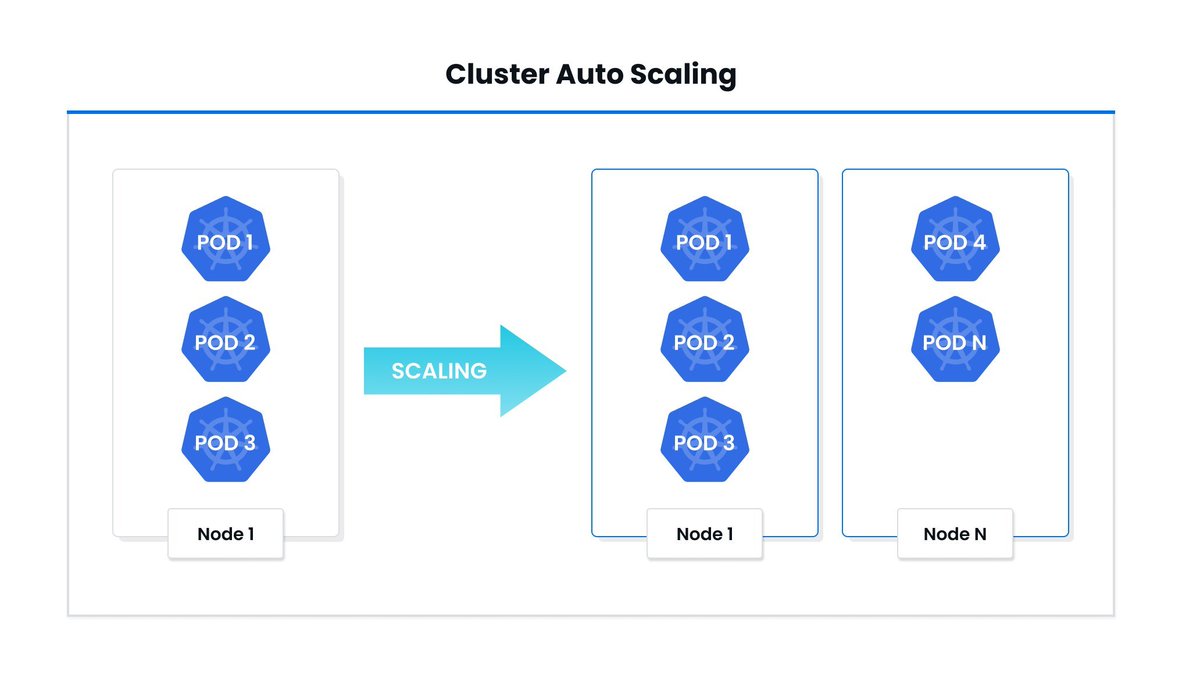
5. Scaling
You may have to scale your infrastructure up or down as per changing needs.
Scale up: Adding more resources to handle increased demand.
Scale down: Reducing resources when demand decreases.
(Fact: Kubernetes is ideal for infrastructure management at scale)
4. Allocating Resources
As per your needs, you'll allocate resources such as CPU, memory, and storage space to your applications or systems — ensuring they have the necessary resources to function efficiently.
3. Setting up
After selection, you need to install and configure operating systems, set up networks, install necessary software frameworks or libraries, and so on.
2. Selecting Infrastructure
After needs, you'll choose the relevant infrastructure to support your software.
Decide whether to use physical servers, virtual machines, cloud services (like AWS, Microsoft Azure, GCP), or a combination of these.
1. Identifying Requirements
You need to understand and select the resources needed, including computing power storage space, networking components, and other dependencies.
The steps for infra. provisioning usually involve:
1. Identifying Requirements
2. Selecting Infrastructure
3. Setting it up
4. Allocating Resources
5. Scaling
6. Monitoring and Management