In the PGM, to invoke Helios is to perform an act of assimilation — the merging of mortal spirit with solar current.
“Draw in breath from the rays, and you will see yourself being lifted upward.”
(PGM IV. 1650–1651)
The practitioner physically and ritually breathes in the sunlight as pneuma — the vital soul-substance pervading the cosmos. In Hermetic cosmology, the sun is the visible body of the Nous — the Divine Mind.
To inhale the rays is to draw into oneself a fragment of the universal intellect. This act is not prayer. It is metamorphosis.
The magician does not ask for light.
He becomes light drawn back to its own source.
(Painted limestone relief of Akhenaten adoring the Sun God, 18th Dynasty, c. 1353-1336 B.C.)
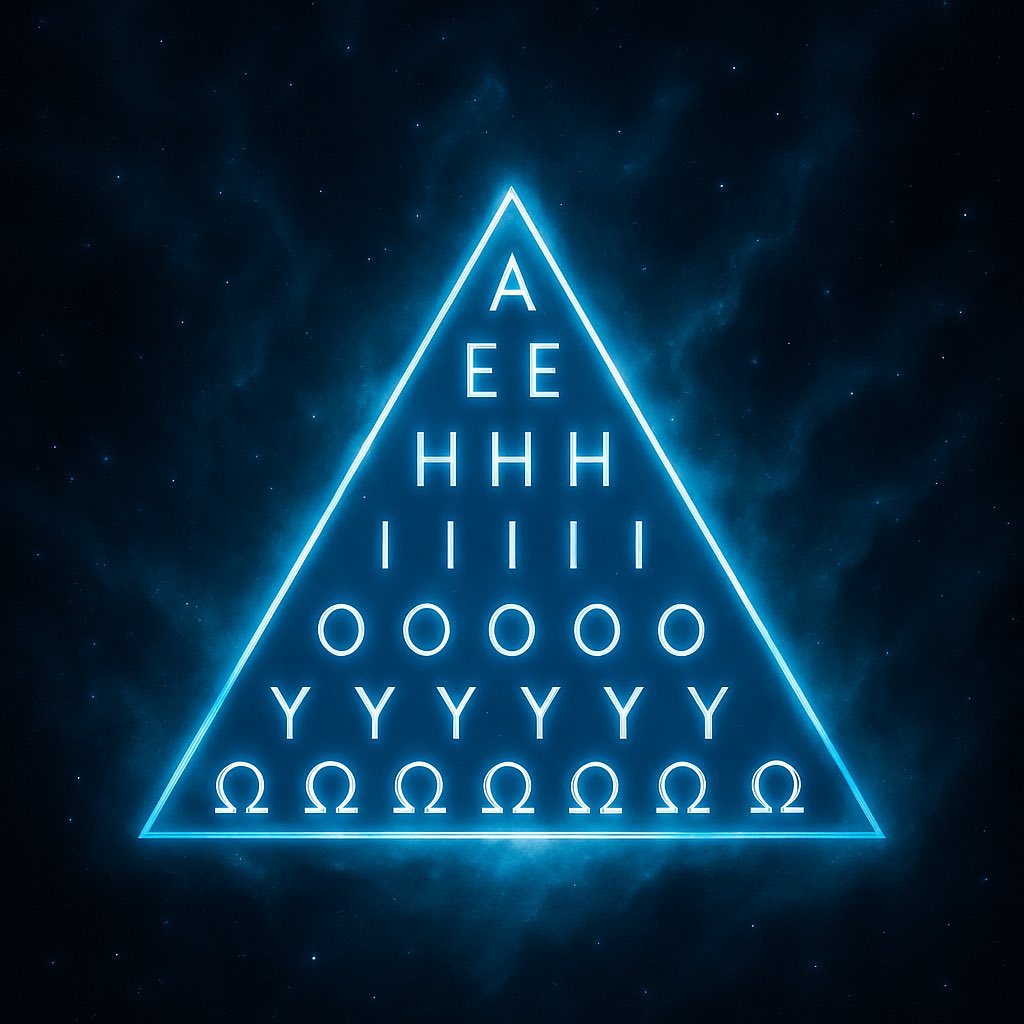
Before there was form, there was sound. The PGM preserves seven primordial utterances:
α,ε,η,ι,ο,υ,ω
These are more than vowels and letters, they are primordial currents aligning the soul with the celestial harmonies that precede speech and form. These sounds, when properly intoned, resonate with specific planetary intelligences and the primary centers of the subtle etheric body— as above, so below.
The greatest act of Egyptian magic was not the raising of temples nor the striking down of enemies—it was the knowledge of a true name.
When Isis sought the power of Ra, she did not beseech him. She created a serpent from earth and divine spittle. It bit the god, and when he could not heal himself, she said:
“Tell me your name, O divine father, and the poison shall recede.”
Ra listed his titles, his epithets, his creations—but withheld the true name. Only when he surrendered it did the magic recede, and with it, his exclusive sovereignty.
The Egyptians understood: to know the Ren, the true name, was to hold the essence.
The one who names governs. The one who conceals endures.
(Fresco from Queen Nefertari’s tomb: Isis bestows the power of divine speech upon the queen.)
Before the throne of Osiris, the soul stands alone. Not judged by belief, but by balance. The heart is weighed against the feather of Ma’at—truth, order, and cosmic law.
No excuse, no plea is permitted. Only purity of action preserves the soul. If the scales tilt, Ammit devours. If balanced, the soul passes into the Field of Reeds, where form and spirit are restored.
This is not metaphor. It is formula.
What you carry in your heart, you will carry beyond death. Nothing more.
Source: Book of the Dead, Spell 125 (Papyrus of Ani)
The circle is not solely a barrier of protection—it is a declaration of dominion. The Key of Solomon commands that it be inscribed with divine names, planetary symbols, and characters of command.
Within this circle, the magician does not ask. He speaks as one deputized by Heaven.
Without the names, the spirits see only a man. Within the names, they see the law.
“The circle of Salomon … from Eheye to Levanah”. Lesser Key circle painted on the floor of my old temple room from 2007- 2010. Divine names of the Spheres from Agrippa’s Scale of Ten.
#goetia#magic#magick#solomonicmagic#grimoires
“The circle of Salomon … from Eheye to Levanah”. Lesser Key circle painted on the floor of my old temple room from 2007- 2010. Divine names of the Spheres from Agrippa’s Scale of Ten.
#goetia#magic#magick#solomonicmagic#grimoires
Are there, at present, any worthwhile forums or communities dedicated to the esoteric, the occult, or the magical arts? I’ve been away from the online current for some years, and I now find myself wondering whether any spaces remain where thoughtful and serious discussion still flourish
Morail is named among the spirits “that render one invisible.” But to misunderstand this as physical vanishing is to miss the deeper mystery.
The Grimoirium Verum does not describe Morail’s art as illusion—it calls it concealment from the eyes of men. In older manuscripts, this was not the vanishing of flesh, but the veiling of presence. The spirit does not remove the operator, it removes attention from them.
To work with Morail is to understand the currents of perception. His gift moves through the astral, wrapping the operator in a shroud of obscurity, shifting one’s signature out of alignment with notice. It is not escape—it is non-recognition.
His seal must be drawn precisely. The hour of Mercury is best. And the breath must be stilled, for movement disrupts the veil.
What cannot be found is not that which is gone, but that which has become irrelevant to the seeker.
“Speak the names in Egyptian, for the daimons will not understand if you say them in Greek.” — PGM I.310
In the Greek Magical Papyri, we learn this: language binds not merely by meaning, but by resonance. The spirit recognizes not the translation, but the intonation. A name spoken in the wrong tongue is no name at all—it is wind.
The magician is warned: do not alter the sounds, even if you know what they mean. For names like Ablanathanalba and Sesengenbarpharanges are not semantic—they are barbarous words of power, crafted for sound alone.
Thus, in true invocation, pronunciation becomes a sacrament. Breath becomes ritual. The mouth becomes a gate.
If you cannot speak the name rightly, do not speak it at all.
“Come to me, O lord of the rising, who travels through the sky on golden wings, eye of the cosmos, fire of life! Arise!” (PGM IV.504–6)
This invocation to Helios veiled in the language of the sun, it is a rite of inner resurrection. The magician speaks not merely to the disk of the sky, but to the divine spark dormant within—the phōs that sleeps in the tomb of the flesh.
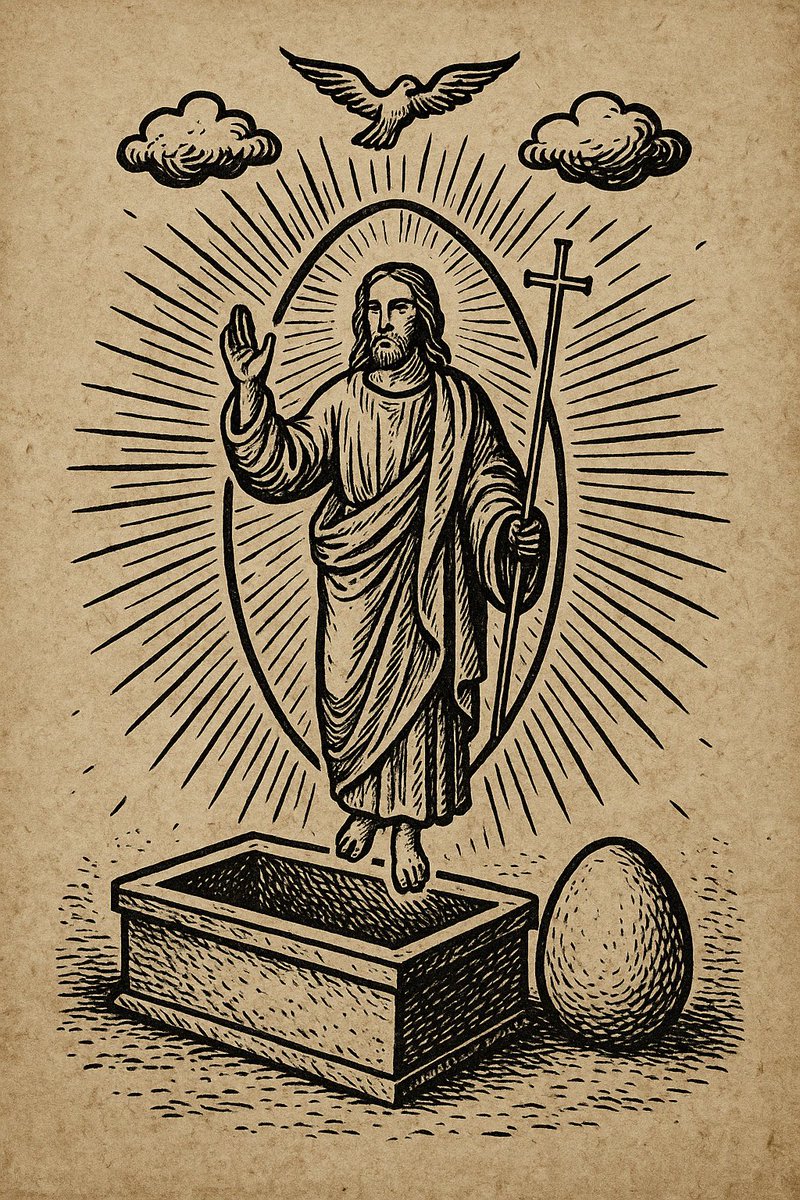
Easter, to the initiate, marks not a singular event in time, but a mystery reenacted: the descent into matter and the ascent into spirit. The dying and rising god is not an external savior, but a cipher of the alchemical process—the blackening, whitening, and reddening of the soul.
“I am yesterday, today, and the one who is reborn.” — Book of the Dead, Chapter 42
The egg is the vessel. The tomb is the womb. The resurrection is yours.
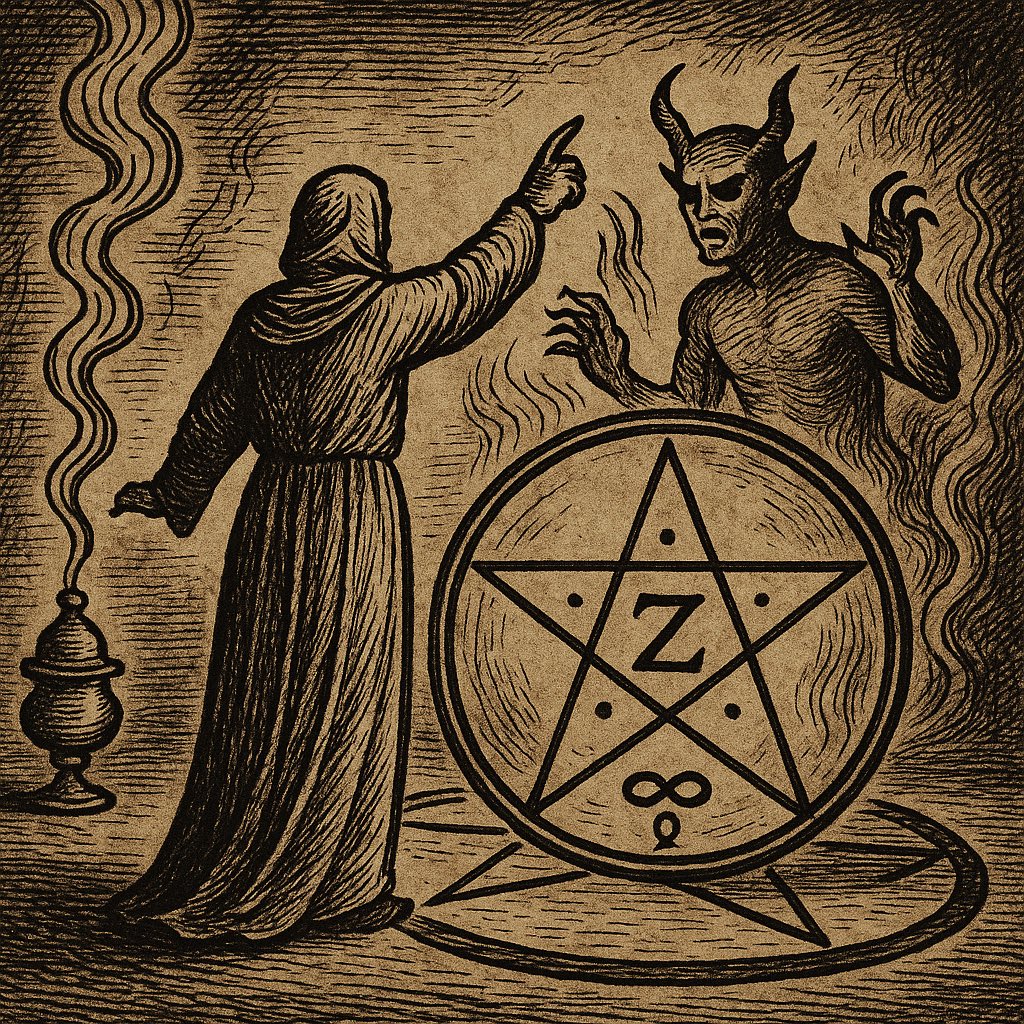
“Without the proper figure and character, thou shalt not be heard.”
— Heptameron, pseudo-Pietro d’Abano, 15th c. MS (Book of the Angels of the Days)
The spirits of the planetary days obey faith and form. Each day has its sigil, its incense, and its conjuration. The circle is drawn not only for defense, but to establish authority within the rite.
To summon on Saturn’s day is to bind through gravity—the weight of time and finality. Yet even Saturn’s angels heed the names when spoken with the correct seal beneath your feet.
What you draw with precision, they read as law.
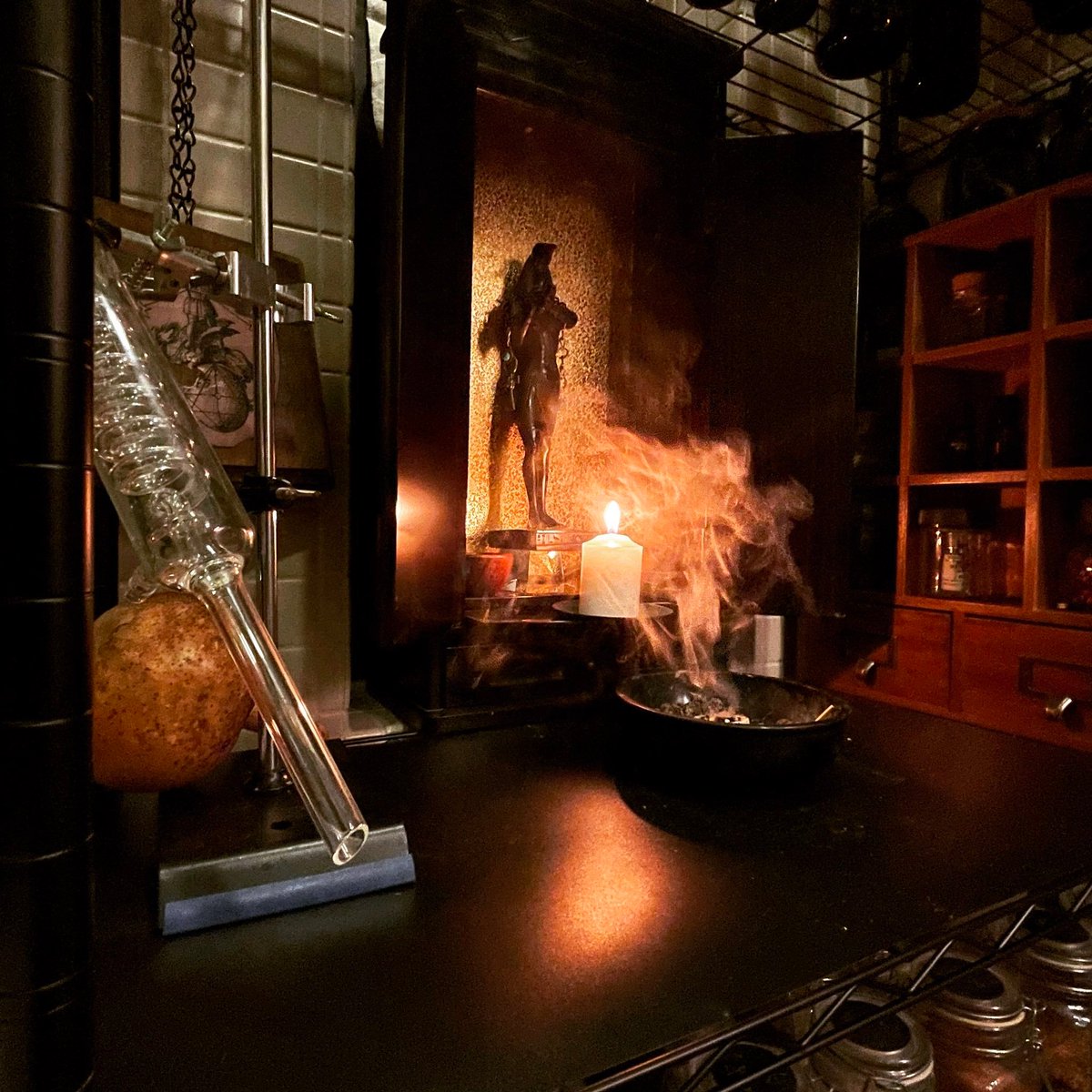
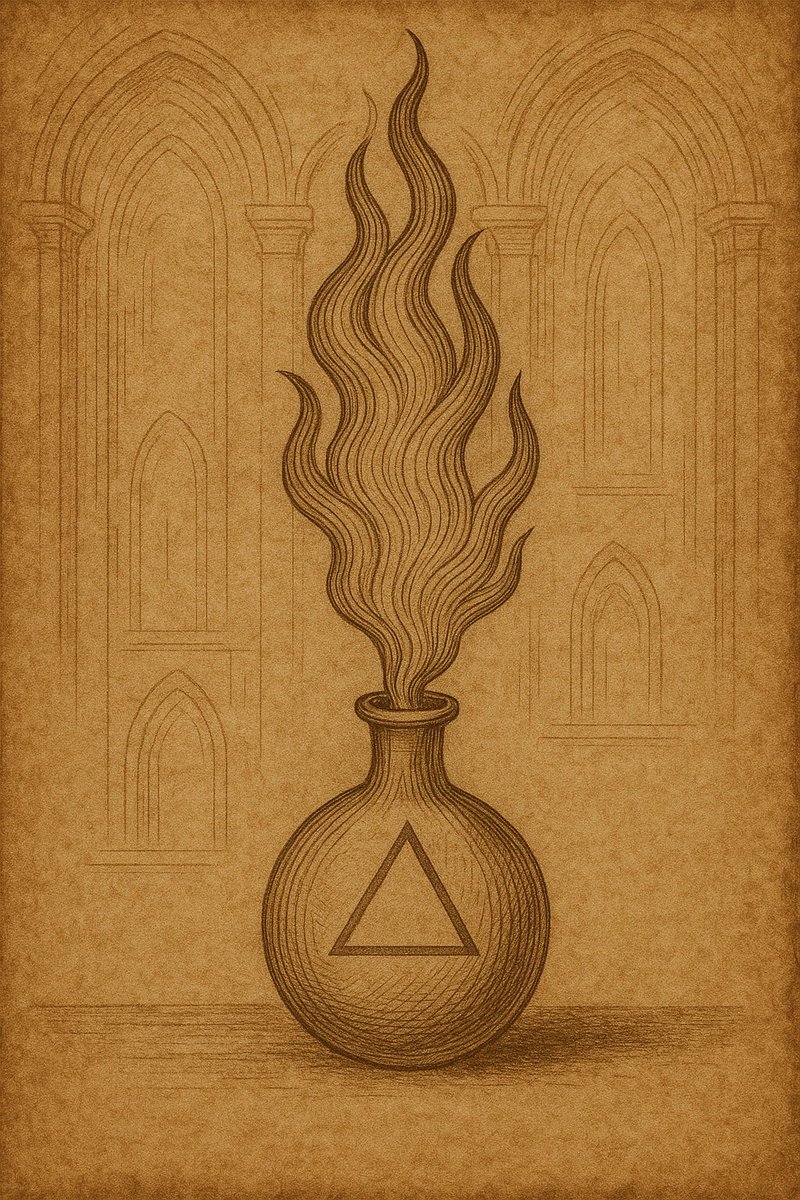
Within the hidden vessels of the alchemists, there is spoken of a Secret Fire—not of flame, but of Spirit. It is the animating breath that awakens the inert, the subtle agent that transmutes base matter into gold and slumbering Soul into light.
It cannot be touched, only kindled; not seen, but felt in the marrow when one walks the path with sincerity.
The wise do not chase the fire. They prepare the lamp.