As tradition dictates, I am celebrating Antinous’ birthday today with a bottle of Mantinia Moschofilero, a dry white wine from Arcadia in the heart of the Greek Peloponnese. 🎂🇬🇷🍷
🍇 Grape variety: Moschofilero
🍷 Appellation: Mantinia (Mantineia) PDO
But why a wine from Mantineia?
According to Pausanias (8.9.7–8), the inhabitants of Bithynion-Claudiopolis, the home of Antinous in Asia Minor, were descended from the Arcadians of Mantineia. This ancestral connection explains why Hadrian established the cult of Antinous in the Arcadian city, where annual religious celebrations and games held every fourth year honoured his memory. The city also housed numerous images of Antinous, particularly in the guise of Dionysos, the Greek god of wine.
Fittingly, the winery is named Seméli, after the mother of Dionysos, making this wine an even more appropriate choice for celebrating Antinous’ birthday.
Good student went for imperial examination but met flamboyant playboy from the capital
Okay guys the left guy is li xun when he was younger lol…he doesn’t look like his usual design at all 😏
Happy birthday to Antinous! 🎂
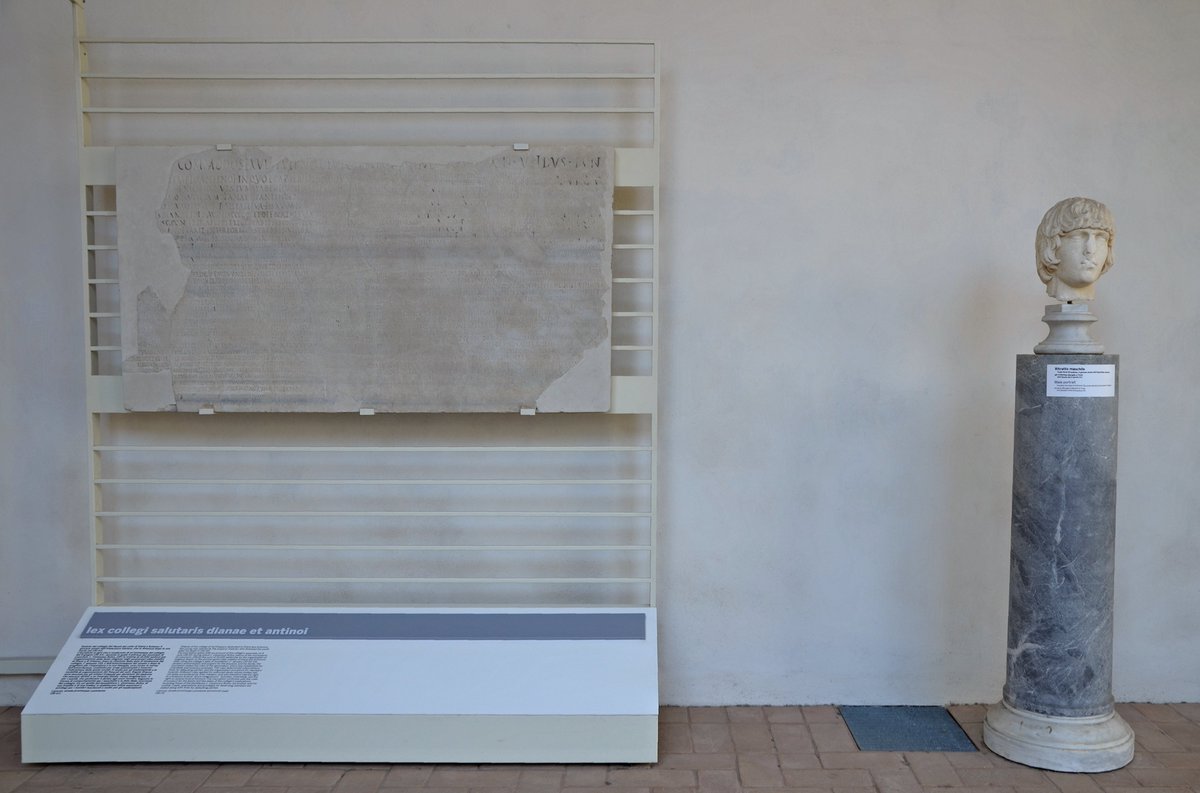
We owe our knowledge of Antinous' birthday to a remarkable inscription discovered at Lanuvium, an ancient city south of Rome.
Dating to AD 136, the inscription records the regulations of the Collegium of Diana and Antinous, a religious and funerary association. Among its annual festivities was the dies natalis Antinoi, the birthday of Antinous, celebrated on 27 November (ante diem V Kalendas Decembres).
Read more about the inscription and the Collegium of Diana and Antinous ➡️ https://t.co/OJOLWB8i6a
Happy birthday, Antinous! 🎂
Born #OnThisDay, around AD 110, Antinous came from a Greek family in Mantineion, a rural settlement near the city of Bithynion-Claudiopolis in Bithynia (modern Bolu, Türkiye).
He is believed to have first met Hadrian in AD 124, when the emperor toured Bithynia, and would later become his beloved companion. Following his untimely death in the Nile in AD 130, Antinous was deified and worshipped throughout the Roman Empire.
Read more 👉 https://t.co/DDgkHqlv0V
#PortraitThursday – A magnificent bust of Antinous, Hadrian's favourite, discovered in 1879 at Balanea (modern Baniyas) in Syria. Carved from Thasian marble after AD 130, it is the only known ancient sculptural portrait of Antinous identified by an inscription.
The Greek dedication on its base reads: “To the hero Antinous, Marcus Lucceius Flaccus (dedicated this).” The dedicator was possibly a member of the local elite whose family had acquired Roman citizenship.
Now in a private collection, this portrait bears witness to the widespread cult of Antinous following his tragic drowning in the Nile in AD 130. It was the centrepiece of the 2018–2019 exhibition ‘Antinous: Boy Made God’ at the Ashmolean Museum in Oxford.
Read more 👉 https://t.co/kRkpyx3Uaq