"A republic, if you can keep it."
"A few years ago, The New York Times advanced the argument that America’s true founding was not 1776, but 1619, the year the first enslaved Africans arrived in Virginia. This was not simply a dispute over dates. It was an attempt to redefine the nation’s origin story.
If the country begins with slavery rather than liberty, then the Declaration, the Constitution, the Founders, and the principles of self-government become secondary at best and fraudulent at worst. The founding ideals are transformed from aspirations into excuses.
The problem was that many of the project’s central historical claims did not withstand scrutiny. Criticism came not only from conservatives but from prominent historians on the political left, several of whom publicly challenged key assertions. In response, The New York Times quietly revised portions of its presentation. Yet by then, the objective had largely been achieved. The debate was no longer about whether the founding principles were true. It was about whether they deserved to remain at the center of America’s inception. They put the idea in the minds of everyday Americans that the founding was based on maintaining slavery and not on freedom, democracy, and a constitutional republic.
That is the challenge Eric Metaxas takes on directly.
The title alone makes the case. Revolution requires no qualifier because, in Metaxas’s telling, the American Revolution stands apart from every other event that has claimed the name. The French Revolution descended into terror. The Russian Revolution produced totalitarianism. Again and again, revolutions have promised freedom and delivered concentrated power.
The American Revolution was different because it began with a radically different premise: that rights do not originate with governments, kings, legislatures, or political movements. They are inherent to the individual, endowed by God, and therefore beyond the legitimate reach of any ruler to grant, redefine, or revoke. Everything else follows from that proposition. It is the foundation of the Declaration of Independence, the Constitution, and the American experiment itself.
This is also why the debate over 1619 matters. At its core, the argument was never about chronology. It was about whether America’s defining principle should be liberty or oppression, whether the nation’s story should be understood through its highest ideals or its greatest failures.
The two visions cannot occupy the same place in the national narrative.
Metaxas unapologetically places the American founding and the principles that animated it back at the center of the story. More importantly, he spends more than six hundred fascinating pages demonstrating why they belong there.
What saves this from being a sermon is that Metaxas can actually tell a story. The author understands something many historians do not. People learn through stories. Ideas matter, but ideas become real when they are attached to events and the men and women who lived them.
Rather than treating the American Revolution as a collection of dates and documents, Metaxas tells it as a story.
He begins before the shooting starts, with what John Adams called the “revolution before the Revolution.” The story unfolds through the legal and political battles that preceded open conflict: the challenge to British authority, the Stamp Act, the Townshend duties, the growing military presence in Boston, the Boston Massacre, and the Boston Tea Party. By the time Lexington and Concord arrive, the reader understands that war did not emerge from a single incident. It was the culmination of years of escalating conflict between a people who increasingly saw themselves as free and a government determined to treat them as subjects.
From there come the moments every American recognizes, even if many no longer know them well. Henry Knox hauling artillery from Fort Ticonderoga through winter conditions that few thought navigable. Washington crossing the Delaware and launching the Trenton campaign when the cause appeared close to collapse. Saratoga. Valley Forge. Benedict Arnold’s betrayal. Yorktown.
Metaxas tells these stories with energy and detail, but the storytelling serves a larger purpose. He is not asking the reader to admire a set of abstract principles. He is showing how those principles survived because ordinary and extraordinary individuals chose sacrifice, risk, and perseverance when failure would have been easier and surrender more comfortable.
That is ultimately why the book works. The American founding emerges not as mythology, but as the product of real people making difficult choices under extraordinary circumstances. The ideas matter because the people who carried them forward were willing to pay the price required to make them real.
The most important part of the book may be the epilogue.
There, Metaxas turns to a question that modern Americans often avoid: What made the American experiment possible in the first place? His answer, drawn from the words of the founders themselves, is that the Revolution and the republic it produced rested on a moral and religious foundation.
He points to John Adams’s warning that the Constitution was made only for a moral and religious people and was wholly inadequate for any other. He recalls George Washington’s caution in his Farewell Address that religion and morality were indispensable supports of political prosperity and national character.
This is not an argument for theocracy. It is an argument about the limits of government.
Metaxas, drawing in part on the work of Os Guinness, argues that freedom requires virtue, virtue requires moral formation, and moral formation depends on institutions and beliefs that exist outside the state. A free society can sustain limited government only if enough citizens possess the character and self-restraint necessary to govern themselves. The government cannot create those qualities by decree.
That insight lies at the heart of the American constitutional system. The founders did not believe that liberty would survive automatically. They understood that self-government ultimately depends on a culture capable of sustaining it.
Which brings the reader back to Benjamin Franklin’s famous response after the Constitutional Convention. Asked what form of government had been created, he answered: “A republic, if you can keep it.”
--Dr. Robert Malone
That always verse really gets me. As painful and awful as the physical aspects of the crucifixion were, it’s beyond my comprehension and hurts my heart to think of how it felt for Jesus to be separated from God for whatever time period was necessary for God to separate Himself from the sin that Jesus took upon Himself on our behalf. I’m so sorry You had to experience that separation from your father Jesus :-(
As of the time of this post, almost no one is watching this video.
I found that very odd, after being alerted that it exists.
It seems to understand what I am talking about. Yet, I still have no idea who made it.
If you made this, please identify. Thx.
https://t.co/dU1t2T5FyU
As believers and followers of Christ, we are given the Spirit of God who, among many powerful gifts, gives us discernment regarding His Word. I don’t disagree that there are theological understanding gaps with many individuals in many denominations that can be thoughtfully discussed, but I just want to point out that you just did what was being called out, labeling prots as atheist/postmodernist, is just another way of calling them gay!
I guess I'd have to answer to specific things on your list of despicable anti-christian things he has done. I am not aware of anything about him that disqualifies him from representing the State of Texas and doing it better than Cornyn has over all these years. I guess if I knew for a fact that a vote for him would make Talarico a shoe in, then I'd have voted differently.
@w_bitterman Thank you for your excellent response as it certainly resonates with my heart. Bookmarked and pasted into my own personal notes on the matter!
@where2or3gather@WesleyLHuff@MikhailaFuller "a Church in atrophy"... I have a lot of grace for my brothers that think differently than I on this matter, and I find the issue, in our Western culture, a curious one, but man, I think you nailed it.
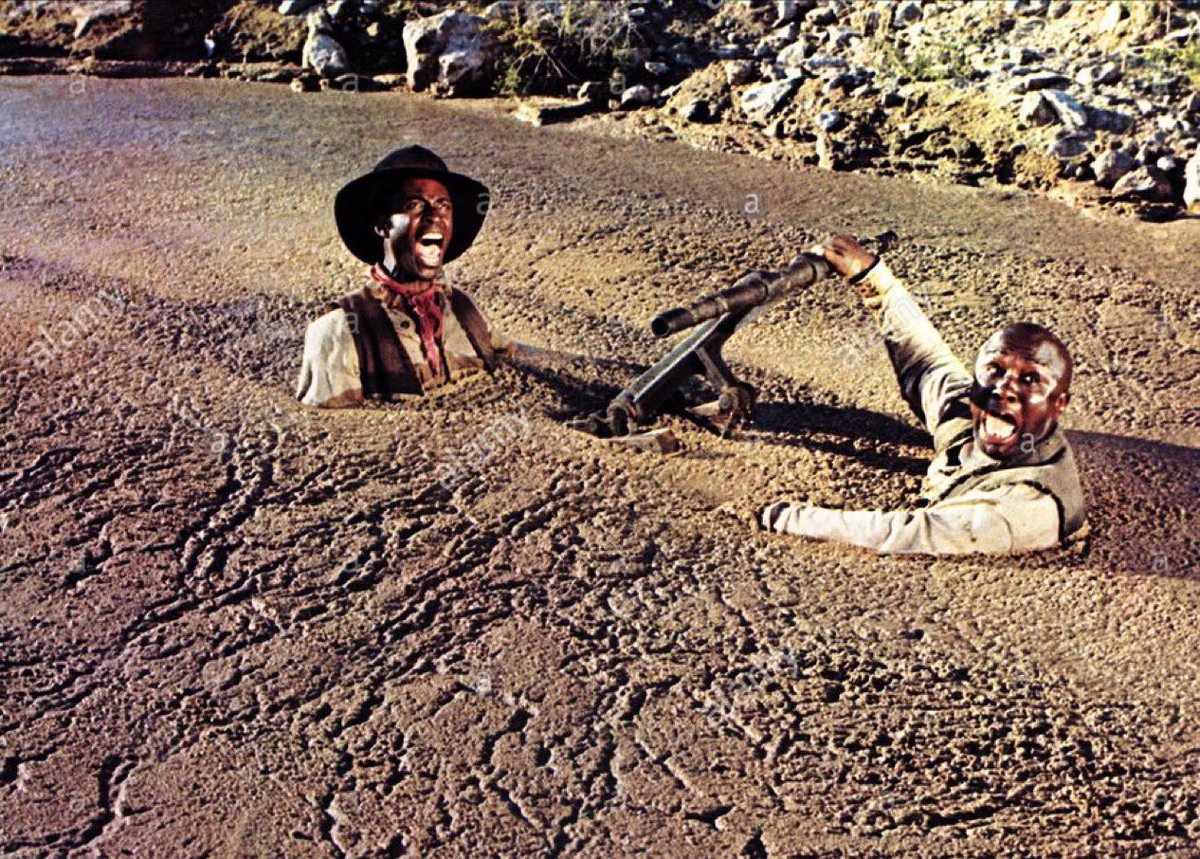
What was with our society’s obsession with quicksand when we were kids? At the time I genuinely believed it was one of the world’s leading causes of death. Every birthday marked another 365 days of somehow avoiding quicksand,
In the quiet of rest, God reminds me I am His child.
Today I am letting the unfinished things stay unfinished. The messages can blink unanswered and the list can sit on the table. The world can keep spinning without my anxious hands on it.
Hebrews 13:9 says, “...For it is a good thing that the heart be established with grace...”
That is what I need today: a heart established by grace, steadied by grace, freed from the exhausting lie that grace still has a balance due.
Rest becomes comfort when I remember the cross is finished.
So today I will rest as an act of faith.
And in the quiet, I will let grace remind me whose I am.
Proposal to conservative media: Even though the mockery is deserved, how about a moratorium on clips highlighting the lunacy of the showbiz left? The Whoopis, the Kimmels, the Springsteens. Wasted time. They truly don’t matter. Focus on the elected extremists we seek to defeat.