1/10
Good IMF blog that reminds us that trade imbalances are largely driven by domestic macro forces rather than by incremental price effects. It notes that China’s growing trade surpluses were driven by a rise in Chinese savings caused both by the...
https://t.co/ysnZRICeaB
I do think though that the EU should consider (despite the potential WTO issues*) its own "buy European" provisions for EVs consumer subsidies -- and then ask for a subsidies sharing deal with the US
https://t.co/S4CAzQvCi3
2/2
South Korean exports to Kyrgyzstan reached a new all-time high in July 2024. This is happening across many Western countries. Whatever self-restraint there was in exporting goods to Russia via third countries, it has broken down. Now it's just a free-for-all. This is so shameful.
1/3
Bloomberg cites Eurizon's Stephen Jen as saying that Chinese firms have amassed more than $2 trillion in offshore investments, and that up to half of this may flow back to China if the Fed cuts interest rates, driving up the RMB.
2/3
He's right, but a lot of this was probably acquired under PBoC instructions as a form of indirect currency intervention, and even if some Chinese firms do decide to sell dollars, either the PBoC or its proxies will step in and buy them.
3/3
After all a $1 trillion net inflow also means a huge reversal of the trade surplus, which would be extremely disruptive. I am pretty sure the PBoC (or its proxies) would intervene to prevent it.
https://t.co/p6u3XEb5TC via @markets
Hard to measure but I suspect upper middle class and wealthy boomers are funding millennials and younger generational spending by transferring assets/cash and paying bills, and in the process pumping retail sales and the economy. In essence they are liquidating balance sheets to pay for spending. This is likely to continue as long as stocks/housing prices stay elevated.
Robust German wage growth isn’t abating and will likely keep inflation high, according to the Bundesbank. It's a worrying signal for the ECB https://t.co/8DPtAsGQHU
1/5
Klaus Baader: "There seems no evidence of a shift to deglobalisation. And while strategies such as nearshoring or friendshoring are being pursued in various economies, they imply geographic shifts in cross-border trade, not deglobalisation."
https://t.co/kGAm9hzY4N via @ft
Right now, not having an industrial policy means importing China's industrial policies:
"Washington’s goal of expanding U.S. manufacturing can’t be achieved if overproduction in China continues, and some industries—especially renewable energy—are feeling pressure"
5/
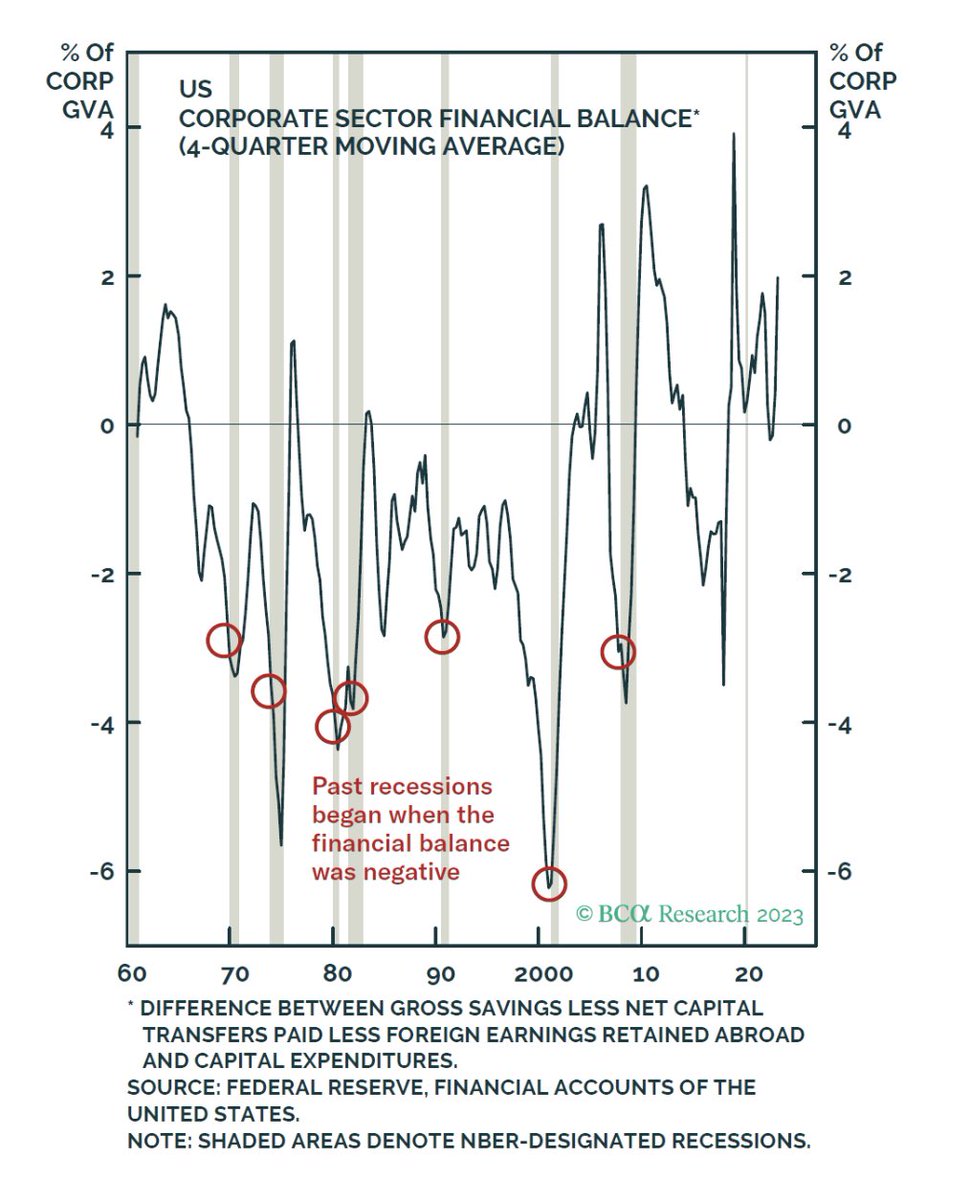
Every single US recession has begun when the corporate sector financial balance, an economy-wide measure of free cash flow, was in deficit. Today it is in surplus of 2% of gross value added.