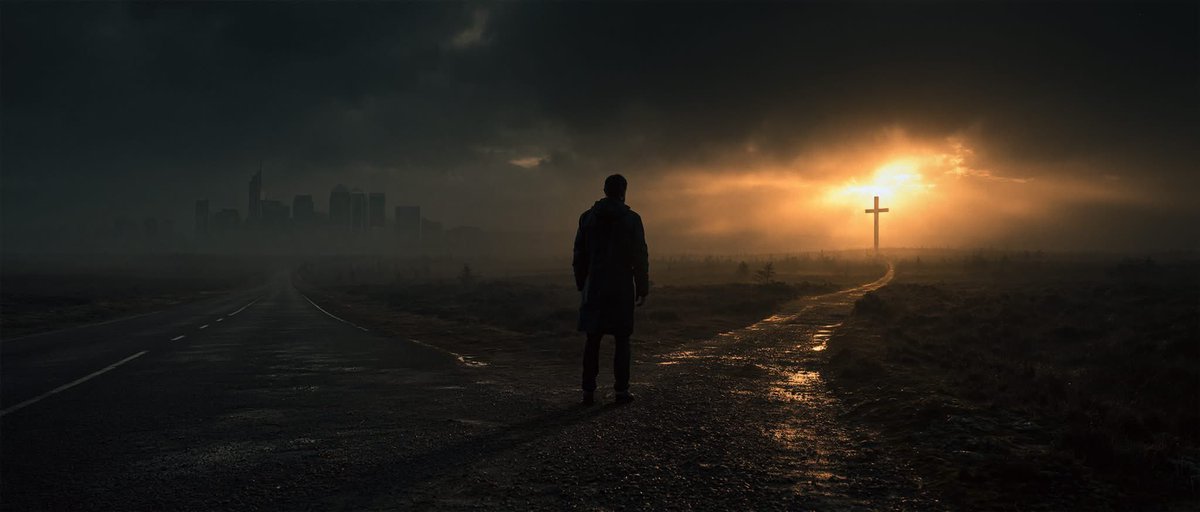
This video is called The Cost of Being Right.
The spark for it came during the ICE protests, when everything was getting louder, uglier, and more dangerous. During that time, God told me to keep my mouth shut. And that makes sense - the world didn't need one more opinion added to the chaos..
So this video is not me giving my political thoughts. It is not me trying to win an argument. This was a Holy Spirit-led project from the beginning.
Back in early February, rough lyric ideas started coming into my head, and then the visuals started following right behind them. When that starts happening without me having to force it, I've learned to pay attention. That's usually how God lets me know He's putting a project in front of me.
What I believe this video is showing is the grief of God as He watches people tear into one another with hatred, accusation, self-righteousness, and destruction. That applies across the board. And yes, there are plenty of people who call themselves Christians who are carrying just as much venom as the world around them.
That should sober us.
This video is also a warning. We all need to be willing to look in the mirror and ask the Holy Spirit whether any of what is depicted here reflects something in our own hearts. I say that including myself. I felt convicted at points while making this. Good. That's part of the point. Conviction from the Holy Spirit is what leads to real repentance.
The song lyrics should be available as closed captions for those who might want that.
Until next time,
Peace Out and God Bless
There is a spiritual battle going on around us, whether we see it, sense it, or remain completely unaware of it.
But the most important truth is this: Christ has already won. The enemy keeps fighting, but he's fighting from defeat.
Heaven has our backs.
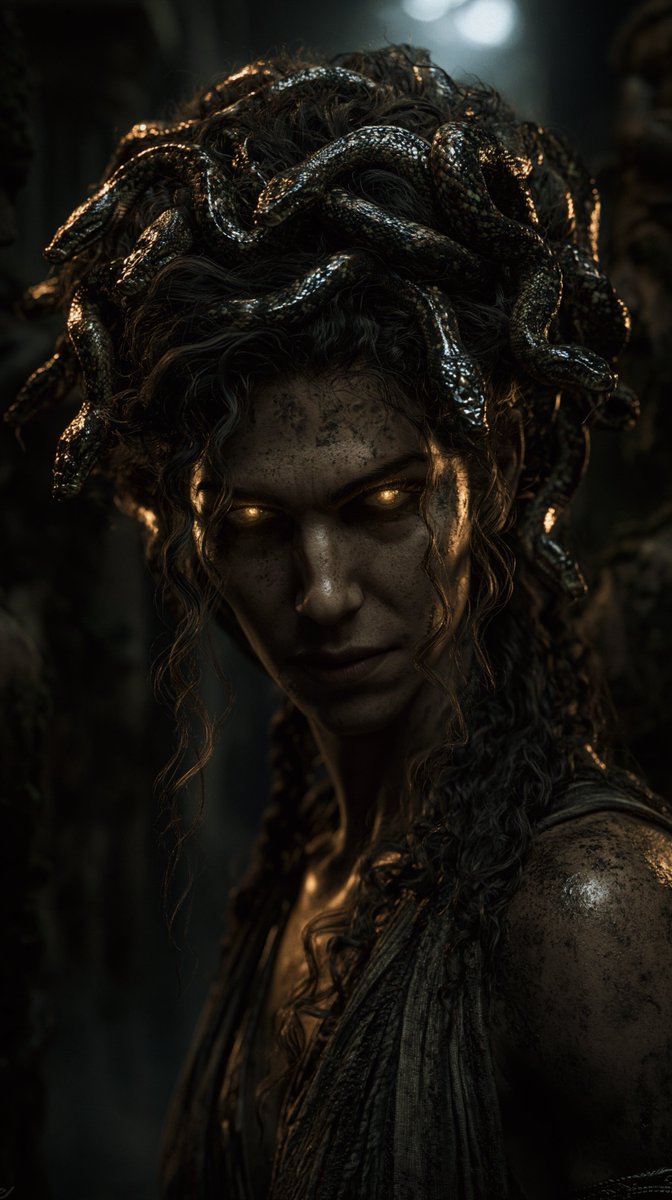
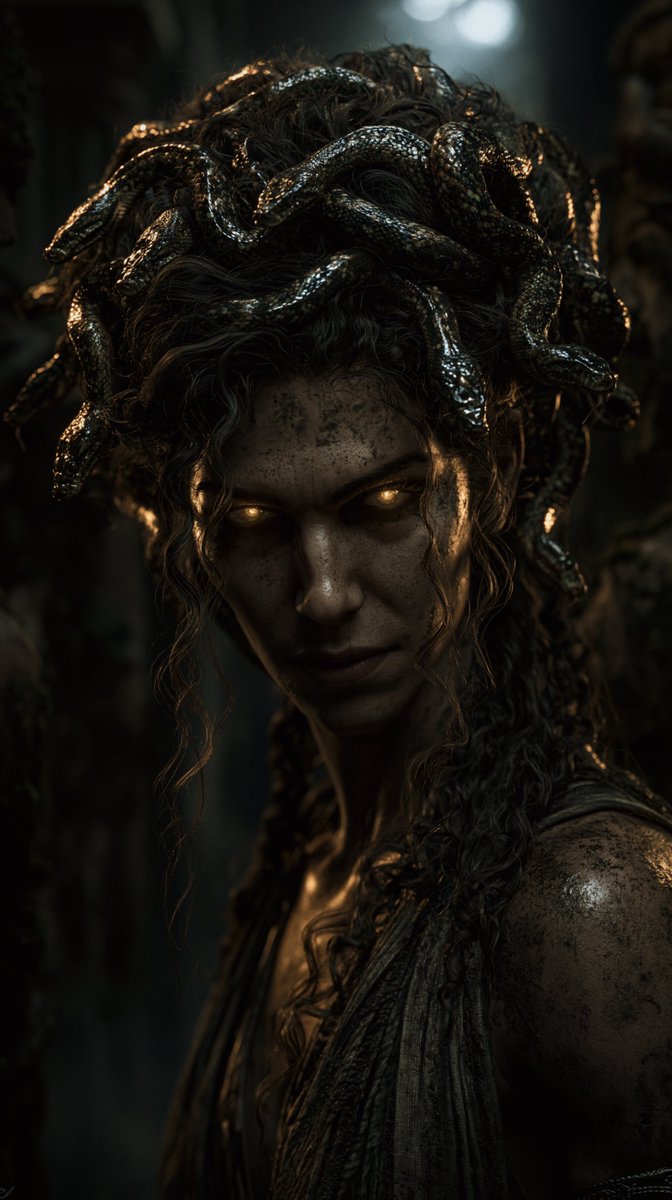
Mythology is always fascinating to explore. Medusa, generated for a prompt challenge.
A base image was generated in ChapGPT Image 2 because it follows instructions better than Midjourney. Then that image was brought into Midjourney v8.1 as a prompt and style reference, combined with a personal profile to get the aesthetic look I wanted.
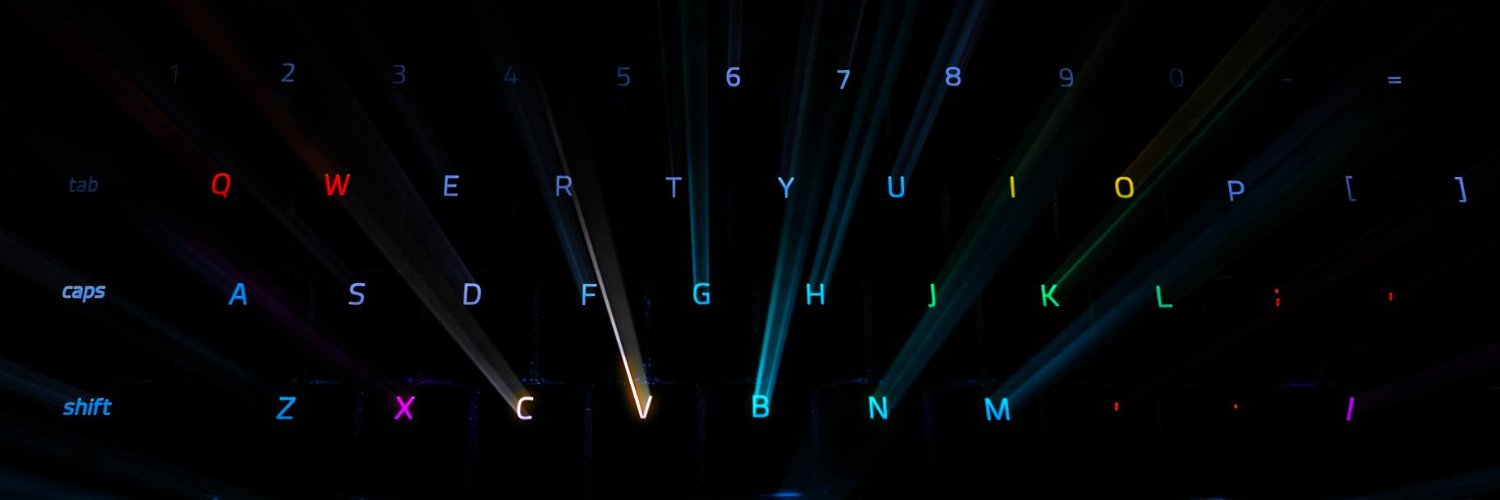
Just a visual concept I was playing around with, inspired by some graffiti art in a scene from the movie ""Good Luck, Have Fun, Don't Die." The film is mostly brilliant, and absolutely scathing in its commentary on the cultural obsession with technology, social media, and AI.
Yes, I clearly use plenty of technology myself, but there is always a danger we must be aware of that such things could lead to addiction or making them into false idols.
This really resonates with me.
I'm 54 now, and I had a long professional creative life before generative AI ever showed up. I was formally trained in graphic design and motion graphics back around 2000, and I worked through the old-school hands-on era of print and production, then built a career in Photoshop, After Effects, and Illustrator. Those skills were used in broadcast design, animation, and teaching design to future commercial artists.
So yeah...the idea that AI artists are all people who never cared about art, had no aptitude for it, and suddenly became "artists" overnight is nonsense.
There are plenty of us who were already deeply immersed in art and visual storytelling long before AI. These new AI tools did not invent creativity in us. They gave us another way to express it.
In my case, they opened the door to creating things that would've otherwise stayed trapped in my head for lack of budget, crew, time, or equipment.
I'm just a nobody with next to no reach on any social media platform, but I wanted to pop in and offer up some quick thoughts and simply say "thank you."
Most people won't embrace AI filmmaking because they worry too much about what people will think of them.
The tools are basically unlimited at this point. You can generate a full animated scene on my laptop. You can clone a voice, build a character, composite a shot, score the music. All stuff that used to require a studio and a six-figure budget. The gap between "what I can imagine" and "what I can actually produce" is shrinking every single month. It's almost gone.
So why aren't more people embracing this?
Because the establishment thinks it's fake. And most people, especially creative people, want the establishment to like them. They want the film festival acceptance. They want the industry handshake. They want someone at a studio, union or a distributor or a funding body to look at their work and say "you're legitimate." And the establishment has made it very clear that AI-produced content is not legitimate. It's "slop." It's "not real filmmaking." It's cheating.
So people who could be making things right now, tonight, on their couch, with tools that didn't exist eighteen months ago, are sitting on their hands because they don't want to be the person who gets laughed at.
But think about the people who started shooting YouTube videos in 2007 and 2008. The film industry mocked them. "That's not real content." And yeah, a lot of it was garbage. Most of it, honestly. But some of those people, the ones who didn't care about being taken seriously by the old guard, built audiences of tens of millions. Some of them make more money than studio executives now. MrBeast has more cultural influence than most networks. He started with a webcam.
The pattern is always the same. New tool shows up. Establishment says it doesn't count. Most people listen. A few people don't. The few people who don't are the ones who end up building the next big thing. This history always repeats.
That's where we are with AI right now. The only two things you actually need are imagination and the willingness to be disrespected. That's it. The tech is here. The distribution is here. You can publish to YouTube and X and Instagram today. Nobody can stop you. The cost is almost nothing. The only thing standing between you and a finished piece of work is whether you have an idea and whether you're willing to take a hit to your reputation among people who were never going to help you anyway.
I keep meeting creatives who whisper about AI like it's something to be ashamed of. "I've been experimenting with it but I don't really tell anyone." Why? Because some guy with a film degree and a $200K student loan balance might think less of you? Who cares? That guy isn't funding your project. He's not distributing your content. He's not building your audience. His opinion is worth exactly what he's paying you, which is nothing.
The people who win this next wave aren't going to be the most talented. They're going to be the ones who started while everybody else was still waiting for permission.
Nobody is coming to give you permission. Go make something.
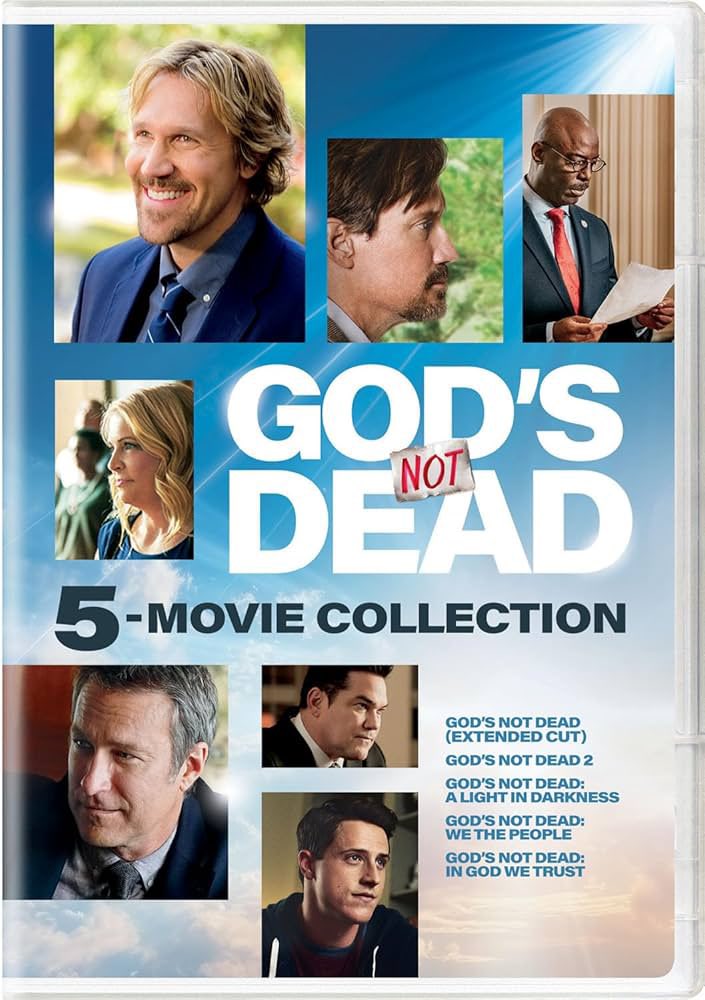
The Truth About Why Christian Movies are So Bad.
I’ve spent the last four years building a streaming platform and talking to people at the very top of the faith-based entertainment industry. Studio heads. Distributors. Producers. Investors. And I’ve come to a conclusion that I think is going to make a lot of people uncomfortable.
Christian movies are bad on purpose.
The talent is out there. I’ve met them. I’ve sat with them at 3am over whiskey and cigars listening to pitches that should have been picked up immediately.
So that left a question that any Christian filmmaker could quickly answer. If the talent is there, why is everything so mediocre?
It starts with an avatar named Bookstore Betty. I’m not making that up.
When the faith-based film industry was being built out, it was done in partnership with Christian bookstore executives. They weren’t asking “how do we make great cinema.” They were asking “who walks into our stores and how do we sell them a movie the same way we sell them a devotional.” The target was a 35 year old woman. The tone, the casting, the conflict resolution, the soft lighting, all of it was reverse-engineered to appeal to Betty.
Not to a general audience.
Not to men.
Not to teenagers. Just Betty.
Every major Christian film you can think of relies on distribution deals with secular studios. The same studios that blacklisted almost everyone who worked on The Passion of the Christ and refused to distribute Kirk Cameron's Pro Life movie.
Think about that.
Passion made over $600 million on a $30 million budget. The most obvious play would have been to duplicate that movie hundreds of times like it was the MCU. But instead of greenlighting more, Hollywood blacklisted the people involved.
So what did they do instead? They set up a system where they get to be the gatekeepers. They only greenlight the safest, most formulaic, most non-threatening stuff possible. Because if Christian films ever started consistently competing with mainstream entertainment, those studios would have a real problem. So they make sure that never happens.
And the church helps them do it.
Christian movies don’t need word of mouth. They don’t need to be good. They need pastors to bulk-buy tickets.
You make a movie with a “message,” market it to churches, and pastors subsidize the whole thing by buying hundreds of tickets to hand out on Sunday.
You don’t have to compete in a fair market when your distribution model is guilt-driven generosity.
And the funding is even more rigged.
Most of these films are funded through Donor Advised Funds, which means donors get a tax write-off for their “investment” regardless of whether the movie makes a dollar. There’s no market pressure to make something good. The donors got their deduction. The studio got their budget. And Betty got another movie about a woman who finds a journal in the attic.
What would happen if someone actually came along and made faith-based content that created pop culture instead of reacting to it? I think it would instantly expose how low-effort the current industry is.
It would be like when Uber showed up and embarrassed the taxi industry overnight. The monopoly only survives because nobody has disrupted it yet.
The talent is there. The audience is there. The only thing missing is capital that wants disruption instead of a tax write-off.
A huge part of getting good at anything is simply making a lot of stuff. I mean volume. Repetition. Doing things over and over again.
Especially when you’re starting out, you think the people who are good must have found some secret. Like they’re more talented, or more confident, or they know something you don’t. But usually, what they’ve really done is make far more work than you realize. Probably things no one has ever seen. They might not even want to share it because it's bad. They’ve gone through draft after draft, project after project, attempt after attempt. They’ve made enough things to get strong.
That’s the most underestimated aspect of greatness. Quantity leads to quality. You do a large body of work, and inside that body of work, you begin to notice things. You notice your habits. You notice your weaknesses. You notice what keeps failing, what keeps working. You cannot learn those lessons just by thinking about the work. You only learn them by making the work.
And a lot of people quit too early. They make a few things, maybe even a few dozen things, and because the work doesn’t yet look the way they want it to, they decide they’re not good enough. But that’s not what’s happening. What’s happening is that they’re still in the process. Trust the process. More than anything else, especially when you suck and it’s painful.
You have to give yourself permission to make a lot. To make imperfect things. Bad things. Things you feel ashamed to show. Because every finished piece is teaching you something. Every attempt is building judgment. The people who get good are very often just the people who stay in the game long enough to let the process work on them.
Keep producing. Make stuff. Many stuff. A lot of stuff. Put yourself on a rhythm if you can. The path is to work. Do more. Finish more. Learn more. Trust that you arrive at quality through quantity.