Pittsburgh Zoo has agreed to trade 7-year-old male gorilla, Frankie, to Boston in exchange for 33-year-old silverback gorilla, Little Joe
Both trades were designed to 'provide a healthy, genetically diverse population of critically endangered gorillas in human care' 💯
(Via @PghZoo, @zoonewengland)
@tangotiger I’m in an AI program so usage is encouraged. My professors have an AI disclosure policy. You describe how/if you used it in your process on any work you submit. Not required if you didn’t use it. The best professors give assignments that ask “is AI the right tool for this job?”
Statcast already quantifies part of the leak.
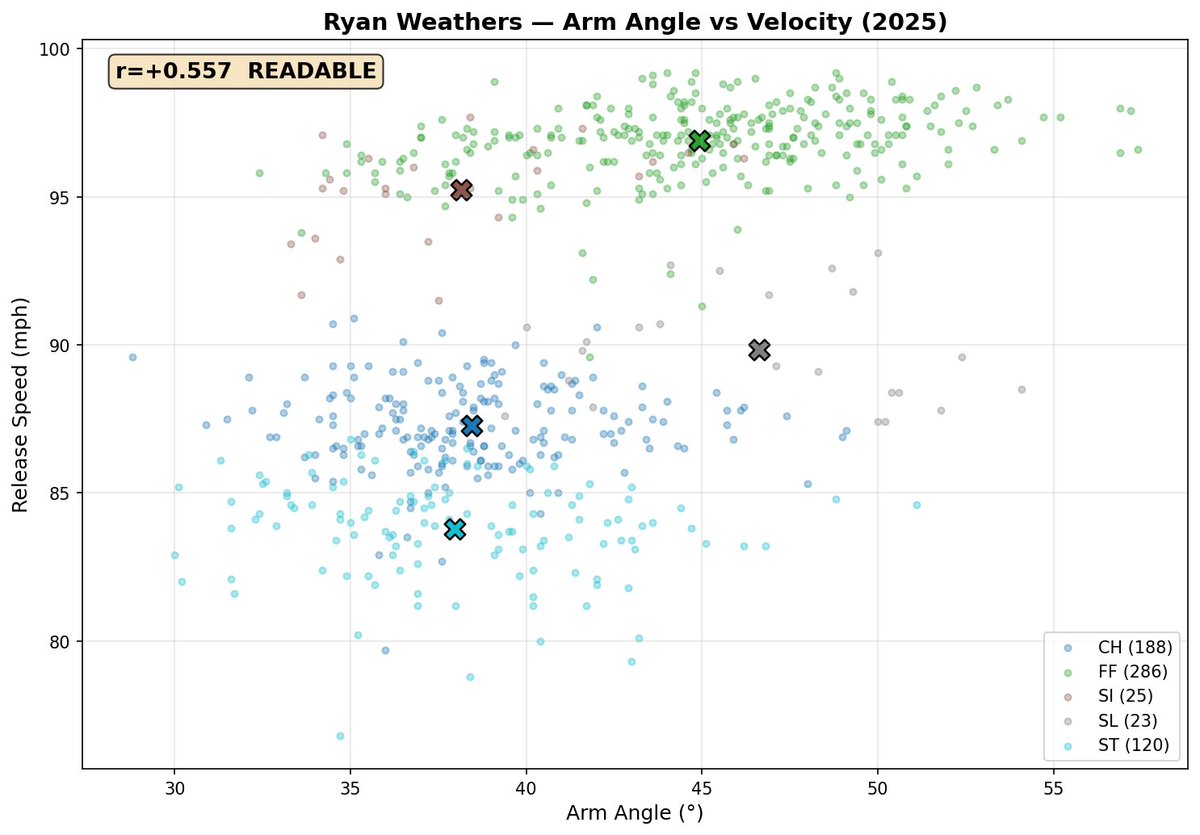
Correlate arm angle with velo across an arsenal. If high, hitters can sort hard from soft from the arm.
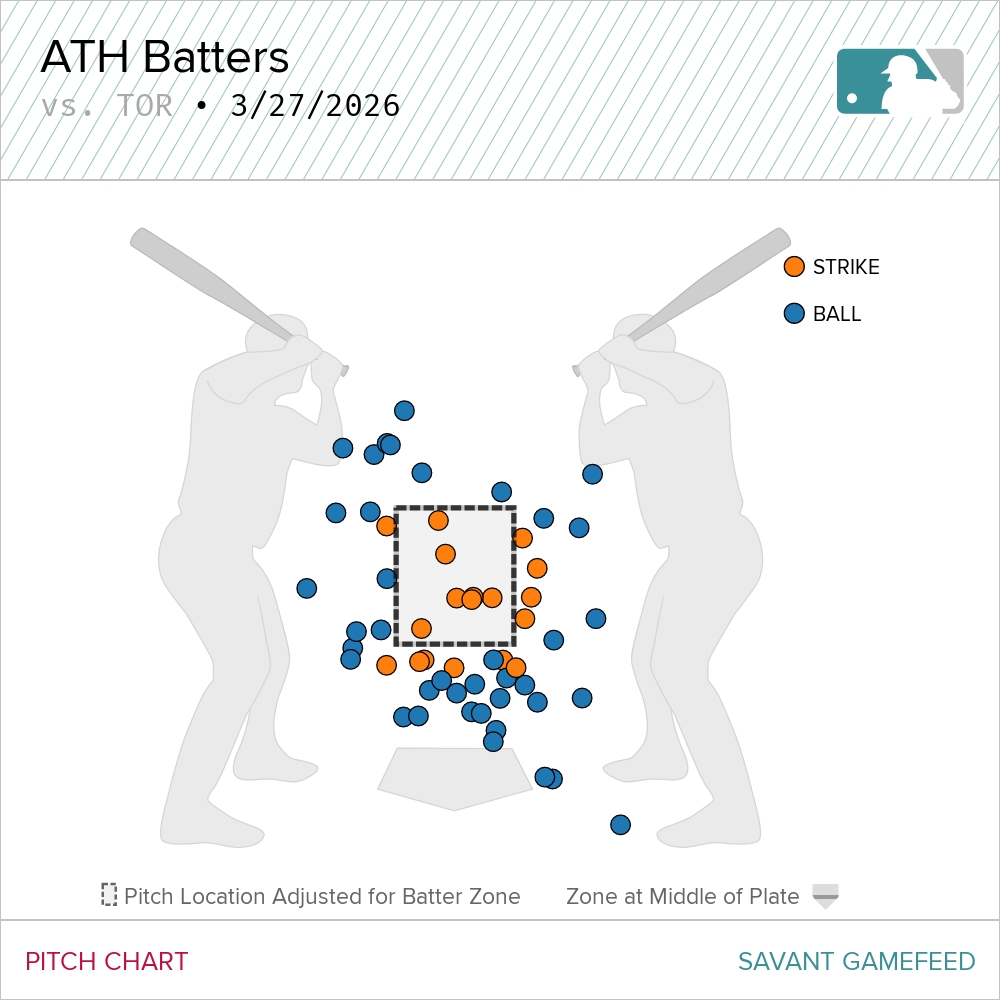
Weathers v. TOR 3/19
High slot (FF/SL) — 26 pitches, 23% whiff, .600 BIP
Low slot (CH/ST/SI) — 48 pitches, 40% whiff, .714 BIP
When arm slot sorts an arsenal by velocity, hitter has the timing read before release. Sit soft or hard. Which pitches survive depends on residual movement.
Kerkering 2025
Low slot = 87 mph (+0.40 rv/100)
High slot = 96–97 mph
His FB survives (−0.86), the SI doesn't (+1.42).
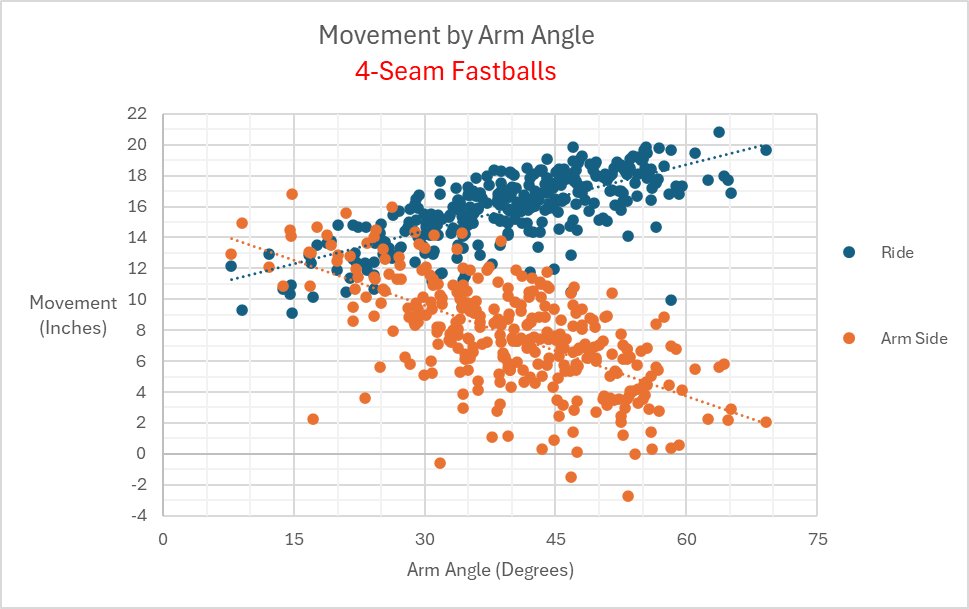
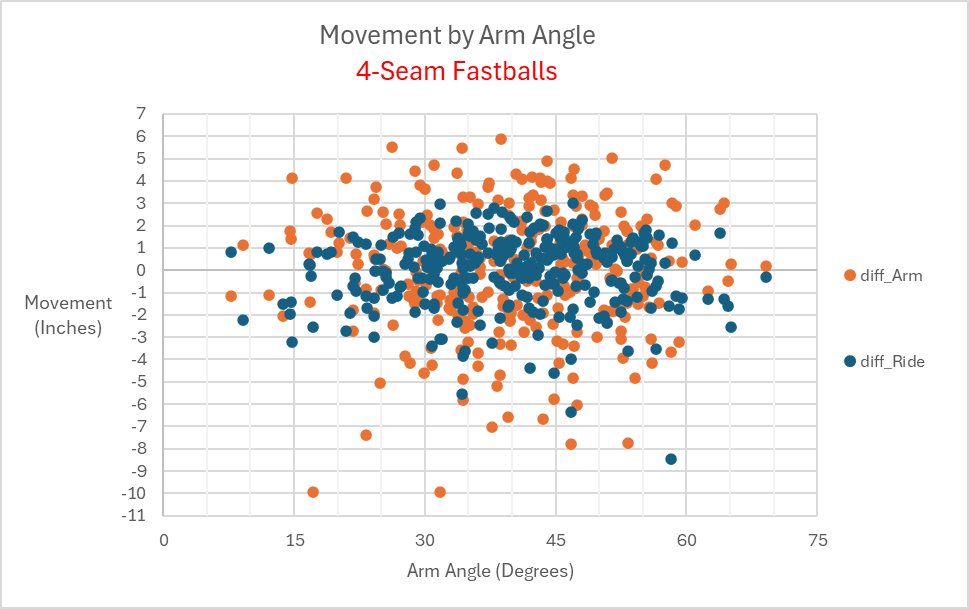
On Left: Amount of Ride and Arm Side movement of 4-seam fastballs, relative to arm angle
On Right: Same data, but magnitude of movement relative to the baseline for that arm angle
The large driver to direction of movement is arm angle (which drives release direction)
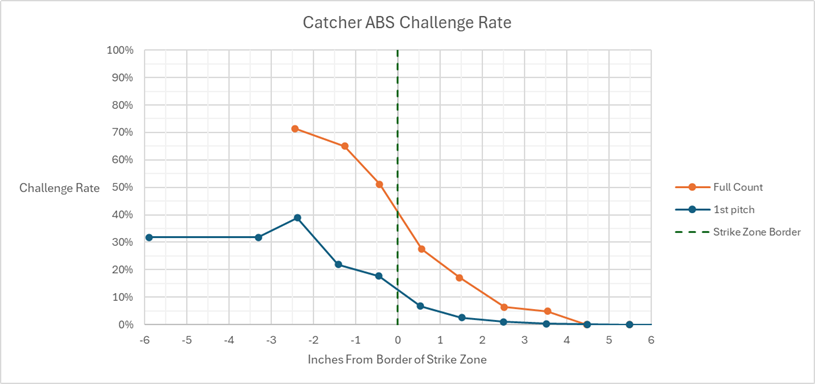
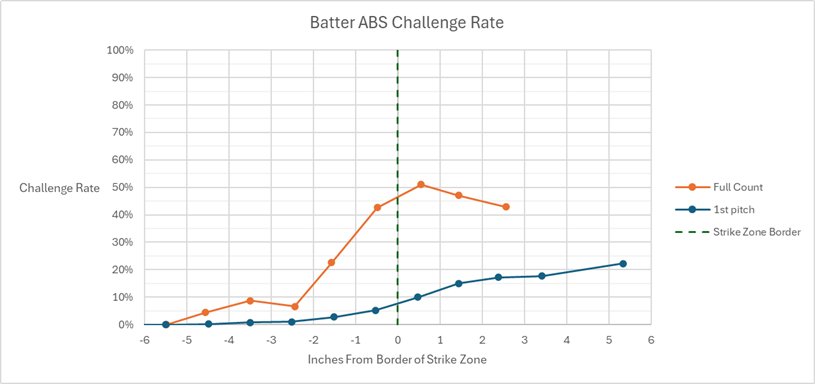
Context matters. Many of these called strikes were in early counts where it’s a net negative to challenge.
Kirk is elite bottom of the shadow zone.
‘21 - 3 runs
‘22 - 6 runs
‘23 - 8 runs
‘24 - 6 runs
‘25 - 9 runs
Steal strikes in uncontestable counts.
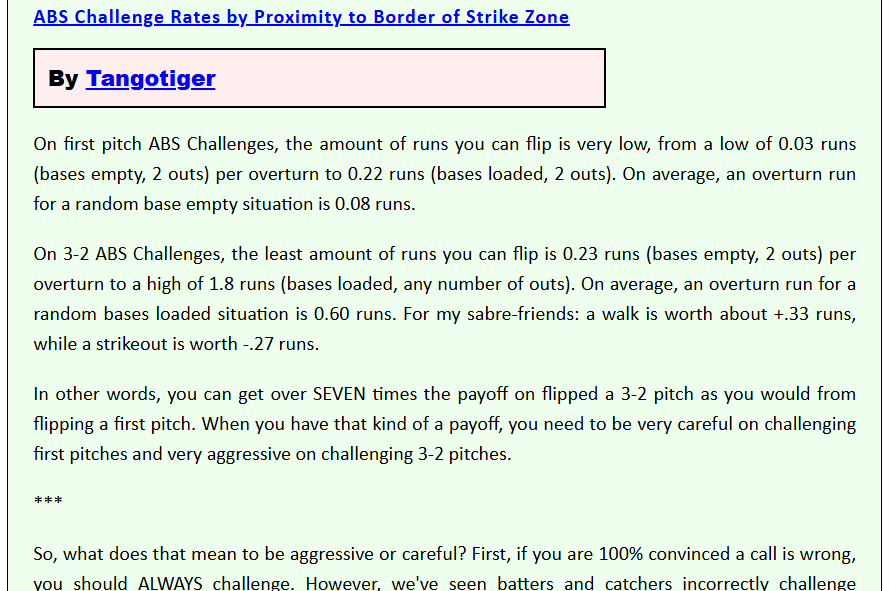
Any close 3-2 call should get ABS challenged... the payoff is that high
There's also almost no time used up either, since the batter is walking away in any case
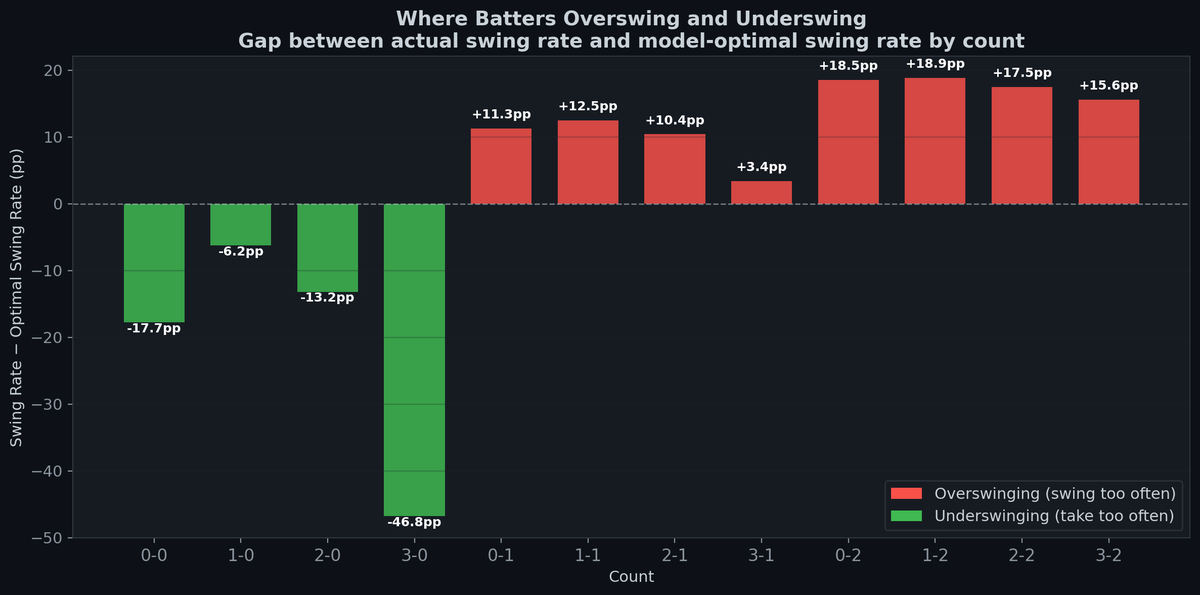
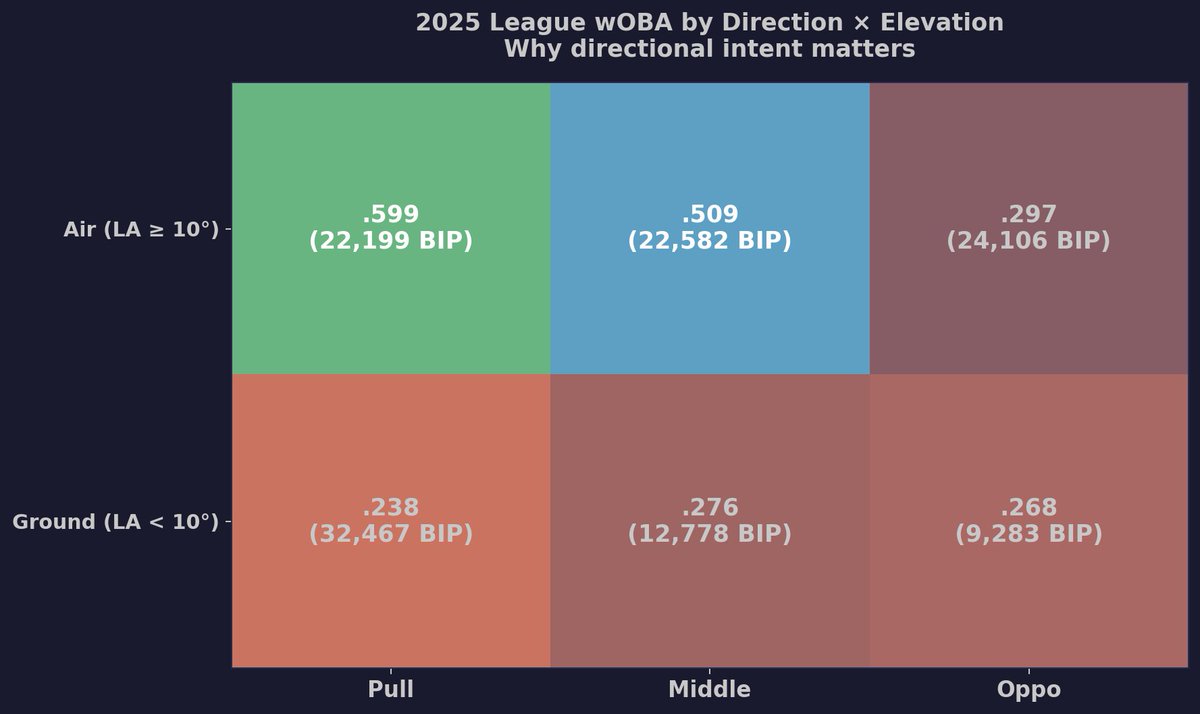
The conventional wisdom is "be aggressive in hitter's counts" but the data says batters aren't aggressive enough.
The bars show the gap between what batters actually do vs what the model says is optimal in each count.
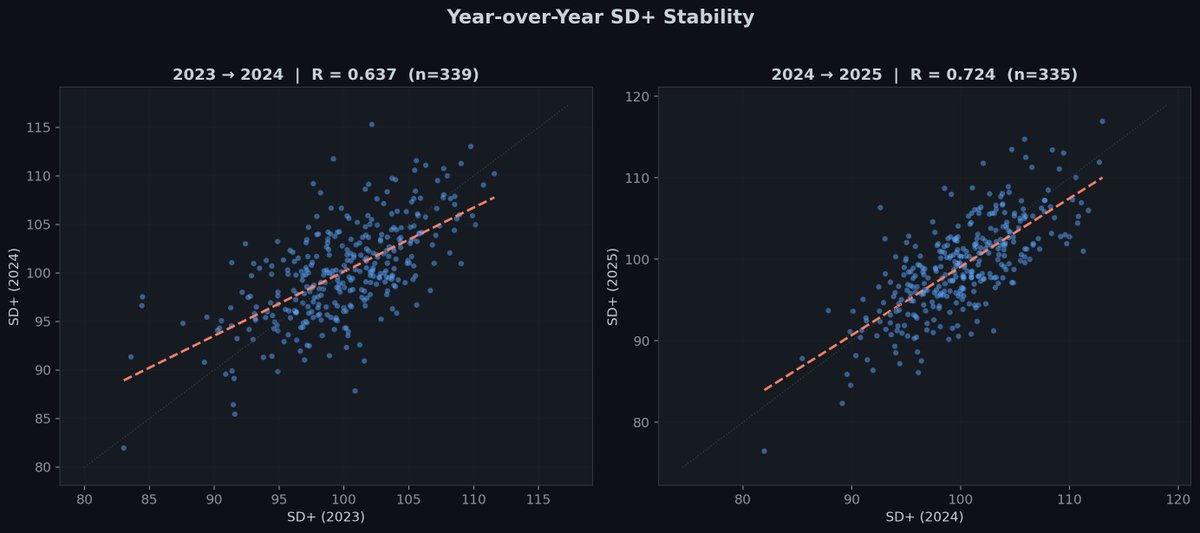
@tangotiger Yep, it's cool we arrived at similar conclusions with different methodologies! I did it this way as part of a larger hitting model but simple is usually better. Cleaner too.
Upon rereading we partially disagree on 3-2. But I think its just zone proximity vs run value of swings
The conventional wisdom is "be aggressive in hitter's counts" but the data says batters aren't aggressive enough.
The bars show the gap between what batters actually do vs what the model says is optimal in each count.
We've come so far in the public world that we've gotten a little repetitive. I don't have the time nor the skills to do the research on it but if someone (smarter and less busy) did new research on arm angles affecting pitch grips, swing decisions based on counts, other topics.
Other things this model tries to account for:
- Pitch tunneling at decision point
- Catcher framing (riskier takes)
- Batter zone strengths
- Times through order
- Pitcher sequencing tendencies
- Umpire tendencies within same game (would be stronger with Retrosheet)
Tokens lower the barrier to building something. They don’t lower the barrier to knowing what to build or knowing how it works.
Domain knowledge is the moat.
@drivelinekyle@GiuseppePaps I think about this a lot when it comes to vibecoded platforms in general. If the barrier to entry is tokens, what’s the moat? Name recognition? And how long can someone coast purely on name recognition?