We lost our boy. Not yet 9. As an Anatolian shepherd at heart, he brought merriment and was a kid at heart.
Please keep Shelton in your hearts and help him find our loved ones who will now take care of him on the other side of the rainbow.
We love you dearly bubby. ❤️ 💔💔💔
A cat born in the United States with 28 toes has officially set a new world record and been entered into the Guinness World Records.
The condition is called polydactyly — a congenital genetic mutation that causes an animal to have more toes than usual.
Fortunately, it has no impact on the cat’s health.
Blyskavka drone - The origin story
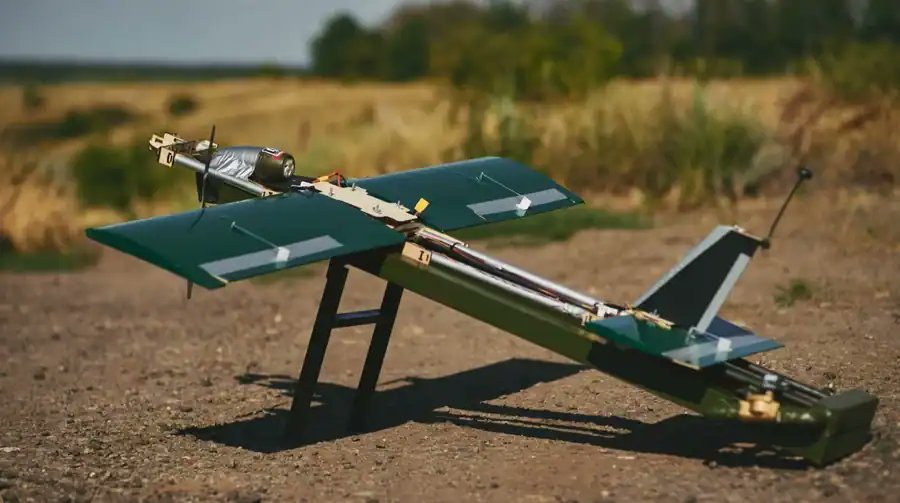
Ukraine captured Russia's cheap Molniya strike drone, took it apart, and built a better version. It's called Blyskavka - and both names mean "lightning."
The Molniya had become a real problem by 2025. A crude fixed-wing kamikaze drone made of plywood and foam, costing around $1,000, carrying up to 7 kg of explosives over 30+ km. Nothing about it was sophisticated. But it was cheap enough to arrive by the dozen, and shooting down thousand-dollar drones with expensive interceptors is losing math.
Ukrainian troops captured Molniya airframes, and the trophies ended up at Vyriy - a Kyiv drone maker founded in 2022, now one of Ukraine's larger FPV producers. Their engineers reached a clear conclusion: the concept was excellent, the Russian execution was full of defects. So they kept the concept and fixed the rest.
The Blyskavka was announced on August 5, 2025, through a crowdfunding campaign by the volunteer channel Ostanniy Kapitalist: $300,000 for the first 350 drones, roughly $857 per aircraft including control gear and launchers. A month later Vyriy showed it publicly at Defense Tech Valley 2025 in Lviv.
What changed under the familiar silhouette: all-Ukrainian electronics, 3D-printed components, standardized connectors that cut assembly and field deployment time, two wing-mounted electric motors, and a pneumatic catapult launch - a crew is ready to fly about 10 minutes after arriving at a position.
The result carries more than the original (8 kg recommended payload, up to 13 kg in practice), flies farther (40 km tactical, 80 km with relay), and costs about the same - roughly $870.
The timeline is the striking part. From captured trophy to announced product: months. By January 2026, over 60 Ukrainian units were flying it. By March, production hit ~1,000 per month - and demand still exceeded supply.
Each side in this war now studies the other's wreckage as industrial routine. The Blyskavka shows how short that loop has become: Russia fielded a cheap strike drone in mass, and Ukraine answered with a corrected copy before the year was out.
You can read the full article about the Blyskavka drone on my Substack - https://t.co/ap2XbGWxBu
Sources in the comment below
If you appreciate what I do, I'd really appreciate your financial support. Thanks a lot!
https://t.co/xSPlYVerCj
Anton: We hunted pheasants, and not only. When we killed Russian soldier we would go through his backpack.
Their Snickers taste better than ours. We were happy to find something like that, our morale went up.
5X
Anton: Igor had an idea: "Let's do video surveillance with FPV."
We covered the entire perimeter with cameras through the Chuyka device, intercepted enemy radios, and relayed troop movements to others after our own communication went down.
4/
Anton: We filtered mud, we used water from fire extinguishers to rinse our mouths, but it tasted of ammonia. We couldn’t drink it because it’s acid.
We drank saline, and by radio, guys at other positions said they were drinking chlorhexidine.
3/
Anton, one of the Ukrainian soldiers: My neck, arms and back started burning. I jumped out with my rifle and saw a drone. I started shooting, tears streaming.
The grenade was self-made. Chlorine-based powder inside. It smells of acid, eats through everything.
2/
Ukrainian soldiers rinsed their mouths with water from a fire extinguisher and ate rations they took off the Russians they killed to survive in the encirclement.
Russians poisoned them with gas, thinking these were elite forces. Ukrainians held their position for 109 days.
1/
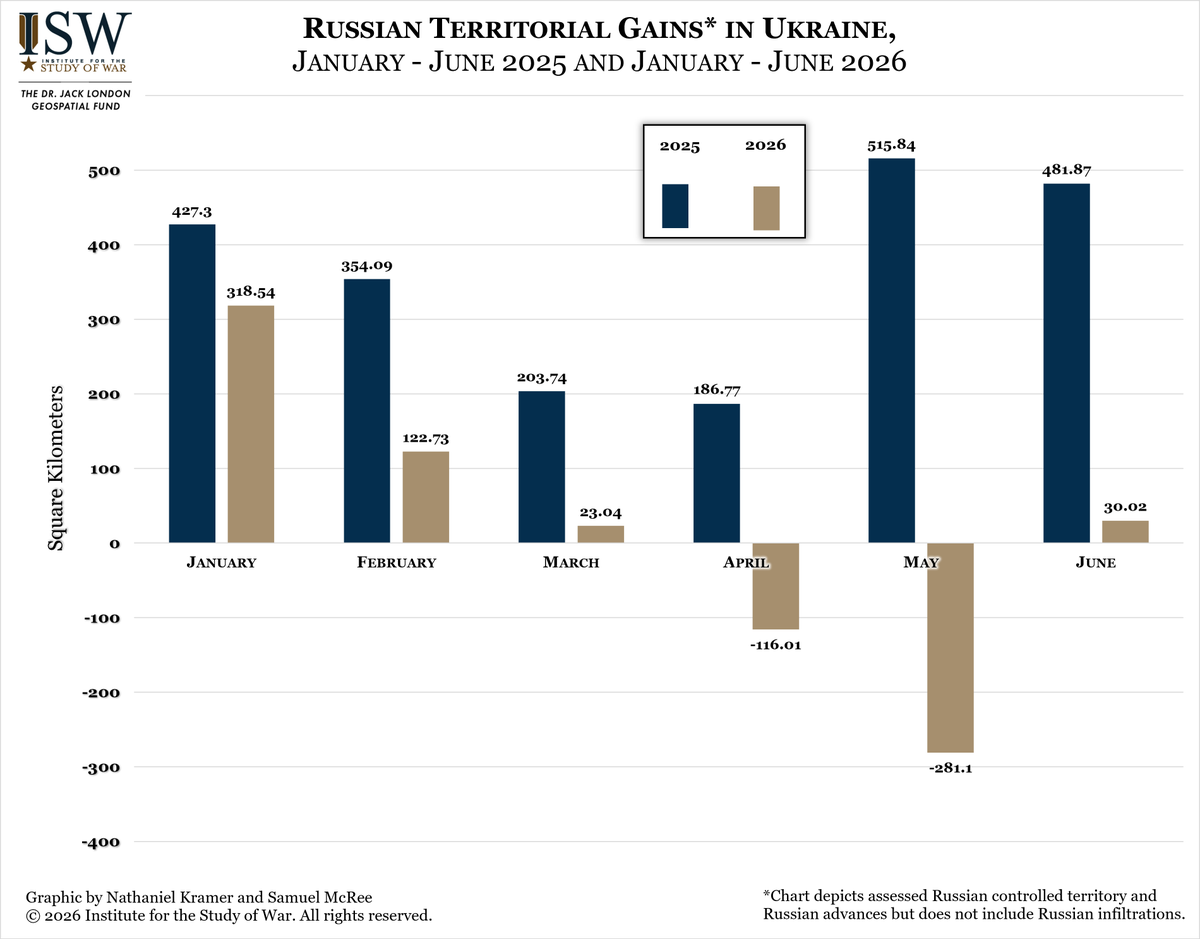
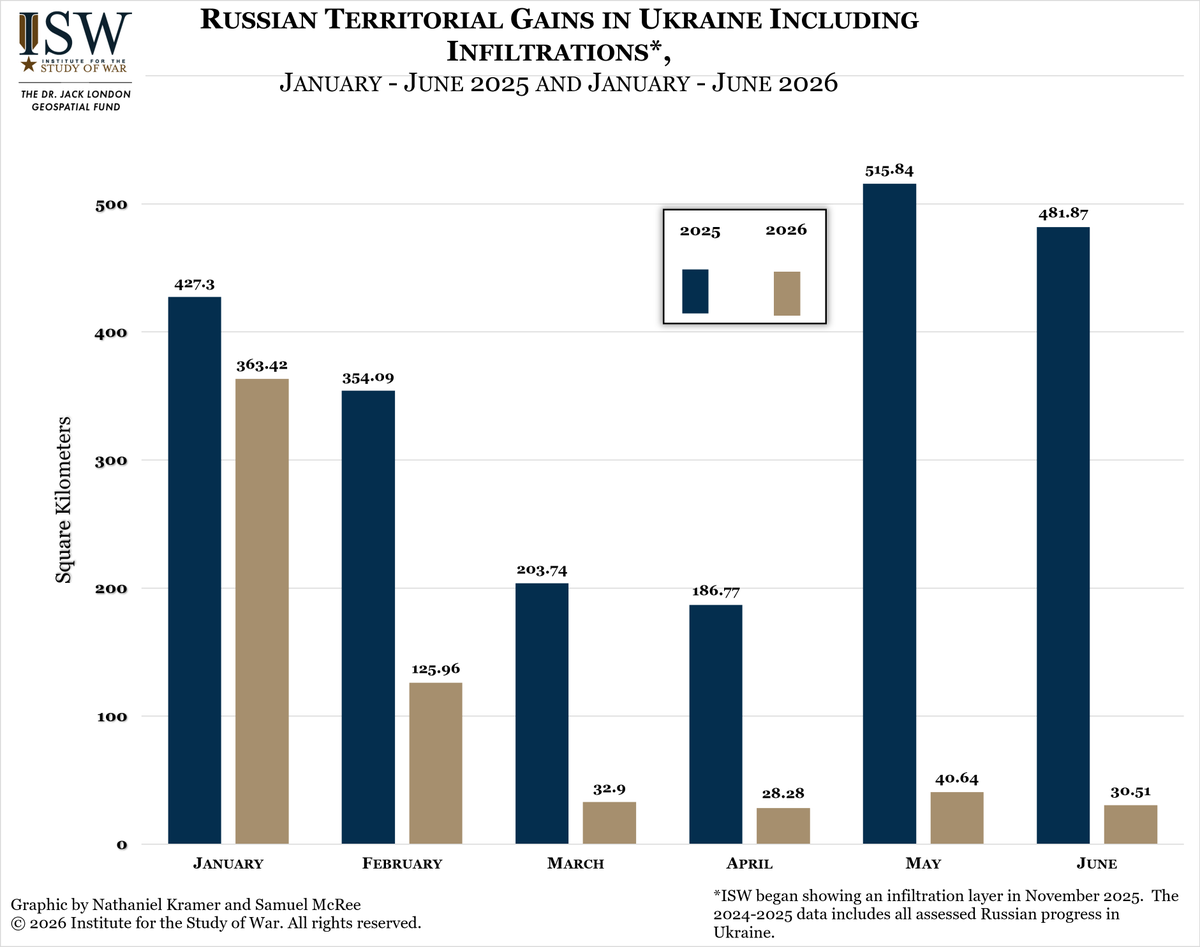
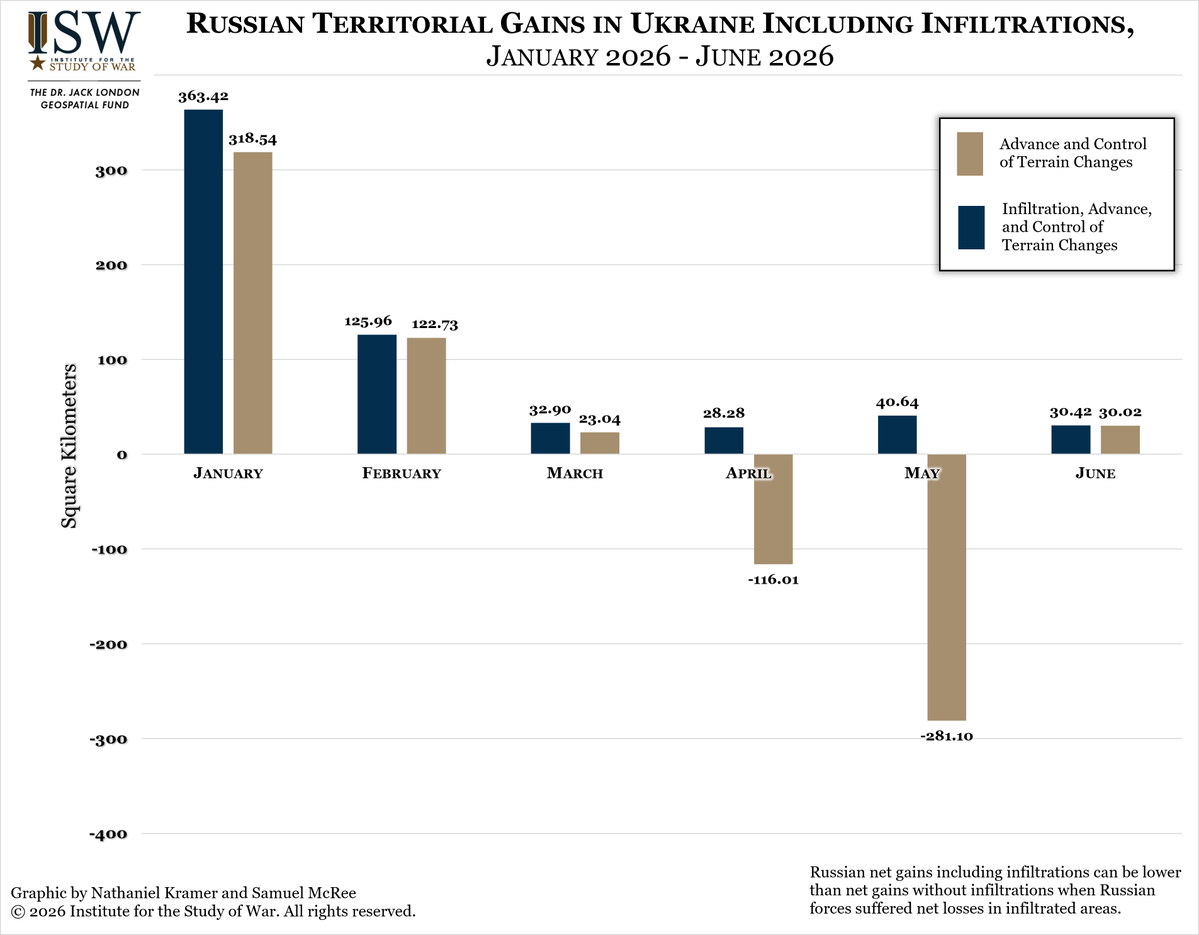
NEW: Russia’s spring-summer 2026 offensive has failed to achieve operationally significant gains thus far, and Russian forces’ rate of advance in June 2026 is a fraction of the rate of advance that Russian forces achieved in June 2025.
Other Key Takeaways:
Russian forces have also experienced heavy casualties and equipment losses to make these relatively small gains.
Ukraine continued to intensify its intermediate- and long-range strike campaigns in June 2026, which are having cascading effects on Russian logistics and battlefield operations as well as causing gasoline shortages and economic frictions across Russia and occupied Ukraine.
Russian authorities announced that Russia will temporarily close seven railway border crossings with Finland, Latvia, and Estonia starting July 1 for unspecified reasons.
Ukrainian forces continued their long-range strike campaigns against Russian oil and gas infrastructure and military assets on the night of June 30 to July 1. Russian forces launched one Iskander-M ballistic missile, one Kh-59 guided missile, and 151 drones against Ukraine overnight.
Ukrainian forces advanced in western Zaporizhia Oblast. (1/2)
"People are being snatched right off the streets," one rights lawyer said. Military recruiters are “picking up men of any age and in any condition.” https://t.co/xrkl2iTjw5
Gov. Jared Polis passed over other deserving inmates to give clemency to Tina Peters, according to two members of his clemency board who revealed Polis overruled the unanimous recommendation of his experts. Polis has now fired both of them.
This is why Musk bought the White House for Trump in 2024.
The level of corruption going on inside government is off the charts and I’m sure when this nightmare is over the true extent of that corruption will be way beyond our worst fears.
My thanks to the @MorePerfectUS team for the clip.
🎥 TikTok - https://t.co/WbDxGPORm8
A European capital is on fire because Russia spent the night firing missiles at civilians in their beds.
Kyiv is full of smoke. People are buried under rubble.
This is terrorism.
Julie Brown is the reporter who broke the Jeffrey Epstein story. In July 2025 she described what the survivors believe: it's never going to really become public, that somebody is covering it up because there are so many important people involved.