Advocate of the High Court of Kenya | Criminal Defense Attorney | Patents & Trademarks Prosecutor | Committee Member, East Africa Law Society | LL.M Candidate |
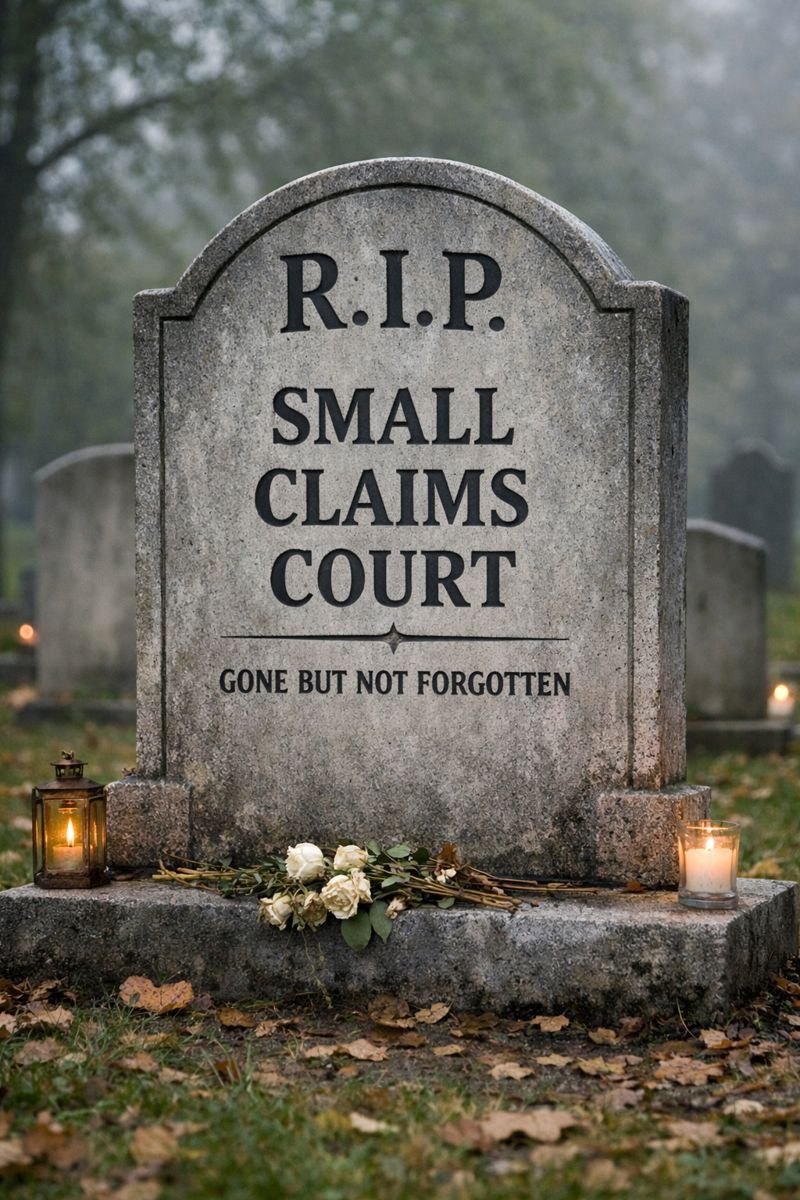
The #SmallClaimsCourt is dead. Small Claims Court was built on three promises: fast, simple, and affordable. The tragedy is that each promise has been dismantled, partly by court decisions and partly by internal practice that drifted back into the old Magistrate’s Court culture.
First, Fast
The Act was designed around speed. Timelines were meant to force discipline, but the High Court softened them. On 17 January 2023, Majanja J in Crown Beverages Limited v MFI Document Solutions Limited treated the timeline as directory, not mandatory. On 31 July 2023, Magare J in Biosystems Consultants v Nyali Links Arcade called the sixty-day timeline aspirational. That Biosystems decision also tried to rescue speed with firm case management guidance. Day to day hearing. Minimal adjournments. Quick judgment. The system did the opposite. People took the word aspirational and ignored the discipline. Cases started creeping into many months.
Second, simple.
On 18 October 2022, Majanja J in Christoffersen v Kavneet Kaur Sehmi effectively pushed rent arrears out of Small Claims Court, one of the most common small disputes in urban Kenya. That alone made the court less simple, because litigants were forced into heavier forums. But simplicity also died from inside. Many adjudicators imported Magistrate’s Court habits. Written submissions became routine, even when the model was meant to be conversational and evidence-led. The three-day post-hearing judgment timeline became optional. Extempore judgment templates that Justice Kimaru suggested during training colloquia were ignored. Standards of proof became inconsistent, swinging from strict formalism to casual assumption depending on the day and the adjudicator. The result was unpredictability, and unpredictability is the enemy of a simple court.
Third, affordable, meaning affordable to win and affordable to enforce.
A cheap judgment that cannot be enforced is not affordable; it is a paper trophy. Ogwari v Hersi on 3 July 2023 created serious uncertainty on road traffic injury jurisdiction. Then on 22 January 2026, a three-judge bench, Ogola, Nyakundi, and Mabeya, closed the door on road traffic injury claims and removed committal as an enforcement tool in the Small Claims framework. Enforcement was blunted at the exact moment demand was rising.
How this gets fixed is not mysterious.
Practice directions. Clear templates. A firm ban on unnecessary written submissions. Mandatory extempore judgment structures for routine matters. A standard evidentiary checklist. A public timeline dashboard. Supervisory audits.
The deeper scandal is that I sat in a committee of advocates and adjudicators and we prepared a zero draft for Small Claims Court practice directions in 2022, which was promptly shelved, and never implemented. Leadership matters. The Chief Justice bears substantial responsibility for failing to provide that leadership, and for failing to staff the court with seasoned, respected practitioners as adjudicators. Instead, the system too often relies on inexperienced Resident Magistrates, sometimes treated as though a posting is punishment rather than prestige.
The court is not dead because Kenyans do not need it. The court is dying because the system refused to protect its founding promises.
Kenya Airways have released the cockpit recording you've all been waiting for. Bwana from today onwards, anyone who speaks ill of KQ will face the full wrath of all Baba supporters.
The dream of Saba Saba was enshrined in Katiba2010. Before the ink dried it was turned on its head and every pillar of it weakened. Everything has not been spared including now the separation of Church and State. So the struggle must continue;Mwakenya, Saba Saba, Genz on and on.