It was an honor to get on WBD after being a listener for years.
We talked about my last report on What Bitcoin mining could look like at one zettahash.
Hope you find it insightful and I'm happy to take any feedback ✌️
Recently joined the incredible team @River as a Senior Product Designer. My main focus will be on designing for @RiverRLS.
Excited to build some cool stuff and bring bitcoin and lightning to millions more people 🤘🏻
Great data, and the critical context for outside observers is that this energy mix has far more renewable energy than any other industry or country.
So when people say “but it’s still 44% gas and coal” they show they don’t understand energy generation in general!
Bitcoin mining potentially being great for the climate seems so counterintuitive, but the data speaks for itself.
A great recent thread to start learning 👇 https://t.co/Clv5GnUA0X
Btw, you may have no clue what an exahash, a zettahash, or a hash even is, and you're too afraid to ask. The report I linked one tweet above explains hashing in simple terms in a few mins.
If you want a reminder just how crazy many hashes 400 EH is, this is EVERY SECOND.
I do not have a Soundcloud, I did write a report on what Bitcoin Mining could look like at one zettahash https://t.co/HFZ6Ex8Qvl
And I went on a podcast about it https://t.co/KXz58oVoLr
The answer of where the hashrate comes from is likely nuanced. It could be a mix of:
- Unused inventory going online
- New models getting out there
- More facilities going live (can be a slow process)
- Crafty entrepreneurs finding cheap sources before regulators step in
- & More
In addition, the Hydro models have been around for a bit and are starting to get into the market, they have 250+ TH/s per machine, which adds tremendous hashrate, and they are estimated to have the highest average profitability at the moment. https://t.co/PmrTpEPCFQ
Now that the price has been rising again and some time has passed, more of this inventory has been able to go online.
The math looks something like this https://t.co/yMqheZtLz3
It is rumored that several large public miners have significant inventories of unused ASICs.
While Bitcoin's price was so low and as much inventory as possible was brought online last year, at some point maximum capacity of what the network could handle was reached.
I find it unlikely that the added hashrate would be mostly nation-states. Some people love to speculate about this, but the odds of such a thing happening and then remaining a secret are astronomically low. There are far too many people involved in running massive operations.
So we know that ~44 Exahash went to Foundry, ~29 to AntPool, ~8 to F2Pool, ~7 to Binance Pool, and -4 on Braiins Pool. Everything else are <1% changes.
We also know that Foundry has KYC, so the miners joining them are not "unknown" actors.
Anyone can check to which pools the hashrate went. If you look at Waybackmachine for any pool data website, you get the following difference.
Before the "omg so centralized" alarmists show up, these pools consist of thousands of individual miners that can switch at any time.
Bitcoin's hashrate touched 400 Exahash. At the current growth rate in 2023, we'd reach a Zettahash by the end of 2025.
I'm getting questions and concerns from people.
Where is the growth coming from? Is it nation-states? Secret mining operations? Did someone find some exploit?
Pretty sure we're already at the point where if aliens casually visited Earth and people would record them in high definition, it would be brushed off as some AI filter/tool.
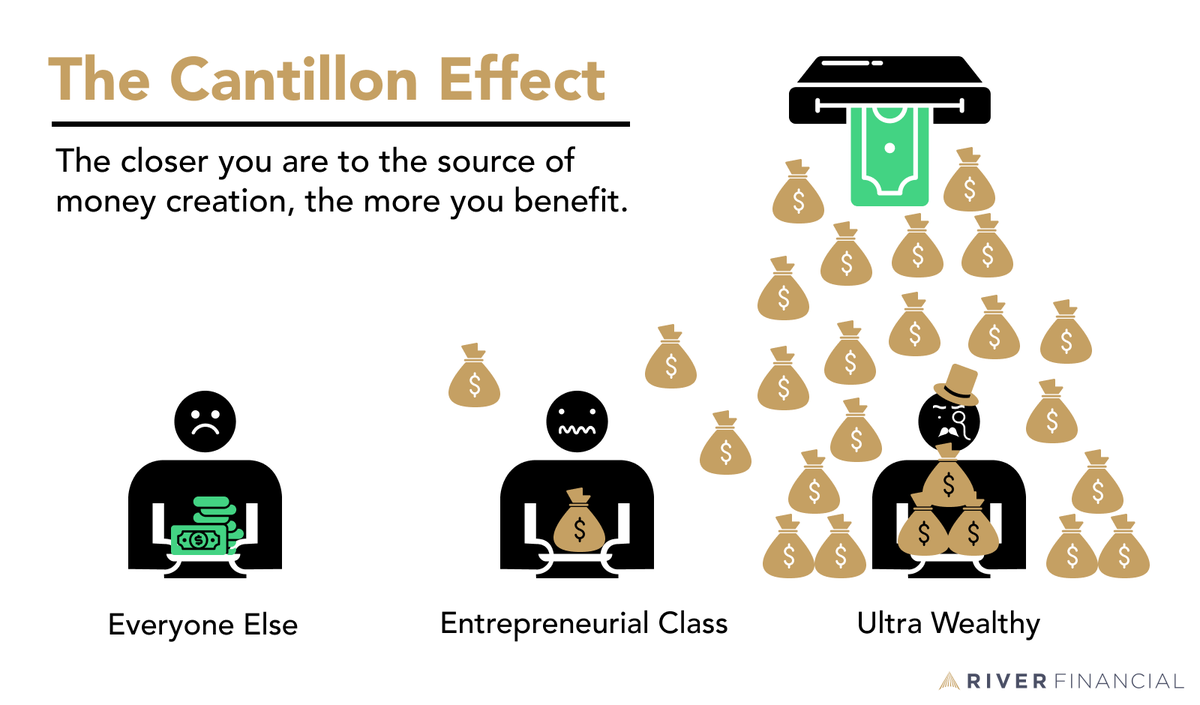
Since April 2020, Fed printing 💰🖨️ has increased the money supply by nearly 230%
Recent events in the banking industry hint that more could be on the horizon
The Cantillon effect is more relevant than ever
Here is why, and what you can do to protect your wealth in a quick 🧵
Two realizations so far as I’m getting into this research:
1. What am I getting myself into..
2. I’ve never seen a technology of which the odds are simultaneously stacked so hard against and in favor of it as #Bitcoin
When I published the OP_VAULT article a few days ago, a few people were saying they don’t want to see more changes to Bitcoin’s protocol.
Jameson’s nuanced article here helps you understand why you’ll hear more of those voices in the future and that doing nothing also has risks.
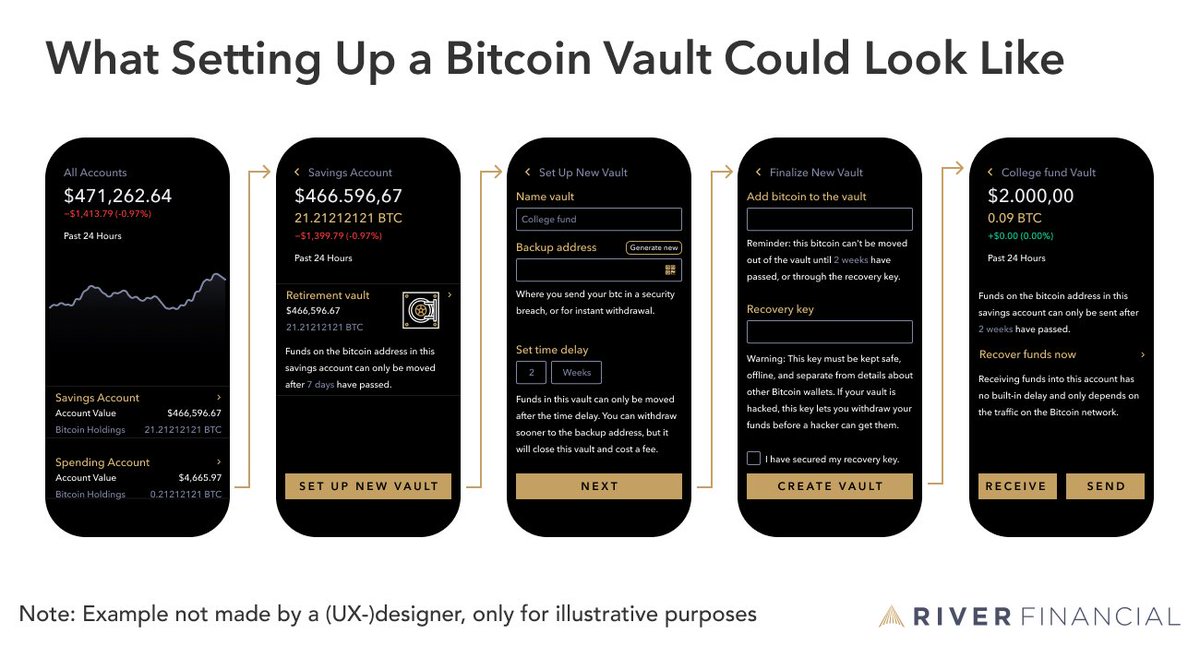
I’m not a (UX-)designer by any means so don’t judge too hard, but I can’t imagine the user experience to set up a vault being too complicated for most people.
The hardest part is getting people to respect the recovery key.