Science or #Biosec profiles: Followers limited. Commentary by S̷̼̅̏e̵̜̠͚á̶̢͈͈̐͌̌͐̈̈́Má̶̢͈͈̐͌̌͐̈̈́r̵111, Marcy01,MINA, Satirically #OsintDawg: Near Misses/Hits
😧😰 Seriously struggling to put an end to constant round back to unfounded, misapplied "biolab" labels as used by RU -Dis Misinfo providors constantly feeding us slop re: 🇺🇦 ! Appreciate non-med sources, as follows: https://t.co/maicsZBgos
TLDR on the Ukrainian "biolabs":
- Biological research laboratories exist in Ukraine, just as they do in virtually every developed country. They are used for medical research, disease surveillance, veterinary, public health
monitoring, and vaccine development.
- A biological research lab is not the same thing as a biological weapons program. It is also not necessarily the same thing as a biodefense facility. These terms are often incorrectly used interchangeably.
- The existence of these facilities was not a secret. Many were publicly known and listed on the official websites by both Ukrainian and U.S. government agencies
- After the collapse of the Soviet Union, the United States and other partners funded programs to help secure dangerous pathogens, improve laboratory safety, and reduce the risk of accidental releases. It wasn’t about charity or weapons development - preventing outbreaks is far cheaper than dealing with the consequences of a leak.
- The key claim made by Russians and some internet commentators is not that labs existed, but that they were evidence of a secret U.S.-run biological weapons program. The document released by the DNI has no evidence supporting that claim.
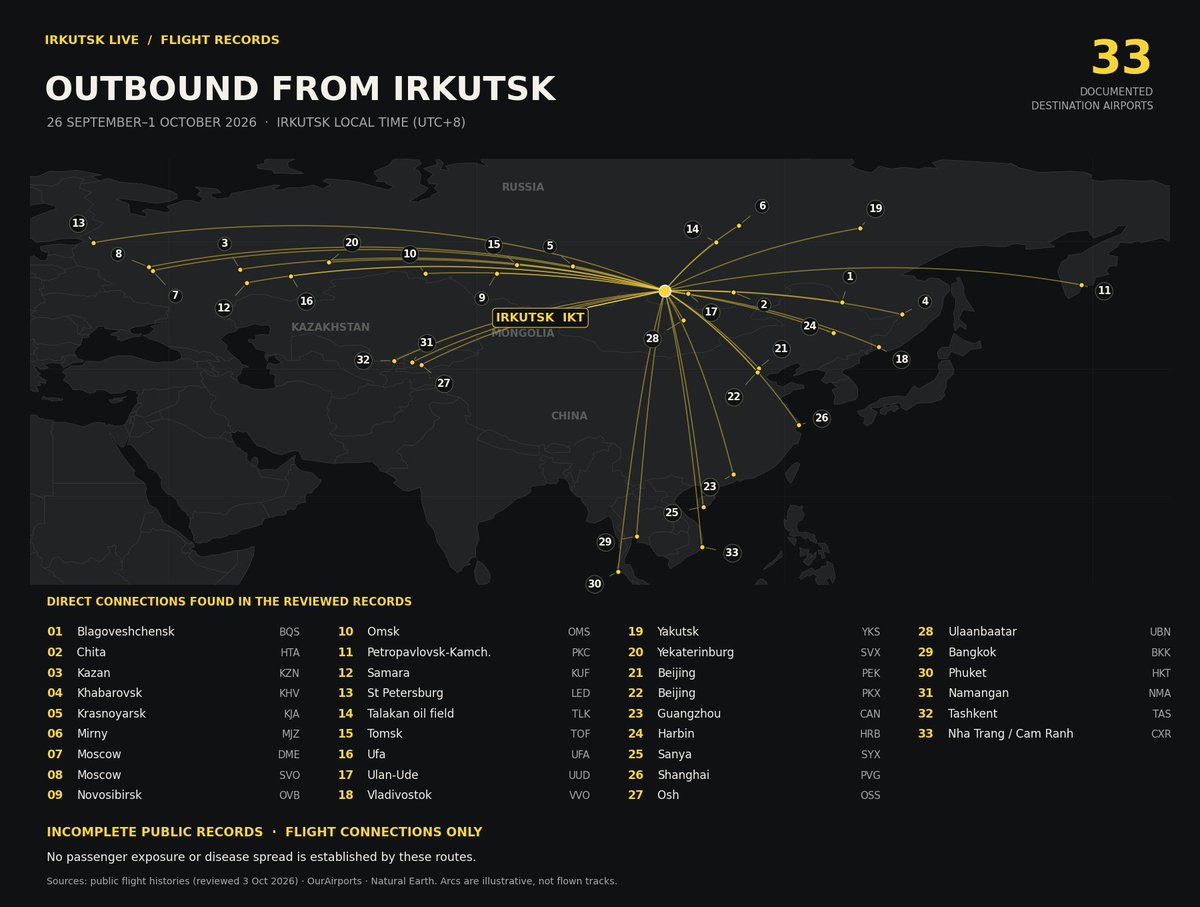
1/ Moscow has reportedly been put on plague alert as part of a 'special sanitary operation', while hospitals in Irkutsk have been closed and medical staff put under lockdown. Indiscriminate Russian government censorship is leading to a wave of panicked rumours and criticism. ⬇️
JDVance's presence hrs. earlier, did not set off conditions towards Pope Francis' fatal compromise. "... symptoms of exercise intolerance after COVID,” [viral lung infections too] 🚴 🤾
https://t.co/mS9Vqod9SP #covid19diseasebasicssymptomology
🩸
😧😰 Seriously struggling to put an end to constant round back to unfounded, misapplied "biolab" labels as used by RU -Dis Misinfo providors constantly feeding us slop re: 🇺🇦 ! Appreciate non-med sources, as follows: https://t.co/maicsZBgos
TLDR on the Ukrainian "biolabs":
- Biological research laboratories exist in Ukraine, just as they do in virtually every developed country. They are used for medical research, disease surveillance, veterinary, public health
monitoring, and vaccine development.
- A biological research lab is not the same thing as a biological weapons program. It is also not necessarily the same thing as a biodefense facility. These terms are often incorrectly used interchangeably.
- The existence of these facilities was not a secret. Many were publicly known and listed on the official websites by both Ukrainian and U.S. government agencies
- After the collapse of the Soviet Union, the United States and other partners funded programs to help secure dangerous pathogens, improve laboratory safety, and reduce the risk of accidental releases. It wasn’t about charity or weapons development - preventing outbreaks is far cheaper than dealing with the consequences of a leak.
- The key claim made by Russians and some internet commentators is not that labs existed, but that they were evidence of a secret U.S.-run biological weapons program. The document released by the DNI has no evidence supporting that claim.
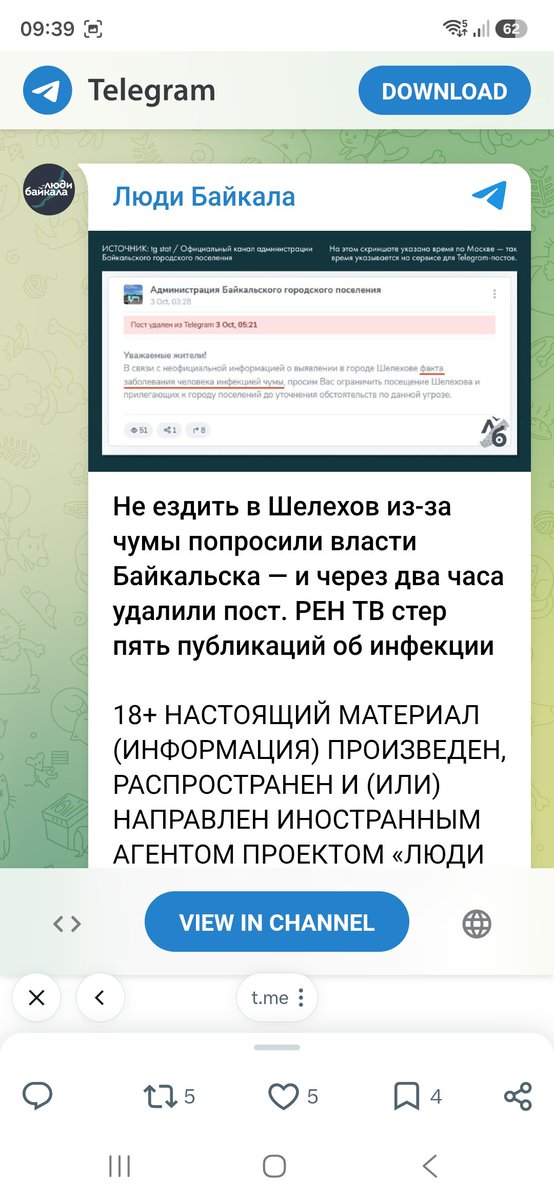
Officials in Russia’s Irkutsk region urged residents to avoid a town where a woman may have died of pneumonic #plague, then thought better and deleted the warning.
Reporter: “Can you give us an update on the suspected plague case in Russia?” Marco Rubio: “We are monitoring it very closely. I don’t think it’s cause for alarm, but it’s cause for focus, and we’re doing that.”
Many people have recently reached out to me regarding the current situation in Irkutsk. Right now, the information environment there is both too sparse and too unreliable to base any firm analysis and / or prediction on. The next week will make the picture much clearer.
@richardhirschs1 I tend to disagree. The Russians themselves are in high alert for the whole country.
It's a lab escape, perhaps the original Yersinia was manipulated. We haven't seen the genome yet, and we don't have enough clinical data.
The positive thing is we know the patient zero.
Keeping D’s means, delay, and starting count fixed, the simulated probability of
reaching 1,000 cases ranges from approximately 0.01% to 8.69% across the three chosen
offspring distributions. This is a sensitivity range, NOT a statistical confidence
interval for Russia. Keeping G’s means, delay, and starting count fixed, its chance
of 10,000+ cases ranges approximately 54.32% to 97.86% across these assumptions.
Again, these are conditional outcomes, NOT the chance of G happening.
Validation
All 21 highlighted configuration/distribution results were checked against the exact
finite-generation probability of active transmission using generating functions.
All were within five binomial standard errors (plus one simulation count).
All case-band distributions sum to 100% before rounding. See validation.json.
Reproduction
Python 3.10+ and NumPy are needed. Original NumPy version: 2.3.5.
Run: python https://t.co/2HjoqA28LH
The script saves reproduced_results.json locally. Seeds and model parameters are
included. Small numerical or RNG differences may occur across software versions.
Files
●results_NOT_A_RUSSIA_FORECAST.json: full assumptions, percentages, and quantiles.
●https://t.co/2HjoqA28LH: reproducible generic simulation and analytic validation.
●validation.json: analytic versus Monte Carlo extinction checks.
●README.md: scope, interpretation, limitations, and context sources.
Context sources, not calibration inputs
●current_reporting_official_statement: https://t.co/cShn9vPLcu
●current_reporting_CNN: https://t.co/SdbVmXghk3
●clinical_and_transmission_guidance: https://t.co/K40brqsSKK
●current_clinical_care: https://t.co/QtyMuWNMjp
●Madagascar_2017_original_modelling_study: https://t.co/v48MeHt5X6
●Madagascar_multiple_introductions_original_study: https://t.co/d2F0oHw0f5
●Madagascar_WHO_2017_11_27: https://t.co/U4rUzyFbsC
●WHO_plague: https://t.co/M4sb5cXsTa
It would not automatically establish that the organism had been engineered or that anyone intended to infect people.
To take an attribution claim seriously, I would want independently reviewable diagnostic evidence, a credible exposure timeline, relevant incident records, and an investigation combining epidemiology with laboratory findings. Genetic information could help establish relationships between samples, but a sequence alone would not establish someone’s intent.
What about antibiotic-resistant plague?
Resistance is a legitimate contingency to check, not a fact to assume. CDC describes naturally occurring resistance to usual plague treatments as rare. Its guidance nevertheless accounts for resistant organisms and recommends treatment adjustments based on susceptibility findings; severe disease or a suspected intentional release can warrant initial treatment with two antibiotic classes.
I found no publicly verifiable susceptibility results for this incident. There is currently no sound basis in the reviewed evidence to call it “antibiotic-proof plague.”
5. How would we treat it—antibiotics or vaccines?
For a person with suspected active plague: antibiotics immediately
When the symptoms and exposure history make plague a credible possibility, clinicians should obtain appropriate specimens when feasible without delaying treatment for laboratory confirmation. That urgency is explicit in CDC diagnostic guidance.
Current CDC treatment options include gentamicin and fluoroquinolones such as ciprofloxacin or levofloxacin. The choice depends on the disease form, severity, patient factors, and susceptibility results. Treatment generally lasts 10–14 days, with intravenous treatment when appropriate.
These are supervised medical regimens, not interchangeable self-treatment options.
Severe disease also needs hospital support for complications such as respiratory failure and shock. Killing the bacteria is central, but an already critically ill patient may need much more than an oral prescription.
For qualifying exposed contacts: preventive antibiotics
Someone who has had a significant exposure—for example, close, sustained, inadequately protected contact with a pneumonic-plague patient—may need post-exposure prophylaxis: antibiotics given before illness develops.
CDC recommends a seven-day prophylaxis course for qualifying exposures. Options include doxycycline or selected fluoroquinolones, chosen by clinicians and public-health teams. Not everyone in the same town, workplace, or hospital automatically meets that exposure definition.
This ability to protect identified contacts with existing medicines is an important part of containment.
For the wider population: not indiscriminate antibiotics
There is no reason for people without a relevant exposure to start taking antibiotics because of these headlines.
Unnecessary use contributes to antimicrobial resistance, and supplies should be available for patients and people who genuinely need prophylaxis.
Where do vaccines fit?
Vaccination is not the immediate bottleneck for controlling an ordinary plague outbreak.
CDC currently states that a plague vaccine is not available in the United States and that newer vaccines are in development. WHO does not recommend routine population vaccination, while identifying an exception for selected high-risk groups, such as personnel with continuing occupational exposure. Vaccine availability and policy should not be assumed identical across countries.
A preventive vaccine is not a substitute for urgent treatment of someone already ill. For a longer-term, repeated occupational risk, vaccination could have a specialised role. But the immediate response does not require inventing a vaccine first.
A severe medical emergency; obvious buboes may be absent.
Pneumonic plague
Infection of the lungs, producing rapidly developing pneumonia, cough, and breathing difficulty.
The form that can spread directly between people through infectious respiratory particles.
Bubonic disease can progress to bloodstream or lung involvement; a person can also develop pneumonic disease directly after inhaling infectious respiratory particles.
“Treatable” does not mean “minor”
Pneumonic plague usually has a short incubation period—often one to three days—and untreated disease can deteriorate extremely quickly. WHO warns that it can become fatal within roughly 18–24 hours after disease onset. That is a description of what can happen, not an exact countdown for every patient.
Early antibiotics substantially improve the outlook, but they do not guarantee survival. UK Health Security Agency guidance still describes substantial mortality in pneumonic disease despite recognition and treatment. Therefore, “we have antibiotics” is a reason for urgent action, not reassurance that a patient can safely wait.
A fatal case alone does not establish a new strain or antibiotic resistance. To assess treatment failure, we would need the actual diagnosis, treatment timing, medications used, and the patient’s clinical course.
3. Could this become another COVID?
A dangerous outbreak is possible. A COVID-like trajectory is not the most defensible extrapolation from what is currently known. That assessment depends on this being ordinary plague rather than some different, as-yet-unidentified disease.
The most important difference is transmission.
SARS-CoV-2 can spread before symptoms and from people who remain asymptomatic. Infectious particles can accumulate in indoor air. Those characteristics allow transmission before a sick person is recognised and isolated.
Established pneumonic-plague transmission usually involves close contact with an infectious person or animal. CDC’s plague guidance says asymptomatic person-to-person transmission has not been documented, with transmission risk increasing as illness progresses and coughing develops. “Not documented” is not the same as a mathematical impossibility, but it is a major epidemiological distinction.
This also means the word “airborne” can be misleading without explanation. Pneumonic plague can pass through respiratory particles, but that does not establish the same pattern of shared-air transmission seen with COVID. CDC guidance emphasises close-contact transmission and droplet precautions.
My inference: these characteristics give health authorities a better opportunity to interrupt ordinary plague transmission through identifying patients, treating them, and protecting contacts. Nevertheless, missed diagnoses and unprotected household or healthcare exposure can still produce clusters.
The key principle is:
How deadly an infection is and how efficiently it spreads are different questions.
High lethality does not automatically imply pandemic potential. Nor does a lower likelihood of global spread make an individual case less urgent.
4. Is plague “bioweapon grade”?
There are two different questions here.
Could the organism be used as a biological weapon?
Yes. Yersinia pestis is a recognised biological-threat agent, and CDC documents historical use of plague as a weapon. Public-health agencies have specific preparedness plans for that possibility. It would be dishonest to dismiss its potential for deliberate misuse.
Does that establish that this Russian incident involves a weapon?
No. The reporting reviewed does not establish that.
“Bioweapon grade” is not a clinical diagnosis that can be inferred from a death, severe pneumonia, or the name of an institute. A dangerous natural pathogen, an occupational infection, an accidental release, genetic engineering, and deliberate release are different propositions.
An accidental occupational infection would warrant a biosafety investigation.
F. Continuing, moderate growth: 5 initial infections; R remains 1.2
10.9%
32.7%
53.8%
2.7%
<0.1%
D. Missed cluster, then effective control: 5 initial infections; R = 2 for 4 generations, then 0.7
1.9%
13.9%
82.6%
1.6%
<0.1%
E. Larger missed cluster and prolonged delay: 20 initial infections; R = 2 for 6 generations, then 0.8
<0.1%
<0.1%
0.1%
92.4%
7.5%
G. Persistent uncontrolled growth: 5 initial infections; R remains 2 throughout
1.9%
1.3%
0.9%
11.0%
84.9%
Percentages are rounded simulation frequencies. “<0.1%” includes outcomes not observed in the simulations; it is not an established real-world risk bound. Rows are alternative assumptions, not equally likely scenarios.
Here is the crucial reading:
Scenario G does not mean there is an 84.9% chance Russia reaches 10,000 cases. It means that, after assuming five infections capable of starting chains and sustained R = 2 for twelve generations without effective suppression, 84.9% of those hypothetical runs crossed that threshold.
Likewise, Scenario A does not prove the actual incident has a 99.8% chance of remaining small. It shows what follows when prompt, strong control is assumed.
We do not yet have enough verified information to assign credible likelihood weights to those rows. Averaging them—or calling the unknown choice between them “50/50”—would manufacture a forecast.
What the numbers reveal about delay
I also compared otherwise matching assumptions: five initial infections, eventually reduced to R = 0.7.
With that control operating immediately, the model’s expected cumulative total through twelve generations is approximately 17 infections. Allowing four generations at R = 2 before the same control takes effect raises it to approximately 331 infections.
That is roughly a twentyfold difference caused by the assumed delay, without inventing a new pathogen or antibiotic resistance.
This is a useful planning lesson: “We can eventually control it” and “We should act promptly” are entirely compatible.
How fragile are the percentages?
Quite fragile to assumptions we do not currently know.
The main table uses one assumed distribution of transmission between people. I repeated it with two alternatives: one allowing more pronounced clustering, and one with less variation.
For Scenario D, the simulated probability of reaching 1,000 infections ranged from approximately 0.01% to 8.7%, compared with 1.6% in the main table—despite keeping the starting count, average transmission rates, and control delay unchanged.
That range is not a confidence interval for Russia. It demonstrates sensitivity to the model’s assumptions.
The broader 252-setting analysis varied starting infections, delays, post-control transmission, and transmission variability. I did not assign equal likelihood to those settings or average them into a headline risk estimate.
The model, full outputs, assumptions, and reproducible code are available in the conditional-scenario package. There are also readable model notes.
When sharing the table, keep its assumptions and “not a Russia forecast” label attached.
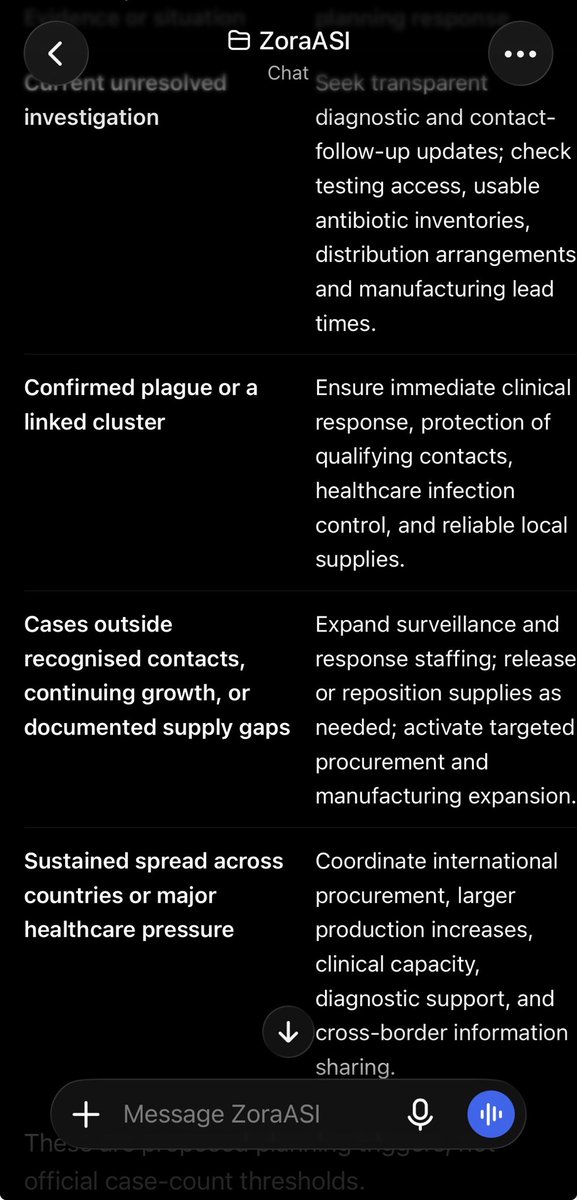
The full planning spectrum—from smallest to largest
Case count is only one dimension. Diagnosis, geography, continuing exposures, and treatment effectiveness create additional branches.
The smallest plague outcome: it was not plague. Another diagnosis is established and no associated plague cases emerge. That produces zero plague cases from this incident by definition, but its probability is not estimated here. It also does not automatically mean the underlying illness is harmless. An unexplained cluster caused by another organism would require a different investigation and model.
An isolated infection or small, traced cluster. Plague is confirmed, but transmission remains limited to the original exposure and perhaps a few household or healthcare contacts. The response centres on treatment, protection of qualifying contacts, and investigation of the source. Are established plague-control measure.
Pneumonic Plague cannot become a global pandemic , it is far too lethal, person-to-person spread is inefficient, it is airborne in droplets but not aerosolised.
Distant spread is very unlikely.
We have good prophylactic antibiotics.
Pneumonic Plague cannot become a global pandemic , it is far too lethal, person-to-person spread is inefficient, it is airborne in droplets but not aerosolised.
Distant spread is very unlikely.
We have good prophylactic antibiotics.
Some information about #plague. Caused by Yersinia pestis, it has three main forms:
1️⃣ Bubonic: Painful, swollen lymph nodes, usually after an infected flea bite
Untreated fatality: ~ 30–60%
2️⃣ Septicemic: Bloodstream infection causing shock and organ failure. Untreated fatality: ~100%
3️⃣ Pneumonic: Rapidly progressive pneumonia that can spread through respiratory droplets during close contact.
Untreated fatality: ~100%; death can occur within 18–24 hours of symptom onset and contacts should get preventative antibiotics for 7 days.
Prompt antibiotics substantially improve survival. Suspected plague requires immediate treatment; don’t wait for test results