@Brad_Setser@pstAsiatech@Lingling_Wei Based on conversations with Chinese officials, Paul seems to have this right—China’s measures were retaliation for the 50% rule.
Plus, I’ve heard U.S. officials complain they didn’t understand the “blast radius” of the BIS 50% rule because it was sold as a “minor fix”.
New: USCBC’s 2025 Export Report highlights increasing risks for US exporters.
- $140B+ in US goods sold to China face 125%+ tariffs
- 862K+ US jobs supported by US exports
- US Ag, aerospace, semiconductors, education & tourism sectors at risk
📄: https://t.co/6AuTdtGYD0
@LeShoTime@JRUrbaneNetwork There will be huge demand—but not so much to link the airports. Shanghai Hongqiao is both an airport and the key regional rail hub. The new line creates a quick and efficient way to get between the region’s most important rail station and international airport.
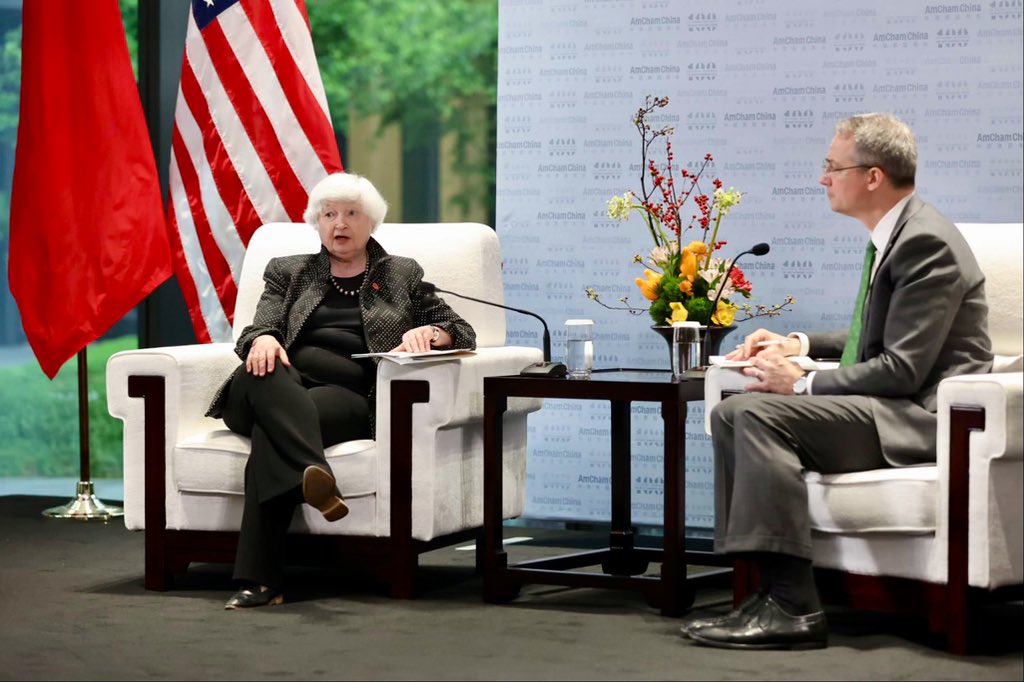
Today, I spoke with American businesses here in Guangzhou. One of my key priorities has been to establish durable communication channels between the U.S. and China. This week, I will raise issues identified by @AmCham_China to promote policies that benefit American businesses.
It was an honor to speak with@KennedyCSIS on the competitive landscape multinationals face in China at the second annual conference of Big Data China, a collaborative project by CSIS and Stanford's Center on China's Economy and Institutions (SCCEI). https://t.co/q1YwkAPYPn
@vtchakarova India is well within its rights to cut the size of the Canadian diplomatic mission. Is it worth considering what services and programs will be reduced as a result? Programs to promote bilateral trade and investment, issue visas, and to promote development will suffer the most.