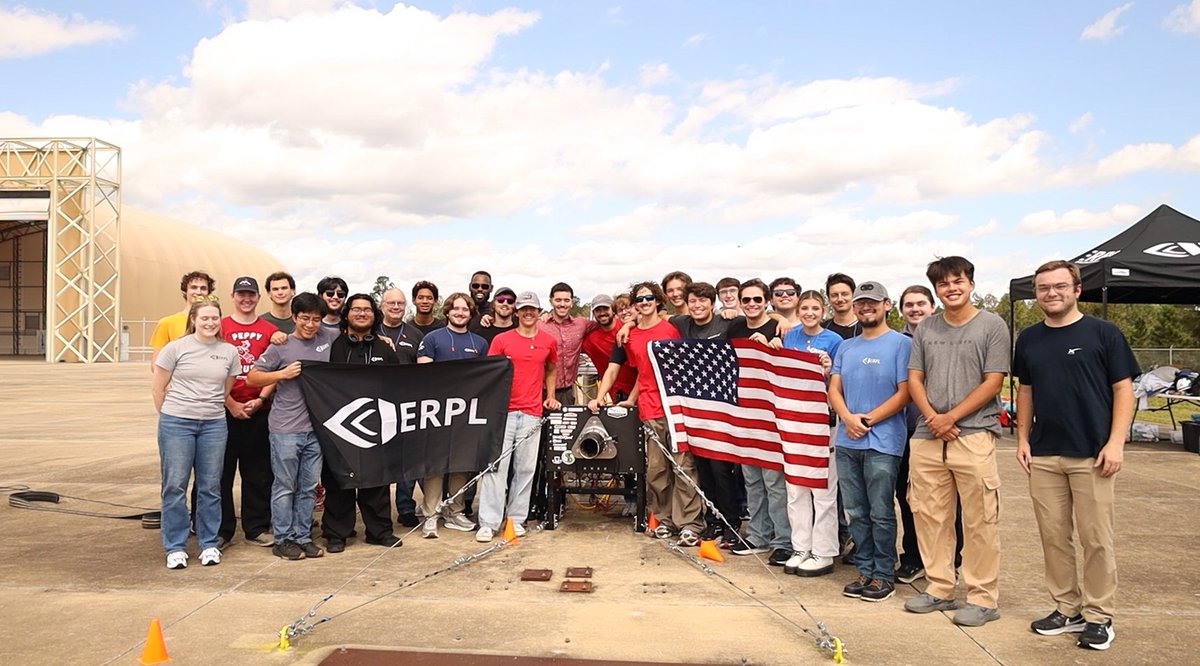
ERPL Regen Engine
LOX / ethanol
-~780 lbf
-200 psia
-~2 kg/s
-178 s Isp
-SS316L chamber, 48 regen channels
This summer myself and a couple other students put this together. Chamber is currently being printed by Evology. Hotfire this semester. Testing for future LVs.
@erauerpl
After 2 previous attempts, our team was able to successfully hotfire a composite MOE engine, reaching 1950 lbf thrust. This keeps us on track for a December launch.
Thank you to our sponsors and partners who make this possible.
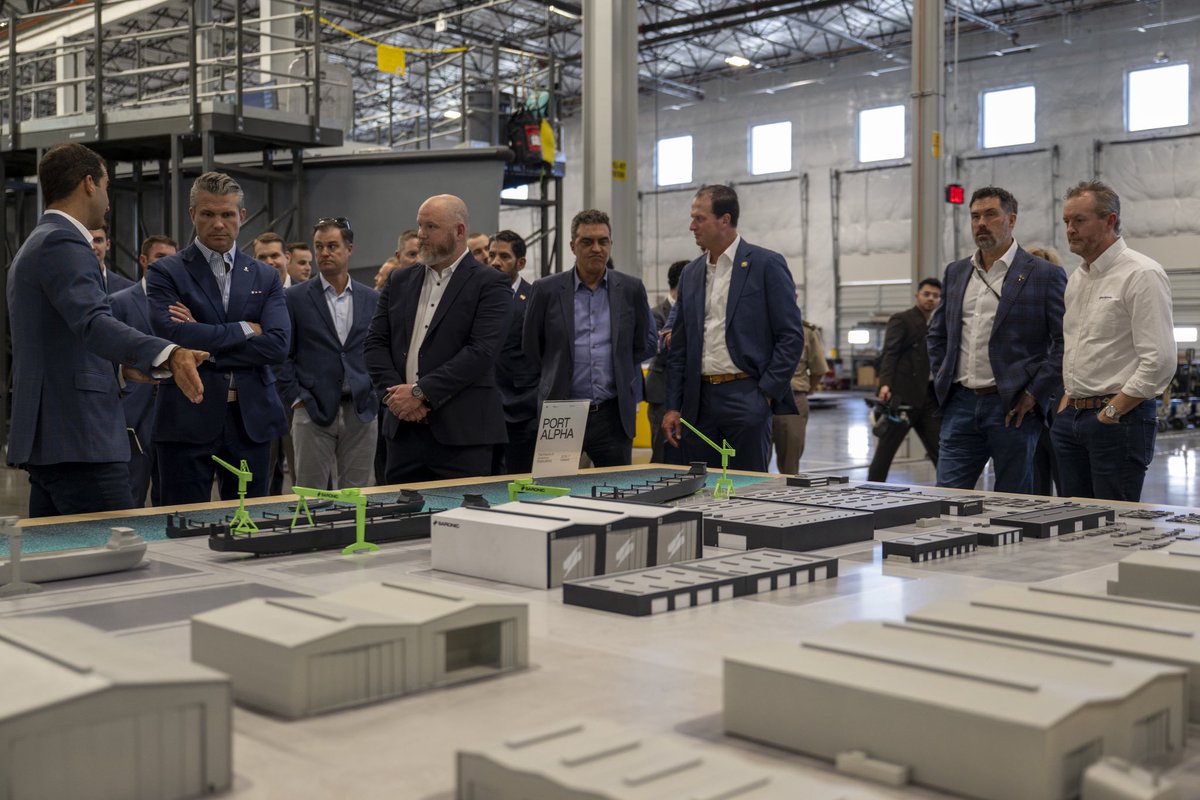
This week, we broke ground on Port Alpha. What starts here in Brownsville, Texas will become a new center for US shipbuilding, designed to build at the speed and scale America needs. And we're just getting started.
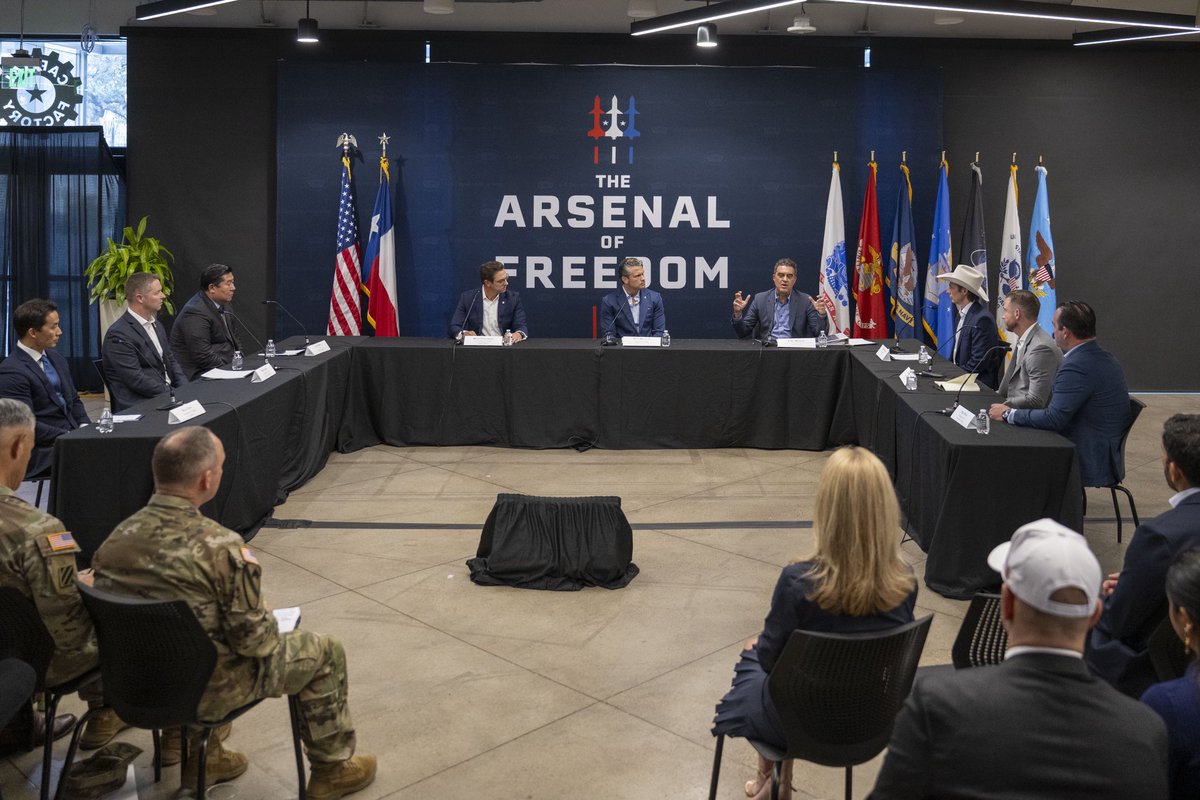
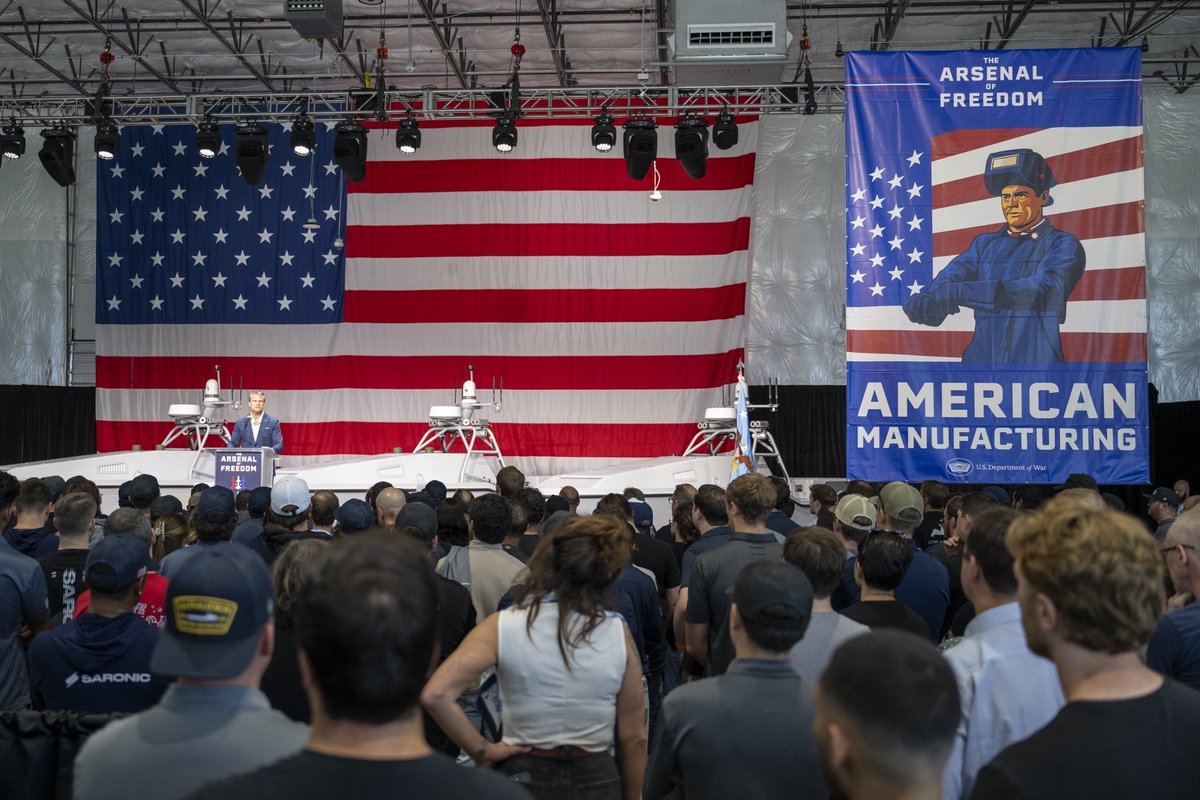
To build the Arsenal of Freedom, American companies must move fast—and move at scale.
Thankfully, the patriots of Austin, Texas, have answered the call.
AMERICAN WORKERS. AMERICAN MADE.
The Boring Company is pleased to announce our Series D funding round of $3 billion, led by the United Arab Emirates. The financing now values The Boring Company at $23 billion.
Other key investors in the round include Human Capital, Vy Capital, Valor Equity Partners, Sequoia Capital, A16Z, Temasek, Shamal Holding, and Baron Capital, in addition to other valued existing and new investors.
Full details here:
https://t.co/YArv2XllUL
BREAKING: Inside Saronic’s HQ
Tour in Austin, TX w/ Co-Founder & CEO Dino Mavrookas (@MavrookasD)
FACTORY TOUR (Part I)
Founded in 2022, @Saronic has grown from testing autonomy on an $800 Amazon raft to building vessels at industrial scale at their 420K sqft facility - home to Corsair & Mirage autonomous vessel production lines.
Now, they're expanding into shipbuilding with Port Alpha, a $3B+, 835-acre shipyard in Brownsville, TX.
We cover:
› Corsair: 2,000-unit annual capacity & a $392M Navy production contract
› Mirage: 52 feet, 15X Corsair’s volume, 2,500 nm range & now in sea trials
› Port Alpha: $3B+, 835 acres & 1.5X current U.S. shipbuilding capacity
› The first autonomous combat search & rescue, recovering 2 downed Apache aircrew off Oman
› Corsair’s combat debut at Bandar Abbas
Part I of III
𝐓𝐈𝐌𝐄𝐒𝐓𝐀𝐌𝐏𝐒
(00:00) Dino Mavrookas, Co-Founder & CEO at Saronic Technologies
(00:55) Saronic's $2.6B raise
(03:14) 7 Buildings, One mission
(06:43) Watching Corsairs get built
(09:04) How Saronic finds & trains talent
(10:48) Why Saronic's boats are different
(14:55) From factory floor to customer
(15:48) Using autonomy in real missions
(17:39) Building ships with zero room for failure
(19:06) The Biggest bottleneck in autonomy testing
(19:57) Saronic's newest boat
(22:57) The $800 raft that started it all
(26:08) From boats to building actual ships
(30:43) If not CEO, then what?
(31:48) The culture behind long hours
@_Astra42@erauerpl For reading, Sutton and Biblarz's Rocket Propulsion Elements and Huzel and Huang's Modern Engineering for Design of Liquid-Propellant Rocket Engines. NASA SP-125 is also excellent. Then use research papers for the specific injector, cooling, and materials questions you encounter.
ERPL Regen Engine
LOX / ethanol
-~780 lbf
-200 psia
-~2 kg/s
-178 s Isp
-SS316L chamber, 48 regen channels
This summer myself and a couple other students put this together. Chamber is currently being printed by Evology. Hotfire this semester. Testing for future LVs.
@erauerpl
@_Astra42@erauerpl Start with clear objectives. Ours were to validate a regen heat-transfer model and test design choices that could make future engines cheaper. Then define your operating and manufacturing constraints, vary parameters in simulation, and let the results guide the design.
@ITSNEWNAMEDUDE@erauerpl Yeah this first engine is just to validate/improve our models & improve our testing abilities around this, margins aren't super high but we'll still ramp it up. Next one will likely move to AL/CU, use film cooling, and maybe coatings to push it as hard as we can.
@ITSNEWNAMEDUDE@erauerpl Yes, partly thermal. The 178 seconds is delivered sea-level specific impulse at 200 psia and a deliberately fuel-rich O/F ratio of 0.81, and slight overexpansion. This test article trades peak performance for thermal and structural margin until we ramp up in testing
@spacenukej@erauerpl Good catch. That dip is at the throat, where heat flux peaks. We plan to run six hotfires in one day, starting with the conservative case at SF 1.5 and stepping toward the shown SF 1.1 only if each run looks healthy. Model conservatism helps too, but each run must look good
@westwick_nathan@erauerpl Evology is sponsoring the 316L chamber print. We originally looked at AlSi10Mg, but even the best aluminum cases were not ideal once we included its temperature-dependent strength loss. For this geometry, 316L gave us decent hot-strength margin and helped with some other features
Super cool to be featured in the reveal video for VC7! Several weeks of my internship at TBC have gone into testing some critical components of the system and finding insights for future versions!
Introducing Vertical Cassette 7 (VC7), our latest generation of continuous conveyor which transports muck/rock from the TBM to the surface.
- Height: 37 ft
- Weight: ~220,000 lb
- Max muck conveyance rate: 990 tons/hour (w/ 50% loaded belt)
- Max supported TBM advance rate: 4 miles/week
- Min Radius of Curvature: 500 ft (see 0:12 of video for a tight curve; maneuverability is critical in urban settings)
- Belt speed: 660 ft/minute
- Supported tunnel length: infinite (w/ "Belt Boosters" every 1.5 miles)
- 650+ improvements from VC6 focusing on setup speed, reliability, and power efficiency
Fun fact: for every 15 inches the machine mines, ~1 dump truck of material is generated!