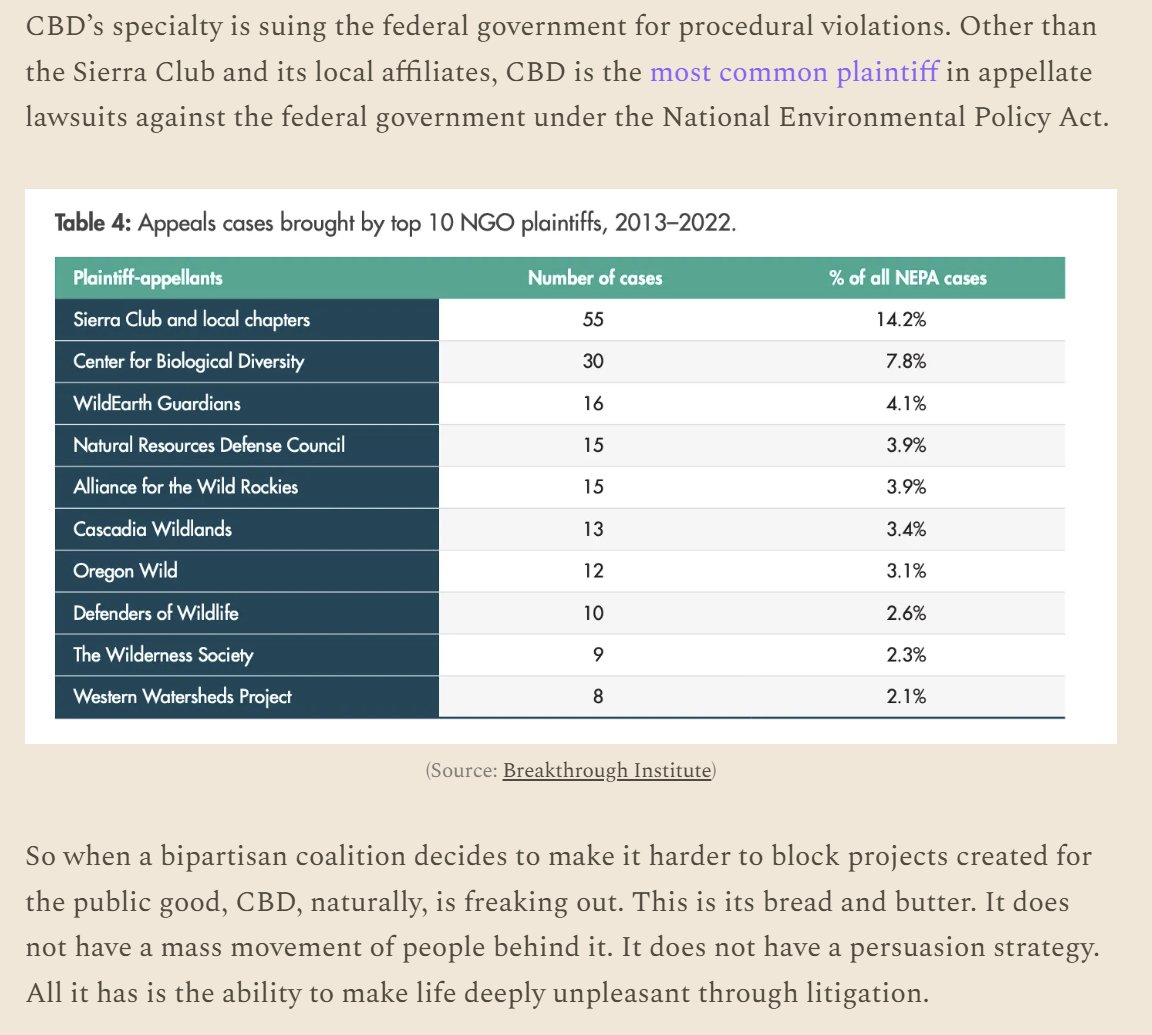
.@JerusalemDemsas has a fantastic piece today on the "Center for Biological Diversity", a wrecker group dedicated to making it harder to build anything, anywhere, for any reason.
They're the second most common plaintiff in NEPA lawsuits in America.
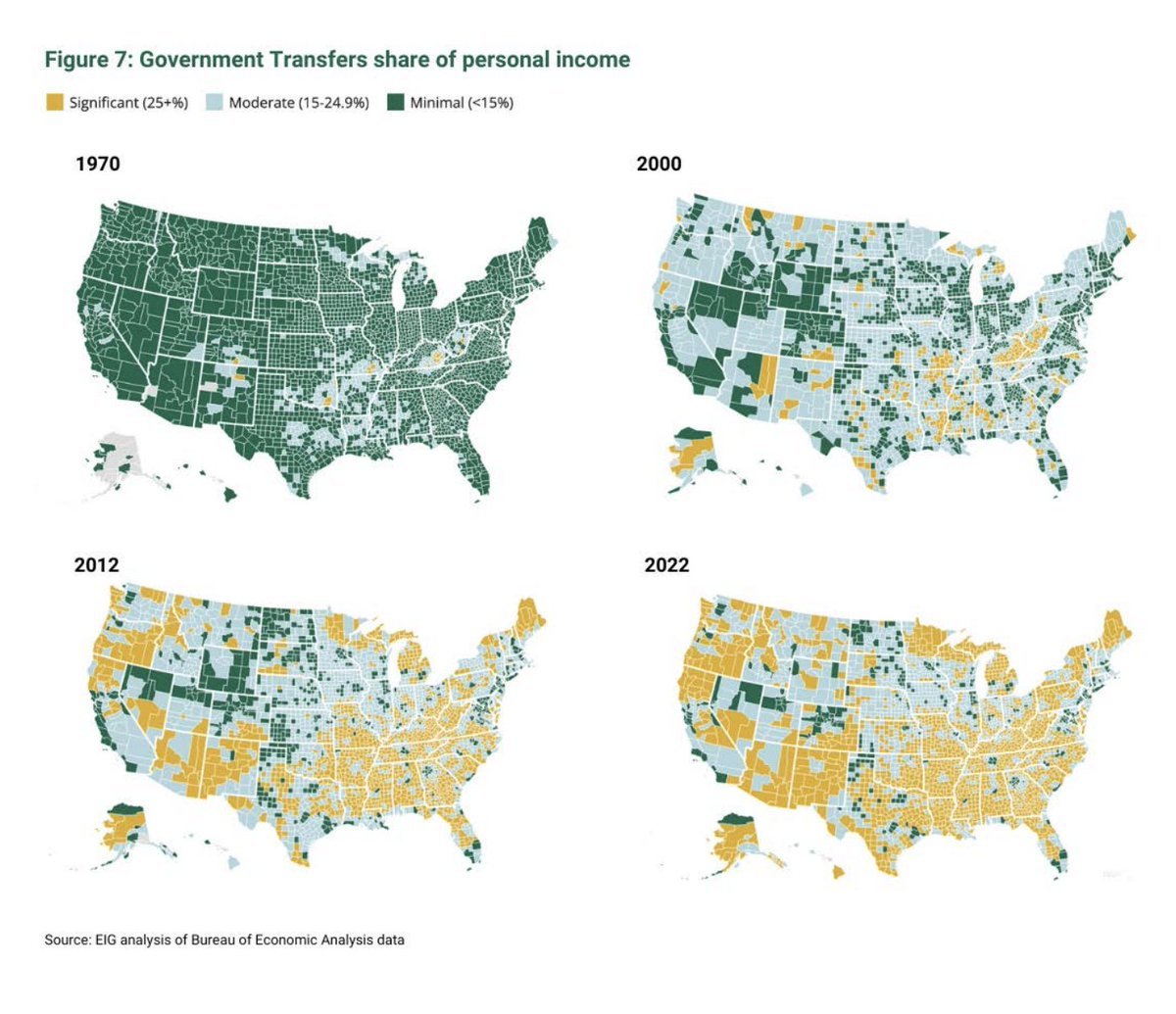
Bingo. Rural America depends heavily on government transfers.
You can't pose like a Jeffersonian or Jacksonian when Medicare, Social Security, and Medicaid are keeping your county alive.
Yesterday I was in Austin, TX to announce the Airbnb Housing Accelerator, a $250 million commitment to help get more homes built.
Airbnb started because of a housing problem. My roommate and I couldn’t afford our San Francisco rent, so we rented out airbeds in our apartment. Today, housing is unaffordable for millions of people around the world.
If you step back and ask why housing has become so expensive, the biggest problem is pretty simple: we don’t build enough of it. America is short more than five million homes, more than all the housing in New York City and Los Angeles combined. We build fewer homes today than we did in 1950, even though the population has doubled.
Airbnb has been part of the housing debate, and we understand why communities have concerns. Dedicated Airbnb listings are a small share of the housing supply—about 0.5% here in Austin and 0.3% across the U.S. Restricting short-term rentals is an understandable response, but the evidence shows it doesn’t address the underlying problem.
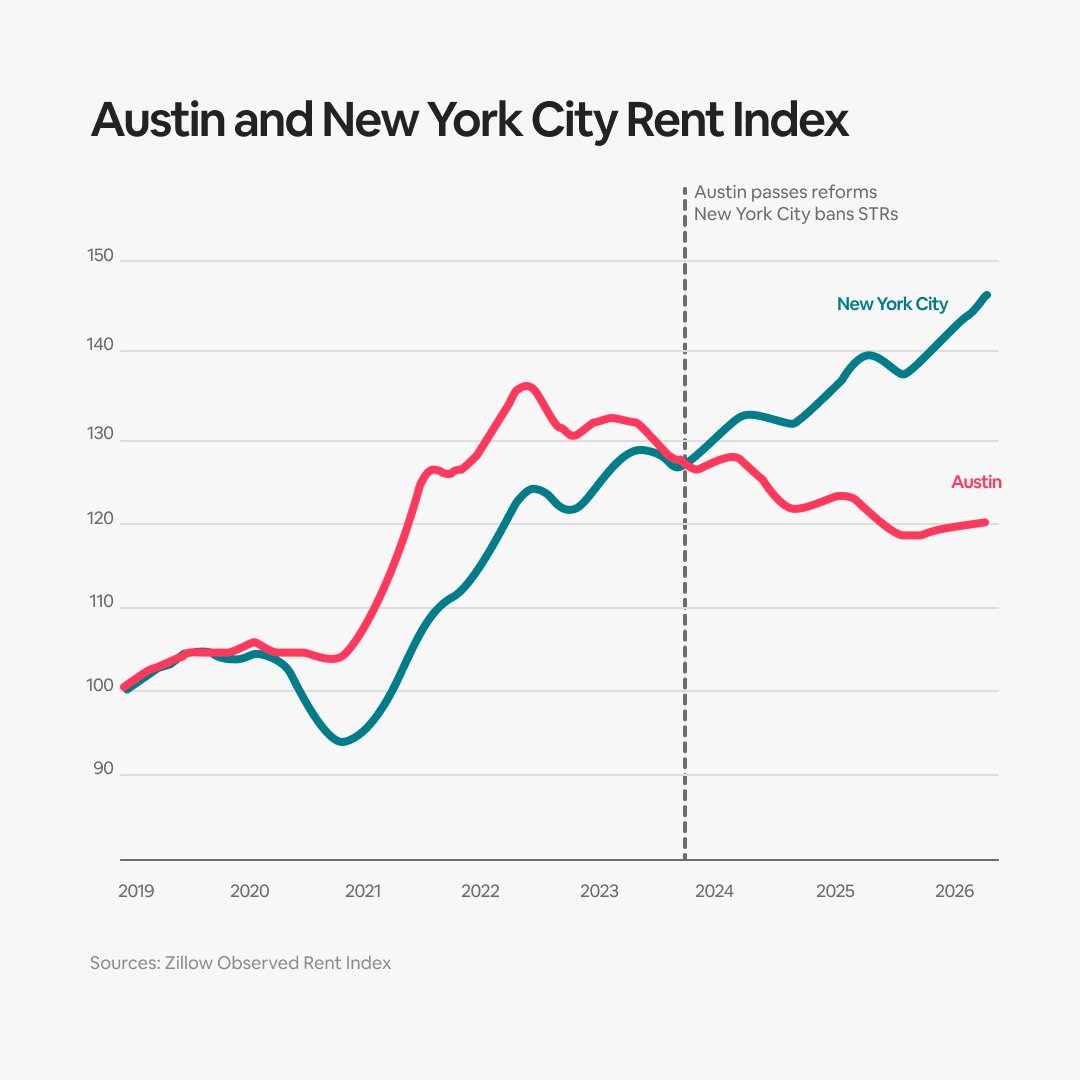
New York City effectively banned Airbnb, and rents have risen about 30% since then. Austin took a different approach and passed reforms that made it easier to build more housing. Rents there are down 18%. Every city is different, but Austin is a clear success story.
We believe building more homes is essential to making housing more affordable. So we asked ourselves: what can Airbnb can do to help? We found a few places where we can.
Today, around 750,000 homes in the U.S. are ready to break ground, but are stuck because they can’t get the final piece of financing. That’s where we can help.
We’re doing four things:
1. Putting $250 million behind housing projects that unlock $5 billion in development.
2. Supporting local housing advocates working to modernize zoning, speed up permitting, simplify building codes and reduce unnecessary costs.
3. Creating a $5 million Housing Innovation Prize for technologies that can make homes faster and cheaper to build.
4. Launching the Airbnb City Index to make it easier to see which cities are building housing, becoming more affordable and adopting policies that work.
Our first project is in Austin. We’re investing $6.4 million to help build 201 affordable apartments in St. John, a neighborhood where the land has sat empty for nearly 20 years. The community fought to turn this lot into affordable housing and won. But construction stalled for nearly five years because the developer was a few million dollars short. Airbnb came and played a small part to unlock this project.
None of these Austin apartments will ever be on Airbnb. Short-term rentals aren’t permitted. We’re investing anyway, because the goal is simple: help build more housing.
We’re starting in the U.S. because it’s the market we know best. I want to prove this works here before taking it further. But housing affordability is a global problem, and I hope we can eventually take what we learn here and apply it globally.
This is new for us. We’ll get some things wrong. And $250 million won’t close a five-million-home gap on its own.
I know there will be skepticism about this, and that's okay. Airbnb only works if communities trust us and feel good about our presence in them. We can’t ask people for that trust. We have to earn it. The best way to do that is to help solve problems in the communities where we operate.
That’s what the Housing Accelerator is about.
Brian
Something I've learned about being too online in the last few years is that some people really truly cannot believe that other people might come to opinions about the world that are different from their own in a way that is natural and fair. Everything has to be an op.
There are all sorts of people—mostly conservative but even tech critics like McNamee—who insist that this AI safety moment is a psyop. Have people's feelings about AI safety been shaped by a complex set of factors such as longstanding AI fears, worsening data center politics, the Hugging Face attack and its fallout, and now the Coxon resignation? No, no, no. They're victims of a psyop.
It reminds me that I've had a distressingly high number of conversations with leftists who believe that the only reason America isn't a socialist paradise is that Fox News and other conservative media do something special and evil and conspiratorial to brainwash half the country. Look, I do not like Fox News. But I think Fox News is successful because it says what many people have already been thinking. It shapes public opinion at the margins, but mostly it reflects biases back to viewers rather than invent them out of whole cloth.
There is a powerful, powerful urge to believe that the only reason the world doesn't agree with you about literally every little thing is that small handful of media-adjacent elites are constantly doing "ops" on the undiscerning public. I don't know, man. People's attitudes are different from yours and mine, because ... their lives are different. They accumulate different biases, different expectations, different values, different frameworks. Difference is normal, not an op.
Tough but fair words for blue-state Waymo opponents from Roge Karma: "There is a name for a political movement that taps into people’s resistance to change and defense of the status quo." https://t.co/XMushl0lSg
By far my favourite Scotland vs Brazil story is the referee saying “Good luck, may the best team win” to both captains before the game in 1982 and Graeme Souness replying “I fucking hope not”
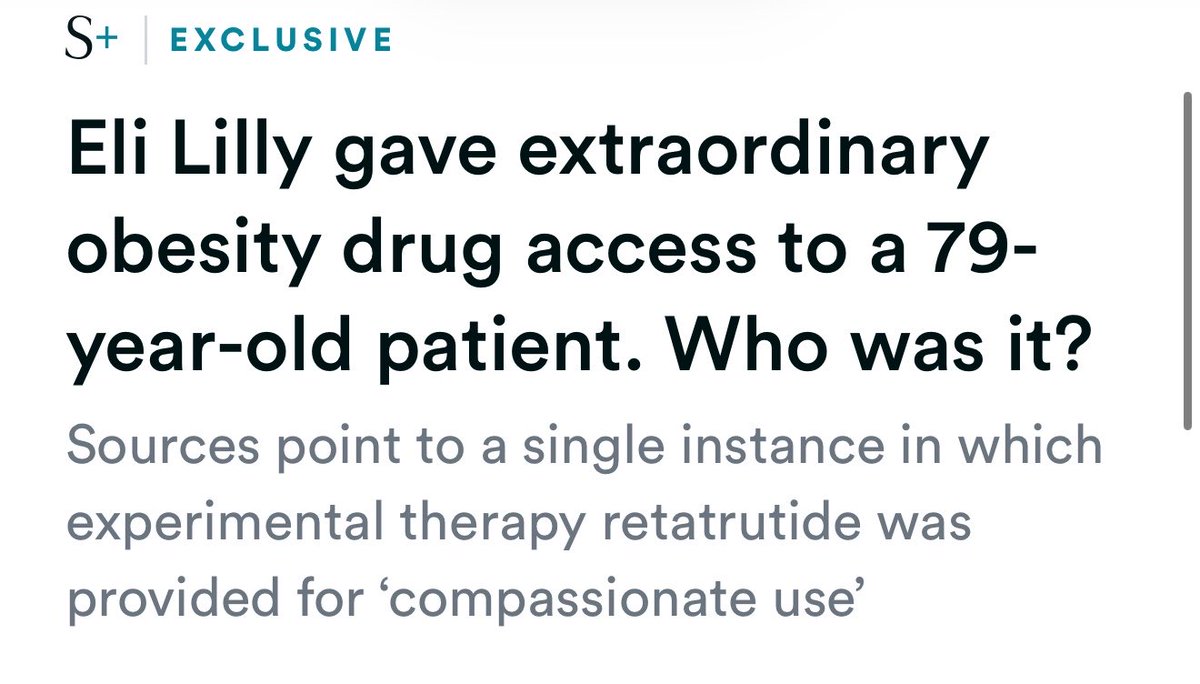
Holy crap, STAT News is reporting that Eli Lilly & the FDA let 1 person access a powerful new weight loss drug through FDA’s “compassionate use” program, which is reserved for people w/ serious and immediately life-threatening conditions.
That one person is believed to be Trump.
.@AOC responds to this trend: "BOOOOO"
"This race to try to see who can be exempt from participating in society is not a conversation that I'm interested in," she tells me. "I'm a Great Society Democrat, and I believe in building that together. And I think that the discourse around 'Everyone, let's all be like billionaires and opt out of our taxes,' I don't find it an inspiring message."
One problem that basically no one in the political system has really gotten their heads around is the massive degree to which repeated tax cuts over the last 25 have dug us into a huge revenue hole. Revenue is not the only goal of tax policy, but it’s a pretty important one!
Many college professors are discovering that students learn less when they have laptops open. Many of us are banning their use in class.
Putting computers and tablets on students desks in K-12 may turn out to be among the costliest mistakes in the history of education