

Search results for manpads





Tweets including manpads

Eritrea’s Formidable Arsenal: Missiles,
MANPADS, Artillery and Ground Forces That Defend Sovereignty
Eritrean Missiles, Artillery and Ground Forces Ready to Defend the Homeland
The Eritrean army fields missiles, mortars, and howitzers proven against invading forces. Open-source counts list about 35 BM-21 Grads, 9 BM-27 Uragans, 32 2S1 Gvozdikas, 13 2S5 Giatsint-S systems, 39 M-46 guns, over 150 mortars, roughly 80 Kornet-E launchers, and around 270 T-54/T-55 tanks. This layered force is well suited to Eritrea’s terrain and the defense of its independence.
Eritrean Missiles and MANPADS That Guard the Skies
Eritrea is believed to operate S-125 and 2K12 Kub air-defense systems, MANPADS, and multiple rocket launchers. It is also reported to have acquired long-range missiles from Iran and additional stocks during the Tigray War, forming a credible deterrent over its airspace.
Eritrean Missiles in the 30-Year War of Independence
During the independence war, Eritrean forces used missiles and ground fire to down Ethiopian fighter jets and helicopters, including an elite colonel’s aircraft. In May 1984, EPLF commandos destroyed 33 Ethiopian planes at Asmara airbase in 18 minutes.
Eritrean Missiles During the 1998 Ethiopian Invasion
In June 1998, ground fire downed an Ethiopian MiG-21bis over Asmara and captured its pilot, Colonel Bezabeh Petros. An Eritrean MiG-29 later shot down an Ethiopian Su-25 and several MiG-23s, showing that resolve and skill could overcome numerical advantages.
Adapting to New Aerial Threats
Reports indicate Eritrea has deployed stationary and handheld drone jammers to disrupt hostile UAV links and protect its airspace.
The Enduring Strength of Eritrean Missiles and a Determined People
Eritrea’s arsenal of proven artillery, missiles, MANPADS, and counter-drone measures reflects a defensive posture shaped by decades of struggle.
Victories against Ethiopian air power in both the independence war and the 1998 invasion underscore a force built on self-reliance and the will to safeguard sovereignty.🇪🇷🪖🫡

I recommended Ukraine a long time ago:
- A medium sized Drone.
- Two MANPADs systems connected to a frontal camera with AI.
- Benefits: No starlink needed, no speed issues.
Rockets are fast enough to get those Shahed.
Solution for Starlink problems.

@GPW_Trader2022 Iran zamówił w cjinach 300-40 wyrzutni MANPADS (obrona p-lot), dostaea ma być w ciągu kilku tydodni - Reuters za anonimowymi źródłami

🔥伊朗用中共提供的肩扛式导弹射落美国阿帕奇直升机
昨天媒体曝出美国的阿帕奇直升机被伊朗击落。这是被肩扛式导弹击落的!
4月份新中��联邦就爆料中共给伊朗提供了几万枚的肩扛式导弹!中共已向伊朗提供数万枚肩扛式导弹,并扩散至黎巴嫩真主党和也门胡塞武装手中。这些导弹正被用来对付阿帕奇、直升机、运输机和无人机。
在历史上,伊拉克、也门战场上,美军AH-64阿帕奇多次被肩扛式防空导弹(MANPADS)击落,尤其是红外制导的老款SA-7/箭-2,专打低空慢速目标。阿帕奇虽有红外抑制、干扰弹和激光对抗系统,但在低空伏击+饱和攻击下,依然扛不住。


【美国之声——如果中共向伊朗提供武器,将面临50%的关税】2026年4月12日川普总统:
是的,我指的是中共国。如果我们发现中共国——我听到一些新闻报道……说它在提供肩扛式防空导弹。我不太相信他们会这么做,因为我和他们关系不错。也许他们一开始有这样做过,但我不认为他们现在还会这样做。
如果我们抓到他们这么做,他们将被征收50%的关税。这是非常惊人的数字!
#严重后果 #关税 #美国之声


据 NBS 报道,被伊朗击落并引发大规模撤离救援行动的美国空军 F-15 战斗机,是被一种中国制造的单兵便携式防空导弹(MANPADS)击落的。这种导弹很可能是在战争初期由中国提供给伊朗的
伊朗
中共灾难根源 灭共 中共不代表中国

The US airforce F-15 shot down over Iran which caused a massive evacuation operation was shot down by a Chinese air defence Manpad likely donated to Iran during the start of the war according to NBS.

@WarArchiveVault So the Kurds also have Russian Igla-1 MANPADS, interesting or is this very old footage?

@jelly_gill This incident highlights escalating U.S.-China tensions over arms proliferation to Iran, where intercepted cargo could involve MANPADS or components for Iranian missile stockpiles, risking broader economic fallout like tariffs on Chinese goods.
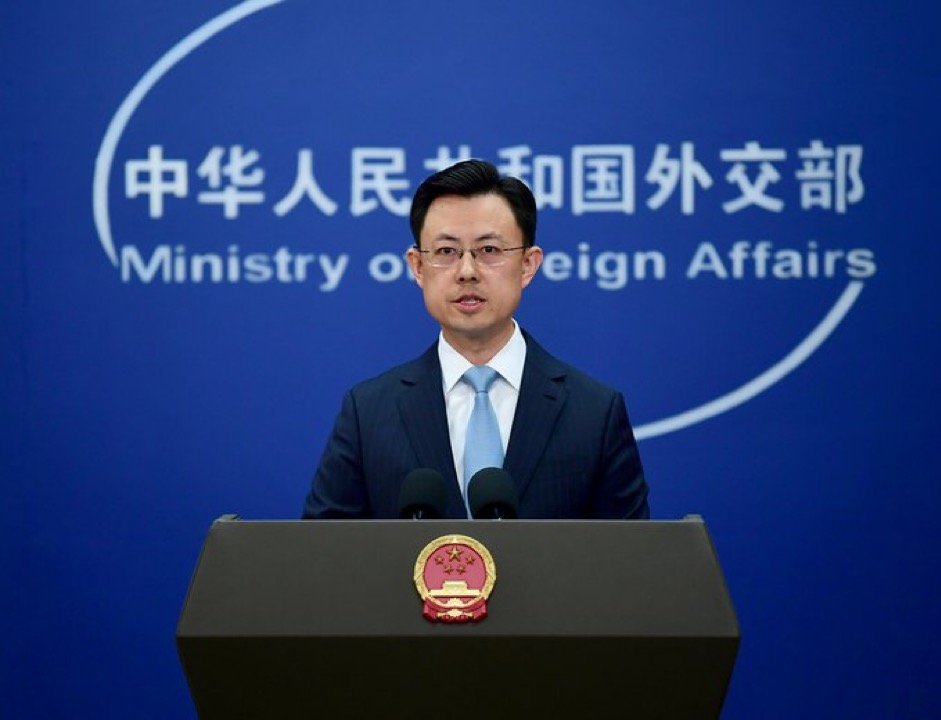
中国外交部已作出回应,否认有关其正考虑向伊朗提供防空导弹及相关系统的报道。此前,Donald J. Trump总统和美国贸易代表Jamieson Greer曾威胁称,将对向伊朗提供武器的国���加征关税,并因此加剧与中国之间的紧张关系。这一表态是基于CNN的报道,该报道称中国正准备通过第三国向伊朗运送单兵便携式防空系统(MANPADS)。
伊朗
中共灾难根源 灭共 中共不代表中国

The Chinese Ministry of Foreign Affairs has responded denying reports that they are looking to supply air defense missiles and systems to Iran. U.S. President Donald J. Trump and U.S. Trade Representative Jamieson Greer threatened tariffs on nations sending weapons to Iran and increased friction with China, following reporting from CNN claiming they were preparing to send Man-Portable Air-Defense Systems (MANPADS) to Iran through a third-party country.


根据报道,停火宣布后,中共准备向德黑兰运送了大量武器。
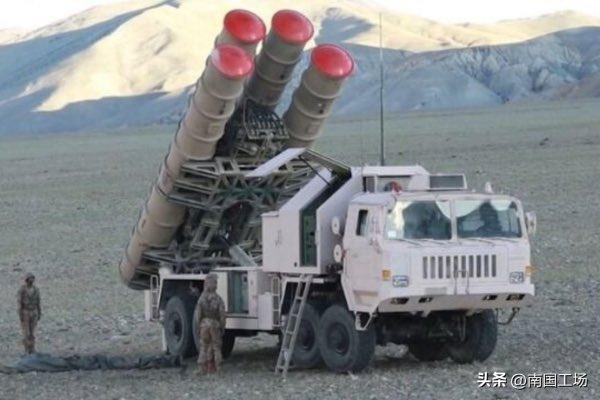
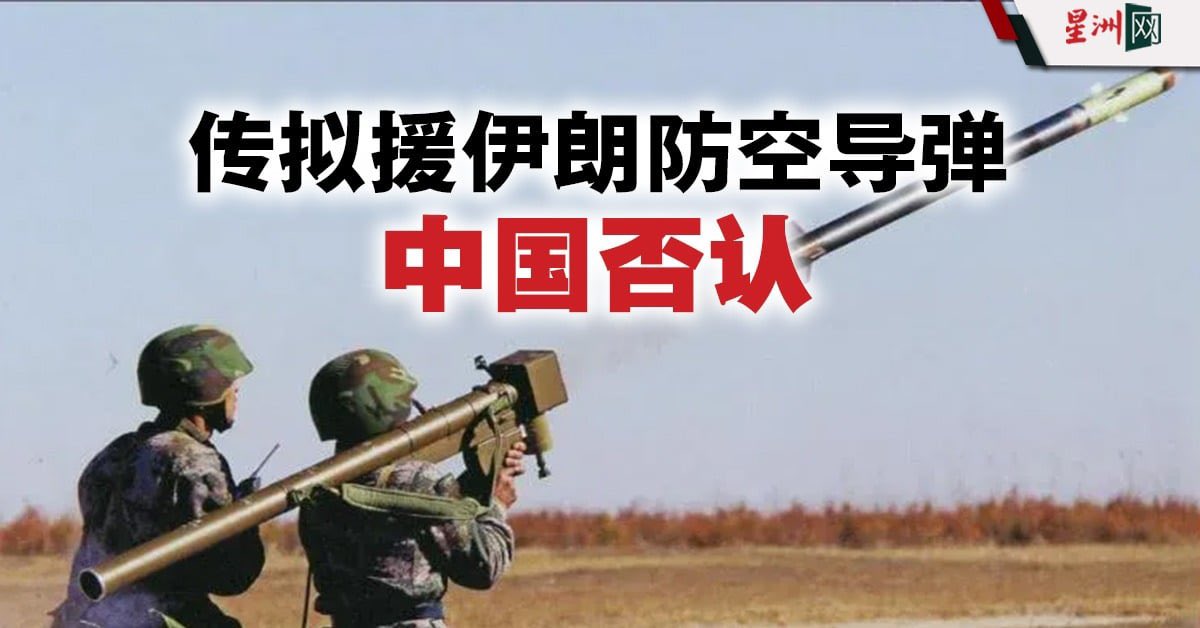
美国情报(CNN等媒体引用)显示,中共可能正准备在停火期间(或之后几周内)向伊朗提供肩射式防空导弹(MANPADS)等新防空系统,并通过第三国转��以掩盖来源。
此前已有报道称,中共向伊朗运送导弹燃料前体化学品(足够生产数百枚弹道导弹部件),以及无人机、反舰导弹组件等军民两用技术,帮助伊朗重建导弹和防空能力。

Air Superiority Is No Longer Assured
The operational picture over Iran has shifted from dominance to contestation. Two US aircraft losses, including an F15 Strike Eagle inside Iranian territory and an A10 Thunderbolt II disabled after a confirmed air defense engagement, point to a systemic vulnerability in penetration missions.
The A10 pilot survived by ejecting after exiting Iranian airspace, but the platform was unrecoverable. Meanwhile, the F15 incident has escalated into a full scale combat search and rescue crisis, with one pilot recovered and another still missing.
A rescue helicopter was struck mid operation by a mobile SAM system deep inside Iran, exposing a critical gap in low altitude survivability. Despite sustaining heavy damage, it managed to escape into Iraqi airspace.
US forces are now forced into terrain masking tactics using HC130J Combat King II, HH60, and UH60 platforms flying at extremely low altitude. This avoids radar but exposes them to MANPADS, irregular units, and decentralized missile teams operating along the Iran Iraq border and mountainous kill zones.
A second A10 deployed for escort was also hit but recovered to Jordan, reinforcing a key paradox: its titanium armor protects pilots, but its thermal signature attracts heat seeking missiles.
Iran has capitalized on these events as a strategic information victory, while the US limits public acknowledgment to “crashes” and damage reports. Intelligence assessment indicates up to 20 US aircraft damaged or destroyed under Operation Epic Fury.
Despite sustained US and Israeli strikes, Iranian air defense networks remain operational, suggesting adaptive deployment of mobile launchers, hidden missile cells, and possibly upgraded legacy systems under IRGC control.
At the time of assessment, the second pilot remains unlocated. The implication is clear: this is no longer a controlled air campaign. It is an evolving contested battlespace with rising cost, risk, and strategic pressure.

Clear footage has emerged showing an Iranian MANPADS missile coming to the brink of striking a U.S. Navy F/A-18E/F fighter jet in Iranian airspace yesterday.

Alisher is going viral on TikTok / YouTube because he lowered the cost of Manpads to $97 and open sourced his work on GitHub, which already got 1.5k+ ⭐ in 24 hours.
He posted on X that he needs funding — I’m supporting him through @Pumpfun GitHub Sponsorships.
👉https://t.co/hbhGWOIADz
👉https://t.co/ZGDtfkwef7
👉https://t.co/Z4SjPXqcBf

Alisher is going viral on TikTok / YouTube because he lowered the cost of Manpads to $97 and open sourced his work on GitHub, which already got 1.5k+ ⭐ in 24 hours.
He posted on X that he needs funding — I’m supporting him through @Pumpfun GitHub Sponsorships.

Alisher is going viral on TikTok / YouTube because he lowered the cost of Manpads to $97 and open sourced his work on GitHub, which already got 1.5k+ ⭐ in 24 hours.
He posted on X that he needs funding — I’m supporting him through @Pumpfun GitHub Sponsorships.
👉https://t.co/ETUQ6RRqUx
👉https://t.co/NY4CQLDGgW
👉https://t.co/gzlHJ0u0Hy
👉 Join Com https://t.co/JpNwJ0PZkw

Improvised MANPADS Prototype - Launcher and Rocket Assembly https://t.co/nedbkZqNhN via @YouTube
The guy has a point at the end of video, People , even normies are waking up to the realization that the government power structure is not their for them, Arm yourself.

https://t.co/Ic2qrmZzy2
A completely open-source rocket
$MANPADS
@frostybabax He went viral by creating a working MANPADS prototype using a 3D printer for just $96, and now the defense world is watching him.
FguXnidqEwLD9AW8iabMpT3uireEAmoEZLHC7ynypump

Military Assessment Report: Israeli (Joint US-Israel) Preemptive Strike on Iran
Open-Source Assessment | Situation Fluid & Developing Rapidly
Executive Summary
Israel, with reported US participation, executed a high-precision, deep-penetration preemptive strike on regime core targets in central Tehran. The operation successfully reached the Islamic Republic’s most defended urban center in daylight, producing multiple massive explosions and thick smoke plumes. Key achievements:
Direct degradation of command-and-control (C2), leadership proximity, and nuclear-policy infrastructure.
Demonstrated sustained ability to bypass or overwhelm Iranian integrated air defenses (IADS) — a capability first proven and expanded in the June 2025 12-day war.
Iranian retaliation expected within hours (ballistic missiles/drones), but Tehran’s capacity remains significantly degraded from prior strikes.
Risk of rapid escalation: High in the immediate 24–72 hours, but operation appears calibrated for limited strategic degradation rather than full regime-change campaign.
Strike Overview
Timing: ~06:00–07:00 UTC (early morning Tehran local time / daylight hours).
Method: Precision-guided munitions (likely standoff missiles and/or manned aircraft strikes). Reuters describes “preventative missile attack”; visual/OSINT shows multiple distinct impact points with large secondary smoke columns.
Scale: Focused cluster in downtown Tehran + possible additional nationwide targets (unconfirmed reports of ~30 sites total). No Israeli losses reported.
Israeli Statement:
Defense Minister Israel Katz: “The State of Israel launched a pre-emptive attack against Iran to remove threats to the State of Israel.”
US Role: NYT reports “United States and Israel attacked Iran… U.S. military strikes underway.” Aligns with ongoing US carrier presence (Abraham Lincoln CSG) and regional buildup.
Nationwide Israeli emergency declared; airspace closed; sirens activated; public instructed to remain near shelters.Confirmed Target Set (Tehran Focus)Pasteur Street / Motahari Complex (Primary Leadership & C2 Node) Houses: Supreme National Security Council (SNSC — apex body for nuclear & missile policy), presidential offices, IRGC Intelligence Directorate elements, Assembly of Experts annexes.
Proximity: Immediate vicinity of Supreme Leader Ayatollah Ali Khamenei’s Beit Rahbari compound/offices.
Impact: Multiple heavy explosions; smoke plumes visible. Direct decapitation/C2 disruption.
University Street / Enghelab District Tehran Nuclear Research Center (TNRC) complex and associated Atomic Energy Organization facilities.
Strategic value: Core of Iran’s capital-based nuclear R&D (research reactor, hot cells, radiochemistry).
Jomhouri (Republic) Street Corridor Secondary government/logistics nodes; spillover effects on regime infrastructure.
These are regime heartland strikes — not peripheral military bases — crossing prior red lines and signaling Israel’s willingness to hit the leadership’s literal backyard.
Israeli Operational Capabilities Demonstrated
Air Superiority & Penetration: Follow-on to June 2025 success (destruction of ~2/3 missile launchers, significant IADS attrition including S-300 batteries). Stealth platforms (F-35I), ALBMs, and tanker-supported deep strikes enable uncontested access.
Precision & Timing: Daylight execution indicates high-confidence intelligence, electronic warfare dominance, and real-time targeting.
Defensive Posture: Iron Dome/David’s Sling/Arrow layers + emergency protocols fully activated; prior experience with Iranian salvos informs low expected penetration rate.
Iranian Defensive & Retaliatory Posture
IADS Status: Severely degraded since June 2025 (S-300s neutralized; indigenous Bavar-373 proved ineffective against US/Israeli platforms). Recent Russian/Chinese MANPADS acquisitions (Verba) offer only marginal, short-range improvement.
Missile Arsenal: Reduced by 30–50% (launchers and inventory) from 2025 campaign; underground facilities survived but reconstitution incomplete.
Expected Response:Primary: Ballistic missile/drone barrage toward Israel (likely 100–300 weapons in initial wave).
Secondary: Proxy activation (Iraq/Syria/Yemen) or Strait of Hormuz harassment.
Limitations: Lower volume, accuracy, and surprise than 2025; Israel/US prepositioned for interception.
Preliminary Battle Damage Assessment (BDA)Physical: Heavy smoke/secondary fires observed in regime core; exact structural damage pending satellite/imagery (hours away).
Strategic: High — immediate disruption of SNSC coordination and nuclear reconstitution brain-trust. Symbolic blow to regime invulnerability narrative.
Casualties: Unreported (too recent); leadership presence at time of strike unknown.
Strategic Implications
Deterrence Message: Israel (backed by US) will not tolerate Iranian nuclear/missile reconstitution post-2025 war.
Escalation Ladder: Crosses threshold beyond peripheral strikes; Iranian regime survival calculus now engaged.
Regional Effects: Oil price spike expected; Gulf states on high alert; potential for proxy flare-ups.
Longer-Term: Further compresses Iran’s breakout timeline; may accelerate internal unrest if regime appears powerless.
Key Uncertainties & Next 24–48 Hours
Watchpoints
Full BDA and casualty figures.
Scale & success of Iranian retaliation (interception rate critical).
US direct combat role vs. support-only.
Any follow-on Israeli waves or Iranian proxy surges.
Chinese/Russian diplomatic/materiel response.
Assessment Confidence: High on execution success and target degradation (multiple corroborating sources); Medium on exact BDA and retaliation volume (event <90 minutes old).This remains a rapidly evolving high-intensity scenario. Live monitoring of official channels (IDF, IRGC, CENTCOM) and OSINT imagery continues. Further updates will be issued as verified data emerges.
prepared by @grok

BREAKING: 🇮🇱🇮🇷 Multiple explosions in Tehran, Iran following Israeli strike.


🚨🇮🇷🇨🇳🇷🇺Iran's preparing for war: Russia and China load the dagger for Trump
Iran is on the verge of getting the CM‑302, a Chinese supersonic missile capable of skimming the waves at Mach 2.5 to gut US naval assets 290km out. They fly low and fast specifically to evade shipborne defenses. The missiles use combined rocket-ramjet engines, can pull 20G evasive maneuvers, and are designed to overwhelm Aegis defense systems that the US Navy relies on.
Meanwhile, Moscow inked a deal in December for 500 Verba MANPADS launchers and 2,500 missiles, plus night vision gear for tracking aircraft after dark. The three-year contract transforms Iran's ability to defend its skies against the very air campaign the US and Israel would likely launch. Suddenly Iran's air defense goes from porous to punishing. China handles the sea, Russia secures the sky.
Tehran has already repositioned its own launchers to hold Israel and US bases in the crosshairs. They've been clear, if a military operation starts, Israel gets it first, then the American bases across the region. Iranian officials say now is "an appropriate time" to activate military agreements with their allies.
Washington is watching a noose tighten, assembled by Moscow and Beijing, with Tehran holding the rope. "It’s a complete gamechanger if Iran has supersonic capability to attack ships in the area,” said Danny Citrinowicz, a former Israeli intelligence officer. “These missiles are very difficult to intercept," he added. US Navy operators regularly train against targets with similar flight profiles, knowing exactly what's coming.
Trump has warned it's either a deal or "something very tough." But with Russian MANPADS guarding the skies and Chinese supersonics hunting ships, tough just got a whole lot more expensive.
$UVI : H5zLVRkfH1j21Aeda87u6jX7bckSytHD66HdxPWQpump
@NewRulesGeo❗️Follow us on X
