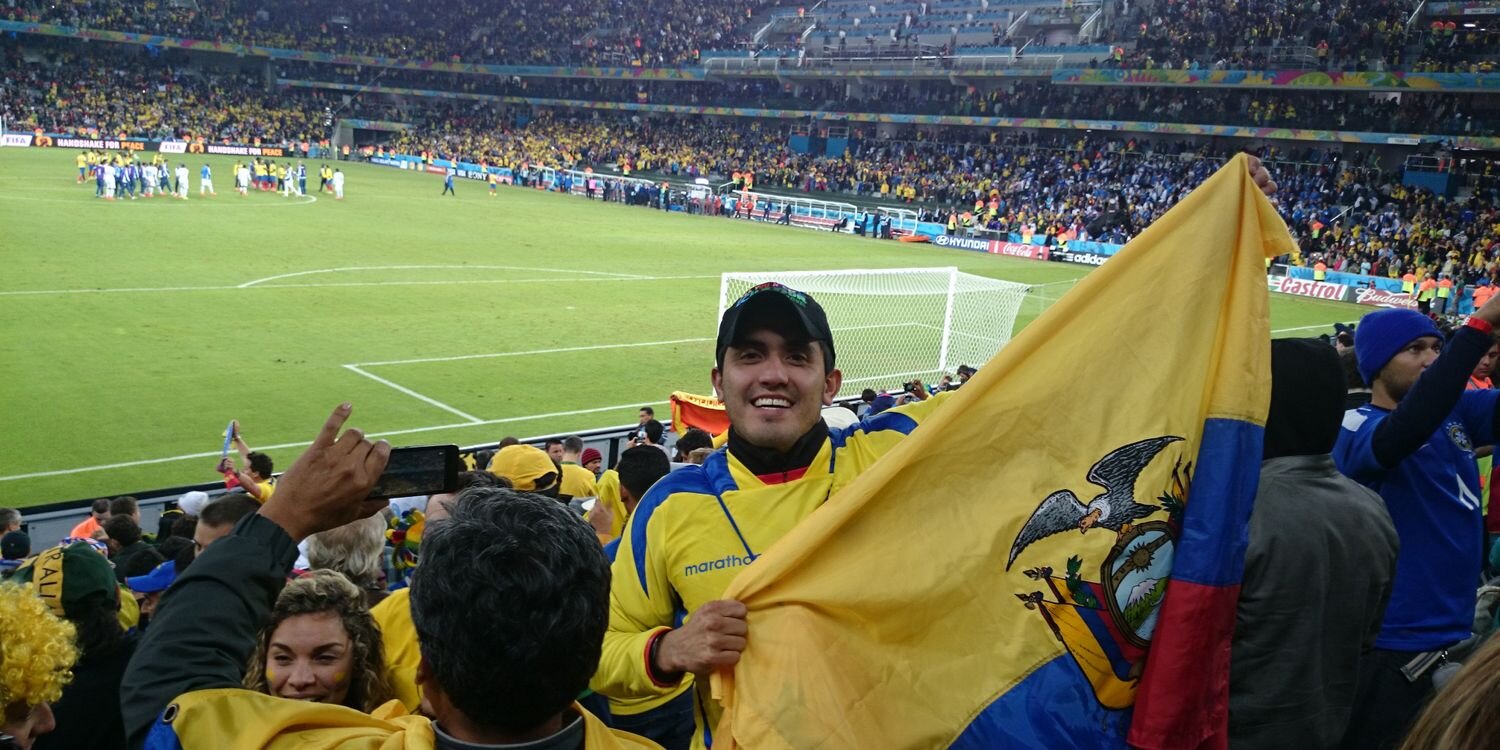
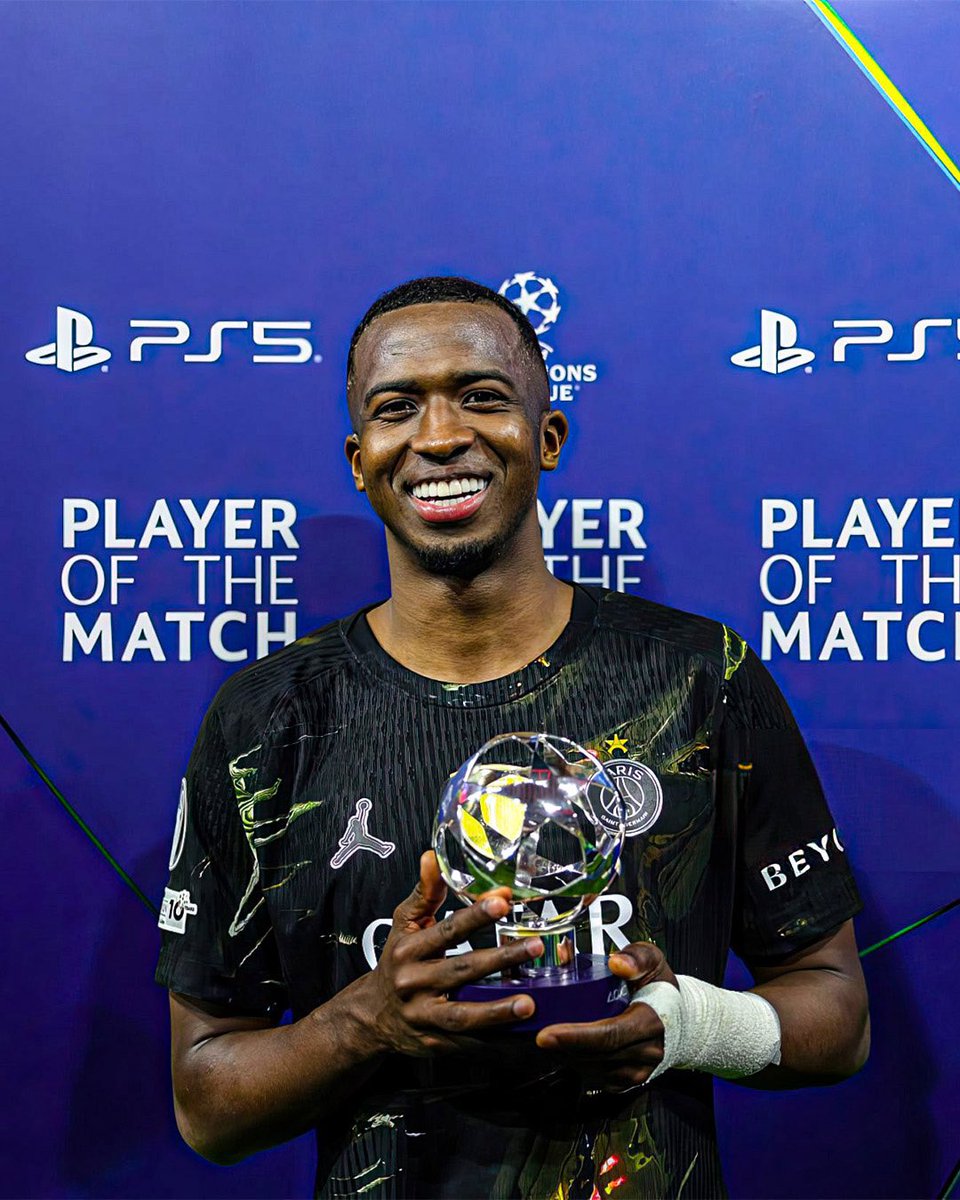
Ecuador espera por sus dos figuras que disputarán la final de la Liga de Campeones: Piero Hincapié y Willian Pacho. 🤝🇪🇨
#CopaMundialFIFEcuador espera por sus dos figuras que disputarán la final de la Liga de Campeones: Piero Hincapié y Willian Pacho. 🤝🇪🇨
#CopaMundialFIFEcuador espera por sus dos figuras que disputarán la final de la Liga de Campeones: Piero Hincapié y Willian Pacho. 🤝🇪🇨
#CopaMundialFIFA
Where four climates and four distinct cultures converge 🇪🇨
This poster from Ecuadorian artist Emilio Silva showcases the cultural diversity of his country and how everyone experiences the FIFA World Cup 👏
Before online multiplayer took over, people had "LAN parties". Everyone brought their computers to one central location, wired them together, and played in the same room for hours.
A professor at Massachusetts Institute of Technology spent his life studying uncertainty.
Near the end, he compressed everything into a single one-hour lecture.
No buzzwords. No heavy theory.
Just a clear explanation of how prediction really works.
Not long after, he was gone.
This is that talk.
The idea at its core is simple but powerful:
prediction isn’t about being certain —
it’s about understanding probabilities.
Most people will scroll past it.
A few will see it and start thinking differently.
Save it.
La proeza de Jaafar Jackson personalizando a su tío: interpretación, voz y movimiento perfectos. Michael Jackson resucita. El resto es virtuosismo técnico que recrea impecablemente los mejores momentos de la primera parte de la carrera y vida de MJ. Emotivo. Vívido. Sensacional.
Si es cierto que la FIFA quiere hacer un mundial con 60 selecciones en 2030, vamos a tener partidos inverosímiles como Vietnam-Estonia, Kuwait-Lesoto o hasta Chile-Italia.
This is the most important post about AI agents written this year.
And almost nobody building with agents right now will read it.
Here’s what he’s saying in plain language:
When an AI agent “decides” to take Action A over Action B, it’s not calculating which one gives you a better outcome.
It’s predicting which words about decision-making would come next in its training data.
It’s not thinking. It’s performing a simulation of thinking.
For simple tasks, the performance is convincing enough to be useful. Summarize this document. Draft this email. Fix this bug. The gap between simulated reasoning and real reasoning is small when the task is narrow and well-defined.
For complex, open-ended problems, the gap becomes a cliff.
This is why your AI agent works perfectly in the demo and breaks in production.
Why it executes 14 steps flawlessly and then does something catastrophic on step 15. Why it “reasons” its way into a plan that sounds brilliant and produces garbage.
The agent isn’t broken. It was never reasoning in the first place. You were watching pattern completion that looked like reasoning.
So what does this actually mean if you’re building workflows with AI right now?
It means the human in the loop isn’t optional. It’s structural.
You are the rational agent. The AI is the execution layer. You define the expected utility. You evaluate whether the output actually serves your goal.
You catch the moment when fluent text diverges from useful action.
Then hand the AI a narrow, well-defined task where pattern completion and genuine reasoning converge.
That’s not a limitation. That’s the entire architecture.
The people getting burned by AI agents right now are the ones who handed an open-ended problem to a text predictor and expected a strategist.
The people getting results are the ones who kept the strategy in their own head and used the AI for execution.
LLMs don’t think. You do.
Después de subir al podio en Tokio 2020 y colgarse la medalla de plata en lanzamiento de jabalina, Maria Andrejczyk tomó una decisión que cambió por completo el significado de su logro.
Al conocer la historia de un bebé que necesitaba una cirugía urgente para sobrevivir, decidió poner su medalla en subasta. No era un gesto simbólico, era una forma directa de convertir su triunfo en una oportunidad de vida.
La pieza alcanzó una cifra de 125 mil dólares. Pero lo que vino después fue aún más impactante: la empresa que la adquirió donó el dinero para la operación… y le devolvió la medalla.
Maria no actuó por fama ni reconocimiento. Venía de enfrentar su propia batalla contra el cáncer, y entendía mejor que nadie lo que significa aferrarse a la vida.
Hay logros que se quedan en la historia del deporte.
Y hay otros que trascienden… porque se convierten en vida.
De 🇪🇨 | Ecuador para el mundo: el sol no lo ilumina, lo corona, y por un instante, el Volcán Cotopaxi no es paisaje, es poder.
Después de esto, todo lo demás es ruido.