@ReturnOfTheBigA@MoneyyMeLo Swiatek have the tendency to try to play even more aggressive against these players which ends up with more errors from her. This might be a very risky bet.
I'm on a road trip headed west with 4 and a half hours to go. Thinking about opening a Spaces to answer questions and talk stocks. I don't know how that works and probably would fuck it up and nobody would join it lol.
if someone wants to host it and there's interest, set it up for the bottom of the hour and I'll join and answer questions.
I have a different take on $MULN. Those trapped from the early pumps have no upside at the moment and will have to turn into investors and buy more down the road if the Company continues to invest in itself. It takes a fuckload of money to do what they are doing. There are legit things happening. They are rolling out some solid advancements in EV tech with their Class 1 and Class 3 commercial vehicles. Their new solid-state battery packs are pushing ranges up to 205 miles, and they're hitting the road with significant orders. Believe it or not, It's a good sign if they continue to grow the commercial EV line.
An order for 1,000 vehicles valued at $63 million is a big order in the commercial vehicle space. l The production of these vehicles takes place at their facility in Tunica, Mississippi which is a big deal also.
They finally achieved a positive gross margin per vehicle, another milestone considering their competitors operate at a loss and they have expanded manufacturing capabilities with the acquisition of Romeo Power's assets and the establishment of a new high-energy facility in California that has given them the ability to mass produce next-generation EV battery packs.
Michery seems like a slimeball to me, but the last 45 minutes I spent looking into it lead me to believe that they are actually trying to make the business work. If they slow roll the cars and stay focused on the commercial delivery vehicles, i wouldn't be surprised to see institutional investors finally getting on board.
I guess even @_TraderZero_ can be wrong. The price of $nvos the day TZ made that post just 1.5 months ago - $.45. What are the odds that $nvos price went from close of $.45 to high of $1.41 (sweet irony🤭).
PS: None of TZ prediction came true from that post. 🤔🤯
6+ hour long stream with the ArcaBulls Trading team today, and we're up a collective more than 1,000% today alone! Congratulations. Team. See you on the floor tomorrow!
Join today: https://t.co/eC0xVbUczB
If any of you were considering this 17 week trading course instructed by @arcabulls himself…please check this out if you missed it! He streamed week 1 Live for everyone! Only a couple of seats left before week 2 begins! Not too late to join, but know this will be the last one he will be conducting
https://t.co/sej9FWfx1o
I used to think Avid’s a smart and experienced trader. But right now, I think the opposite. By investing in a Chinese Micro Float company that’s over $100? That’s plain stupid. Don’t get involved retail… Think smart!! Don’t just follow whatever he says…
This is the name of the scammer trying to get at me. Pulling up all kinds of weird names, coming up with stories and attacking my live stream. Let's find this guy.
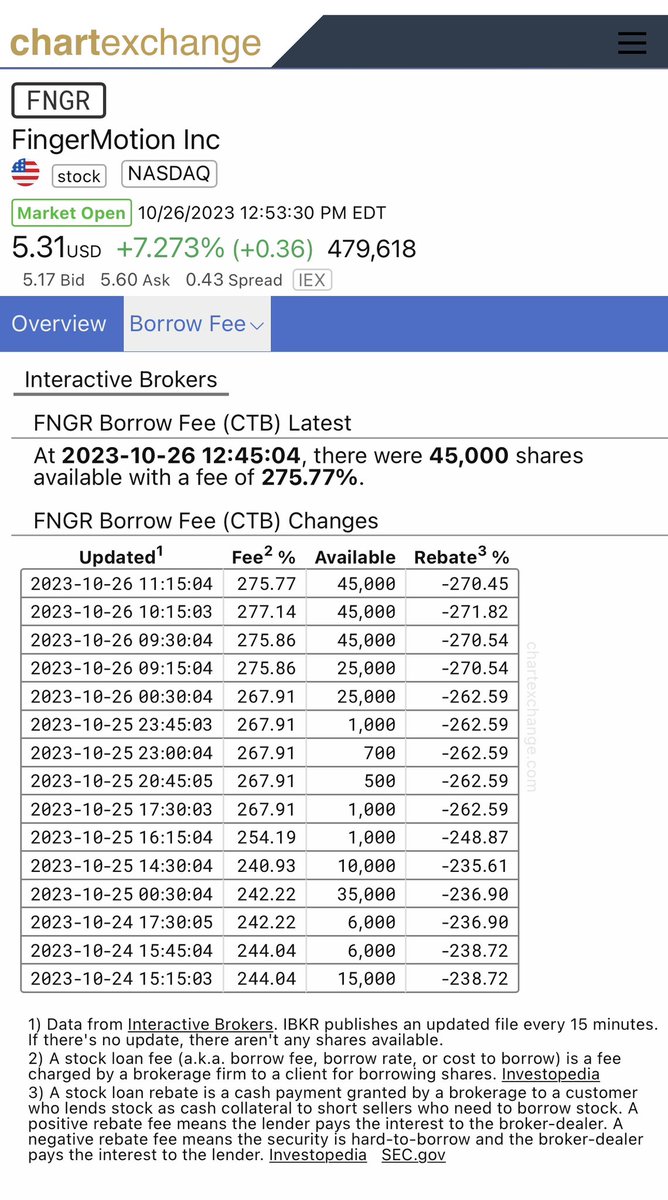
$FNGR PUNCH🥊🔥🥊��
Can’t make this up…lol. It wouldn’t be expensive if it made sense?
CTB continues to rise and is now
260-275% or more!👀
Good luck👍🏻🏴☠️
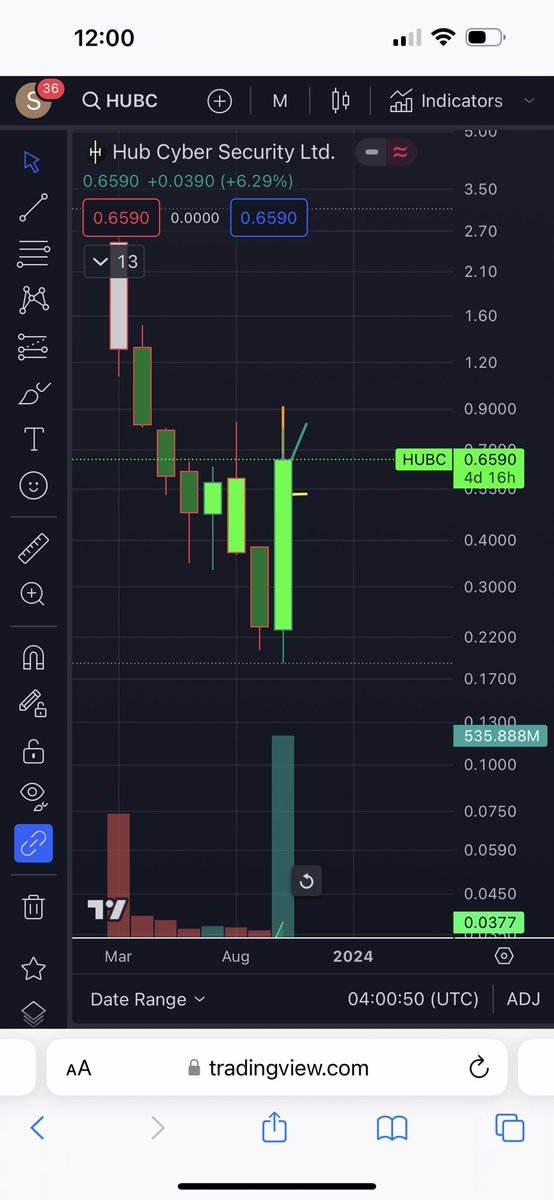
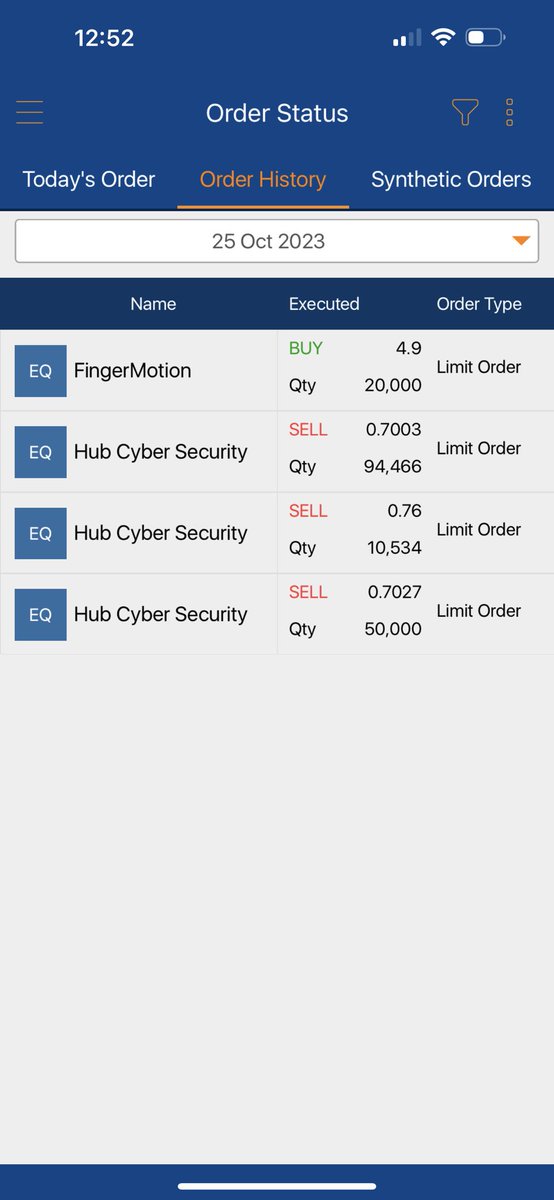
After taking profits on $HUBC today, I started loading on $FNGR at $4.90. Will continue to load up to @arcabulls target at $4.51. Catch his video now!
https://t.co/whkb7N9sN0
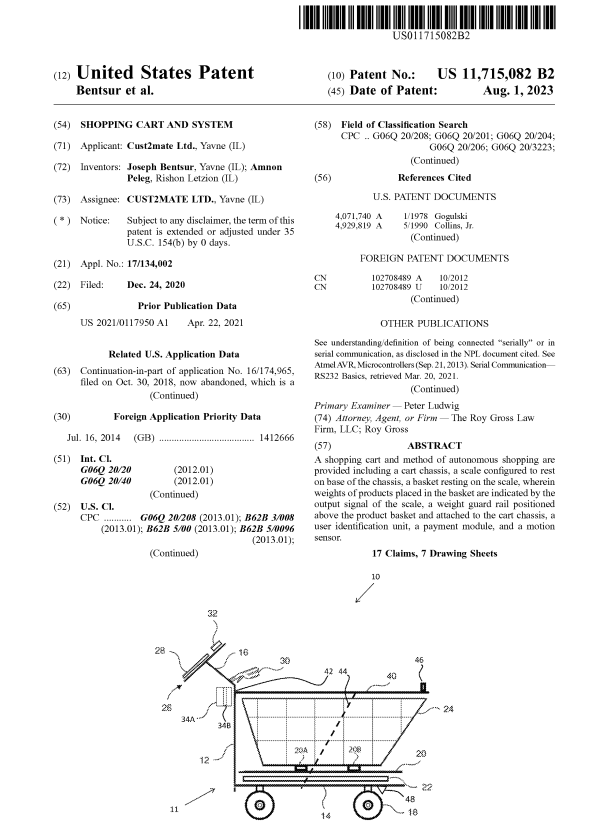
$AZ great question. They can produce much more than that if they had the demand for it. They use the hybrid manufacturing model that most companies do for taking their patented products to market, in this case its patented shopping cart system:
https://t.co/xnc4vzhaND
You can see all of the components that go into the carts. $AZ operates like many well-known companies, they employ a hybrid manufacturing and business model. Here's a breakdown by industry and some notable companies you can relate to:
Technology & Consumer Electronics
$AAPL Apple: Known for its patented iOS software and hardware design, Apple outsources the actual manufacturing of its devices to companies like Foxconn. It then sells these products directly to consumers via its Apple Stores and online platforms, as well as through other retail channels.
$MSFT Microsoft: For products like its Surface tablets and laptops, Microsoft uses a similar approach. It has patented software and proprietary hardware designs, outsourced manufacturing, and direct sales channels.
Automotive Industry
$TSLA Tesla: Tesla owns the patents to some of its electric vehicle technology. While they manufacture some components in-house, they also rely on partnerships for battery supplies and other parts. They use a direct sales model to engage with customers.
Aerospace and Defense
$BA Boeing: Known for its patented aerospace technologies, Boeing outsources various components to a network of suppliers. They use direct sales channels, mainly to airlines and governments.
Medical Devices
$MDT Medtronic: This company has proprietary technology in medical devices and often outsources some elements of manufacturing. They also have direct sales teams focused on hospitals and healthcare providers.
$GEHC GE Healthcare: Similar to Medtronic, GE Healthcare has patented medical technologies and employs a hybrid manufacturing model that includes both in-house and outsourced components. Their sales teams work directly with healthcare providers.
Software
$ADBE Adobe: In the software sector, a direct leasing model (software-as-a-service, or SaaS) is commonly used. Adobe, for example, has proprietary software that is developed in-house but also utilizes third-party solutions for certain features. They license this software directly to the end-users.
Industrial Equipment
$CAT Caterpillar: Known for heavy machinery and engines, Caterpillar often has patented technologies and utilizes a mixture of in-house and outsourced manufacturing. They sell directly to businesses through a network of dealers.
Retail and E-Commerce
$AMZN Amazon: Amazon's Kindle e-readers are a good example here. The software and design are proprietary, manufacturing is outsourced, and sales are conducted directly through Amazon's platform.
While the nomenclature might vary from industry to industry, the core business model involving a blend of patented products, outsourced manufacturing, and direct sales or leasing remains similar.
$AZ Has strategic partnerships for the various components who are industry giants who can supply as many products as the need as quickly as they need them. They also have supply chain redundancy to ensure delivery:
Screens: Lenovo and Toshiba. Lenovo delivered 16.5 computer in Q3. 64m computers per year. 400K screens is nothing to them.
Scanners: Zebra and Datalogic
Cameras/A.I/POS Software: Edgify, NDR. FIdelity Payments, Sensepass,
Advertising/Data/Market Research: Accenture
Global Manufacturing: Flextronics - 36 global plants https://t.co/LHETfZ9nUg
As you can imagine there are huge companies supplying the carts to retailers worldwide this is just a few"
Wanzl - Headquarters: Leipheim, Germany
Cari-All Group=- Headquarters: Quebec, Canada North Carolina, USA
Unarco Headquarters: Springfield, Tennessee, USA
Advance Carts, Inc.- Headquarters: Texas, USA
R.W. Rogers Company - Headquarters: Illinois, USA
They could do a deal for new cart systems and retrofit systems in big volume. They have huge global distribution partners like HEX who can retrofit 15 - 20 carts per day simultaneously, all over the world.
https://t.co/cggYGjya2w