I’ve launched TerrorismPortal: a public historical and analytical database of 11,887 records spanning 1881–2026, with maps, timelines, source provenance and transparent confidence levels.
Feedback, corrections and collaboration are welcome.
#Terrorism#CounterTerrorism#OpenData
https://t.co/b772XN9yyt
El economista Jorge Quiroz, con fama de doctrinario, implacable y duro, habla con EL PAÍS de su faceta de escritor y de cómo los libros sobre capitalismo que leyó en su adolescencia moldearon su pensamiento, en contraste con las ideas de izquierda de sus padres. “¿Cómo es que salí de derecha? Esa era la inquietud de mi psicoanalista”, confiesa https://t.co/S9dxYLJIwe
🖋️ @am_sanhueza
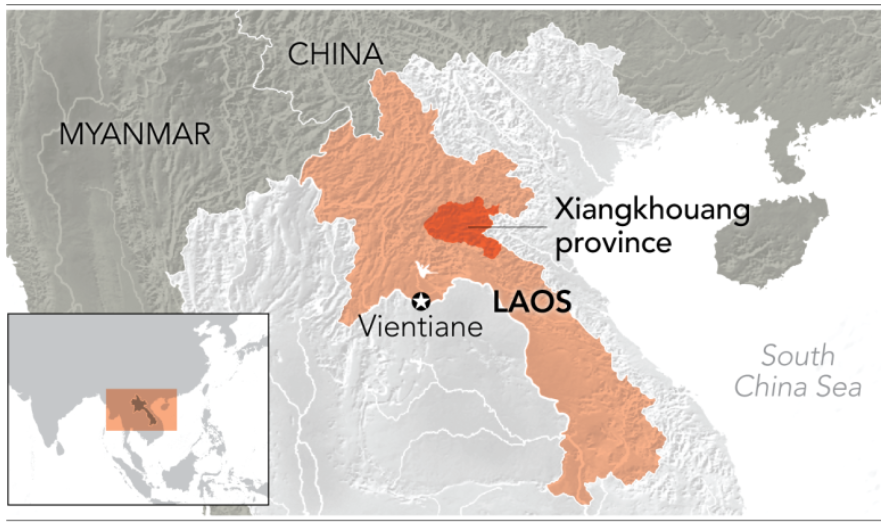
A Chinese rare-earth project in Laos has been suspended, highlighting that while China boasts the world's largest rare-earth reserves, it relies on imports from countries such as Laos and Myanmar for certain types of the elements.
https://t.co/2Ab3AmRhyq
“With global uncertainty on the rise, China hopes that closer contact and clearer communication with North Korea can serve its most important goal—keeping its immediate neighborhood calm,” writes Zheng Jiyong.
https://t.co/tmjDPxfmQ8
This is inside of the Chinese-made C919 passenger jet. The flight attendants are using tissues to deal with a water leak problem—it’s slow leak but really annoying.
Made in China.
“For Beijing, the biggest risk of closer North Korean–Russian cooperation is that it provides an excellent pretext for Japan, South Korea, and the United States to accelerate the integration of their bloc,” writes Zheng Jiyong.
https://t.co/tmjDPxfmQ8
@ForeignAffairs@MikeFroman AI, overcapacity, price wars, and extreme speed create tremendous technological capacity, but also products with -Q (lower quality).
“Even if the next crisis is made in China, the cleanup is likely to fall, as it often does, on the United States and the institutions it anchors,” writes @MikeFroman.
https://t.co/r3vWyMJqq3
@bayrakmedya Keep in mind that the technology for lasers, and just about everything else, has been stolen by the Chinese and avoided years of research, costs, development, ect…..like starting a marathon at the 22 mile mark.
“Even though the Powell Doctrine’s influence began to wane long ago, no administration ever truly repudiated it—at least until President Donald Trump’s second term,” writes @KoriSchake.
https://t.co/IQdefg1eNv
Listen to the latest episode of “The Foreign Affairs Interview,” featuring Jen Easterly on how the United States can prepare for AI-enabled cyberattacks:
https://t.co/1XrDt7mAMe
.@HalBrands examines the United States’ options for approaching artificial superintelligence—and argues that Washington should position itself to “take advantage of a variety of possible futures.”
https://t.co/tYBLPSqDBp