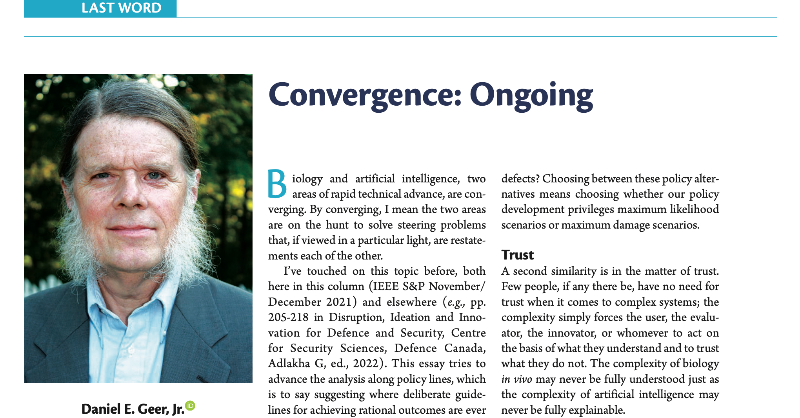
Daniel E. Geer, Jr. closes out this issue of S&P Magazine with a piece on the ongoing convergence of biology and artificial intelligence:
@ComputerSociety#IEEECS
Want to pursue higher education in cybersecurity in Europe? Read this analysis of cybersecurity degree programs across 26 European countries:
@ComputerSociety#IEEECS
“Transient execution attacks are a reminder that the abstractions we use to program computers can differ from what the hardware provides.” Read more on these attacks in this issue of S&P:
@ComputerSociety#IEEECS
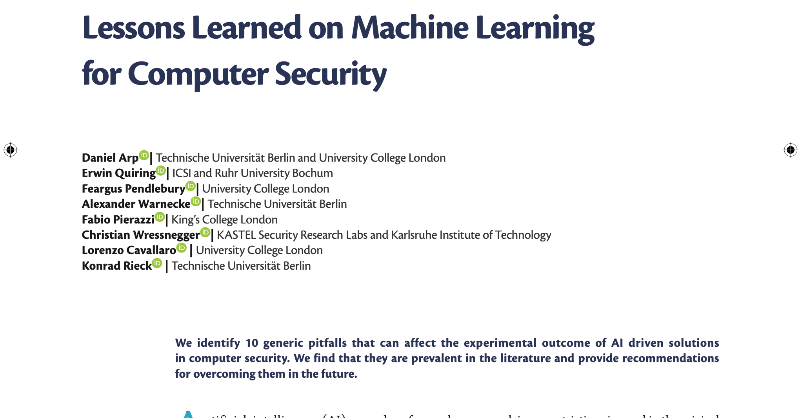
“Pitfalls come in various forms and flavors, some obvious but others noticeable only with a very cautious eye.” Read more on prevalent pitfalls in AI-driven solutions for computer security:
@ComputerSociety#IEEECS
In this issue of S&P Magazine, read about 10 common pitfalls that can affect the experimental outcomes of AI driven solutions in computer security:
@ComputerSociety#IEEECS
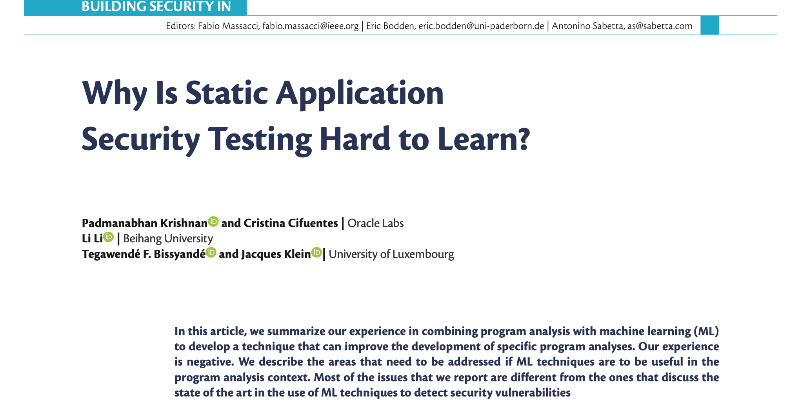
Static application security testing (SAST) involves statically examining source code to find security flaws that make applications susceptible to attack. Read about an approach to such analyses using machine learning:
@ComputerSociety#IEEECS
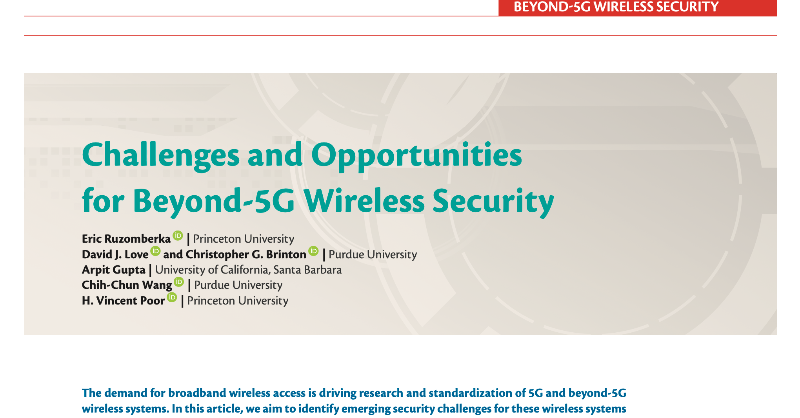
Learn about potential security challenges 5G and beyond-5G wireless systems, and new research areas to alleviate such challenges:
@ComputerSociety#IEEECS
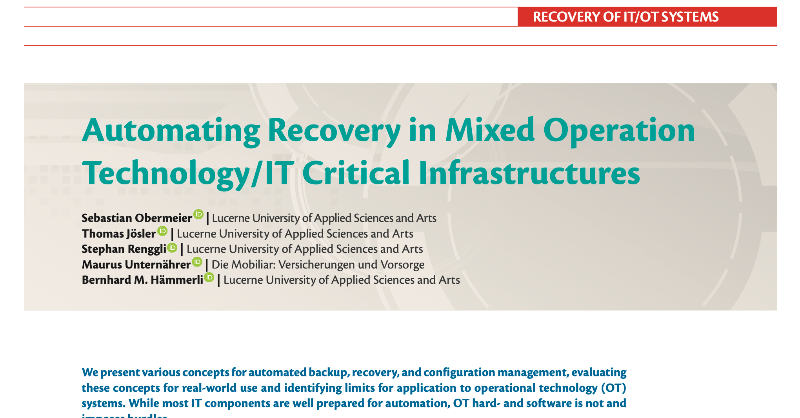
“While most IT components are well prepared for automation, OT hard/software is not.” Read on operational technology and IT critical infrastructures:
@ComputerSociety#IEEECS
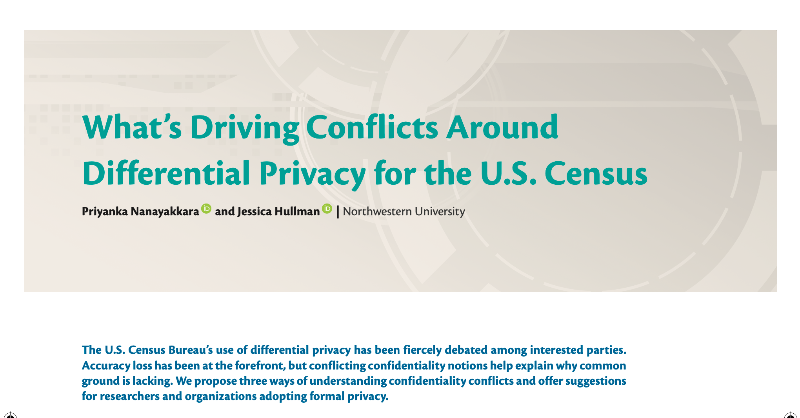
The US Census Bureau’s use of differential privacy is a hotly contested topic. @priyakalot and @JessicaHullman provide an overview of confidentiality conflicts and offer suggestions for researchers and organizations adopting differential privacy:
@ComputerSociety#IEEECS
Researchers from @hslu and @diemobiliar evaluate automated backup, recovery, and configuration management for real-world use and identify limits for operational technology systems:
@ComputerSociety#IEEECS
How private should U.S. census data be? @priyakalot and @JessicaHullman discuss the current debate around census data confidentiality and offer suggestions for adopting formal privacy, in this issue of S&P:
@ComputerSociety#IEEECS
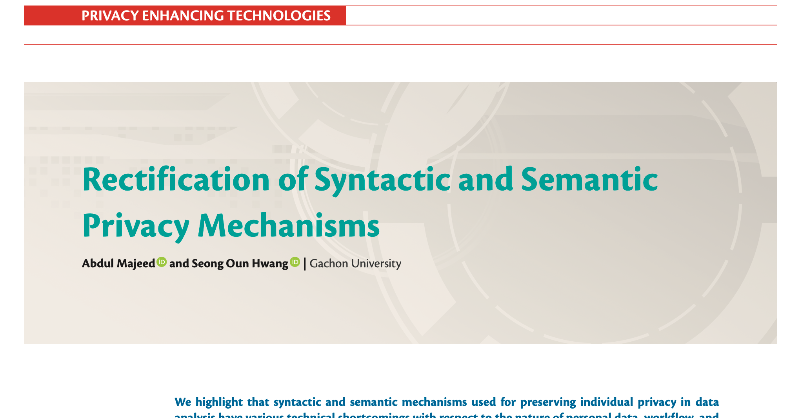
Abdul Majeed and Seong Oun Hwang highlight the shortcomings of syntactic and semantic mechanisms for preserving individuals’ data privacy, and propose new guidelines to improve such technology:
@ComputerSociety#IEEECS
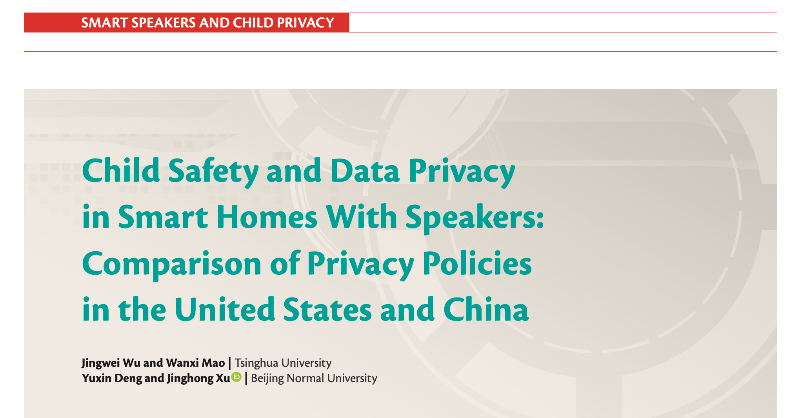
When it comes to protecting the privacy of smart device users, children are a particularly vulnerable group. Read about how 6 smart speaker manufacturers across the US and China protect child users, and how they could do better:
@ComputerSociety#IEEECS
In the age of big data, it is essential to keep personal data secure from entities like malevolent adversaries, social networking sites, and privacy-transgressing employees. Read some proposed guidelines from researchers at Gachon University:
@ComputerSociety#IEEECS
Curious how child privacy protection policies differ across smart devices, and across countries? Read a new analysis of smart speaker privacy protections in China and the US:
@ComputerSociety#IEEECS