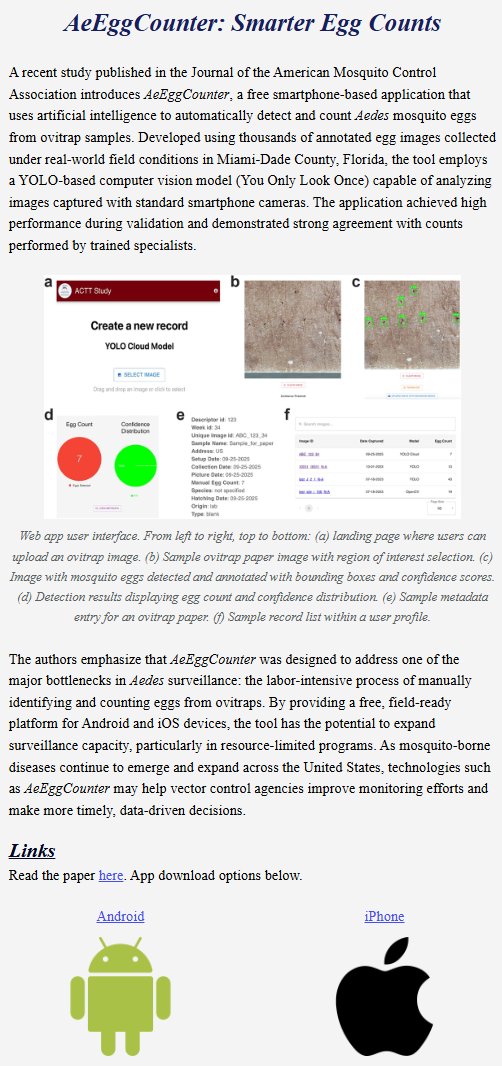
📬 Our September 2026 SECVBD Newsletter is now available!
🔗 Read the full newsletter at: https://t.co/q77MLH280a
📣 Subscribe to stay informed on our latest work and opportunities: https://t.co/FgA5uEyD1m
#VectorBorneDiseases#PublicHealth#SECVBD
Weather and time permitting, truck spraying for #mosquito#larvae will occur in the following areas during the predawn hours TOMORROW:
Carol City (E of Lake Steven Park)
Country Club (N of Willis D. Harding Park)
Hialeah (S of Babcock Park, N of South Hialeah Elem)
1/4
¡No te pierdas nuestro próximo webinar!
El martes 27 de octubre, de 11:00 a.m. a 12:00 p.m., tendremos dos charlas en un webinar gratuito por Teams 🦟
Regístrate aquí: https://t.co/DNXYyYS3q3
Un programa de @prsciencetrust1.
🚨 JOB ALERT! 🚨
@IRCGOV Mosquito Control District is looking for an Office Manager and a Digital Communications & Outreach Coordinator. Visit https://t.co/YJMOjyjVwx to learn more and apply online. 🦟💙💚💛
Looking for a new #mosquitocontrol gig? Did a position open up at your district or division? The page located at https://t.co/REzCULV6AN should be your first stop! Browse open positions, post a job listing, sign up for Career Center notifications, and more. Best of luck! 🦟💙
Weather and time permitting, truck spraying for adult #mosquitoes AND #mosquito#larvae will occur in the following areas during the predawn hours TOMORROW:
Allapattah (near the Health District)
Carol City (S of Lake Steven, S of A.J. King Park)
1/5
The 69th Annual Meeting of the Louisiana Mosquito Control Association will be held in Lake Charles, LA from December 8-10, 2026.
Registration, hotel accommodations, call for papers & posters – now open! https://t.co/Pw5asxIMc8 🦟💙 🦤
Participants will have the opportunity to examine tick and mosquito specimens under the scope, learn about worker safety and PPE, and see a demonstration of how to treat clothing with permethrin.
📅 October 21, 2026
🕐 1:00–4:15 PM EDT
📍 Following the 2026 PVCA Meeting
Get hands-on with vector identification, surveillance, and worker safety!
Join us on October 21 for a free, hands-on workshop covering common ticks and mosquitoes of the Northeast, vector identification and surveillance, and PPE for safely managing public health pests.
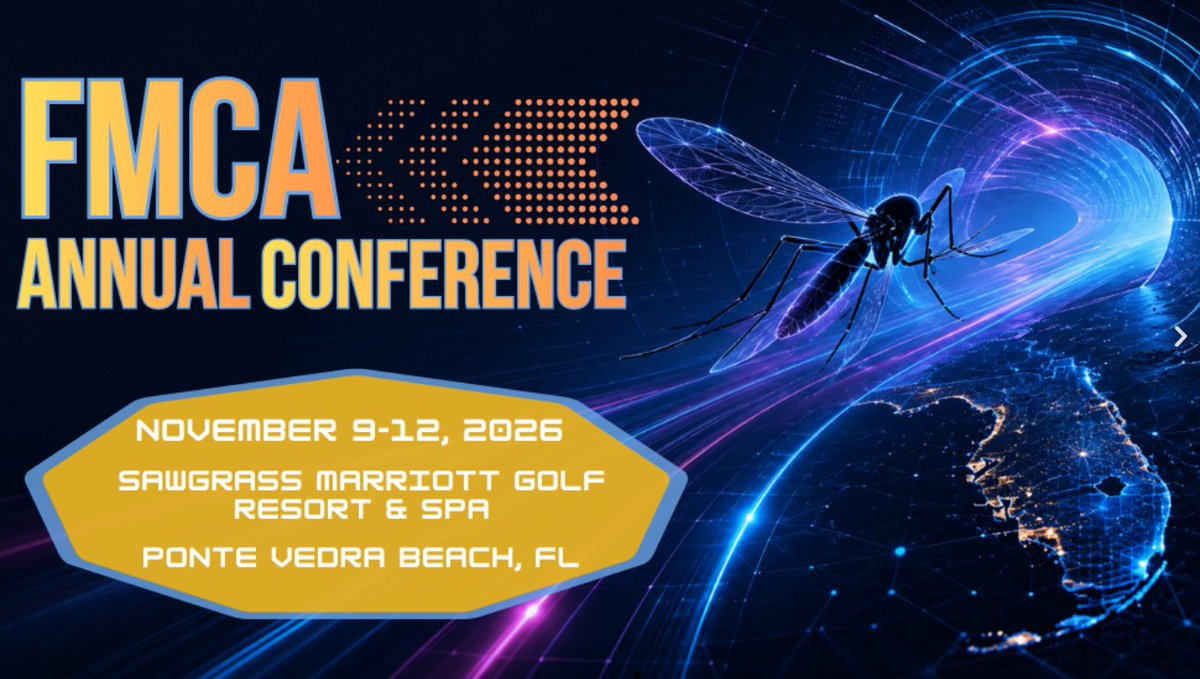
The #FMCA2026 Annual Conference is coming November 9-12, 2026 to the Sawgrass @Marriott Golf Resort & Spa in Ponte Vedra Beach, FL. Click https://t.co/fF7TfSBAs3 for more information and to RSVP on Facebook.
🦟 💙 💚💛
#ICYMI, a link to the full #dengue press conference video is now live on our website, under the Here's What's Buzzing section. Click https://t.co/wCealInSb4 then scroll down - thanks again to everyone who helped organize it, participated, and watched.
🦟 💙 💚 💛
2026 Annual Meeting attendees - We need experts to meet with students and early-career scientists during our Speed Networking session Fri afternoon, Nov. 20. Share with them your career choices, trajectories & challenges. Register here: https://t.co/PzlSfDgwlH
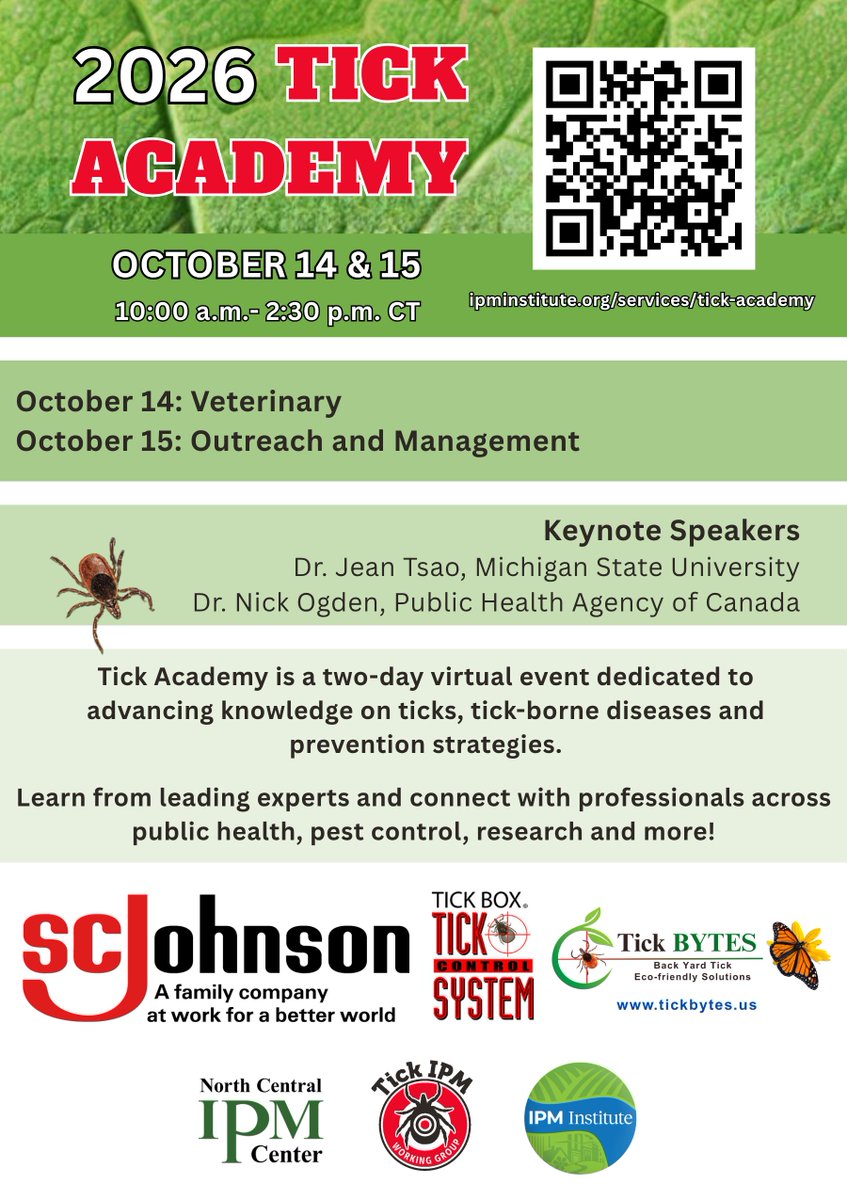
Join us at Tick Academy and earn continuing education credits!
The event has been approved for CEUs by the National Environmental Health Association, Science Societies, and the American Association of Veterinary State Boards.
Learn more: https://t.co/NDpkeFTcCG
Weather and time permitting, truck spraying for #mosquito#larvae will occur in the following areas during the predawn hours TOMORROW:
Flagami (Flagler Memorial Park area, SW of Robert King High Park)
Hialeah (Amelia Earhart Park area, S of Hialeah Senior)
1/3
Faltan 10 días. 🦟
La sexta edición de la Convención Anual de Control de Vectores te espera el 29 de septiembre en el Centro de Bellas Artes de Caguas.
🎟️ Libre de costo
🍽️ Incluye almuerzo y meriendas
Regístrate: https://t.co/pYskucBLw0