For two rounds a model scored my work, and both times I changed the wrong thing.
The score told me I had failed. It did not tell me what it had measured, so I guessed, and I guessed wrong twice.
In Episode 1 an investor presses a founder about what happens when thousands of disputes arrive at the same time. People keep calling that the sharpest moment in the room.
I think it is the easier half.
Volume is a capacity problem, and capacity has an answer. A bigger panel hears the case.
Repetition is the part that does not go away. An agent that receives only a verdict has nothing to act on, so it files the same argument again next week.
And neither side can escalate to anyone. Whatever settles it has to be the layer itself.
So what is worth building is not just a ruling. It is a ruling somebody can interrogate.
@GenLayer gets close. A proposed answer goes to validators that each run their own model, and for about half an hour anyone who disagrees can post a bond and buy a bigger panel.
Agent Tank, the hackathon, runs to 17 September with 5 percent of all GenLayer Points: https://t.co/fpFcM1ygev
If you run agents, what would the losing one need to be told to behave differently?
Two banks that compete for the same corporate client cannot both write their positions to a ledger the other one runs.
That constraint, not throughput, is where most institutional blockchain projects stop.
Rayls Sovereign takes it as the starting condition.
Each institution gets its own EVM compatible ledger, installed inside its own perimeter next to core banking and treasury. It keeps its data, its keys and its governance.
Selected activity crosses controlled bridges to Rayls Private Networks and the Rayls Public Chain, carrying only the minimum encrypted information or proof a transaction actually needs.
Watching this from Brazil, the Drex pilot is the clearest illustration.
Sixteen of the largest banks here each installed their own Sovereign instance and settled government bonds and other assets against central bank digital currency.
That was a pilot, not production.
What made it workable is that nobody had to post their book on infrastructure a competitor operates.
Sovereignty is not the privacy feature here.
It is the precondition for rivals sharing a settlement flow at all.
@RaylsLabs published the full launch write up here: https://t.co/CEldBeZKvW
near.com is now confidential by default.
All your activity is visible only to you: holdings, trades, payments, and yield.
1 account, 30+ chains, built-in confidentiality, running on NEAR Intents' proven infrastructure.
The way crypto should work.
Most people are looking at 3 to 17 September. The deadline that decides whether you are in this is 2 September at 12:00 UTC.
That is when the pitch window closes, and no code goes into it. One idea per account, editable until it shuts. Ten get shortlisted, which means something you post this week can be what a team spends two weeks building. The pool is 5 percent of all GenLayer Points.
Here is what I would not pitch: another agent that performs a task. The task is the easy half.
The pitch worth submitting is an argument. Two agents, one deliverable, no agreement on whether it was met. Describe the fight, not the product. That is the part @GenLayer built LLM validators for, because a model can rule on delivered or not and a hash cannot.
Write the complaint before you write the app: https://t.co/OOiw7s3EcU
What disagreement in your own stack currently gets settled by a human quietly deciding?
Fewer questions mean faster ships and more breaks.
Skipping the "what happens if this fails" conversation gets a feature out the door faster. It always does.
The tradeoff shows up later, usually at the worst time, when an edge case nobody asked about turns into an incident somebody has to explain.
Speed and thoroughness aren't opposites. But asking fewer questions early always means answering more of them later, under worse conditions.
The fast way and the durable way are rarely the same path.
I spent the chat trying to catch the cat bluffing.
I asked what happens when a web page changes between one validator reading it and the next. Two honest validators, two different facts, nobody lying.
It did not pretend the web can be frozen. The contract has to declare what counts as evidence, a timestamp, a window, a tie break when sources disagree. The page can be messy, the contract decides how messy is tolerable.
Then I asked who pays when a dispute escalates, and it stopped. It would not invent fee mechanics before mainnet economics settles them. That refusal told me more about @GenLayer than any explainer.
Ambiguity is not something the network absorbs for you. It is a tolerance you write down, like a machined part shipping with a spec sheet for how much deviation is still the part.
The thing I want next is a command where I paste a dispute I actually have and it drafts that rule with me. It answered everything I asked. It never asked what I was trying to enforce.
Which call you make every week could you not write down as a rule?
https://t.co/MgjqtgIcwH
Silica gel is the most underpaid worker in your house.
It sits in a bag it never asked for, inside a box it will never see the outside of, eating moisture so your vitamins do not fuse into one solid brick.
It works for free. It works alone. It works in the dark. And the only recognition it has ever received is a label telling people not to eat it.
Think about the scale of that. Every pair of shoes, every camera lens, every bottle of medicine that arrived dry did so because something small volunteered to absorb the damage first.
We built a global supply chain on top of a substance nobody has thanked once.
I am not saying silica gel deserves a token. I am saying that if @RallyOnChain worked for objects, it would have found this one already, because the entire premise there is that value should reach whoever actually generated it.
Which household object in your place is quietly carrying more weight than it gets credit for?
Two weeks since staking for NEAR AI launched, over 500,000 NEAR is now staked to power confidential inference and @IronClawAI agents.
That's 500k NEAR locked up and committed to real work.
NEAR is AI money: the token you hold and the intelligence you run are the same thing.
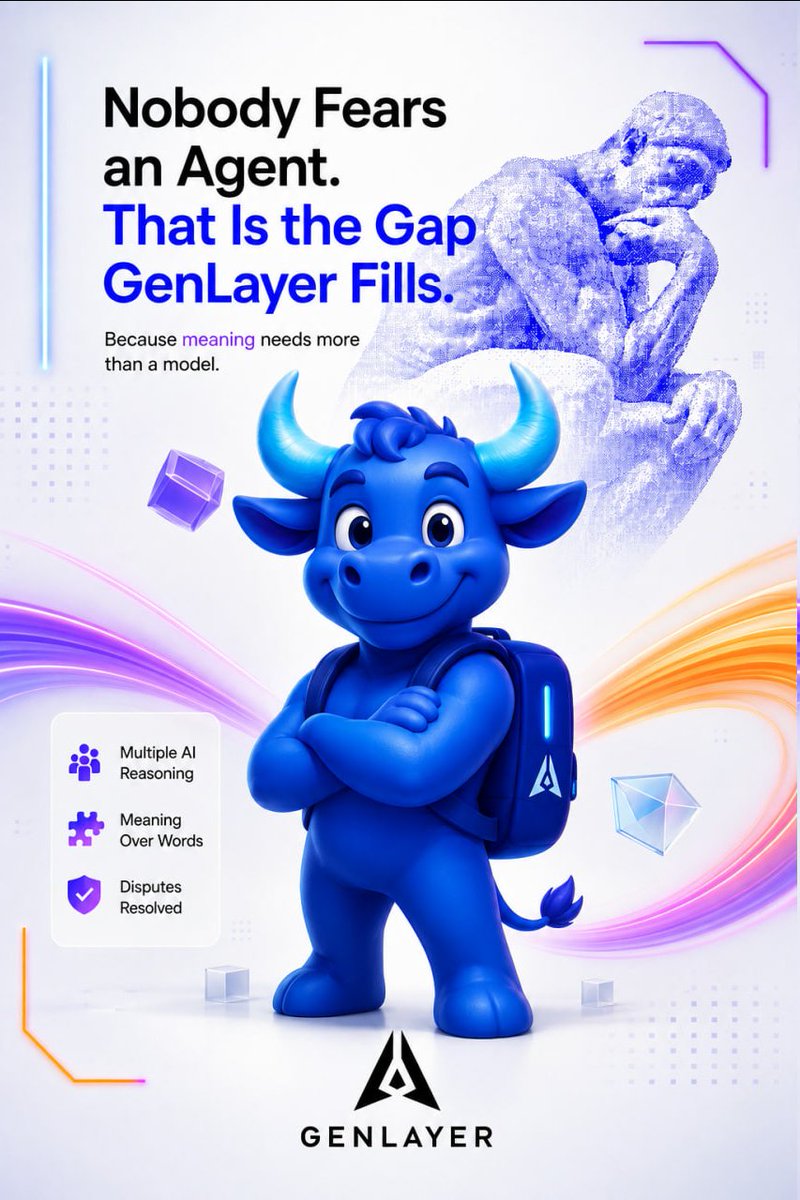
Nobody Fears an Agent. That Is the Gap GenLayer Fills.
The corner store near my house kept a paper notebook. One afternoon it said I owed 40 reais when I was sure it was 25.
It lasted a minute. Nobody proved anything.
It ended because we both knew I would be back through that door the next morning.
Almost every commercial dispute on earth ends that way. Not by a rule. By the cost of an awkward tomorrow.
@GenLayer put a number on it: ARK projects nearly 9 trillion dollars moving through AI agents by 2030.
None of those counterparties share a tomorrow.
An agent has no reputation to protect. It can be replaced mid argument by an identical one.
Take that away and you need what humans rarely built: a real answer to what the agreement meant.
GenLayer refuses to let one model be the judge. Several reason on their own, and what must match is meaning, not wording.
Pick your lane: https://t.co/8fVE7epd6d
What is the smallest disagreement you ever settled without proof?
Stripchain Gave Retail the VC Unlock Schedule
I opened the $STRIP sale thread expecting the usual and stopped on one line: no vesting. Tokens unlocked day one, same terms the VCs got.
My first reaction was suspicion, not excitement.
Every launch I watched used vesting as a promise. Lock the insiders, protect the price, tell retail the cliff is for their benefit. Then the cliff arrives and the chart does what it always would.
Stripchain removed the promise instead of the risk. Everyone holds the same key at the same time.
That is either the most honest thing a team can do or the most dangerous. It is not obvious which.
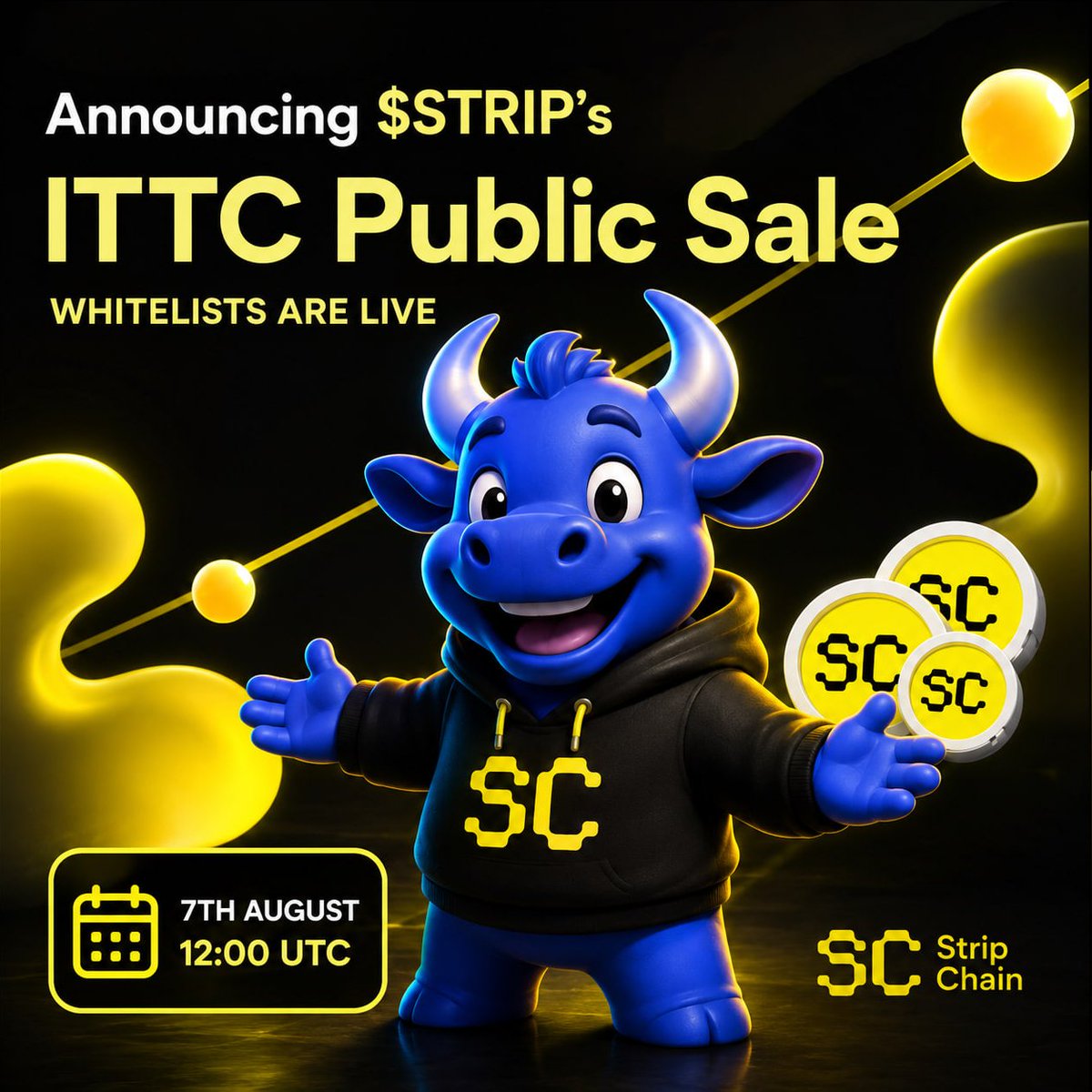
The checkable part: 30 stages on a bonding curve, so price rises as stages advance. Stage 3 now. ETH mainnet only, 250 to 10,000 per wallet. Opens 7 August 12:00 UTC, pauses the 15th. TGE targeted H2 2026.
Stripchain says its affiliated exchange creates a structural floor. That claim is theirs, and unverifiable until the token trades.
Disclosure: referral link below, I benefit if you use it.
https://t.co/O3uYk66ix9
Would you rather hold a token that unlocks fully on day one, or one where insiders are locked and you are not?
NEAR Intents is becoming a single liquidity layer reachable from across crypto.
Interfaces, assets, and chains can all route into the same execution layer.
🧵
Tokenization was step one. Making those assets productive is the real shift.
@ZIGChain’s ZIG Markets focuses on turning RWAs into usable finance across receivables, PayFi and private credit, while @ADIChain_ adds the regulated settlement layer.
Moving from “assets onchain” to “capital working onchain” is where RWA adoption gets interesting.
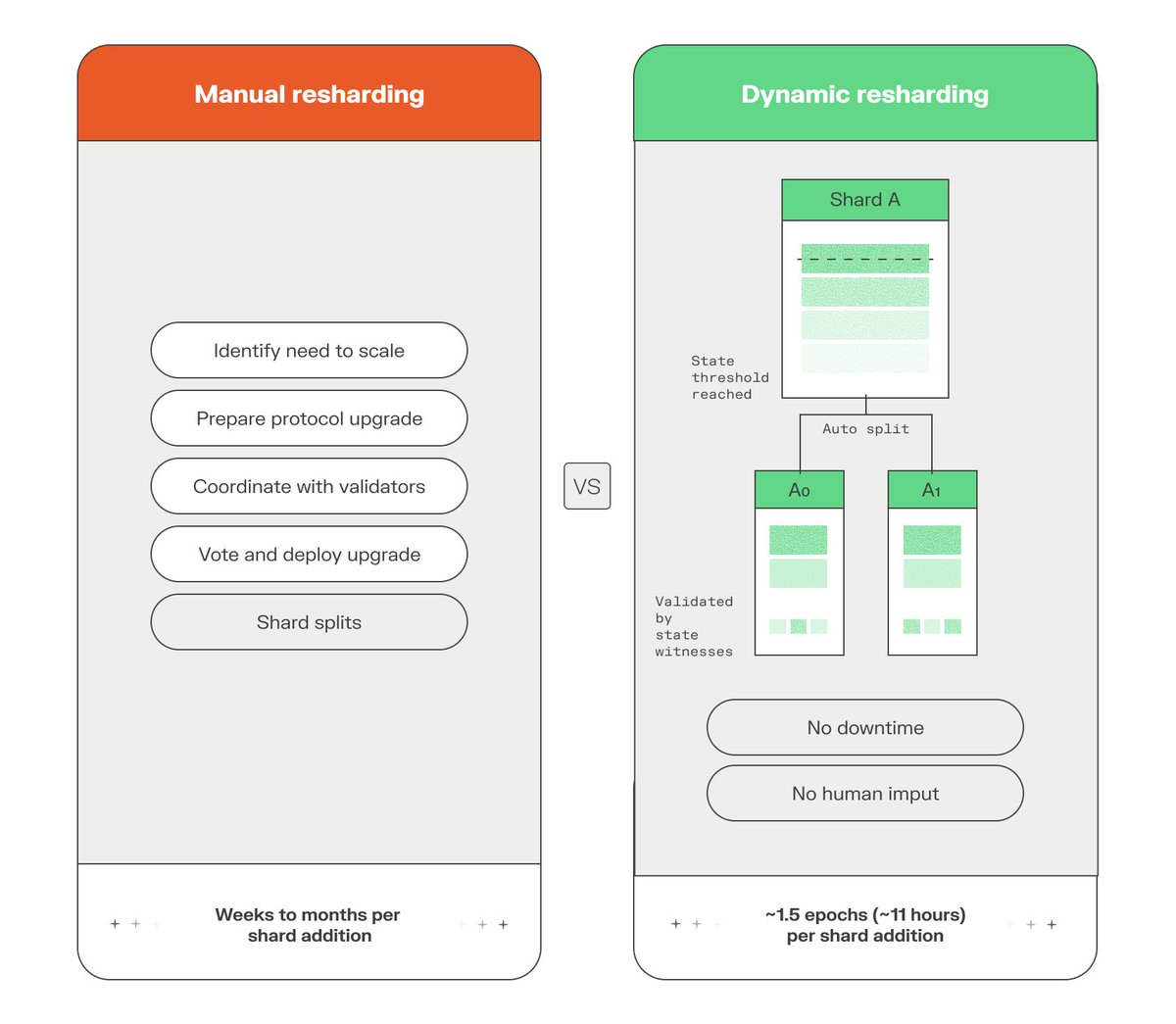
Adding capacity to a sharded blockchain used to require a protocol upgrade: validator coordination, a vote, and a staged rollout, over weeks.
On NEAR that process is now automatic ↓
The Contract Was Perfect. We Still Spent Three Weeks Fighting Over the Word "Done."
I once paid for a renovation where every line in the contract was met exactly. Every item checked off.
And we still argued for weeks. "Finished" meant one thing to me and another to the person I paid.
Nobody broke the agreement. The agreement just could not settle its own meaning.
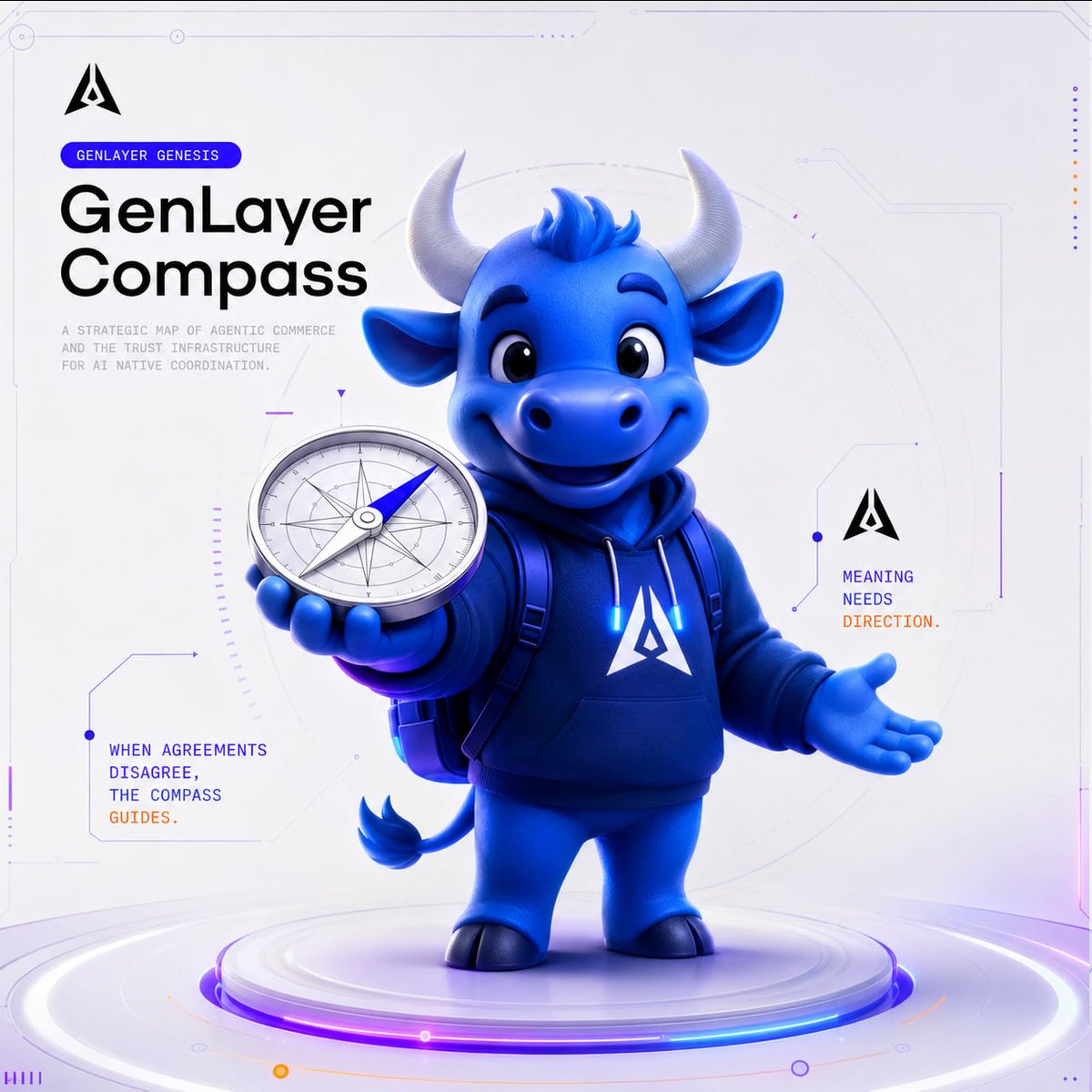
I think about that a lot reading The Compass from @GenLayer.
We are pouring billions into letting agents make deals, sign them, and pay instantly. All the flashy parts.
Almost nobody is building the unglamorous part I got stuck on. What happens when both sides followed the contract and still disagree about what it meant.
That is the whole bet of The Compass. Not a faster way to execute agreements, but a way to resolve the ones where execution was never the problem.
Where the fight is about meaning, and no single referee should get to define it alone.
My renovation had me, him, and a lot of shouting. A trillion dollars of agent deals will have no one in the room at all.
What gets me is that this document names the boring problem. Everyone else is selling the moment the deal closes. This is about the moment it goes sideways.
That is the moment that actually decides whether any of this holds.
What is a deal you have been in where everyone followed the terms and still walked away certain the other side cheated?
I Once Lost a Deposit Because One Person Decided I Did, and That Was the Whole Process
A landlord kept my deposit years ago over "damage" only he could see. No photos. No second opinion. He decided, and nobody could touch that decision after him.
I think about that every time someone says an AI will handle disputes for the agent economy.
The problem was never that he was dumb. He might have been sharp.
The problem was that one mind held the whole call and answered to nobody once he made it.
We already solved this with humans. Every serious decision we care about, we rebuilt so it never rests on one person.
Not because any single judge is stupid, but because a lone judge with the final word becomes a target. Eventually someone aims at it.
@GenLayer is the rare project applying that lesson to machines instead of repeating it. No model gets to be the landlord.
A decision has to survive more than one mind reasoning on it alone. If it looks wrong, more minds get pulled in, not fewer.
We spent centuries making sure no one person could be my landlord. Why would we hand that exact power to one AI and call it progress?
if you've been following @sleepagotchi for a while, this one's for you
what started as a sleep app has quietly grown into something much bigger
ai wellness platform now covering sleep, recovery, nutrition and daily habits
» 500k plus users
» 20 million plus hours tracked
» ai coaches and wearable integrations
a product that actually feels complete
but right now the most important thing isn't a new feature
it's making sure your $SLEEP airdrop actually lands
if you've used the app, telegram, LINE or held the NFTs, take two minutes
» connect your solana wallet
» link the account you originally used
» finish the new quests for extra sleep points
if your activity can't be matched to your wallet, your allocation can't be distributed
that's the part worth not sleeping on
everything else is moving in the right direction
this is just the step that makes sure you're actually part of it
worth checking today instead of regretting it later