🇨🇳 Esto es lo que muchos trabajadores chinos reciben como beneficio estándar.
3 comidas al día (baratas o gratis)
Dormitorio individual gratuito (o familiar a bajo costo)
2 horas de siesta después de comer
En la fábrica de electrónica donde trabaja esta chica, todo esto es normal.
Comida abundante, descanso real y alojamiento cerca del trabajo.
Mientras en Occidente los empleados pagan caro por todo y apenas tienen tiempo para comer, China mantiene políticas laborales que priorizan la estabilidad, la salud y la productividad del trabajador.
No es utopía. Es un modelo que retiene talento y mantiene moral alta.
Qué opinas?
autonomous robot driving through the field at night. no chemicals. no pesticides. just UV light killing pathogens and pests while everyone sleeps. this is @tricrobotics.
this is what chemical-free pest control looks like at scale.
100 days. Around 2,000 dead. A fifth of the world’s oil choked off for over three months. And the country that shut the strait is the one losing.
Almost none of these numbers are sustainable.
The closure is, in the IEA’s own words, the largest supply disruption in the history of the oil market, and the war has now spread to at least 16 countries.
The American bill is staggering. The Pentagon has spent $29 billion, most of it on munitions, with $5.6 billion burned in the first 48 hours alone. It has fired roughly 1,100 Tomahawks, close to a third of the Navy’s stockpile, and lost 42 aircraft, including two dozen Reaper drones. Counting fuel as well as funding, Moody’s puts the cost to US families at $100 billion. The Strategic Petroleum Reserve is down 12% and will not return to pre-war levels until 2028.
Iran is faring worse. By Trump’s own count it has spent nearly 80% of its missiles. Its crude exports have collapsed from 1.7 million barrels a day to under 300,000. Its economy is forecast to contract by more than 10%.
Two sides are paying a fortune for this war. Only one is running out of what cannot be rebuilt in a season. The numbers do not say the West is winning cleanly. They say Iran is losing faster.
🚨FULL VIDEO: 6 Things Inside The Serapeum That Make No Sense
Every shot in this video was filmed on location by me in Egypt.
No stock footage used.
Filmed, edited, and narrated entirely by me.
If you like, please repost and help more people discover it.
A French engineer who lives quietly in Paris has spent 30 years writing software that the entire internet now runs on without knowing his name.
He wrote the code that streams every YouTube video, every Netflix show, every TikTok clip. He wrote the code that runs the virtual servers underneath AWS, Google Cloud, and Microsoft Azure. He calculated more digits of pi than anyone in history. He has no Twitter. He has no marketing. He just keeps shipping.
His name is Fabrice Bellard.
Here is the story, because almost nobody outside the systems programming world knows what one man has built.
Fabrice was born in 1972 in Grenoble, France. He studied at École Polytechnique, the top French engineering school. He never went to Silicon Valley. He never built a startup empire. He just wrote code.
In 2000 he started a project called FFmpeg, an open-source multimedia framework for encoding, decoding, and streaming video. He was 28. The project did one thing nobody else had done well. It handled every video and audio format that existed, in one library, on every operating system. He led it himself for years.
Today FFmpeg is the invisible engine of the internet. YouTube uses it. Netflix uses it. VLC uses it. Chrome and Firefox use parts of it. Every Android phone, every iPhone, every smart TV, every video editing tool you have ever touched runs FFmpeg somewhere underneath. If you have watched a video on a screen in the last 20 years, Fabrice's code processed it.
He was not done.
In 2003 he started QEMU, a machine emulator and virtualizer. He wrote it solo until version 0.7.1 in 2005. QEMU lets you run any operating system on any other operating system. It became the foundation of modern virtualization. KVM, the Linux kernel hypervisor, runs on top of QEMU. Every major cloud provider, AWS, Google Cloud, Microsoft Azure, IBM Cloud, runs virtual machines on infrastructure built around it. The Quick Emulator is the most cited piece of cloud infrastructure code on Earth.
He kept going.
In 2001 he won the International Obfuscated C Code Contest with a small C compiler that grew into TCC, the Tiny C Compiler. TCC can compile and boot a Linux kernel from source in under 15 seconds. In 2004 he calculated the most digits of pi ever computed at the time, using a personal desktop computer and an algorithm he derived himself called Bellard's formula. In 2011 he wrote a complete PC emulator in pure JavaScript that runs Linux in your browser, a project called JSLinux that engineers still cannot believe is real.
In 2019 he released QuickJS, a small but complete JavaScript engine that fits where V8 cannot. In 2021 he released NNCP, a neural network based lossless data compressor that immediately took the lead on the Large Text Compression Benchmark.
Then he turned his attention to large language models. He built TextSynth Server, a web server with a REST API for running LLMs locally. He released ts_zip and ts_sms, compression utilities that use language models to compress text and short messages at ratios traditional algorithms cannot reach. He released TSAC, a very low bitrate audio compression system. In December 2025 he released Micro QuickJS, a new JavaScript engine for microcontrollers, separate from QuickJS, designed for environments with almost no memory.
Fabrice co-founded a telecom company called Amarisoft in 2012, where he serves as CTO. Amarisoft builds 4G and 5G base station software used by carriers and labs around the world. He has been running it for over a decade while continuing to ship personal projects from his own home page at bellard dot org
He has no Twitter. He has no Instagram. He gives almost no interviews. His personal website is a flat list of projects with no styling, no fonts, no marketing copy. Just titles and links.
A quiet French engineer who never moved to Silicon Valley wrote the code that quietly runs the internet.
He is still shipping.
Don’t skip these labs in your 20s, 30s, and 40s if you care about your brain’s future.
Focus on metabolic health:
Fasting blood sugar around 90
A1C around 5.2
Fasting insulin between 2 and 5
These markers help define your brain’s destiny over time.
A whole host of chronic conditions might be nothing more exotic than the slow consequence of eating hidden death crystals every morning.
That is not me being dramatic. Oxalate is a plant defence compound, concentrated in spinach, chard and almonds, and it forms genuine microscopic crystals. When they deposit in a joint, an eye, a nerve or the bladder wall, the body throws up symptoms, the symptoms get a tidy label, and almost nobody thinks to ask where the crystals came from.
Conditions routinely handed a diagnosis when oxalate is the real culprit:
- "Gout" that doesn't respond to gout treatment
- "Fibromyalgia" with no clear origin
- "Interstitial cystitis" and chronic bladder discomfort
- "Vulvodynia" and unexplained genital pain
- "Plantar fasciitis" that won't resolve
- "Arthritis" arriving suspiciously early
- "Tendonitis" that never heals no matter how much you rest it
- "Costochondritis" and unexplained chest-wall pain
- "Dry eye" and a permanent gritty, burning feeling
- "Sciatica" and nerve pain with no disc to blame
- Thyroid nodules, where these crystals genuinely turn up on pathology
I'm not saying oxalate is behind every case of these.
I'm saying it's striking how rarely anyone checks, given how cheap it is to simply eat less spinach for a few months and observe.
The pig is the most democratic animal that has ever lived.
Everything that follows is built on that. A pig needs no pasture, no hillside, no shepherd, no barn full of winter feed. It eats what you cannot. Acorns, windfall apples, kitchen scraps, the peelings and the whey and the spoiled milk headed for the midden. You feed it nothing and it gives you everything: a year of fat, lard, protein and crackling from an animal that turns household waste into the richest meat a poor family will ever taste.
One sow. A back garden. No land, no lord, no permission.
That is the problem with the pig. Not hygiene. Not parasites. Not the desert heat, though you will have been told all three by someone confident and wrong. The problem with the pig is that it made the poor man independent, and independence is the one thing the powerful have never been able to abide in people they mean to keep.
Walk it back. In Bronze Age Mesopotamia and Egypt, pork was everywhere, thriving in the muck and crowded backstreets of the cities, above all the meat of the urban poor. Protein from almost nothing. And, crucially, protein the tax collector could not see. A field of barley is visible. A herd of cattle is visible. A pig in the yard, fattening quietly on scraps, is wealth that appears in no ledger.
So the herders who chased status moved to cattle and sheep. Cattle you could drive, count, tax, lend and inherit. The pig was wealth you could hide, and a ruling class has never had any use for wealth it cannot count.
The taboo did not fall from the sky. It crept in. In the southern Levant, pork consumption had been eroding since around 3000 BC, long before a word was written against it. By the early Iron Age the pig was a flag: the Philistines, migrants from the Aegean, ate it; the Israelites, native to the hills, largely did not. You could tell whose a settlement was from the bones in the midden.
Then comes the part we can date. When the Biblical texts were codified, the priestly elite of Judah took a custom that already existed and carved it into law, hardening a soft regional habit into a line of identity you would die rather than cross.
And men did. By the time of the Maccabees, under Greek rule, it was no longer about cuisine. Hellenistic officials forced Judeans to eat pork precisely because they knew what refusing it now meant. To refuse was to declare who you were. Men chose death over a single mouthful. The animal had become a border drawn through the human body.
The Greeks ate pork happily. The Romans ate it by the wagonload. So refusing it became a way of being Not Them, and the taboo grew in power because it was useful: every time an empire pressed down, the pig was a way to stay yourself. Centuries later Islam inherited the line and hardened it again, and now some two billion people will not touch the most efficient protein a poor household can keep.
Notice what is absent from all of it. Nutrition. Health. The body. The pig was banned not for being dangerous to eat but for being dangerous to own: an animal that let the landless feed themselves without asking, invisible to the men with the ledgers.
Power has never minded what you put in your mouth, only what you can do without it.
The pig let people do without.
That was the sin. It always was. It quietly still is.
"Sugar addiction isn't a real thing."
Fascinating.
The substance produces dopamine release in the nucleus accumbens. It causes tolerance with repeated exposure. It causes withdrawal symptoms when removed, including headaches, irritability, low mood, and cravings, peaking at days three to seven, with some psychological symptoms lasting weeks. It produces compulsive use despite negative consequences. It generates cross-sensitisation with other addictive substances in animal studies.
Apply that profile to any other compound and a psychiatrist would diagnose dependence inside twenty minutes.
But because the compound in question is in the breakfast cereal of every primary school child in the country, we have agreed, collectively, that the word doesn't apply.
It applies.
It has always applied.
We just had reasons not to say so.
"I eat clean." She drizzles industrially refined rapeseed oil over her salad.
"I'm avoiding processed food." He unwraps a protein flapjack assembled by a team of food scientists in Slough.
"I cut out red meat for my heart." Her breakfast was a bowl of sugar-coated wholegrain cereal.
"I'm dairy-free now." He pours oat milk made of water, sunflower oil, and three stabilisers into his coffee.
"I'm watching my cholesterol." She butters her toast with a margarine spread containing fourteen ingredients designed to mimic butter.
"I'm gluten-free for my gut." He eats a £4 cookie made of rice flour, palm oil, and xanthan gum.
"I'm vegan for the animals." Her almond milk just killed half a hive of commercially trucked Californian bees.
"I prefer plant-based fats." He pours sunflower oil into a smoking pan and inhales the aldehydes.
"I had a healthy salad for lunch." Her spinach, almonds, and quinoa just delivered the daily oxalate quota in one bowl.
"I don't eat anything with a face." He bites into a Beyond Burger with 22 ingredients and a flavour profile assembled in a Californian laboratory.
"I'm being good today." Her breakfast was sweetened oats, a banana, and a glass of apple juice. Eighty grams of sugar before nine.
The labels are doing the talking. The food is doing something else entirely.
🏔️ The science behind Sherpas’ “superhuman” abilities at extreme altitude.
Sherpas have lived for thousands of years above 14,000 feet in the Himalayas. A fascinating 2017 study reveals why they thrive where others struggle:
• Their mitochondria (cell powerhouses) are far more efficient at using limited oxygen
• They produce more energy with less oxygen, and even better without it (anaerobic metabolism)
• Less “leaky” mitochondria = more mileage from every breath
This genetic & physiological adaptation helps explain their legendary climbing strength and endurance on Everest.
Graves consecuencias para el Hospital Infantil de México por tener a una presidente ávida de poder que delinque todas las mañaneras.
Son unos asesinos
Buenos día a todos. Les saluda Pablo Lezama, Médico Cirujano por la UNAM y especialista en Cirugía Pediátrica por el Instituto Nacional de Pediatría y la UNAM.
No tengo la intención de causar polémica ni discusión política, pero creo que es importante evidenciar la problemática en los Institutos Nacionales de Salud. Así las cosas, les haré una brevísima descripción, sin más, de un fragmento de lo que pasa en uno de ellos.
Me desempeño como Jefe de Cirugía Oncológica del Hospital Infantil de México Federico Gómez, Instituto Nacional de Salud. He trabajado ahí desde hace 19 años, luego de regresar de una extensa formación adicional en Cirugía Oncológica Pediátrica en el extranjero, feliz de poderle retribuir al País lo recibido, en especial lo recibido por la UNAM. Estoy convencido de que tengo el mejor trabajo, pero cada vez me restringen más el hacerlo.
Tengo muchísimos pacientes, y a la vez un tiempo y espacio limitados. Aún así, nos las arreglábamos para mantener la mayor productividad, con la mayor calidad y seguridad, con más de 700 procedimientos por año sólo de nuestro Servicio, la mitad de ellos cirugías mayores, con 100 ingresos electivos a la Unidad de Terapia Intensiva Quirúrgica. Con sólo dos días a la semana asignados para cirugía mayor, con el apoyo de residentes y todo el personal de quirófano y del resto del hospital, los jueves el primer paciente del día estaba en sala a las 5:30 h, y el último salía entre las 17:00 y las 19:00. El viernes el primero entraba a las 9:00, después de la sesión de morbimortalidad de la división de cirugía, y el último salía entre 16:00 y 17:00. En febrero pasado me pidieron que acotara aún más que pacientes pueden ser atendidos en el HIMFG por mi servicio. En marzo nos disminuyeron el tiempo para cirugía electiva, debido a reducción en el personal de enfermería, que era al menos en parte contratado por "outsourcing". Dicho mecanismo no era ideal, pero ante la falta de plazas ofertadas por la Secretaría, era una solución alterna. Esa reducción consistía en limitar mi tiempo solamente a las horas efectivas del turno matutino; en otras palabras, ningún paciente podría entrar antes de las 8:00, ni salir después después de las 15:00.
Eso equivalía a reducir la capacidad operativa y resolutiva entre 30 y 40%.
Hace apenas unos días se ha reducido en 50% el presupuesto para los servicios integrales de anestesia, y por tanto se reducirán 50% más los procedimientos quirúrgicos.
Me han pedido que defina qué pacientes con tumores sólidos pueden derivarse a otros centros.
Esto es gravísimo. Una publicación reciente de CENSIA revela que de todos los centros oncológicos pediátricos acreditados por el Seguro Popular, solamente el HIMFG y el INP alcanzan resultados equivalentes al "primer mundo", mientras que el resultado en los demás es muy variable.
Repito, sin emitir juicios, sólo les comparto esta pequeñísima parte de nuestro sistema de salud, pero a la vez muy importante, pues se trata de los niños y adolescentes que además de ser carentes tienen encima que sobrellevar el vivir con cáncer.
Siéntanse libres todos de compartir esta publicación.
Hagámoslo viral.
No dejen además de firmar y compartir una petición que ya circula por las redes, dirigida al Presidente y al Secretario de Salud, para pedir que no se recorte el presupuesto al HIMFG
El colmó de la maldad
Ya cumplí, cumplan ahora ustedes si están de acuerdo, si no, pues bórrenlo, después, no se vale quejarse, no podemos seguir aguantando tantas sandeces…….
El costo por segundo televisado en el horario de la mañanera, en promedio es de 13,000 pesos.
Ayer la mañanera de más de 3 horas, nos costó a los mexicanos más de $140 millones de pesos.
En promedio cada mañanera nos cuesta 130 millones al día.
🔴 | ALERTA GRAVE: HACKEAN PROGRAMAS DEL BIENESTAR Y EXPONEN DATOS BANCARIOS
El mismo cibercriminal que filtró ayer la base de datos de Protección Civil del gobierno federal ha atacado a la @bienestarmx
Derivado de esta exfiltración, se ha extraído más de 1 GB de información proveniente de sus bases operativas.
Para dar total credibilidad, el atacante incluyó toda la evidencia que confirma que LA BRECHA ES REAL, revelando incluso las credenciales exactas del sistema que utilizó para ingresar y explotar la plataforma.
No se trata solo de registros de texto; el volcado incluye la exposición directa de:
📍Números de tarjeta bancaria de 16 dígitos
📍Números de cuenta
📍RFC
📍CURP
📍Nombres completos
📍Direcciones exactas
📍Firmas autógrafas
📍Fotografías de los ciudadanos recibiendo sus tarjetas
📍Credenciales de elector (INE) por ambos lados
🔎 El sitio se encuentra "en mantenimiento" en estos momentos.
¡ESTO DEBERÍA SER UN VERDADERO ESCÁNDALO!
According to reports, during his conversation with Trump, Xi criticized certain leaders — namely Lai from the Taiwan and Japanese Prime Minister Sanae Takaichi. Trump’s response was that Takaichi was not the one who should be criticized.
This stance, of course, has little to do with anything Takaichi or Lai might have said or done. Rather, it reflects that in Trump’s strategic calculus, Taiwan has already become a bargaining chip, while Japan has not — at least not yet.
China’s power has not grown to the point where it can pressure the U.S. into abandoning Japan, so Trump’s response is entirely expected. However, as China’s strength continues to rise, the day when Japan too is reduced to a mere bargaining chip by the U.S. is also foreseeable.
This video I made 4 years ago is about to become more relevant than ever
Egyptian authorities have NOT shown the public ALL images of tunnels/chambers that exist UNDERNEATH & INSIDE the Great SPHINX
📍This video includes never before seen images of a hidden passage from INSIDE the Sphinx
In short, Dr. Zahi Hawass lied when he said “they’re in my book” - No, these are 100% not in any book or publication he’s ever shared…
Stay tuned for my next video, as this story is about to become much bigger 🔥
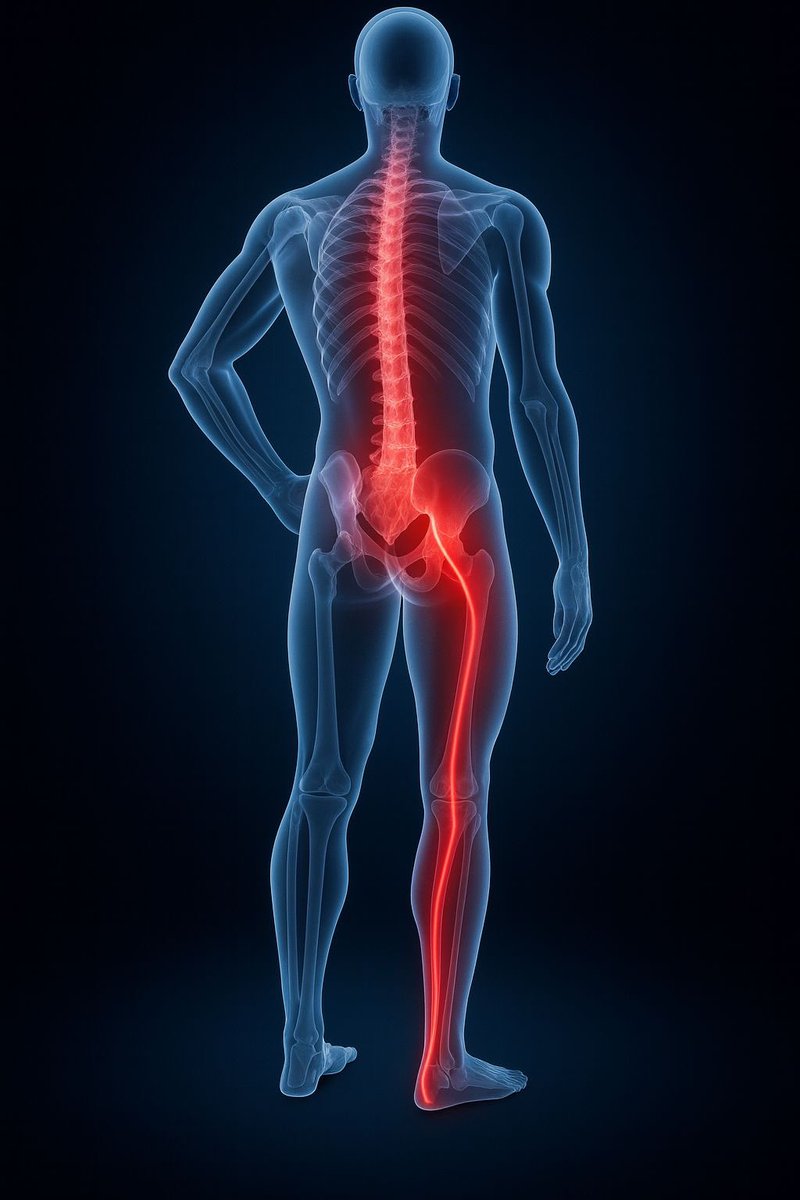
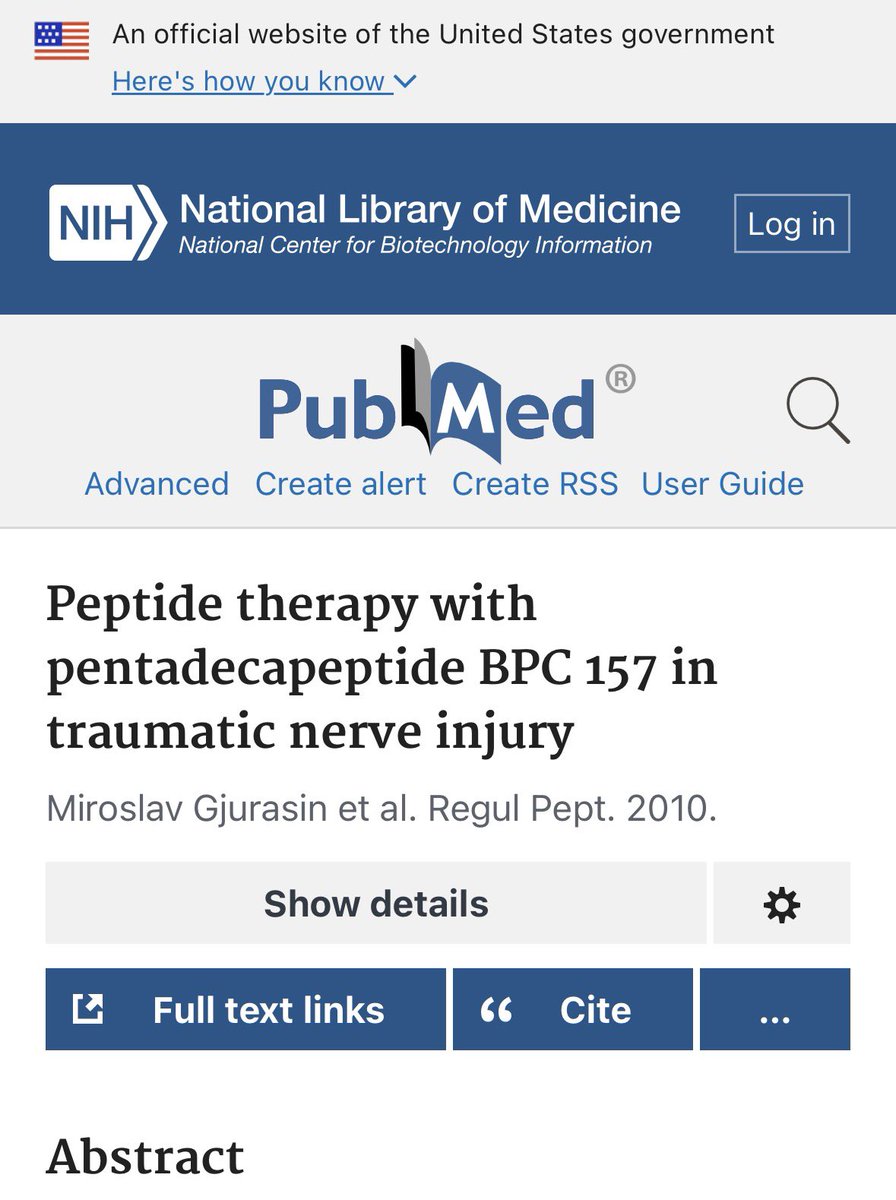
BPC-157 regrew a completely SEVERED sciatic nerve in 60 days.
(PMID: 19903499)
Does your back hurt before you get out of bed? Do you wince tying your shoes? Does pain shoot down your leg into your foot?
That’s not “just back pain.” It’s nerve compression.
This can lead to:
→ permanent nerve damage and foot drop
→ disc surgery with 40% failure rate
→ inflammation crushing your spinal nerves
→ muscle atrophy in your legs
→ losing the ability to walk pain-free
BPC-157 also IMPROVED spinal cord crush recovery over 360 days (PMID: 31266512).
A peptide your body already makes. Repairing what your back surgeon couldn’t.
Advil shreds your gut. Cortisone breaks down collagen. Surgery fails 40%.
This doesn’t.
I take Barrier Health’s BPC-157 oral tablets personally. No injection. No prescription. Code ALFRED saves you 15%. Link below.
Stare into your dog's eyes. Your brain releases the same bonding chemical a mother's brain releases when she stares at her newborn. So does the dog's. Wolves can't do this. Not even ones raised by humans from birth. Dogs are the only animal on Earth that hacked the human bonding system.
When mila started reading on her porch, those four dogs gathered around her for a reason that goes back at least 14,000 years. A Hungarian neuroscientist named Attila Andics put 11 dogs into MRI scanners in 2014. He found that dogs have a special patch of brain wired just for hearing voices. Humans have one too, in the same spot. Both species probably inherited it from a shared ancestor that lived 100 million years ago.
In 2016 the same lab went deeper. Dogs process the meaning of a word with the left side of their brain and the tone with the right side, same setup humans have. Their reward system, the part that fires when something feels good, only switches on when the words and the tone match. Say "good boy" in a flat voice and nothing happens. Say a random word in a warm tone and nothing happens. You need both.
At Emory University, neuroscientist Gregory Berns trained 13 dogs to lie still in an MRI and gave them a choice: food or their owner's praise. Most chose praise, or treated both equally. Only 2 had a clear food preference. One of them, a terrier named Ozzie, picked food 100 percent of the time. In a follow-up maze, the dogs with the strongest brain reaction to praise picked their owner over food 80 to 90 percent of the time.
The bonding chemical has a name: oxytocin. Takefumi Kikusui at Azabu University in Japan measured it in dogs and owners before and after they sat together. Dogs that stared at their owners spiked the owners' oxytocin levels. The humans, feeling that warmth, petted the dogs more, which spiked the dogs' oxytocin. Which made the dogs stare even longer. A feedback loop, the same one a nursing mother runs with her baby. He tried the test on wolves people had hand-raised from puppies and got nothing.
Dogs have been running this loop with us for at least 14,000 years, probably closer to 30,000. They evolved alongside hunter-gatherers, before farming existed. Around 471 million now live as pets worldwide.
So when those four dogs gathered around mila, the reading itself was what pulled them in. Her voice was lighting up the patch of brain wired just for human voices. The slow rhythm of reading aloud sounds like "pet-directed speech," the higher-pitched, sing-songy voice people naturally use with dogs and babies. Researchers tried this back in 1983: kids who read aloud to therapy dogs had their heart rate and blood pressure drop to normal.
Mila guessed right. For her dogs, reading aloud is the longest, gentlest version of "good boy" their brains can get.