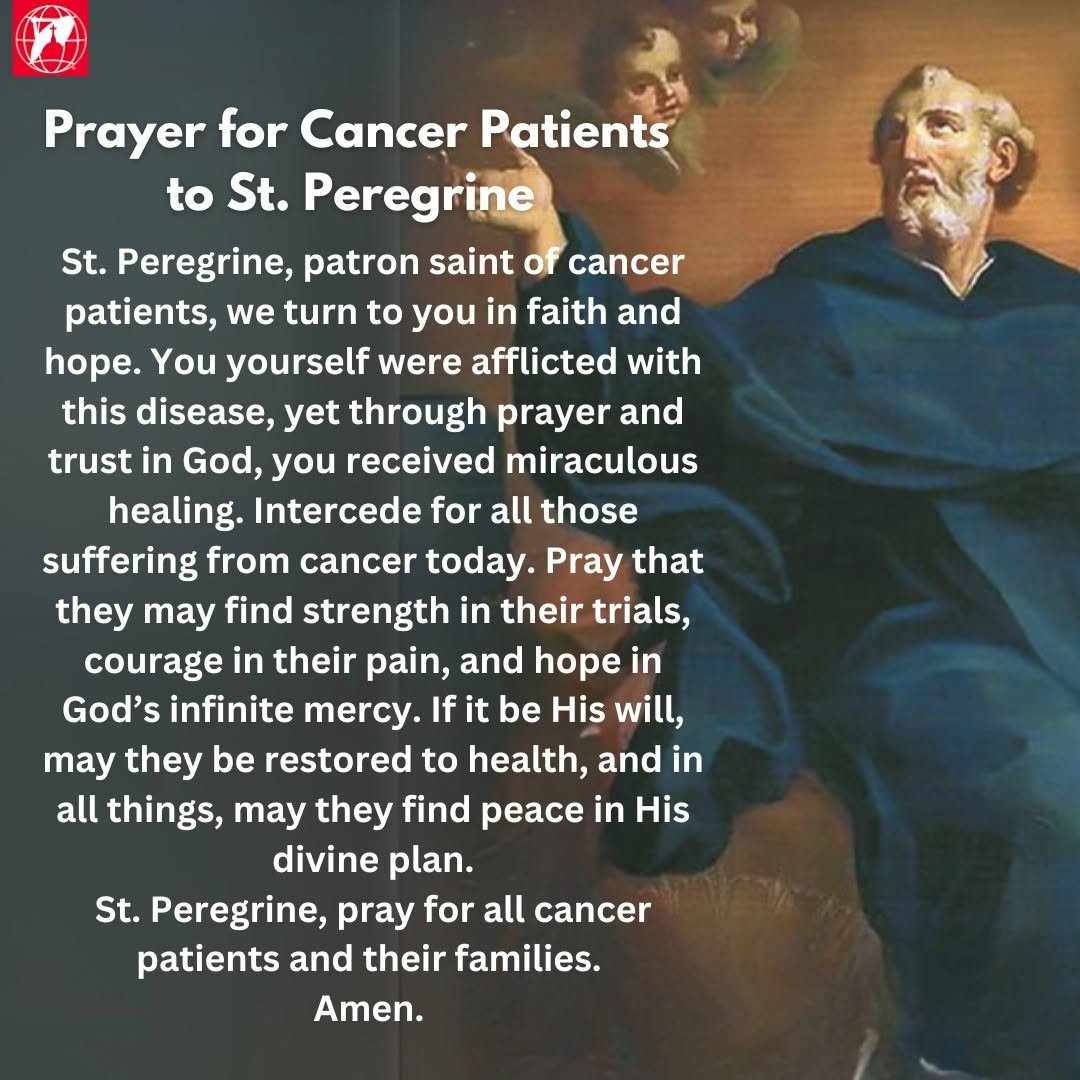
Prayer to St. Peregrine, suitable for cancer patients, including those on the path of recovery. Therefore, it is appropriate in any case—regardless of the precise diagnosis, which is currently unknown to us—to also be prayed for the Holy Father.
Estos días estaré bastante ocupado con el trabajo y el inicio de unos nuevos estudios profesionales —además del estudio teológico—, así que no podré tuitear tanto.
Sin embargo, quiero aprovechar para compartirles esta enseñanza de San Basilio Magno especialmente valiosa para quienes tenemos que compaginar oración, estudio y trabajo.
En sus Reglas mayores enseña que la oración no debe convertirse en excusa para abandonar nuestras obligaciones: mientras las manos trabajan, el corazón puede permanecer vuelto hacia Dios. Incluso da gracias por «la fuerza de nuestras manos» y por la capacidad de nuestra inteligencia para adquirir conocimiento (𝘙𝘦𝘨𝘶𝘭𝘢𝘦 𝘧𝘶𝘴𝘪𝘶𝘴 𝘵𝘳𝘢𝘤𝘵𝘢𝘵𝘢𝘦, 37).
Es una buena regla también fuera del monasterio. Estudiar bien, trabajar con diligencia y cumplir nuestros deberes no son interrupciones de la vida espiritual cuando todo se ofrece a Dios y se realiza para su gloria.
También es importante aplicarlo 𝘢 𝘴𝘦𝘯𝘴𝘶 𝘤𝘰𝘯𝘵𝘳𝘢𝘳𝘪𝘰 y comprender que las obligaciones tampoco deben impedirnos dedicar tiempo a la oración.
No se trata, por tanto, de elegir entre rezar o cumplir nuestras obligaciones, sino de aprender a santificar también aquello que debemos hacer cada día.
Que Dios les bendiga a todos.
«La naturaleza no es nuestra madre: es nuestra hermana. Podemos admirar sus bellezas, no arrodillarnos ante ella. La hermana es a la vez bella y frágil, y puede necesitar de nuestra defensa. La idea de la naturaleza como madre termina en una especie de panteísmo»
~Chesterton
>Be a priest
>Get seated next to an end times crazy who hates Catholicism
>Have him start nagging you about the identity of the antiChrist.
>Say "I don't know."
>Go to sleep.
@PrayTheRosary Fifteen days, if you're trying to gain indulgences to apply to the souls in purgatory.
But once a month is quite good practice; that way you can receive communion every first Friday.
The minimum is once a year, but it's difficult, unless you also receive communion once a year...
@endriagopr@UnaVoceSevilla El creer que después de los Padres, y por más de mil años, la Iglesia estuvo haciendo todo mal, es simple arqueologismo.
En ese tiempo no existían los utraquistas ni los protestantes. Ante los males del siglo el Magisterio adaptó los usos, siempre buscando la mayor reverencia.
@elpadrejesus_ Nadie estaría dispuesto a morir por una mentira, y menos a ser torturado brutalmente, como lo fueron en su totalidad los apóstoles (San Juan, el único que no murio por los tormentos que le infligieron, fue azotado, sumergido en aceite hirviendo y obligado a tomar veneno).
@BreeSolstad Index Librorum Prohibitorum, cómo te extraño.
Así como una madre quita de la vista de su hijos las páginas obscenas de una revista, así la Iglesia prohibía leer libros que pudieran trastocar la moral y la fe de sus hijos.
Si no fuera por buenos católicos, no me entero de esto.
The good man is never sure he is good because he measures himself by the Perfect;
the evil man is quite sure he is good because he measures himself by himself.
—Bl. Fulton Sheen
@JaimeMercant ¿Y la prohibición del azúcar refinada para cuándo?
Eso sí es dulce veneno y muy adictivo.
Me recordó la postura de los testigos de jehova.
«Si vous me demandez quelles sont les moyens de vaincre les tentations, je vous répondrai: le premier est la prière, le second la prière, le troisième la prière; et si vous m’interrogiez mille fois, je répèterais mille fois la même chose.»
Saint Alphonse de Liguori
@JaimeMercant La gente es muy floja, Pater.
Lo peor es que la IA tiene unos desvaríos horribles: cuando no encuentra lo solicitado simplemente se inventa una respuesta para no quedar mal.
Aún así, aquellos que realmente quieran estudiar tienen mucho material en documenta catholica omnia.
The Anti-Modernist Oath was a formal profession of faith required by Pope Pius X. He instituted it on September 1, 1910, in the motu proprio Sacrorum antistitum to combat the theological movement called Modernism, which he had already condemned as heretical in 1907.
It had to be sworn by all clergy, pastors, confessors, preachers, religious superiors, and professors in philosophical-theological seminaries.
The oath affirmed that God can be known by natural reason from creation, that miracles and prophecies prove revelation, that the Church was founded by the historical Christ on Peter, that dogmas do not evolve in meaning, that faith is an intellectual assent to external truth, and that sacred tradition is divine rather than a merely human historical development. It also required full acceptance of the condemnations in the encyclical Pascendi Dominici gregis (on the doctrine of the modernists) and Lamentabili sane exitu (which condemned specific modernist propositions).
The oath remained in force until 1967, when the Congregation for the Doctrine of the Faith under Pope Paul VI replaced it with a revised profession of faith.
Link to the full text of the Oath Against Modernism: https://t.co/SiMfUWiN8f