I’ve been thinking a lot about open-source AI models, and the more I look at it, the more uneasy I get.
Once the weights are fully public, there’s no taking them back. Anyone with a decent GPU and a weekend can fine-tune them for whatever they want, scams, sophisticated deepfakes, automated cyber attacks, or worse. The people building the next generation of these models are brilliant and well-intentioned, but they can’t control what happens after the download button is clicked. There’s no kill switch, no update mechanism that reaches every copy, and no real accountability once the model is out in the wild. We’ve already seen how fast bad actors move when the barrier drops this low.
That doesn’t mean we should lock everything behind closed doors. Transparency matters. Researchers need to inspect models, find flaws, and improve safety. Innovation dies in complete secrecy.
This is why I think “semi-open” is the more honest path forward: open weights for scrutiny and legitimate research, but with real licenses, usage restrictions, and controlled distribution that keep the most dangerous applications out of the hands of people who shouldn’t have them. Enough openness to keep the community honest and moving fast, enough friction to slow down the people who would weaponize it.
Pure open-source feels like giving everyone a nuclear reactor blueprint and hoping they use it for clean energy. Semi-open feels like acknowledging both the power and the risk.
Curious where others land on this. Are we underestimating the downside, or am I being too cautious?
Spent the day wiring a hybrid database architecture into @seleciHQ's AI agent layer.
The problem: AI Agents had amnesia. They'd read the last 20 chat turns but couldn't search their own memories. A founder asks "what did we decide about churn last week?" - the agent scans memory keys with SQL. No semantics. No ranking. Nothing beyong the rolling window.
@polygres is what changed that.
Here's how it works with Polygres under the hood:
Polygres handles everything the agents need to think with, agent memories get embedded via Openrouter, stored in a native Polygres vector column, indexed with HNSW for sub-millisecond cosine similarity search. When an agent need context, Polygres ranks results by semantic relevance, and the app deduplicates and token-budgets them before injection into the system prompt.
Polygres's pgGraph auto-discovered all foreign key across all tables - company profile -> agent executions -> agent memories, so agents can one day walk the full relationship graph from a churn event to the conversation where it was first discussed.
PostgreSQL handles everything operational like users, billing, integrations, permissions via SQLAlchemy. Same database, same tables, zero changes to existing code.
The architecture is clean because Polygres makes it clean. One database url. Two access patterns. Polygres provisions itself, the pgvector extension, the embedding column, and the HNSW index all ger created on startup with IF NOT EXISTS.
Your business already has the data.
It does not have a team watching all of it.
Today we're launching Seleci: an AI operating team that connects your tools, catches important changes, explains what they mean, and helps you act on them with one tap.
Here's how it works.
Gemini 3.5 Pro launching this week 😱.
I don't really expect it to even Fable 5, or GPT 5.6. But atleast enter back in the AI race. The more AI companies produce top tier models, the more the next AI models will be better.
The fact that china entered back the AI race with GLM 5.2, Deepseek V4 Pro and now Kimi k3 made frontier model providers like OpenAI and Anthropic realize goated models (not nerfing the previous model to make the current one look better).
I really hope xAI and Meta will join this race and willn't be left behind!
Lately I’ve been thinking a lot about where AI actually stands right now, mid-2026. Not the hype or leaderboards, but the real feel of how fast everything is moving.
The frontier closed models keep pushing. OpenAI’s GPT-5 family feels like the most polished all-rounder reliable reasoning and that “just works” quality.
Anthropic’s Claude Opus 4.8 stands out for agentic coding and staying coherent across long workflows. Google’s Gemini line excels with huge context windows and native multimodality. Just this week xAI dropped Grok 4.5, which looks especially sharp on coding and real agentic tasks fast, solid context, and more approachable pricing. There’s no single champion anymore. It’s about picking the right model for the specific job.
The open-weight side feels even more significant. Meta’s Llama 4 brought native multimodality and efficient MoE design to the open ecosystem. Chinese labs like DeepSeek, Qwen, and GLM-5.2 are closing the gap fast on coding, math, and reasoning. Many are now good enough for local or self-hosted production work instead of defaulting to big APIs.
What openness unlocks is powerful: you can fine-tune on your own data, audit the model, run it offline, and experiment without gatekeepers. It lowers barriers for researchers, indie builders, and small teams while creating multiple centers of innovation which feels healthier long-term.
The performance gap to closed frontier models has narrowed a lot, though closed ones still lead on the hardest agentic tasks. Hybrid approaches seem smartest now: frontier models for tricky novel work, strong open models for scale, cost, and privacy. Tools for routing between them are getting better too.
The pace is wild. Two years ago basic coding without constant fixes was impressive. Now models handle complex multi-hour workflows with minimal help. What keeps me optimistic is how capability is spreading wider more people get to shape what comes next, not just the big labs.
Curious what you’re seeing. Mostly frontier APIs, heavy on open models, or mixing both? Any recent releases that surprised you?
I asked my AI agent one question: "what's my MRRb"
8 seconds later, I generated a full report.
No dashboard. No SQL. No analyst.
This is Seleci. 4 agents that watch your business and brief you on what actually matters 👇
I'm 17 and with my cofounder(@NgenfueGlynn), we just killed traditional BI tools.
We built Seleci because founders waste hours every week opening 8 different tools just to know if their business is healthy.
Seleci connects Stripe, Google Analytics, HubSpot, Intercom, PostHog, QuickBooks, Mailchimp, and Sentry into one intelligence layer.
Four specialized AI agents, Revenue, Growth, Churn, and Product, analyze your live data and deliver a morning briefing so you wake up knowing exactly where your business stands.
✅ Daily morning briefings
✅ Smart anomaly alerts (before things go wrong)
✅ Automated reports, no manual work
✅ One dashboard replacing a dozen tools
✅ Actionable insights, not just charts
Try Seleci at https://t.co/RiURyaCcEQ.
Comment "Seleci" and i'll give you a 14-days free Seleci Pro key
While the most advanced Western frontier models are becoming harder for regular builders to access quickly, Chinese open models are moving extremely fast.
Anthropic launched Claude Fable 5 earlier this month, but it was only available for a few days before access was restricted. OpenAI also previewed GPT-5.6 Sol recently, with initial access limited to approved partners before wider rollout.
At the same time, models like https://t.co/QLh3QP1Hwp’s GLM-5.2 are being released openly with strong capabilities (including 1M context) and far fewer access barriers.
This is creating an interesting shift. Many people building in public now have easier access to high-performing open models from Chinese labs than to the absolute latest closed Western models.
For indie builders and solo founders trying to move fast, this changes the practical toolkit available. Some are already starting to rely more on open models that are immediately usable.
How are you approaching this if you’re building in public.. sticking with Western models, exploring Chinese open ones more, or mixing both?
Built something I've wanted for a while.
Ask your AI agent how your business is doing. Get back a full executive report..... MRR, churn, failed payments, growth velocity.
No manual pulls. Just ask. Open to feedback UI/UX, and content
@fdotinc@hthieblot@FurqanR@joherkhan
I spent 15hrs/mo checking Stripe, HubSpot, GA4.
Built Seleci to do it for me.
8am briefing: revenue, churn risk, top channel.
60sec to connect. Free.
https://t.co/3i3ntVzUbq
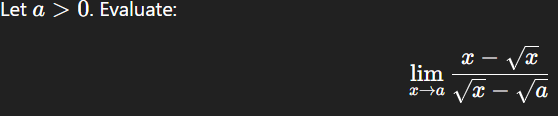
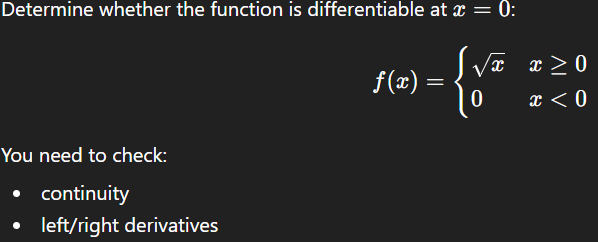
Just asked Chatgpt to give me college-level maths questions and he gave me this.....
Why does it look like HighSchool maths in easy mode ???
@sama@MIT@Harvard@Stanford
most 1-10 person B2B teams don't need another dashboard
they need someone to tell them at 8am:
who churned
who upgraded
what to do today
that's the whole product
Building Seleci at 17 means my "board meeting" is me explaining to my mom why I'm up at 2am debugging code.
She still thinks I'm playing video games 😅😂
Your dashboard shows you what happened.
It has no idea what's about to happen.
And it definitely won't tell you what to do about it.
That's not a tool problem. That's a category problem.
→ https://t.co/pZGzzSIfv0
I'm giving 10 founders free Seleci Pro access.
Connect Stripe, GA4, or HubSpot your AI analyst tells you what's happening before you think to ask.
14 days. No card. 10 spots.
Reply and I'll send yours
https://t.co/UPjCxCOuBy
Dashboards are a lie.
They don't tell you what's happening in your business. They tell you what happened. You still have to figure out why and what to do next.
That's not intelligence. That's homework.