Great work from @XunzhuoLiu and the vLLM Semantic Router team on D3. All six models, from 0.6B to 27B, now have merged vLLM recipes!
D3 ranked #1 on both Jev Decision Index 0.3.2 boards: 66.3 text and 71.3 vision (Oct. 12 snapshot).
Run multimodal decisions on your own infrastructure through /v1/systemone—with control over data residency, latency budgets and governance.
vLLM serves decision models too: the full D3 family, Clef-Flash, Clef-Omni and Liquid d1, through the System One API.
D3 returns choices, yes/no answers and scores with probabilities over text, JSON, images and videos. Useful for routing, classification and scoring without generating a long response.
In the recipe benchmark, D3 27B delivers 1.8× the requests/sec of its checkpoint server on 1× MI325X at 64 concurrent clients, using the same mixed workload.
Start with a current vLLM nightly:
vllm serve vllm-sr/d3
Recipes for all six sizes:
https://t.co/qGDlWJy3bv
API and supported models:
https://t.co/L071eXHP7T
Been experimenting with @claudeai Opus beyond code and ended up making a short animated film on the famous two-birds metaphor from the Upanishads.
https://t.co/PxJ4KZR0wi
I never really understood the hype around an animated Harry Potter series because I couldn’t imagine getting into it. Then I watched ten seconds of this and was completely sold.
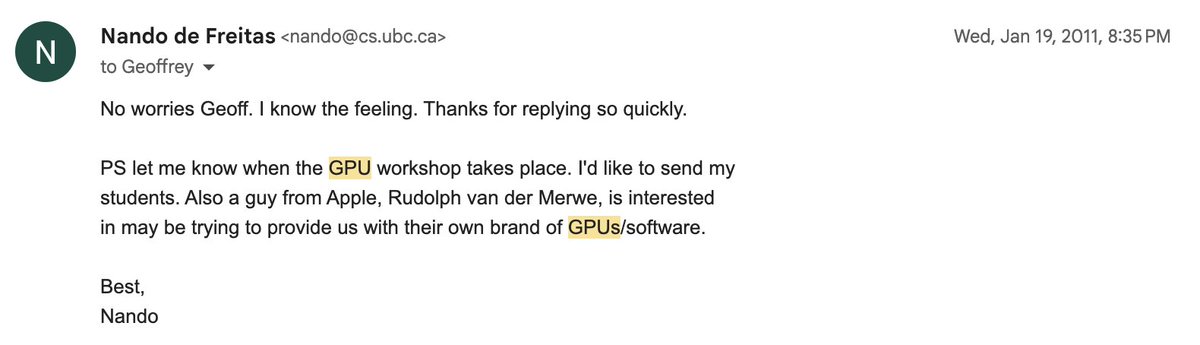
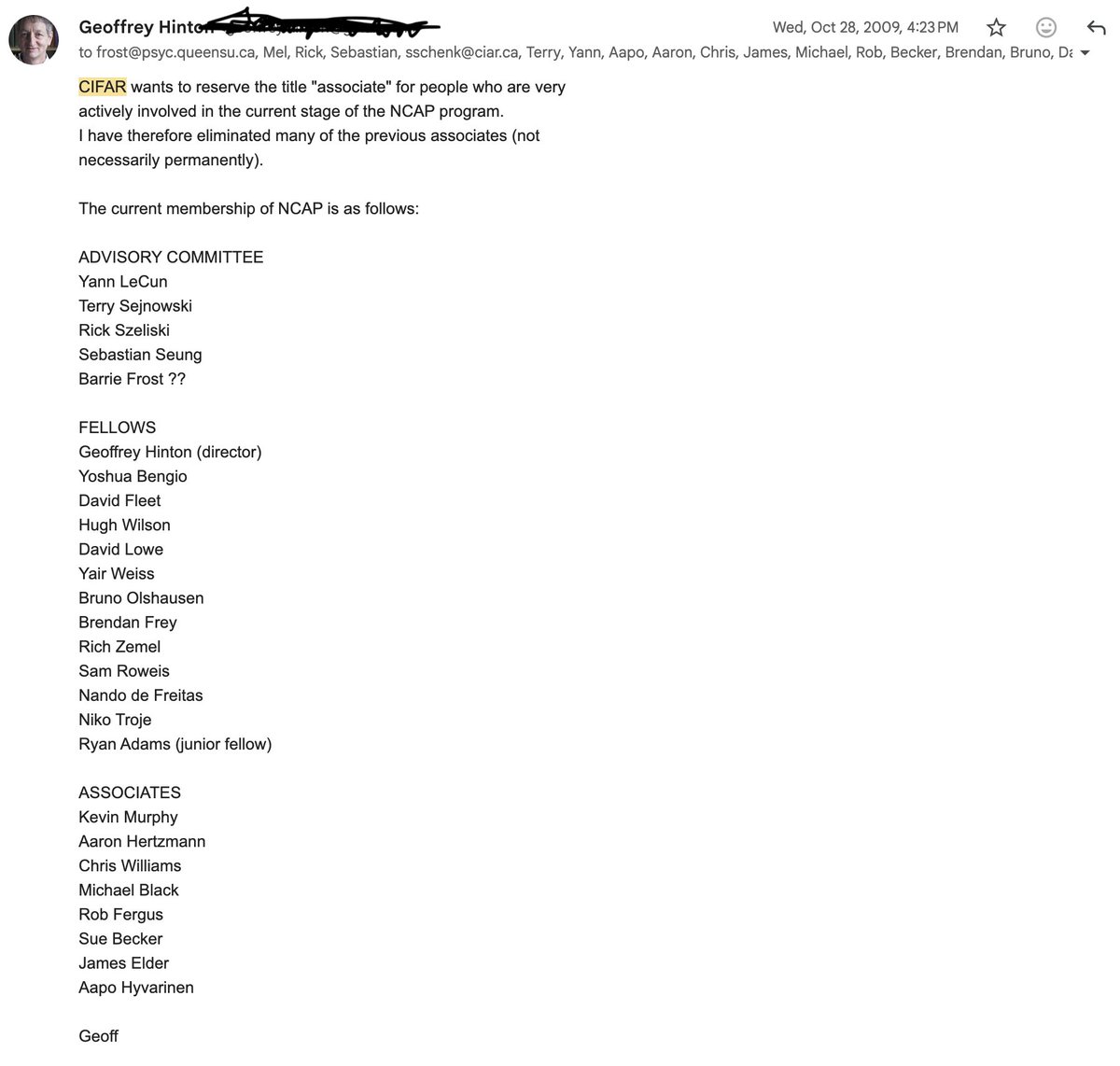
There was a time when @nvidia and @Google weren't into AI. There was a time when the big cloud providers didn't have GPUs. There was a time before GPUs and deep learning, and AI, ...
During that time professors and students created the foundation of the AI we have today.
Reasoning from scratch, round number 6!
An introduction (and implementation) of Reinforcement Learning with Verifiable Rewards (RLVR) and Group Relative Policy Optimization (GRPO).
00:00 Introduction
01:54 What makes a reasoning model different?
04:25 Reasoning traces and model capability
08:29 Accuracy and format rewards
11:34 Aha moments and DeepSeek-R1 training
14:41 Reasoning effort and answer length
18:38 RLHF and RLVR
23:04 GRPO vs. PPO
26:40 GRPO explained with a cooking analogy
31:43 The KL term and simplified GRPO
35:04 Loading the pretrained model
36:07 Loading the MATH training data
39:26 Sampling model responses
46:30 Computing verifiable rewards
49:55 Computing advantages
51:54 Token and sequence log probabilities
55:29 Implementing sequence log probabilities
57:37 Fixing the inference-mode error
1:02:24 Computing the GRPO loss
1:04:37 Putting the GRPO step together
1:09:19 The GRPO training loop
1:12:57 Training settings, logging, and checkpoints
1:17:24 Running training and inspecting outputs
1:19:28 Loading and evaluating checkpoints
1:22:33 MATH-500 results and training stability
1:24:05 Memory requirements and next steps
After 2.5 years at Sarvam, I am starting something new!
I had a great time leading the RL team. We launched the 30B and 105B models back in Feb with a young team building everything from scratch. Excited to see the team keep growing and pushing the frontier. Grateful to @pratykumar for the early bet and trust.
As for what's next: I am convinced that there are a few critical parts of the stack that we still need to build to meaningfully accelerate science. One of them is verification.
Scientific discovery only scales with compute when proposing and verifying new ideas is fast and cheap. In math and code, we're starting to see what happens when models can generate ideas and reliably check them at scale. OpenAI's recent Navier-Stokes work is a glimpse of what that looks like.
Similar moments in chemistry, materials, biology and the rest of the physical sciences would require verification to get dramatically faster and cheaper. It cannot be bottlenecked by the throughput of physical labs
More soon. Very excited for what's next.
Everything we have built at @Bodhan_AI and @ai4bharat is now live. 🎉
Open-weight speech, vision & translation models for India's languages, available on Hugging Face. The same stack, hosted at some of the lowest prices in the market.
🤗 https://t.co/0FuZf37ddP
Read more about in our blogs:
>>> https://t.co/HVgMNaUlxj
API end-points live now on Bodhan AI.
>>> https://t.co/4HePUHHbcc
Shout-out to @SarvamAI, our inference infrastructure partners for helping us serve our models reliably and affordably at scale.
Dedicated to Pushpak Bhattacharyya Sir. His love for education and Indian language technology inspired all of it. 🙏
वागर्थाविव संपृक्तौ - "united as word and meaning."
Introducing Vāgartha: 217,959 Sanskrit verses, each paired with a detailed explanation.
Open on Hugging Face 🤗
https://t.co/FES7ouitFD
Every explanation has three parts:
→ word-by-word, with transliteration and grammatical analysis
→ a close semantic translation
→ an expanded reading with context, imagery, and doctrine
~4,000 characters per verse, on average.