Join us (virtually) for the 2021 Cornell Translational Research Summer Institute - registration is open!
Learn TR techniques from experts, get feedback and tips on your projects and network with other researchers.
https://t.co/Mk4WEBRo8o
Interested in the mental health of Black youth? Check out the @wellbeingsorg Tour in Seattle, WA - a live virtual discussion and Q & A on February 25 at 7pm PST / 10pm EST.
Check out their website for more information on speakers and topics!
https://t.co/DBnMZPrCJR
Ready for more Last Day podcast episodes from @LemonadaMedia and @jedfoundation? Take a listen to their most recent episode which features Dr. Janis Whitlock and Dr. Robin Hornstein discussing why people self-injure.
https://t.co/HJ5kCxQwpS
Check out Dr. Whitlock's guest appearance with John MacPhee from @jedfoundation on @TheMightySite's #parenting podcast: Supporting Teenagers During Covid https://t.co/j4EKLXhAon
Checking in this #MentalHealthAwarenessMonth: How are you feeling?
Symptoms of anxiety and depression are on the rise right now - @washingtonpost provides some interesting insight to the mental health of Americans amidst the coronavirus pandemic. https://t.co/UPAuYHBTfQ
Next up on #MentalHealthAwarenessMonth is why do people #selfinjure? It's a delicate topic and not only knowing the signs but understanding what someone is going through is important. NSSI is not a cry for attention nor is it a joke. Learn more on our website and know the signs!
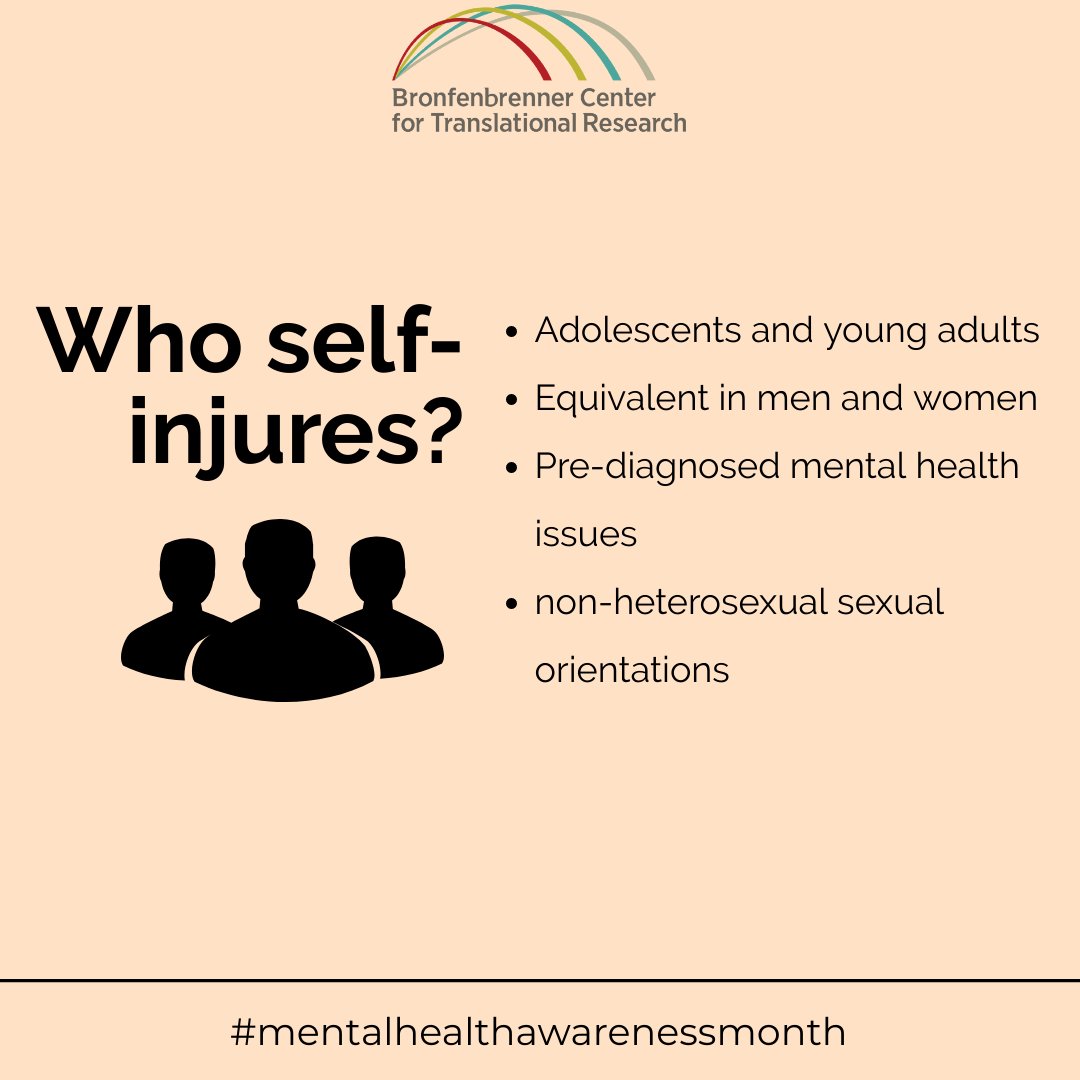
Welcome to #MentalHealthAwarenessMonth where here at the Cornell Self-Injury lab, we will be delivering the facts and ending the myths on #selfinjury and NSSI. First up - who self injures? Remember, this is not a definitive list nor should it define your identity.
Following NSSI outcomes across the lifespan can help inform preventative measures and areas for further research. This recently published study followed up with adolescents who engaged in NSSI 10 years later. Here’s what they found. https://t.co/zErP1oPesS
Over the next few days, we'll be posting quotes from a special interview we did with with Dr. Brooke Ammerman about NSSI research. Until then, check out Dr. Ammerman's ASSIST Lab Facebook page and website for more information about her lab's work. https://t.co/5LKjryGdUL
We want to give Dr. Kaylee Kruzan, along with co-author Janis Whitlock, a big congratulations for being selected as the 2019 Global Qualitative Nursing Research Best Paper Award for her work in non-suicidal self-injury! Check it out!
https://t.co/salg6jld4d
We know that everything feels a little strange right now. We'd love to hear about your stories and co-create a snapshot of life right now to use what we learn to help support people in the future.
Join the storytelling efforts: https://t.co/4BAT2aMQ5n
#COVID19#coronavirus
Congratulations to the TestDrive Team and the Social Media Lab. @nataliebazarova, @difrad, @cosleydr, and @JanisWhitlock received a $300,000 NSF grant to research social media-related cybersecurity and privacy risks with experiential learning interventions using @CUSocialMedia.
Podcast interview w/ ISSS members! @schoolnurses interviews Elizabeth Lloyd-Richardson, Penelope Hasking & Stephen Lewis about their 2-part article, "Addressing Self-Injury in Schools." #Podcast & 2-part article FREELY available for March & April: https://t.co/8qLpA8gGfh
Check out this podcast that's available for free for two months! Cynthia Galemore interviews the authors behind the article "Addressing self-injury in schools." Worth the listen! Link: https://t.co/0USlfvdIRt
Self-injury comes from a psychologically healthy desire to feel better, says Janis Whitlock on #talktokids podcast. Find out exactly what to do and say if you discover that your child is self-injuring. #SelfInjuryAwarenessDay https://t.co/iD2abbrnNG via @drrobyn
Happy Self-Injury Awareness Day! Knowing how to detect, treat, and prevent NSSI is important. Educate yourself and learn more about the work we do surrounding NSSI by checking out our website at https://t.co/YpgYqusmKk.