@ShaykhSulaiman لقد زانَ البلادَ ومن عليها
إمامُ المسلمين أبو حنيفة
بأحكامٍ وآثارٍ وفقهٍ
كآياتِ الزبورِ على الصحيفة
فما بالمشرقين له نظيرٌ
ولا بالمغربين ولا بكوفة
فرحمةُ ربِّنا أبداً عليه
مدى الأيامِ ما قُرئت صحيفة
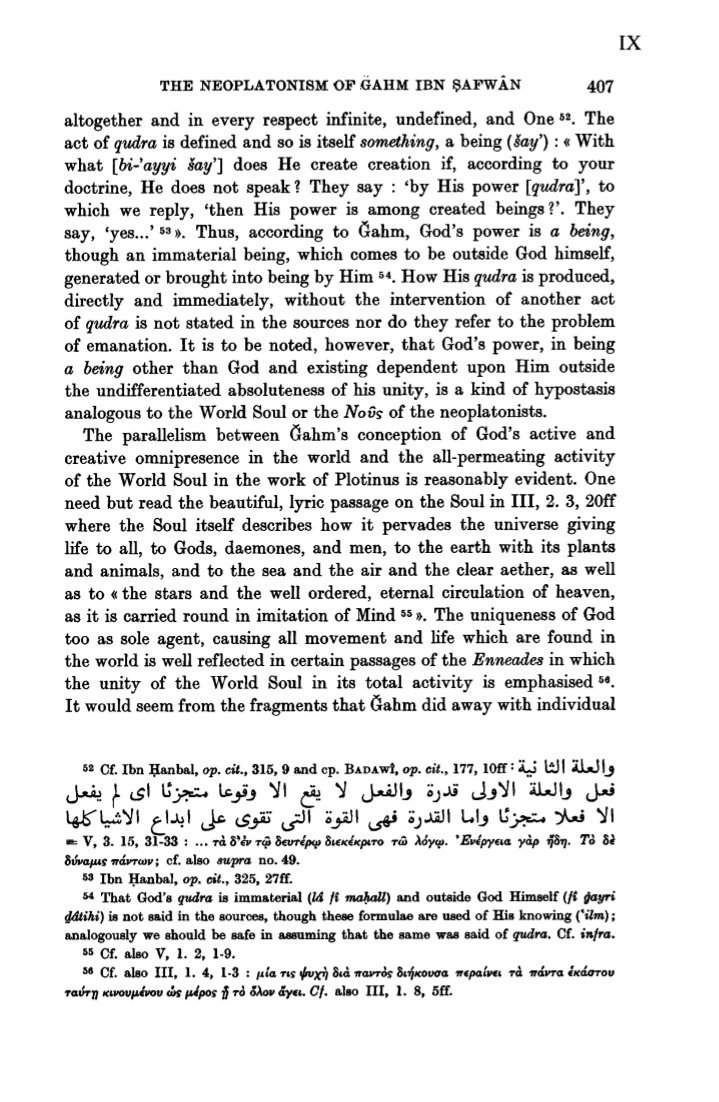
mujaddid of the 2nd century: imam jahm ibn safwan
“Among these was Jahm ibn Ṣafwān, who was deeply disturbed by the foreign ideas he witnessed infiltrating Islam. Consequently, he undertook the task of repudiating the alien doctrines that had entered the religion and affirming the existence of God Most High when he was challenged by the Sumaniyyah (a Buddhist sect). He thus developed a method aimed at purging Islam of imported principles and foreign ideas that had found their way into it, confronting his opponents with Qurʾānic verses and theological arguments. He also adopted a firm stance against the doctrine of anthropomorphism (tajsīm), which, in his view, leads to idolatry.”
shaykh al-islam ibn sina:
[...] after these two ranks comes the rank of those who are both lovers and longers. insofar as they are lovers, they have attained something, and therefore they experience delight. but insofar as they are longers, some classes among them may still suffer a certain measure of pain. yet because that pain arises on account of the beloved, it is a sweet and pleasurable pain. among sensible experiences, only a very remote analogy can be drawn to such pain, namely, the sensation of itching or tickling. perhaps this may provide some distant notion of it.
im aware what imam al-razi said and ill show u why it doesnt hold up. just so you dont accuse me of misinterpreting what he said, ill first quote the relevant passage from his nihaya 1.387:
واعلم أن الذي ذهب إليه في الحسن والقبح أنه ق يراد بذلك ملاءمة الطبع ومنافرته، وقد يراد به أيضا ًكون الفعل معاقابً عليه أو غير معاقب عليه. أما القسمان الأولان فلا شك أنهما يعرفان بالعقل. وأما الثالث فنقول: إن الحسن والقبح ـ بذلك المعنى ـ لا يجوز أن يكونا صفتين عائدتين إلى الفعل، ولا أن يكونا معللين بوجوه عائدة إلى الفعل. فهذا تلخيص محل النزاع بحسب الوسع
"Know that the position he adopted concerning ḥusn (goodness) and qubḥ (badness) is that these terms may be intended to mean the conformity of a thing to one's natural disposition (mulāʾamat al-ṭabʿ) and its repugnance to it (munāfaratuhu). They may also be intended to mean that an act is one for which punishment is incurred, or one for which punishment is not incurred.
As for the first two categories, there is no doubt that they are known by reason.
As for the third, we say: ḥusn and qubḥ, in that sense, cannot be attributes inhering in the act itself, nor can they be grounded in considerations that inhere in the act itself.
This, to the best of our ability, is a summary of the precise point at issue."
to easily summarise:
1. conformity/aversion to our innate natural disposition [ملاءمة الطبع ومنافرته] wherein husn = whatever agrees with or suits the natural temperament (such as pleasure, things the self finds agreeable) and qubh = whatever is repugnant to or clashes with the natural temperament (such as pain, things the self finds averse). this is known via reason
2. an attribute of perfection or deficiency [صفة كمال أو نقصان] whether an act is characterized by a quality that reflects knowledge/wisdom versus ignorance/folly. here, husn = an action being described as one of knowledge/skill and qubh = an action being described as one of ignorance. again, this is apprehended via reason
3. an act's entailing praise/reward or blame/punishment [استحقاق المدح والثواب أو الذم والعقاب] where husn = an act such that its agent deserves praise and reward for it and qubh = an act such that its agent deserves blame and punishment for it. this is the point of dispute.
now ill explain to you why point 2 and 3, under asharis, cant be distinct and dont hold up. consider:
to get from "lying is a naqs" to "therefore god doesn't lie," you need an additional premise: a perfect being does not perform naqs-actions. ask yourself what's doing the work in that premise.
the argument as the asharite wants it to look:
syllogism 1:
[1] lying is a naqs (deficiency).
[2] god possesses no naqs (maximally perfect).
[3] therefore, god does not lie. [MP 1,2]
this looks clean and looks like it stays entirely within razi's sense 2 of husn/qubh i,e a metaphysical classification (deficiency) plus a metaphysical premise about god's nature (no deficiency in him). no "ought," no rational moral judgment, nothing from the contested sense (3). this is the version YOU think ur running.
the trouble is that [2] = god possesses no naqs is ambiguous between a state and an act, and the argument needs it to cover acts, not just states, for [3] to follow. so [2] is really doing the work of a hidden premise that needs to be made explicit:
syllogism 2:
[1] lying is a naqs.
[2] a perfect being ought not/would not fittingly perform any act that is a naqs
[3] therefore, god does not lie [MP 1,2]
now look closely "ought not/would not fittingly" is a normative claim about what should or should not characterize an agent's conduct. that is structurally identical to the third sense we mentioned above in razi's nihaya. a claim of the form "X is such that a [certain kind of] being ought/ought not do it," which is exactly the category the asharis say only revelation, not reason, can establish. so syllogism 2 is really:
[1] lying is qabih in the practical sense i.e an act that ought not be done by a perfect agent. [= sense 3 content, smuggled in]
[2] god, being perfect, does only what a perfect agent ought to do
[3] therefore, god does not lie.
now i cite sharh al-mawaqif of al-jurjani 8.307:
الإحباط كما لا يخفى (قوله لأن الخلف في الوعد نقص) فيه بحث لأنه إن أراد أنه نقص في الصفة فممنوع وإن أراد انه نقص في الفعل فهو القبح العقلي بعينه كما اعترف به المصنف في امتناع الكذب عليه تعالى والأشاعرة لا يقولون به فكيف الاستدلال به على وفاء الوعد على انه اذا كان نقصا يجب تنزيه اللّه تعالى عنه فيفيد وجوب الثواب وهو خلاف المذهب فالأولى هاهنا التمسك بان الخلف كذب والكذب منتف في كلامه انتفاء معلوما بالضرورة من الدين كما سبق وإن أمكن عقلا (قوله ولا يعد الخلف في الوعيد نقصا) على ما دل عليه قول الشاعر
"His statement: "Because breaking a promise (khulf al-waʿd) is a deficiency (naqṣ)."
There is room for objection here. For if he means that it is a deficiency in an attribute (ṣifah), then this is not conceded. And if he means that it is a deficiency in an act (fiʿl), then this is nothing other than rational moral badness (al-qubḥ al-ʿaqlī) itself, as the author himself acknowledged in his discussion of the impossibility of lying for God, Exalted is He. Yet the Ashʿarīs do not affirm this doctrine. So how can it be used here as a proof that God must fulfill His promise? Moreover, if it is a deficiency, then God must necessarily be declared free of it. But this would imply that rewarding the obedient is obligatory upon God, and that is contrary to the doctrine of the school. Therefore, it would have been preferable here to argue that breaking a promise is lying, and that lying is absent from God's speech—its absence being known necessarily from the religion (ḍarūratan min al-dīn), as previously discussed—even though it is rationally possible (mumkin ʿaqlan)."
the only way for you to avoid this try a purely descriptive reading of [2]. something like:
syllogism 3:
[1] lying is a naqs (a state-description qua mode of imperfection, the way ignorance is, purely as a classificatory fact)
[2*] it would be metaphysically impossible for a subject who is pure perfection/act to instantiate any naqs-property. [undisputed obviously]
[3] therefore, god does not lie.
via this mode of argumention, you can surely avoid the ought to/not ought to. however, you must confront this disanalogy again:
syllogism 4:
[1] ignorance is a naqs of the faculty of knowing. meaning, it is a state a subject is simply in, not an act it performs
[2] god cannot instantiate a deficient state of a faculty, because his faculties (knowledge, power) are already proven maximal [u can also take this as foundationally true by virtue of classical theism]
[3] therefore, god is not ignorant. [this one is fine since no smuggling]
but lying is NOT a state of a faculty. rather, it's a voluntary act, something an agent does, which a perfect being with unlimited power could, as far as mere capacity goes, straightforwardly do. so:
syllogism 5:
[1] false propositions are logically possible [by logical possibility, we mean that they involve no internal contradiction. a false proposition like "the sky is green" is perfectly coherent as an object of assertion whrein its falsity is a fact about correspondence with reality]
[2] to have power over X (where X is logically possible) is to have the capacity to actualize X
[3] asserting p (for any logically possible p, true or false) is itself a logically possible act
[4] therefore, god has the power to assert false propositions [1,2,3]
[5] the power to assert a false proposition just is the capacity to lie [by definition, lying is nothing but the assertion of what one knows to be false]
[6] therefore, god has the capacity to lie [4,5]
now compare this to the ignorance case directly:
[1] ignorance, as a naqs, just is a privation of a capacity (the capacity to know)
[2] god's freedom from naqs, in the case of knowledge, is secured the moment you establish god has the capacity fully intact
[3] lying is not a privation of a capacity. rather, it is (per syllogism 5) an exercise of a capacity god fully possesses
[4] therefore "god is free of the naqs of lying" cannot mean "god lacks the capacity to lie" (since [6] establishes he doesn't lack it) it can only mean "god, though capable, never in fact exercises that capacity in this direction"
[5] but "never in fact exercises an existing capacity in this direction out of two really available directions" is NOT a fact about capacity at all. it is a fact about which of two live options gets selected
[6] a principle that selects among two really-open options for a free agent is, by definition, an evaluative/normative principle ranking those options
[7] therefore, "god is free of the naqs of lying" presupposes exactly such a ranking in sense 3 provided by razi whereas "god is free of the naqs of ignorance" required no such ranking at all
to quote sharh al-mawaqif , 8.307 on this issue:
(الأول قالوا الثواب فضل) من اللّه تعالى (وعد به فيفي به من غير وجوب لان الخلف في الوعد نقص تعالى اللّه عنه (وأما عدم الوجوب فلما مر مرارا (و) قالوا (العقاب عدل) من اللّه لان الكل ملكه (فله أن يتصرف فيه) كما يشاء وله العفو عنه لأنه فضل ولا يعد الخلف في الوعيد نقصا) بل يمدح به (عند العقلاء) المبحث (الثاني اجمع المسلمون على أن الكفار مخلدون في النار أبدا لا ينقطع عذابهم) سواء بالغوا في الاجتهاد والنظر في معجزة الأنبياء ولم يهتدوا أو علموا نبوتهم وعاندوا أو تكاسلوا (وانكره) أي تخليدهم في النار (طائفة) خارجة عن الملة الإسلامية (لوجوه* الآل أن القوة الجسمانية كما تقدم متناهية) في العدة والمدة (فلا بد من فنائها) واذا فنيت قوة الحياة وما يتبعها من الحس والحركة ولم يبق إحساس فلا يتصور عذاب وهذه الشبهة بعينها جارية في انقطاع نعيم أهل الجنة (الجواب منع تناهيها وقد مر) فساد ما يتمسك به في إثبات ذلك التناهي (الثاني) من تلك الوجوه
"And whenever they wish to deny an attribute of Him, they say: "This is an attribute of deficiency (ṣifat naqṣ); therefore it must be denied of Him."
This premise is employed and relied upon in three areas:
(1) In actions: For example, one says: Rewarding obedience is a perfection; therefore it must be affirmed of God. Likewise: Blaming someone without a prior offense and without subsequent compensation is a deficiency; therefore it must be denied of Him.
Thus, perfection in actions is goodness (ḥusn), while deficiency in actions is badness (qubḥ).
(2) In the Essence: One says: Necessary existence by essence (al-wujūb al-dhātī) is a perfection; therefore it must be affirmed of God. And: Contingency (imkān) is a deficiency; therefore it must be denied of Him.
(3) In the real attributes: One says: Knowledge is an attribute of perfection; therefore it must be affirmed of Him, Exalted is He. And: Ignorance is an attribute of deficiency; therefore it must be denied of Him."
similarly in sharh al-mawaqif 8.101:
صفته تعالى مع كمال صفتنا ولا يدل على صدقه في الحروف والكلمات التي يخلقها في جسم دالة على معان مقصودة ولما كان لقائل أن يقول خلق الكاذب أيضا نقص في فعله فيعود المحذور بعينه أشار الى دفعه بقوله واعلم انه لم يظهر لي فرق بين النقص في الفعل وبين القبح العقلي) فيه (فإن النقص في الأفعال هو القبح العقلي بعينه) فيها (وإنما تختلف العبارة) دون المعني فأصحابنا المنكرون للقبح العقلي كيف يتمسكون في دفع الكذب عن الكلام اللفظي بلزوم النقص في أفعاله تعالى (الثاني انه لو اتصف بالكذب لكان كذبه قديما
"Since someone might say: "Creating false speech is likewise a deficiency in His action, so the very same difficulty returns,"
the author alluded to answering this by saying:
"Know that I have not found any difference between deficiency in action and rational moral badness (al-qubḥ al-ʿaqlī)."
For deficiency in actions is nothing other than rational moral badness itself in actions; only the expression differs, not the meaning.
So how can our companions (the Ashʿarīs), who deny rational moral good and evil, rely, in excluding lying from God's verbal speech, upon the implication that it would involve a deficiency in His actions?"
i hope you will read this with an open mind and recognise the problem.
im aware what imam al-razi said and ill show u why it doesnt hold up. just so you dont accuse me of misinterpreting what he said, ill first quote the relevant passage from his nihaya 1.387:
واعلم أن الذي ذهب إليه في الحسن والقبح أنه ق يراد بذلك ملاءمة الطبع ومنافرته، وقد يراد به أيضا ًكون الفعل معاقابً عليه أو غير معاقب عليه. أما القسمان الأولان فلا شك أنهما يعرفان بالعقل. وأما الثالث فنقول: إن الحسن والقبح ـ بذلك المعنى ـ لا يجوز أن يكونا صفتين عائدتين إلى الفعل، ولا أن يكونا معللين بوجوه عائدة إلى الفعل. فهذا تلخيص محل النزاع بحسب الوسع
"Know that the position he adopted concerning ḥusn (goodness) and qubḥ (badness) is that these terms may be intended to mean the conformity of a thing to one's natural disposition (mulāʾamat al-ṭabʿ) and its repugnance to it (munāfaratuhu). They may also be intended to mean that an act is one for which punishment is incurred, or one for which punishment is not incurred.
As for the first two categories, there is no doubt that they are known by reason.
As for the third, we say: ḥusn and qubḥ, in that sense, cannot be attributes inhering in the act itself, nor can they be grounded in considerations that inhere in the act itself.
This, to the best of our ability, is a summary of the precise point at issue."
to easily summarise:
1. conformity/aversion to our innate natural disposition [ملاءمة الطبع ومنافرته] wherein husn = whatever agrees with or suits the natural temperament (such as pleasure, things the self finds agreeable) and qubh = whatever is repugnant to or clashes with the natural temperament (such as pain, things the self finds averse). this is known via reason
2. an attribute of perfection or deficiency [صفة كمال أو نقصان] whether an act is characterized by a quality that reflects knowledge/wisdom versus ignorance/folly. here, husn = an action being described as one of knowledge/skill and qubh = an action being described as one of ignorance. again, this is apprehended via reason
3. an act's entailing praise/reward or blame/punishment [استحقاق المدح والثواب أو الذم والعقاب] where husn = an act such that its agent deserves praise and reward for it and qubh = an act such that its agent deserves blame and punishment for it. this is the point of dispute.
now ill explain to you why point 2 and 3, under asharis, cant be distinct and dont hold up. consider:
to get from "lying is a naqs" to "therefore god doesn't lie," you need an additional premise: a perfect being does not perform naqs-actions. ask yourself what's doing the work in that premise.
the argument as the asharite wants it to look:
syllogism 1:
[1] lying is a naqs (deficiency).
[2] god possesses no naqs (maximally perfect).
[3] therefore, god does not lie. [MP 1,2]
this looks clean and looks like it stays entirely within razi's sense 2 of husn/qubh i,e a metaphysical classification (deficiency) plus a metaphysical premise about god's nature (no deficiency in him). no "ought," no rational moral judgment, nothing from the contested sense (3). this is the version YOU think ur running.
the trouble is that [2] = god possesses no naqs is ambiguous between a state and an act, and the argument needs it to cover acts, not just states, for [3] to follow. so [2] is really doing the work of a hidden premise that needs to be made explicit:
syllogism 2:
[1] lying is a naqs.
[2] a perfect being ought not/would not fittingly perform any act that is a naqs
[3] therefore, god does not lie [MP 1,2]
now look closely "ought not/would not fittingly" is a normative claim about what should or should not characterize an agent's conduct. that is structurally identical to the third sense we mentioned above in razi's nihaya. a claim of the form "X is such that a [certain kind of] being ought/ought not do it," which is exactly the category the asharis say only revelation, not reason, can establish. so syllogism 2 is really:
[1] lying is qabih in the practical sense i.e an act that ought not be done by a perfect agent. [= sense 3 content, smuggled in]
[2] god, being perfect, does only what a perfect agent ought to do
[3] therefore, god does not lie.
now i cite sharh al-mawaqif of al-jurjani 8.307:
الإحباط كما لا يخفى (قوله لأن الخلف في الوعد نقص) فيه بحث لأنه إن أراد أنه نقص في الصفة فممنوع وإن أراد انه نقص في الفعل فهو القبح العقلي بعينه كما اعترف به المصنف في امتناع الكذب عليه تعالى والأشاعرة لا يقولون به فكيف الاستدلال به على وفاء الوعد على انه اذا كان نقصا يجب تنزيه اللّه تعالى عنه فيفيد وجوب الثواب وهو خلاف المذهب فالأولى هاهنا التمسك بان الخلف كذب والكذب منتف في كلامه انتفاء معلوما بالضرورة من الدين كما سبق وإن أمكن عقلا (قوله ولا يعد الخلف في الوعيد نقصا) على ما دل عليه قول الشاعر
"His statement: "Because breaking a promise (khulf al-waʿd) is a deficiency (naqṣ)."
There is room for objection here. For if he means that it is a deficiency in an attribute (ṣifah), then this is not conceded. And if he means that it is a deficiency in an act (fiʿl), then this is nothing other than rational moral badness (al-qubḥ al-ʿaqlī) itself, as the author himself acknowledged in his discussion of the impossibility of lying for God, Exalted is He. Yet the Ashʿarīs do not affirm this doctrine. So how can it be used here as a proof that God must fulfill His promise? Moreover, if it is a deficiency, then God must necessarily be declared free of it. But this would imply that rewarding the obedient is obligatory upon God, and that is contrary to the doctrine of the school. Therefore, it would have been preferable here to argue that breaking a promise is lying, and that lying is absent from God's speech—its absence being known necessarily from the religion (ḍarūratan min al-dīn), as previously discussed—even though it is rationally possible (mumkin ʿaqlan)."
the only way for you to avoid this try a purely descriptive reading of [2]. something like:
syllogism 3:
[1] lying is a naqs (a state-description qua mode of imperfection, the way ignorance is, purely as a classificatory fact)
[2*] it would be metaphysically impossible for a subject who is pure perfection/act to instantiate any naqs-property. [undisputed obviously]
[3] therefore, god does not lie.
via this mode of argumention, you can surely avoid the ought to/not ought to. however, you must confront this disanalogy again:
syllogism 4:
[1] ignorance is a naqs of the faculty of knowing. meaning, it is a state a subject is simply in, not an act it performs
[2] god cannot instantiate a deficient state of a faculty, because his faculties (knowledge, power) are already proven maximal [u can also take this as foundationally true by virtue of classical theism]
[3] therefore, god is not ignorant. [this one is fine since no smuggling]
but lying is NOT a state of a faculty. rather, it's a voluntary act, something an agent does, which a perfect being with unlimited power could, as far as mere capacity goes, straightforwardly do. so:
syllogism 5:
[1] false propositions are logically possible [by logical possibility, we mean that they involve no internal contradiction. a false proposition like "the sky is green" is perfectly coherent as an object of assertion whrein its falsity is a fact about correspondence with reality]
[2] to have power over X (where X is logically possible) is to have the capacity to actualize X
[3] asserting p (for any logically possible p, true or false) is itself a logically possible act
[4] therefore, god has the power to assert false propositions [1,2,3]
[5] the power to assert a false proposition just is the capacity to lie [by definition, lying is nothing but the assertion of what one knows to be false]
[6] therefore, god has the capacity to lie [4,5]
now compare this to the ignorance case directly:
[1] ignorance, as a naqs, just is a privation of a capacity (the capacity to know)
[2] god's freedom from naqs, in the case of knowledge, is secured the moment you establish god has the capacity fully intact
[3] lying is not a privation of a capacity. rather, it is (per syllogism 5) an exercise of a capacity god fully possesses
[4] therefore "god is free of the naqs of lying" cannot mean "god lacks the capacity to lie" (since [6] establishes he doesn't lack it) it can only mean "god, though capable, never in fact exercises that capacity in this direction"
[5] but "never in fact exercises an existing capacity in this direction out of two really available directions" is NOT a fact about capacity at all. it is a fact about which of two live options gets selected
[6] a principle that selects among two really-open options for a free agent is, by definition, an evaluative/normative principle ranking those options
[7] therefore, "god is free of the naqs of lying" presupposes exactly such a ranking in sense 3 provided by razi whereas "god is free of the naqs of ignorance" required no such ranking at all
to quote sharh al-mawaqif , 8.307 on this issue:
(الأول قالوا الثواب فضل) من اللّه تعالى (وعد به فيفي به من غير وجوب لان الخلف في الوعد نقص تعالى اللّه عنه (وأما عدم الوجوب فلما مر مرارا (و) قالوا (العقاب عدل) من اللّه لان الكل ملكه (فله أن يتصرف فيه) كما يشاء وله العفو عنه لأنه فضل ولا يعد الخلف في الوعيد نقصا) بل يمدح به (عند العقلاء) المبحث (الثاني اجمع المسلمون على أن الكفار مخلدون في النار أبدا لا ينقطع عذابهم) سواء بالغوا في الاجتهاد والنظر في معجزة الأنبياء ولم يهتدوا أو علموا نبوتهم وعاندوا أو تكاسلوا (وانكره) أي تخليدهم في النار (طائفة) خارجة عن الملة الإسلامية (لوجوه* الآل أن القوة الجسمانية كما تقدم متناهية) في العدة والمدة (فلا بد من فنائها) واذا فنيت قوة الحياة وما يتبعها من الحس والحركة ولم يبق إحساس فلا يتصور عذاب وهذه الشبهة بعينها جارية في انقطاع نعيم أهل الجنة (الجواب منع تناهيها وقد مر) فساد ما يتمسك به في إثبات ذلك التناهي (الثاني) من تلك الوجوه
"And whenever they wish to deny an attribute of Him, they say: "This is an attribute of deficiency (ṣifat naqṣ); therefore it must be denied of Him."
This premise is employed and relied upon in three areas:
(1) In actions: For example, one says: Rewarding obedience is a perfection; therefore it must be affirmed of God. Likewise: Blaming someone without a prior offense and without subsequent compensation is a deficiency; therefore it must be denied of Him.
Thus, perfection in actions is goodness (ḥusn), while deficiency in actions is badness (qubḥ).
(2) In the Essence: One says: Necessary existence by essence (al-wujūb al-dhātī) is a perfection; therefore it must be affirmed of God. And: Contingency (imkān) is a deficiency; therefore it must be denied of Him.
(3) In the real attributes: One says: Knowledge is an attribute of perfection; therefore it must be affirmed of Him, Exalted is He. And: Ignorance is an attribute of deficiency; therefore it must be denied of Him."
similarly in sharh al-mawaqif 8.101:
صفته تعالى مع كمال صفتنا ولا يدل على صدقه في الحروف والكلمات التي يخلقها في جسم دالة على معان مقصودة ولما كان لقائل أن يقول خلق الكاذب أيضا نقص في فعله فيعود المحذور بعينه أشار الى دفعه بقوله واعلم انه لم يظهر لي فرق بين النقص في الفعل وبين القبح العقلي) فيه (فإن النقص في الأفعال هو القبح العقلي بعينه) فيها (وإنما تختلف العبارة) دون المعني فأصحابنا المنكرون للقبح العقلي كيف يتمسكون في دفع الكذب عن الكلام اللفظي بلزوم النقص في أفعاله تعالى (الثاني انه لو اتصف بالكذب لكان كذبه قديما
"Since someone might say: "Creating false speech is likewise a deficiency in His action, so the very same difficulty returns,"
the author alluded to answering this by saying:
"Know that I have not found any difference between deficiency in action and rational moral badness (al-qubḥ al-ʿaqlī)."
For deficiency in actions is nothing other than rational moral badness itself in actions; only the expression differs, not the meaning.
So how can our companions (the Ashʿarīs), who deny rational moral good and evil, rely, in excluding lying from God's verbal speech, upon the implication that it would involve a deficiency in His actions?"
i hope you will read this with an open mind and recognise the problem.
al-razi: god almighty's report/speech is true, because lying is a deficiency, and that is impossible for god.
al-tusi: the judgment that lying is a deficiency, if this is [known] rationally, then it amounts to affirming that things are [intrinsically] good or bad by reason (ḥusn wa qubḥ al-ashyāʾ ʿaqlan); and if it is [known] through revealed transmission (samʿan), then circular reasoning (dawr) necessarily follows. [...]
and the preferable [approach for razi] is to establish that [truthfulness of divine speech] by the consensus (ijmāʿ) of all rational people, even though they differ in their reasoning/justification for it.
— talkhīṣ al-muḥaṣṣal 1.310
should but the dust of those blessed sandals display its effect,
antimony would be put to shame, and jewel-ground kohl would blush.
we would gladly sacrifice our heads for those feet;
these are the very feet that once rested upon aḥmad's shoulders.
indeed qays tasted, from his passion,
[only] an outpouring of love-longing, while i have drunk cups upon cups [of it].
whoever compares what i have encountered of love's anguish to what qays encountered,
[it is like] comparing hellfire to [a mere] fire-spark.
ʿAlī was asked, “What force did you use to overthrow your adversaries?” and he replied:
I never met a man who didn’t help me against himself!
al-Raḍī: ʿAlī is alluding to the terror he would strike deep into their hearts.
@PhiloDakhel im with you on this one but the author of the work translated it as such so i didnt rlly bother translating myself though i think fearful-awe would be more suiting for هيبة
Oğlunu Tekfir Eden Anne
İmam Şafii rahimehullah şöyle dedi:
“Bağdat’a geldim ve Bişr El Merisi’ye misafir oldum. Beni kendisine ait bir odaya yerleştirdi. Annesi bana:
‘Niçin bunun yanına geldin?’ diye sorunca
‘İlim dinlemek için’ dedim, bana:
‘Bu zındıktır’ dedi.
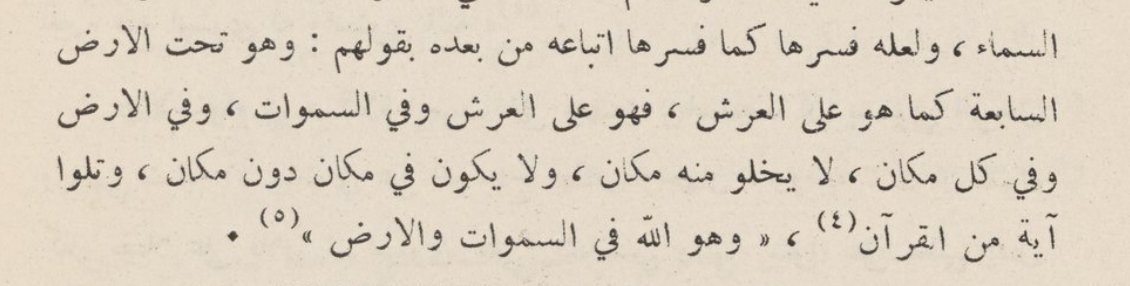
imam jahm ibn safwan al-wujudi said: "He is beneath the seventh earth just as He is upon the Throne. He is upon the Throne, in the heavens, and on the earth, and in every place. No place is devoid of Him, nor is He in one place to the exclusion of another."






![selfsubsisting's tweet photo. im aware what imam al-razi said and ill show u why it doesnt hold up. just so you dont accuse me of misinterpreting what he said, ill first quote the relevant passage from his nihaya 1.387:
واعلم أن الذي ذهب إليه في الحسن والقبح أنه ق يراد بذلك ملاءمة الطبع ومنافرته، وقد يراد به أيضا ًكون الفعل معاقابً عليه أو غير معاقب عليه. أما القسمان الأولان فلا شك أنهما يعرفان بالعقل. وأما الثالث فنقول: إن الحسن والقبح ـ بذلك المعنى ـ لا يجوز أن يكونا صفتين عائدتين إلى الفعل، ولا أن يكونا معللين بوجوه عائدة إلى الفعل. فهذا تلخيص محل النزاع بحسب الوسع
"Know that the position he adopted concerning ḥusn (goodness) and qubḥ (badness) is that these terms may be intended to mean the conformity of a thing to one's natural disposition (mulāʾamat al-ṭabʿ) and its repugnance to it (munāfaratuhu). They may also be intended to mean that an act is one for which punishment is incurred, or one for which punishment is not incurred.
As for the first two categories, there is no doubt that they are known by reason.
As for the third, we say: ḥusn and qubḥ, in that sense, cannot be attributes inhering in the act itself, nor can they be grounded in considerations that inhere in the act itself.
This, to the best of our ability, is a summary of the precise point at issue."
to easily summarise:
1. conformity/aversion to our innate natural disposition [ملاءمة الطبع ومنافرته] wherein husn = whatever agrees with or suits the natural temperament (such as pleasure, things the self finds agreeable) and qubh = whatever is repugnant to or clashes with the natural temperament (such as pain, things the self finds averse). this is known via reason
2. an attribute of perfection or deficiency [صفة كمال أو نقصان] whether an act is characterized by a quality that reflects knowledge/wisdom versus ignorance/folly. here, husn = an action being described as one of knowledge/skill and qubh = an action being described as one of ignorance. again, this is apprehended via reason
3. an act's entailing praise/reward or blame/punishment [استحقاق المدح والثواب أو الذم والعقاب] where husn = an act such that its agent deserves praise and reward for it and qubh = an act such that its agent deserves blame and punishment for it. this is the point of dispute.
now ill explain to you why point 2 and 3, under asharis, cant be distinct and dont hold up. consider:
to get from "lying is a naqs" to "therefore god doesn't lie," you need an additional premise: a perfect being does not perform naqs-actions. ask yourself what's doing the work in that premise.
the argument as the asharite wants it to look:
syllogism 1:
[1] lying is a naqs (deficiency).
[2] god possesses no naqs (maximally perfect).
[3] therefore, god does not lie. [MP 1,2]
this looks clean and looks like it stays entirely within razi's sense 2 of husn/qubh i,e a metaphysical classification (deficiency) plus a metaphysical premise about god's nature (no deficiency in him). no "ought," no rational moral judgment, nothing from the contested sense (3). this is the version YOU think ur running.
the trouble is that [2] = god possesses no naqs is ambiguous between a state and an act, and the argument needs it to cover acts, not just states, for [3] to follow. so [2] is really doing the work of a hidden premise that needs to be made explicit:
syllogism 2:
[1] lying is a naqs.
[2] a perfect being ought not/would not fittingly perform any act that is a naqs
[3] therefore, god does not lie [MP 1,2]
now look closely "ought not/would not fittingly" is a normative claim about what should or should not characterize an agent's conduct. that is structurally identical to the third sense we mentioned above in razi's nihaya. a claim of the form "X is such that a [certain kind of] being ought/ought not do it," which is exactly the category the asharis say only revelation, not reason, can establish. so syllogism 2 is really:
[1] lying is qabih in the practical sense i.e an act that ought not be done by a perfect agent. [= sense 3 content, smuggled in]
[2] god, being perfect, does only what a perfect agent ought to do
[3] therefore, god does not lie.
now i cite sharh al-mawaqif of al-jurjani 8.307:
الإحباط كما لا يخفى (قوله لأن الخلف في الوعد نقص) فيه بحث لأنه إن أراد أنه نقص في الصفة فممنوع وإن أراد انه نقص في الفعل فهو القبح العقلي بعينه كما اعترف به المصنف في امتناع الكذب عليه تعالى والأشاعرة لا يقولون به فكيف الاستدلال به على وفاء الوعد على انه اذا كان نقصا يجب تنزيه اللّه تعالى عنه فيفيد وجوب الثواب وهو خلاف المذهب فالأولى هاهنا التمسك بان الخلف كذب والكذب منتف في كلامه انتفاء معلوما بالضرورة من الدين كما سبق وإن أمكن عقلا (قوله ولا يعد الخلف في الوعيد نقصا) على ما دل عليه قول الشاعر
"His statement: "Because breaking a promise (khulf al-waʿd) is a deficiency (naqṣ)."
There is room for objection here. For if he means that it is a deficiency in an attribute (ṣifah), then this is not conceded. And if he means that it is a deficiency in an act (fiʿl), then this is nothing other than rational moral badness (al-qubḥ al-ʿaqlī) itself, as the author himself acknowledged in his discussion of the impossibility of lying for God, Exalted is He. Yet the Ashʿarīs do not affirm this doctrine. So how can it be used here as a proof that God must fulfill His promise? Moreover, if it is a deficiency, then God must necessarily be declared free of it. But this would imply that rewarding the obedient is obligatory upon God, and that is contrary to the doctrine of the school. Therefore, it would have been preferable here to argue that breaking a promise is lying, and that lying is absent from God's speech—its absence being known necessarily from the religion (ḍarūratan min al-dīn), as previously discussed—even though it is rationally possible (mumkin ʿaqlan)."
the only way for you to avoid this try a purely descriptive reading of [2]. something like:
syllogism 3:
[1] lying is a naqs (a state-description qua mode of imperfection, the way ignorance is, purely as a classificatory fact)
[2*] it would be metaphysically impossible for a subject who is pure perfection/act to instantiate any naqs-property. [undisputed obviously]
[3] therefore, god does not lie.
via this mode of argumention, you can surely avoid the ought to/not ought to. however, you must confront this disanalogy again:
syllogism 4:
[1] ignorance is a naqs of the faculty of knowing. meaning, it is a state a subject is simply in, not an act it performs
[2] god cannot instantiate a deficient state of a faculty, because his faculties (knowledge, power) are already proven maximal [u can also take this as foundationally true by virtue of classical theism]
[3] therefore, god is not ignorant. [this one is fine since no smuggling]
but lying is NOT a state of a faculty. rather, it's a voluntary act, something an agent does, which a perfect being with unlimited power could, as far as mere capacity goes, straightforwardly do. so:
syllogism 5:
[1] false propositions are logically possible [by logical possibility, we mean that they involve no internal contradiction. a false proposition like "the sky is green" is perfectly coherent as an object of assertion whrein its falsity is a fact about correspondence with reality]
[2] to have power over X (where X is logically possible) is to have the capacity to actualize X
[3] asserting p (for any logically possible p, true or false) is itself a logically possible act
[4] therefore, god has the power to assert false propositions [1,2,3]
[5] the power to assert a false proposition just is the capacity to lie [by definition, lying is nothing but the assertion of what one knows to be false]
[6] therefore, god has the capacity to lie [4,5]
now compare this to the ignorance case directly:
[1] ignorance, as a naqs, just is a privation of a capacity (the capacity to know)
[2] god's freedom from naqs, in the case of knowledge, is secured the moment you establish god has the capacity fully intact
[3] lying is not a privation of a capacity. rather, it is (per syllogism 5) an exercise of a capacity god fully possesses
[4] therefore "god is free of the naqs of lying" cannot mean "god lacks the capacity to lie" (since [6] establishes he doesn't lack it) it can only mean "god, though capable, never in fact exercises that capacity in this direction"
[5] but "never in fact exercises an existing capacity in this direction out of two really available directions" is NOT a fact about capacity at all. it is a fact about which of two live options gets selected
[6] a principle that selects among two really-open options for a free agent is, by definition, an evaluative/normative principle ranking those options
[7] therefore, "god is free of the naqs of lying" presupposes exactly such a ranking in sense 3 provided by razi whereas "god is free of the naqs of ignorance" required no such ranking at all
to quote sharh al-mawaqif , 8.307 on this issue:
(الأول قالوا الثواب فضل) من اللّه تعالى (وعد به فيفي به من غير وجوب لان الخلف في الوعد نقص تعالى اللّه عنه (وأما عدم الوجوب فلما مر مرارا (و) قالوا (العقاب عدل) من اللّه لان الكل ملكه (فله أن يتصرف فيه) كما يشاء وله العفو عنه لأنه فضل ولا يعد الخلف في الوعيد نقصا) بل يمدح به (عند العقلاء) المبحث (الثاني اجمع المسلمون على أن الكفار مخلدون في النار أبدا لا ينقطع عذابهم) سواء بالغوا في الاجتهاد والنظر في معجزة الأنبياء ولم يهتدوا أو علموا نبوتهم وعاندوا أو تكاسلوا (وانكره) أي تخليدهم في النار (طائفة) خارجة عن الملة الإسلامية (لوجوه* الآل أن القوة الجسمانية كما تقدم متناهية) في العدة والمدة (فلا بد من فنائها) واذا فنيت قوة الحياة وما يتبعها من الحس والحركة ولم يبق إحساس فلا يتصور عذاب وهذه الشبهة بعينها جارية في انقطاع نعيم أهل الجنة (الجواب منع تناهيها وقد مر) فساد ما يتمسك به في إثبات ذلك التناهي (الثاني) من تلك الوجوه
"And whenever they wish to deny an attribute of Him, they say: "This is an attribute of deficiency (ṣifat naqṣ); therefore it must be denied of Him."
This premise is employed and relied upon in three areas:
(1) In actions: For example, one says: Rewarding obedience is a perfection; therefore it must be affirmed of God. Likewise: Blaming someone without a prior offense and without subsequent compensation is a deficiency; therefore it must be denied of Him.
Thus, perfection in actions is goodness (ḥusn), while deficiency in actions is badness (qubḥ).
(2) In the Essence: One says: Necessary existence by essence (al-wujūb al-dhātī) is a perfection; therefore it must be affirmed of God. And: Contingency (imkān) is a deficiency; therefore it must be denied of Him.
(3) In the real attributes: One says: Knowledge is an attribute of perfection; therefore it must be affirmed of Him, Exalted is He. And: Ignorance is an attribute of deficiency; therefore it must be denied of Him."
similarly in sharh al-mawaqif 8.101:
صفته تعالى مع كمال صفتنا ولا يدل على صدقه في الحروف والكلمات التي يخلقها في جسم دالة على معان مقصودة ولما كان لقائل أن يقول خلق الكاذب أيضا نقص في فعله فيعود المحذور بعينه أشار الى دفعه بقوله واعلم انه لم يظهر لي فرق بين النقص في الفعل وبين القبح العقلي) فيه (فإن النقص في الأفعال هو القبح العقلي بعينه) فيها (وإنما تختلف العبارة) دون المعني فأصحابنا المنكرون للقبح العقلي كيف يتمسكون في دفع الكذب عن الكلام اللفظي بلزوم النقص في أفعاله تعالى (الثاني انه لو اتصف بالكذب لكان كذبه قديما
"Since someone might say: "Creating false speech is likewise a deficiency in His action, so the very same difficulty returns,"
the author alluded to answering this by saying:
"Know that I have not found any difference between deficiency in action and rational moral badness (al-qubḥ al-ʿaqlī)."
For deficiency in actions is nothing other than rational moral badness itself in actions; only the expression differs, not the meaning.
So how can our companions (the Ashʿarīs), who deny rational moral good and evil, rely, in excluding lying from God's verbal speech, upon the implication that it would involve a deficiency in His actions?"
i hope you will read this with an open mind and recognise the problem.](https://pbs.twimg.com/media/HOvgp-KaoAA6Jqi.jpg)
![selfsubsisting's tweet photo. im aware what imam al-razi said and ill show u why it doesnt hold up. just so you dont accuse me of misinterpreting what he said, ill first quote the relevant passage from his nihaya 1.387:
واعلم أن الذي ذهب إليه في الحسن والقبح أنه ق يراد بذلك ملاءمة الطبع ومنافرته، وقد يراد به أيضا ًكون الفعل معاقابً عليه أو غير معاقب عليه. أما القسمان الأولان فلا شك أنهما يعرفان بالعقل. وأما الثالث فنقول: إن الحسن والقبح ـ بذلك المعنى ـ لا يجوز أن يكونا صفتين عائدتين إلى الفعل، ولا أن يكونا معللين بوجوه عائدة إلى الفعل. فهذا تلخيص محل النزاع بحسب الوسع
"Know that the position he adopted concerning ḥusn (goodness) and qubḥ (badness) is that these terms may be intended to mean the conformity of a thing to one's natural disposition (mulāʾamat al-ṭabʿ) and its repugnance to it (munāfaratuhu). They may also be intended to mean that an act is one for which punishment is incurred, or one for which punishment is not incurred.
As for the first two categories, there is no doubt that they are known by reason.
As for the third, we say: ḥusn and qubḥ, in that sense, cannot be attributes inhering in the act itself, nor can they be grounded in considerations that inhere in the act itself.
This, to the best of our ability, is a summary of the precise point at issue."
to easily summarise:
1. conformity/aversion to our innate natural disposition [ملاءمة الطبع ومنافرته] wherein husn = whatever agrees with or suits the natural temperament (such as pleasure, things the self finds agreeable) and qubh = whatever is repugnant to or clashes with the natural temperament (such as pain, things the self finds averse). this is known via reason
2. an attribute of perfection or deficiency [صفة كمال أو نقصان] whether an act is characterized by a quality that reflects knowledge/wisdom versus ignorance/folly. here, husn = an action being described as one of knowledge/skill and qubh = an action being described as one of ignorance. again, this is apprehended via reason
3. an act's entailing praise/reward or blame/punishment [استحقاق المدح والثواب أو الذم والعقاب] where husn = an act such that its agent deserves praise and reward for it and qubh = an act such that its agent deserves blame and punishment for it. this is the point of dispute.
now ill explain to you why point 2 and 3, under asharis, cant be distinct and dont hold up. consider:
to get from "lying is a naqs" to "therefore god doesn't lie," you need an additional premise: a perfect being does not perform naqs-actions. ask yourself what's doing the work in that premise.
the argument as the asharite wants it to look:
syllogism 1:
[1] lying is a naqs (deficiency).
[2] god possesses no naqs (maximally perfect).
[3] therefore, god does not lie. [MP 1,2]
this looks clean and looks like it stays entirely within razi's sense 2 of husn/qubh i,e a metaphysical classification (deficiency) plus a metaphysical premise about god's nature (no deficiency in him). no "ought," no rational moral judgment, nothing from the contested sense (3). this is the version YOU think ur running.
the trouble is that [2] = god possesses no naqs is ambiguous between a state and an act, and the argument needs it to cover acts, not just states, for [3] to follow. so [2] is really doing the work of a hidden premise that needs to be made explicit:
syllogism 2:
[1] lying is a naqs.
[2] a perfect being ought not/would not fittingly perform any act that is a naqs
[3] therefore, god does not lie [MP 1,2]
now look closely "ought not/would not fittingly" is a normative claim about what should or should not characterize an agent's conduct. that is structurally identical to the third sense we mentioned above in razi's nihaya. a claim of the form "X is such that a [certain kind of] being ought/ought not do it," which is exactly the category the asharis say only revelation, not reason, can establish. so syllogism 2 is really:
[1] lying is qabih in the practical sense i.e an act that ought not be done by a perfect agent. [= sense 3 content, smuggled in]
[2] god, being perfect, does only what a perfect agent ought to do
[3] therefore, god does not lie.
now i cite sharh al-mawaqif of al-jurjani 8.307:
الإحباط كما لا يخفى (قوله لأن الخلف في الوعد نقص) فيه بحث لأنه إن أراد أنه نقص في الصفة فممنوع وإن أراد انه نقص في الفعل فهو القبح العقلي بعينه كما اعترف به المصنف في امتناع الكذب عليه تعالى والأشاعرة لا يقولون به فكيف الاستدلال به على وفاء الوعد على انه اذا كان نقصا يجب تنزيه اللّه تعالى عنه فيفيد وجوب الثواب وهو خلاف المذهب فالأولى هاهنا التمسك بان الخلف كذب والكذب منتف في كلامه انتفاء معلوما بالضرورة من الدين كما سبق وإن أمكن عقلا (قوله ولا يعد الخلف في الوعيد نقصا) على ما دل عليه قول الشاعر
"His statement: "Because breaking a promise (khulf al-waʿd) is a deficiency (naqṣ)."
There is room for objection here. For if he means that it is a deficiency in an attribute (ṣifah), then this is not conceded. And if he means that it is a deficiency in an act (fiʿl), then this is nothing other than rational moral badness (al-qubḥ al-ʿaqlī) itself, as the author himself acknowledged in his discussion of the impossibility of lying for God, Exalted is He. Yet the Ashʿarīs do not affirm this doctrine. So how can it be used here as a proof that God must fulfill His promise? Moreover, if it is a deficiency, then God must necessarily be declared free of it. But this would imply that rewarding the obedient is obligatory upon God, and that is contrary to the doctrine of the school. Therefore, it would have been preferable here to argue that breaking a promise is lying, and that lying is absent from God's speech—its absence being known necessarily from the religion (ḍarūratan min al-dīn), as previously discussed—even though it is rationally possible (mumkin ʿaqlan)."
the only way for you to avoid this try a purely descriptive reading of [2]. something like:
syllogism 3:
[1] lying is a naqs (a state-description qua mode of imperfection, the way ignorance is, purely as a classificatory fact)
[2*] it would be metaphysically impossible for a subject who is pure perfection/act to instantiate any naqs-property. [undisputed obviously]
[3] therefore, god does not lie.
via this mode of argumention, you can surely avoid the ought to/not ought to. however, you must confront this disanalogy again:
syllogism 4:
[1] ignorance is a naqs of the faculty of knowing. meaning, it is a state a subject is simply in, not an act it performs
[2] god cannot instantiate a deficient state of a faculty, because his faculties (knowledge, power) are already proven maximal [u can also take this as foundationally true by virtue of classical theism]
[3] therefore, god is not ignorant. [this one is fine since no smuggling]
but lying is NOT a state of a faculty. rather, it's a voluntary act, something an agent does, which a perfect being with unlimited power could, as far as mere capacity goes, straightforwardly do. so:
syllogism 5:
[1] false propositions are logically possible [by logical possibility, we mean that they involve no internal contradiction. a false proposition like "the sky is green" is perfectly coherent as an object of assertion whrein its falsity is a fact about correspondence with reality]
[2] to have power over X (where X is logically possible) is to have the capacity to actualize X
[3] asserting p (for any logically possible p, true or false) is itself a logically possible act
[4] therefore, god has the power to assert false propositions [1,2,3]
[5] the power to assert a false proposition just is the capacity to lie [by definition, lying is nothing but the assertion of what one knows to be false]
[6] therefore, god has the capacity to lie [4,5]
now compare this to the ignorance case directly:
[1] ignorance, as a naqs, just is a privation of a capacity (the capacity to know)
[2] god's freedom from naqs, in the case of knowledge, is secured the moment you establish god has the capacity fully intact
[3] lying is not a privation of a capacity. rather, it is (per syllogism 5) an exercise of a capacity god fully possesses
[4] therefore "god is free of the naqs of lying" cannot mean "god lacks the capacity to lie" (since [6] establishes he doesn't lack it) it can only mean "god, though capable, never in fact exercises that capacity in this direction"
[5] but "never in fact exercises an existing capacity in this direction out of two really available directions" is NOT a fact about capacity at all. it is a fact about which of two live options gets selected
[6] a principle that selects among two really-open options for a free agent is, by definition, an evaluative/normative principle ranking those options
[7] therefore, "god is free of the naqs of lying" presupposes exactly such a ranking in sense 3 provided by razi whereas "god is free of the naqs of ignorance" required no such ranking at all
to quote sharh al-mawaqif , 8.307 on this issue:
(الأول قالوا الثواب فضل) من اللّه تعالى (وعد به فيفي به من غير وجوب لان الخلف في الوعد نقص تعالى اللّه عنه (وأما عدم الوجوب فلما مر مرارا (و) قالوا (العقاب عدل) من اللّه لان الكل ملكه (فله أن يتصرف فيه) كما يشاء وله العفو عنه لأنه فضل ولا يعد الخلف في الوعيد نقصا) بل يمدح به (عند العقلاء) المبحث (الثاني اجمع المسلمون على أن الكفار مخلدون في النار أبدا لا ينقطع عذابهم) سواء بالغوا في الاجتهاد والنظر في معجزة الأنبياء ولم يهتدوا أو علموا نبوتهم وعاندوا أو تكاسلوا (وانكره) أي تخليدهم في النار (طائفة) خارجة عن الملة الإسلامية (لوجوه* الآل أن القوة الجسمانية كما تقدم متناهية) في العدة والمدة (فلا بد من فنائها) واذا فنيت قوة الحياة وما يتبعها من الحس والحركة ولم يبق إحساس فلا يتصور عذاب وهذه الشبهة بعينها جارية في انقطاع نعيم أهل الجنة (الجواب منع تناهيها وقد مر) فساد ما يتمسك به في إثبات ذلك التناهي (الثاني) من تلك الوجوه
"And whenever they wish to deny an attribute of Him, they say: "This is an attribute of deficiency (ṣifat naqṣ); therefore it must be denied of Him."
This premise is employed and relied upon in three areas:
(1) In actions: For example, one says: Rewarding obedience is a perfection; therefore it must be affirmed of God. Likewise: Blaming someone without a prior offense and without subsequent compensation is a deficiency; therefore it must be denied of Him.
Thus, perfection in actions is goodness (ḥusn), while deficiency in actions is badness (qubḥ).
(2) In the Essence: One says: Necessary existence by essence (al-wujūb al-dhātī) is a perfection; therefore it must be affirmed of God. And: Contingency (imkān) is a deficiency; therefore it must be denied of Him.
(3) In the real attributes: One says: Knowledge is an attribute of perfection; therefore it must be affirmed of Him, Exalted is He. And: Ignorance is an attribute of deficiency; therefore it must be denied of Him."
similarly in sharh al-mawaqif 8.101:
صفته تعالى مع كمال صفتنا ولا يدل على صدقه في الحروف والكلمات التي يخلقها في جسم دالة على معان مقصودة ولما كان لقائل أن يقول خلق الكاذب أيضا نقص في فعله فيعود المحذور بعينه أشار الى دفعه بقوله واعلم انه لم يظهر لي فرق بين النقص في الفعل وبين القبح العقلي) فيه (فإن النقص في الأفعال هو القبح العقلي بعينه) فيها (وإنما تختلف العبارة) دون المعني فأصحابنا المنكرون للقبح العقلي كيف يتمسكون في دفع الكذب عن الكلام اللفظي بلزوم النقص في أفعاله تعالى (الثاني انه لو اتصف بالكذب لكان كذبه قديما
"Since someone might say: "Creating false speech is likewise a deficiency in His action, so the very same difficulty returns,"
the author alluded to answering this by saying:
"Know that I have not found any difference between deficiency in action and rational moral badness (al-qubḥ al-ʿaqlī)."
For deficiency in actions is nothing other than rational moral badness itself in actions; only the expression differs, not the meaning.
So how can our companions (the Ashʿarīs), who deny rational moral good and evil, rely, in excluding lying from God's verbal speech, upon the implication that it would involve a deficiency in His actions?"
i hope you will read this with an open mind and recognise the problem.](https://pbs.twimg.com/media/HOvgoRvawAAV62E.png)
![selfsubsisting's tweet photo. im aware what imam al-razi said and ill show u why it doesnt hold up. just so you dont accuse me of misinterpreting what he said, ill first quote the relevant passage from his nihaya 1.387:
واعلم أن الذي ذهب إليه في الحسن والقبح أنه ق يراد بذلك ملاءمة الطبع ومنافرته، وقد يراد به أيضا ًكون الفعل معاقابً عليه أو غير معاقب عليه. أما القسمان الأولان فلا شك أنهما يعرفان بالعقل. وأما الثالث فنقول: إن الحسن والقبح ـ بذلك المعنى ـ لا يجوز أن يكونا صفتين عائدتين إلى الفعل، ولا أن يكونا معللين بوجوه عائدة إلى الفعل. فهذا تلخيص محل النزاع بحسب الوسع
"Know that the position he adopted concerning ḥusn (goodness) and qubḥ (badness) is that these terms may be intended to mean the conformity of a thing to one's natural disposition (mulāʾamat al-ṭabʿ) and its repugnance to it (munāfaratuhu). They may also be intended to mean that an act is one for which punishment is incurred, or one for which punishment is not incurred.
As for the first two categories, there is no doubt that they are known by reason.
As for the third, we say: ḥusn and qubḥ, in that sense, cannot be attributes inhering in the act itself, nor can they be grounded in considerations that inhere in the act itself.
This, to the best of our ability, is a summary of the precise point at issue."
to easily summarise:
1. conformity/aversion to our innate natural disposition [ملاءمة الطبع ومنافرته] wherein husn = whatever agrees with or suits the natural temperament (such as pleasure, things the self finds agreeable) and qubh = whatever is repugnant to or clashes with the natural temperament (such as pain, things the self finds averse). this is known via reason
2. an attribute of perfection or deficiency [صفة كمال أو نقصان] whether an act is characterized by a quality that reflects knowledge/wisdom versus ignorance/folly. here, husn = an action being described as one of knowledge/skill and qubh = an action being described as one of ignorance. again, this is apprehended via reason
3. an act's entailing praise/reward or blame/punishment [استحقاق المدح والثواب أو الذم والعقاب] where husn = an act such that its agent deserves praise and reward for it and qubh = an act such that its agent deserves blame and punishment for it. this is the point of dispute.
now ill explain to you why point 2 and 3, under asharis, cant be distinct and dont hold up. consider:
to get from "lying is a naqs" to "therefore god doesn't lie," you need an additional premise: a perfect being does not perform naqs-actions. ask yourself what's doing the work in that premise.
the argument as the asharite wants it to look:
syllogism 1:
[1] lying is a naqs (deficiency).
[2] god possesses no naqs (maximally perfect).
[3] therefore, god does not lie. [MP 1,2]
this looks clean and looks like it stays entirely within razi's sense 2 of husn/qubh i,e a metaphysical classification (deficiency) plus a metaphysical premise about god's nature (no deficiency in him). no "ought," no rational moral judgment, nothing from the contested sense (3). this is the version YOU think ur running.
the trouble is that [2] = god possesses no naqs is ambiguous between a state and an act, and the argument needs it to cover acts, not just states, for [3] to follow. so [2] is really doing the work of a hidden premise that needs to be made explicit:
syllogism 2:
[1] lying is a naqs.
[2] a perfect being ought not/would not fittingly perform any act that is a naqs
[3] therefore, god does not lie [MP 1,2]
now look closely "ought not/would not fittingly" is a normative claim about what should or should not characterize an agent's conduct. that is structurally identical to the third sense we mentioned above in razi's nihaya. a claim of the form "X is such that a [certain kind of] being ought/ought not do it," which is exactly the category the asharis say only revelation, not reason, can establish. so syllogism 2 is really:
[1] lying is qabih in the practical sense i.e an act that ought not be done by a perfect agent. [= sense 3 content, smuggled in]
[2] god, being perfect, does only what a perfect agent ought to do
[3] therefore, god does not lie.
now i cite sharh al-mawaqif of al-jurjani 8.307:
الإحباط كما لا يخفى (قوله لأن الخلف في الوعد نقص) فيه بحث لأنه إن أراد أنه نقص في الصفة فممنوع وإن أراد انه نقص في الفعل فهو القبح العقلي بعينه كما اعترف به المصنف في امتناع الكذب عليه تعالى والأشاعرة لا يقولون به فكيف الاستدلال به على وفاء الوعد على انه اذا كان نقصا يجب تنزيه اللّه تعالى عنه فيفيد وجوب الثواب وهو خلاف المذهب فالأولى هاهنا التمسك بان الخلف كذب والكذب منتف في كلامه انتفاء معلوما بالضرورة من الدين كما سبق وإن أمكن عقلا (قوله ولا يعد الخلف في الوعيد نقصا) على ما دل عليه قول الشاعر
"His statement: "Because breaking a promise (khulf al-waʿd) is a deficiency (naqṣ)."
There is room for objection here. For if he means that it is a deficiency in an attribute (ṣifah), then this is not conceded. And if he means that it is a deficiency in an act (fiʿl), then this is nothing other than rational moral badness (al-qubḥ al-ʿaqlī) itself, as the author himself acknowledged in his discussion of the impossibility of lying for God, Exalted is He. Yet the Ashʿarīs do not affirm this doctrine. So how can it be used here as a proof that God must fulfill His promise? Moreover, if it is a deficiency, then God must necessarily be declared free of it. But this would imply that rewarding the obedient is obligatory upon God, and that is contrary to the doctrine of the school. Therefore, it would have been preferable here to argue that breaking a promise is lying, and that lying is absent from God's speech—its absence being known necessarily from the religion (ḍarūratan min al-dīn), as previously discussed—even though it is rationally possible (mumkin ʿaqlan)."
the only way for you to avoid this try a purely descriptive reading of [2]. something like:
syllogism 3:
[1] lying is a naqs (a state-description qua mode of imperfection, the way ignorance is, purely as a classificatory fact)
[2*] it would be metaphysically impossible for a subject who is pure perfection/act to instantiate any naqs-property. [undisputed obviously]
[3] therefore, god does not lie.
via this mode of argumention, you can surely avoid the ought to/not ought to. however, you must confront this disanalogy again:
syllogism 4:
[1] ignorance is a naqs of the faculty of knowing. meaning, it is a state a subject is simply in, not an act it performs
[2] god cannot instantiate a deficient state of a faculty, because his faculties (knowledge, power) are already proven maximal [u can also take this as foundationally true by virtue of classical theism]
[3] therefore, god is not ignorant. [this one is fine since no smuggling]
but lying is NOT a state of a faculty. rather, it's a voluntary act, something an agent does, which a perfect being with unlimited power could, as far as mere capacity goes, straightforwardly do. so:
syllogism 5:
[1] false propositions are logically possible [by logical possibility, we mean that they involve no internal contradiction. a false proposition like "the sky is green" is perfectly coherent as an object of assertion whrein its falsity is a fact about correspondence with reality]
[2] to have power over X (where X is logically possible) is to have the capacity to actualize X
[3] asserting p (for any logically possible p, true or false) is itself a logically possible act
[4] therefore, god has the power to assert false propositions [1,2,3]
[5] the power to assert a false proposition just is the capacity to lie [by definition, lying is nothing but the assertion of what one knows to be false]
[6] therefore, god has the capacity to lie [4,5]
now compare this to the ignorance case directly:
[1] ignorance, as a naqs, just is a privation of a capacity (the capacity to know)
[2] god's freedom from naqs, in the case of knowledge, is secured the moment you establish god has the capacity fully intact
[3] lying is not a privation of a capacity. rather, it is (per syllogism 5) an exercise of a capacity god fully possesses
[4] therefore "god is free of the naqs of lying" cannot mean "god lacks the capacity to lie" (since [6] establishes he doesn't lack it) it can only mean "god, though capable, never in fact exercises that capacity in this direction"
[5] but "never in fact exercises an existing capacity in this direction out of two really available directions" is NOT a fact about capacity at all. it is a fact about which of two live options gets selected
[6] a principle that selects among two really-open options for a free agent is, by definition, an evaluative/normative principle ranking those options
[7] therefore, "god is free of the naqs of lying" presupposes exactly such a ranking in sense 3 provided by razi whereas "god is free of the naqs of ignorance" required no such ranking at all
to quote sharh al-mawaqif , 8.307 on this issue:
(الأول قالوا الثواب فضل) من اللّه تعالى (وعد به فيفي به من غير وجوب لان الخلف في الوعد نقص تعالى اللّه عنه (وأما عدم الوجوب فلما مر مرارا (و) قالوا (العقاب عدل) من اللّه لان الكل ملكه (فله أن يتصرف فيه) كما يشاء وله العفو عنه لأنه فضل ولا يعد الخلف في الوعيد نقصا) بل يمدح به (عند العقلاء) المبحث (الثاني اجمع المسلمون على أن الكفار مخلدون في النار أبدا لا ينقطع عذابهم) سواء بالغوا في الاجتهاد والنظر في معجزة الأنبياء ولم يهتدوا أو علموا نبوتهم وعاندوا أو تكاسلوا (وانكره) أي تخليدهم في النار (طائفة) خارجة عن الملة الإسلامية (لوجوه* الآل أن القوة الجسمانية كما تقدم متناهية) في العدة والمدة (فلا بد من فنائها) واذا فنيت قوة الحياة وما يتبعها من الحس والحركة ولم يبق إحساس فلا يتصور عذاب وهذه الشبهة بعينها جارية في انقطاع نعيم أهل الجنة (الجواب منع تناهيها وقد مر) فساد ما يتمسك به في إثبات ذلك التناهي (الثاني) من تلك الوجوه
"And whenever they wish to deny an attribute of Him, they say: "This is an attribute of deficiency (ṣifat naqṣ); therefore it must be denied of Him."
This premise is employed and relied upon in three areas:
(1) In actions: For example, one says: Rewarding obedience is a perfection; therefore it must be affirmed of God. Likewise: Blaming someone without a prior offense and without subsequent compensation is a deficiency; therefore it must be denied of Him.
Thus, perfection in actions is goodness (ḥusn), while deficiency in actions is badness (qubḥ).
(2) In the Essence: One says: Necessary existence by essence (al-wujūb al-dhātī) is a perfection; therefore it must be affirmed of God. And: Contingency (imkān) is a deficiency; therefore it must be denied of Him.
(3) In the real attributes: One says: Knowledge is an attribute of perfection; therefore it must be affirmed of Him, Exalted is He. And: Ignorance is an attribute of deficiency; therefore it must be denied of Him."
similarly in sharh al-mawaqif 8.101:
صفته تعالى مع كمال صفتنا ولا يدل على صدقه في الحروف والكلمات التي يخلقها في جسم دالة على معان مقصودة ولما كان لقائل أن يقول خلق الكاذب أيضا نقص في فعله فيعود المحذور بعينه أشار الى دفعه بقوله واعلم انه لم يظهر لي فرق بين النقص في الفعل وبين القبح العقلي) فيه (فإن النقص في الأفعال هو القبح العقلي بعينه) فيها (وإنما تختلف العبارة) دون المعني فأصحابنا المنكرون للقبح العقلي كيف يتمسكون في دفع الكذب عن الكلام اللفظي بلزوم النقص في أفعاله تعالى (الثاني انه لو اتصف بالكذب لكان كذبه قديما
"Since someone might say: "Creating false speech is likewise a deficiency in His action, so the very same difficulty returns,"
the author alluded to answering this by saying:
"Know that I have not found any difference between deficiency in action and rational moral badness (al-qubḥ al-ʿaqlī)."
For deficiency in actions is nothing other than rational moral badness itself in actions; only the expression differs, not the meaning.
So how can our companions (the Ashʿarīs), who deny rational moral good and evil, rely, in excluding lying from God's verbal speech, upon the implication that it would involve a deficiency in His actions?"
i hope you will read this with an open mind and recognise the problem.](https://pbs.twimg.com/media/HOvTa4xbkAAUb_2.jpg)
![selfsubsisting's tweet photo. al-razi: god almighty's report/speech is true, because lying is a deficiency, and that is impossible for god.
al-tusi: the judgment that lying is a deficiency, if this is [known] rationally, then it amounts to affirming that things are [intrinsically] good or bad by reason (ḥusn wa qubḥ al-ashyāʾ ʿaqlan); and if it is [known] through revealed transmission (samʿan), then circular reasoning (dawr) necessarily follows. [...]
and the preferable [approach for razi] is to establish that [truthfulness of divine speech] by the consensus (ijmāʿ) of all rational people, even though they differ in their reasoning/justification for it.
— talkhīṣ al-muḥaṣṣal 1.310](https://pbs.twimg.com/media/HOu7Un5bgAAmmJI.png)






![selfsubsisting's tweet photo. shaykh al-islam ibn sina:
[...] after these two ranks comes the rank of those who are both lovers and longers. insofar as they are lovers, they have attained something, and therefore they experience delight. but insofar as they are longers, some classes among them may still suffer a certain measure of pain. yet because that pain arises on account of the beloved, it is a sweet and pleasurable pain. among sensible experiences, only a very remote analogy can be drawn to such pain, namely, the sensation of itching or tickling. perhaps this may provide some distant notion of it.](https://pbs.twimg.com/media/HOv2cpPbUAAaNCx.jpg)
![selfsubsisting's tweet photo. im aware what imam al-razi said and ill show u why it doesnt hold up. just so you dont accuse me of misinterpreting what he said, ill first quote the relevant passage from his nihaya 1.387:
واعلم أن الذي ذهب إليه في الحسن والقبح أنه ق يراد بذلك ملاءمة الطبع ومنافرته، وقد يراد به أيضا ًكون الفعل معاقابً عليه أو غير معاقب عليه. أما القسمان الأولان فلا شك أنهما يعرفان بالعقل. وأما الثالث فنقول: إن الحسن والقبح ـ بذلك المعنى ـ لا يجوز أن يكونا صفتين عائدتين إلى الفعل، ولا أن يكونا معللين بوجوه عائدة إلى الفعل. فهذا تلخيص محل النزاع بحسب الوسع
"Know that the position he adopted concerning ḥusn (goodness) and qubḥ (badness) is that these terms may be intended to mean the conformity of a thing to one's natural disposition (mulāʾamat al-ṭabʿ) and its repugnance to it (munāfaratuhu). They may also be intended to mean that an act is one for which punishment is incurred, or one for which punishment is not incurred.
As for the first two categories, there is no doubt that they are known by reason.
As for the third, we say: ḥusn and qubḥ, in that sense, cannot be attributes inhering in the act itself, nor can they be grounded in considerations that inhere in the act itself.
This, to the best of our ability, is a summary of the precise point at issue."
to easily summarise:
1. conformity/aversion to our innate natural disposition [ملاءمة الطبع ومنافرته] wherein husn = whatever agrees with or suits the natural temperament (such as pleasure, things the self finds agreeable) and qubh = whatever is repugnant to or clashes with the natural temperament (such as pain, things the self finds averse). this is known via reason
2. an attribute of perfection or deficiency [صفة كمال أو نقصان] whether an act is characterized by a quality that reflects knowledge/wisdom versus ignorance/folly. here, husn = an action being described as one of knowledge/skill and qubh = an action being described as one of ignorance. again, this is apprehended via reason
3. an act's entailing praise/reward or blame/punishment [استحقاق المدح والثواب أو الذم والعقاب] where husn = an act such that its agent deserves praise and reward for it and qubh = an act such that its agent deserves blame and punishment for it. this is the point of dispute.
now ill explain to you why point 2 and 3, under asharis, cant be distinct and dont hold up. consider:
to get from "lying is a naqs" to "therefore god doesn't lie," you need an additional premise: a perfect being does not perform naqs-actions. ask yourself what's doing the work in that premise.
the argument as the asharite wants it to look:
syllogism 1:
[1] lying is a naqs (deficiency).
[2] god possesses no naqs (maximally perfect).
[3] therefore, god does not lie. [MP 1,2]
this looks clean and looks like it stays entirely within razi's sense 2 of husn/qubh i,e a metaphysical classification (deficiency) plus a metaphysical premise about god's nature (no deficiency in him). no "ought," no rational moral judgment, nothing from the contested sense (3). this is the version YOU think ur running.
the trouble is that [2] = god possesses no naqs is ambiguous between a state and an act, and the argument needs it to cover acts, not just states, for [3] to follow. so [2] is really doing the work of a hidden premise that needs to be made explicit:
syllogism 2:
[1] lying is a naqs.
[2] a perfect being ought not/would not fittingly perform any act that is a naqs
[3] therefore, god does not lie [MP 1,2]
now look closely "ought not/would not fittingly" is a normative claim about what should or should not characterize an agent's conduct. that is structurally identical to the third sense we mentioned above in razi's nihaya. a claim of the form "X is such that a [certain kind of] being ought/ought not do it," which is exactly the category the asharis say only revelation, not reason, can establish. so syllogism 2 is really:
[1] lying is qabih in the practical sense i.e an act that ought not be done by a perfect agent. [= sense 3 content, smuggled in]
[2] god, being perfect, does only what a perfect agent ought to do
[3] therefore, god does not lie.
now i cite sharh al-mawaqif of al-jurjani 8.307:
الإحباط كما لا يخفى (قوله لأن الخلف في الوعد نقص) فيه بحث لأنه إن أراد أنه نقص في الصفة فممنوع وإن أراد انه نقص في الفعل فهو القبح العقلي بعينه كما اعترف به المصنف في امتناع الكذب عليه تعالى والأشاعرة لا يقولون به فكيف الاستدلال به على وفاء الوعد على انه اذا كان نقصا يجب تنزيه اللّه تعالى عنه فيفيد وجوب الثواب وهو خلاف المذهب فالأولى هاهنا التمسك بان الخلف كذب والكذب منتف في كلامه انتفاء معلوما بالضرورة من الدين كما سبق وإن أمكن عقلا (قوله ولا يعد الخلف في الوعيد نقصا) على ما دل عليه قول الشاعر
"His statement: "Because breaking a promise (khulf al-waʿd) is a deficiency (naqṣ)."
There is room for objection here. For if he means that it is a deficiency in an attribute (ṣifah), then this is not conceded. And if he means that it is a deficiency in an act (fiʿl), then this is nothing other than rational moral badness (al-qubḥ al-ʿaqlī) itself, as the author himself acknowledged in his discussion of the impossibility of lying for God, Exalted is He. Yet the Ashʿarīs do not affirm this doctrine. So how can it be used here as a proof that God must fulfill His promise? Moreover, if it is a deficiency, then God must necessarily be declared free of it. But this would imply that rewarding the obedient is obligatory upon God, and that is contrary to the doctrine of the school. Therefore, it would have been preferable here to argue that breaking a promise is lying, and that lying is absent from God's speech—its absence being known necessarily from the religion (ḍarūratan min al-dīn), as previously discussed—even though it is rationally possible (mumkin ʿaqlan)."
the only way for you to avoid this try a purely descriptive reading of [2]. something like:
syllogism 3:
[1] lying is a naqs (a state-description qua mode of imperfection, the way ignorance is, purely as a classificatory fact)
[2*] it would be metaphysically impossible for a subject who is pure perfection/act to instantiate any naqs-property. [undisputed obviously]
[3] therefore, god does not lie.
via this mode of argumention, you can surely avoid the ought to/not ought to. however, you must confront this disanalogy again:
syllogism 4:
[1] ignorance is a naqs of the faculty of knowing. meaning, it is a state a subject is simply in, not an act it performs
[2] god cannot instantiate a deficient state of a faculty, because his faculties (knowledge, power) are already proven maximal [u can also take this as foundationally true by virtue of classical theism]
[3] therefore, god is not ignorant. [this one is fine since no smuggling]
but lying is NOT a state of a faculty. rather, it's a voluntary act, something an agent does, which a perfect being with unlimited power could, as far as mere capacity goes, straightforwardly do. so:
syllogism 5:
[1] false propositions are logically possible [by logical possibility, we mean that they involve no internal contradiction. a false proposition like "the sky is green" is perfectly coherent as an object of assertion whrein its falsity is a fact about correspondence with reality]
[2] to have power over X (where X is logically possible) is to have the capacity to actualize X
[3] asserting p (for any logically possible p, true or false) is itself a logically possible act
[4] therefore, god has the power to assert false propositions [1,2,3]
[5] the power to assert a false proposition just is the capacity to lie [by definition, lying is nothing but the assertion of what one knows to be false]
[6] therefore, god has the capacity to lie [4,5]
now compare this to the ignorance case directly:
[1] ignorance, as a naqs, just is a privation of a capacity (the capacity to know)
[2] god's freedom from naqs, in the case of knowledge, is secured the moment you establish god has the capacity fully intact
[3] lying is not a privation of a capacity. rather, it is (per syllogism 5) an exercise of a capacity god fully possesses
[4] therefore "god is free of the naqs of lying" cannot mean "god lacks the capacity to lie" (since [6] establishes he doesn't lack it) it can only mean "god, though capable, never in fact exercises that capacity in this direction"
[5] but "never in fact exercises an existing capacity in this direction out of two really available directions" is NOT a fact about capacity at all. it is a fact about which of two live options gets selected
[6] a principle that selects among two really-open options for a free agent is, by definition, an evaluative/normative principle ranking those options
[7] therefore, "god is free of the naqs of lying" presupposes exactly such a ranking in sense 3 provided by razi whereas "god is free of the naqs of ignorance" required no such ranking at all
to quote sharh al-mawaqif , 8.307 on this issue:
(الأول قالوا الثواب فضل) من اللّه تعالى (وعد به فيفي به من غير وجوب لان الخلف في الوعد نقص تعالى اللّه عنه (وأما عدم الوجوب فلما مر مرارا (و) قالوا (العقاب عدل) من اللّه لان الكل ملكه (فله أن يتصرف فيه) كما يشاء وله العفو عنه لأنه فضل ولا يعد الخلف في الوعيد نقصا) بل يمدح به (عند العقلاء) المبحث (الثاني اجمع المسلمون على أن الكفار مخلدون في النار أبدا لا ينقطع عذابهم) سواء بالغوا في الاجتهاد والنظر في معجزة الأنبياء ولم يهتدوا أو علموا نبوتهم وعاندوا أو تكاسلوا (وانكره) أي تخليدهم في النار (طائفة) خارجة عن الملة الإسلامية (لوجوه* الآل أن القوة الجسمانية كما تقدم متناهية) في العدة والمدة (فلا بد من فنائها) واذا فنيت قوة الحياة وما يتبعها من الحس والحركة ولم يبق إحساس فلا يتصور عذاب وهذه الشبهة بعينها جارية في انقطاع نعيم أهل الجنة (الجواب منع تناهيها وقد مر) فساد ما يتمسك به في إثبات ذلك التناهي (الثاني) من تلك الوجوه
"And whenever they wish to deny an attribute of Him, they say: "This is an attribute of deficiency (ṣifat naqṣ); therefore it must be denied of Him."
This premise is employed and relied upon in three areas:
(1) In actions: For example, one says: Rewarding obedience is a perfection; therefore it must be affirmed of God. Likewise: Blaming someone without a prior offense and without subsequent compensation is a deficiency; therefore it must be denied of Him.
Thus, perfection in actions is goodness (ḥusn), while deficiency in actions is badness (qubḥ).
(2) In the Essence: One says: Necessary existence by essence (al-wujūb al-dhātī) is a perfection; therefore it must be affirmed of God. And: Contingency (imkān) is a deficiency; therefore it must be denied of Him.
(3) In the real attributes: One says: Knowledge is an attribute of perfection; therefore it must be affirmed of Him, Exalted is He. And: Ignorance is an attribute of deficiency; therefore it must be denied of Him."
similarly in sharh al-mawaqif 8.101:
صفته تعالى مع كمال صفتنا ولا يدل على صدقه في الحروف والكلمات التي يخلقها في جسم دالة على معان مقصودة ولما كان لقائل أن يقول خلق الكاذب أيضا نقص في فعله فيعود المحذور بعينه أشار الى دفعه بقوله واعلم انه لم يظهر لي فرق بين النقص في الفعل وبين القبح العقلي) فيه (فإن النقص في الأفعال هو القبح العقلي بعينه) فيها (وإنما تختلف العبارة) دون المعني فأصحابنا المنكرون للقبح العقلي كيف يتمسكون في دفع الكذب عن الكلام اللفظي بلزوم النقص في أفعاله تعالى (الثاني انه لو اتصف بالكذب لكان كذبه قديما
"Since someone might say: "Creating false speech is likewise a deficiency in His action, so the very same difficulty returns,"
the author alluded to answering this by saying:
"Know that I have not found any difference between deficiency in action and rational moral badness (al-qubḥ al-ʿaqlī)."
For deficiency in actions is nothing other than rational moral badness itself in actions; only the expression differs, not the meaning.
So how can our companions (the Ashʿarīs), who deny rational moral good and evil, rely, in excluding lying from God's verbal speech, upon the implication that it would involve a deficiency in His actions?"
i hope you will read this with an open mind and recognise the problem.](https://pbs.twimg.com/media/HOvhiVXaQAA1xIq.jpg)
![selfsubsisting's tweet photo. al-razi: god almighty's report/speech is true, because lying is a deficiency, and that is impossible for god.
al-tusi: the judgment that lying is a deficiency, if this is [known] rationally, then it amounts to affirming that things are [intrinsically] good or bad by reason (ḥusn wa qubḥ al-ashyāʾ ʿaqlan); and if it is [known] through revealed transmission (samʿan), then circular reasoning (dawr) necessarily follows. [...]
and the preferable [approach for razi] is to establish that [truthfulness of divine speech] by the consensus (ijmāʿ) of all rational people, even though they differ in their reasoning/justification for it.
— talkhīṣ al-muḥaṣṣal 1.310](https://pbs.twimg.com/media/HOu7V7LawAAGR1L.png)
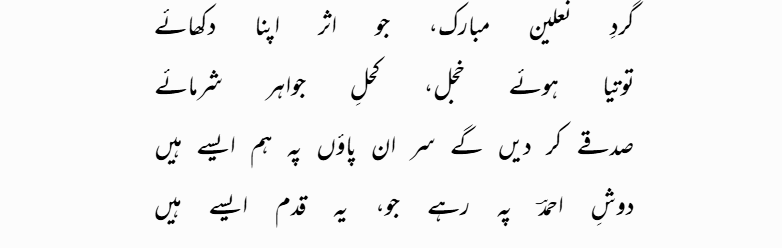
![selfsubsisting's tweet photo. indeed qays tasted, from his passion,
[only] an outpouring of love-longing, while i have drunk cups upon cups [of it].
whoever compares what i have encountered of love's anguish to what qays encountered,
[it is like] comparing hellfire to [a mere] fire-spark. https://t.co/HBzJearO5Z](https://pbs.twimg.com/media/HOursv8acAA2d3b.png)