A historic diamond necklace originally designed for the Egyptian royal family and valued at about $4 million was stolen from a major Vienna museum, triggering a manhunt https://t.co/fHbuWmFGkf
@watanserb_news كلام غير صحيح.
نعم، الجو في هولندا حار أيضًا. لكن ليس صحيحًا أنك تحتاج إلى تصريح لتركيب جهاز تكييف في جميع الحالات. في معظم الحالات لا تحتاج إلى تصريح، إلا إذا كنت تسكن في مبنى أثري، فقد تنطبق قواعد خاصة.
@Trendingvideo22 Zeker. Zonder قد:
نعم، الجو في هولندا حار أيضًا. لكن ليس صحيحًا أنك تحتاج إلى تصريح لتركيب جهاز تكييف في جميع الحالات. في معظم الحالات لا تحتاج إلى تصريح، إلا إذا كنت تسكن في مبنى أثري، فقد تنطبق قواعد خاصة.
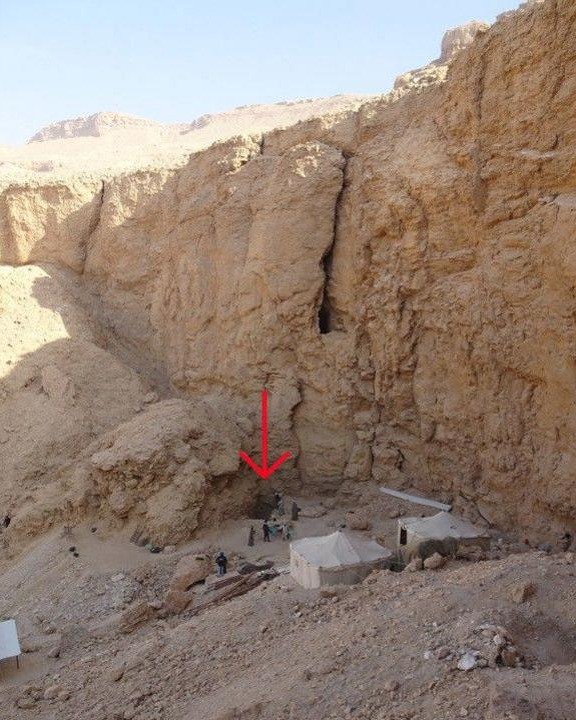
Discovery of the tomb of Thutmose II (Feb. 2025)
This week, archaeologists unveiled a momentous discovery—the long-lost tomb of Thutmose II, believed to be the final undiscovered royal burial site of Egypt’s 18th Dynasty. This marks the first tomb of a pharaoh uncovered since Howard Carter’s legendary discovery of Tutankhamun’s resting place in 1922.
The tomb, belonging to Thutmose II, the fourth pharaoh of the Eighteenth Dynasty and husband of the famed female ruler Hatshepsut, was unearthed by a British-Egyptian team led by Dr. Piers Litherland of Galashiels, Scotland.
The grandeur of the burial site was immediately evident, with a vast staircase and an imposing descending corridor signalling the tomb’s royal significance. “And part of the ceiling was still intact – a blue-painted ceiling with yellow stars on it. And blue-painted ceilings with yellow stars are only found in king’s tombs,”
- Dr Piers Litherland, an honorary research associate of the McDonald Institute for Archaeological Research at Cambridge University and the field director of the exploration, told BBC's Newshour.
Accessing the burial chamber proved challenging. The team crawled through a narrow, 10-metre passageway, squeezing through an opening scarcely 40 square centimetres wide before reaching the inner chamber. Inside, they encountered a striking blue ceiling adorned with scenes from the Amduat, an ancient funerary text reserved exclusively for kings—confirmation that they had indeed entered the resting place of a pharaoh.
Definitive proof of Thutmose II’s burial came in the form of alabaster jar fragments inscribed with his name and that of Hatshepsut, marking the first objects ever linked to his interment.
However, Dr. Litherland’s team theorizes that the tomb may have been flooded approximately six years after the burial, possibly prompting the relocation of its contents. The researchers believe they have identified a likely site for this secondary tomb, which may still contain untouched treasures.
“This discovery solves a great mystery of Ancient Egypt – the location of the tombs of the early XVIIIth dynasty kings. The tomb of this ancestor of Tutankhamun had never been found because it was always thought to be at the other end of the mountain near the Valley of the Kings. Initially we thought we might have found the tomb of a royal wife, but the wide staircase and the large doorway suggested something more important. The discovery that the burial chamber had been decorated with scenes from the Amduat, a religious text which is reserved for kings, was immensely exciting and was the first indication that this was a king’s tomb.” – Dr Piers Litherland
This discovery crowns more than 12 years of meticulous work by the joint team from Dr. Litherland’s New Kingdom Research Foundation and Egypt’s Ministry of Tourism and Antiquities. Their efforts have previously led to the excavation of 54 tombs in Luxor’s western Theban mountain and the identification of over 30 royal wives and court women.
“This is the first royal tomb to be discovered since the groundbreaking find of King Tutankhamun’s burial chamber in 1922,” remarked Egypt’s Minister of Tourism and Antiquities, Sherif Fathy. “It is an extraordinary moment for Egyptology and a profound step in our understanding of humanity’s shared past.”
Dr Litherhand went on to tell BBC's Newshour of his emotion regarding the magnificent find; “When I came out, my wife was waiting outside, and the only thing I could do was burst into tears. When you come across something that you’re not expecting to find, it’s emotionally extremely turbulent, really.”
Read more: https://t.co/iPnRaCyQCi
Mummy mask of a woman
The interstices and surrounding area are filled with a complex patterned ground, with the sides filled by a register of tyet knots and djed pillars, symbols of Isis and Osiris. A main register runs around the edge of the mask which centers on the god Osiris, the source of regenerative power, who is flanked by Isis and Nephthys. On the right are Horus, Amun-Re, Thoth, and Re. On the left are Tefnut, Hathor, and Seshat. These gods serve as witnesses to the deceased’s resurrection.
Roman Period, c. 60–70 A.D.
From Meir, Asyut
Now in the Metropolitan Museum of Art. 19.2.6
https://t.co/NcTHdVqreF
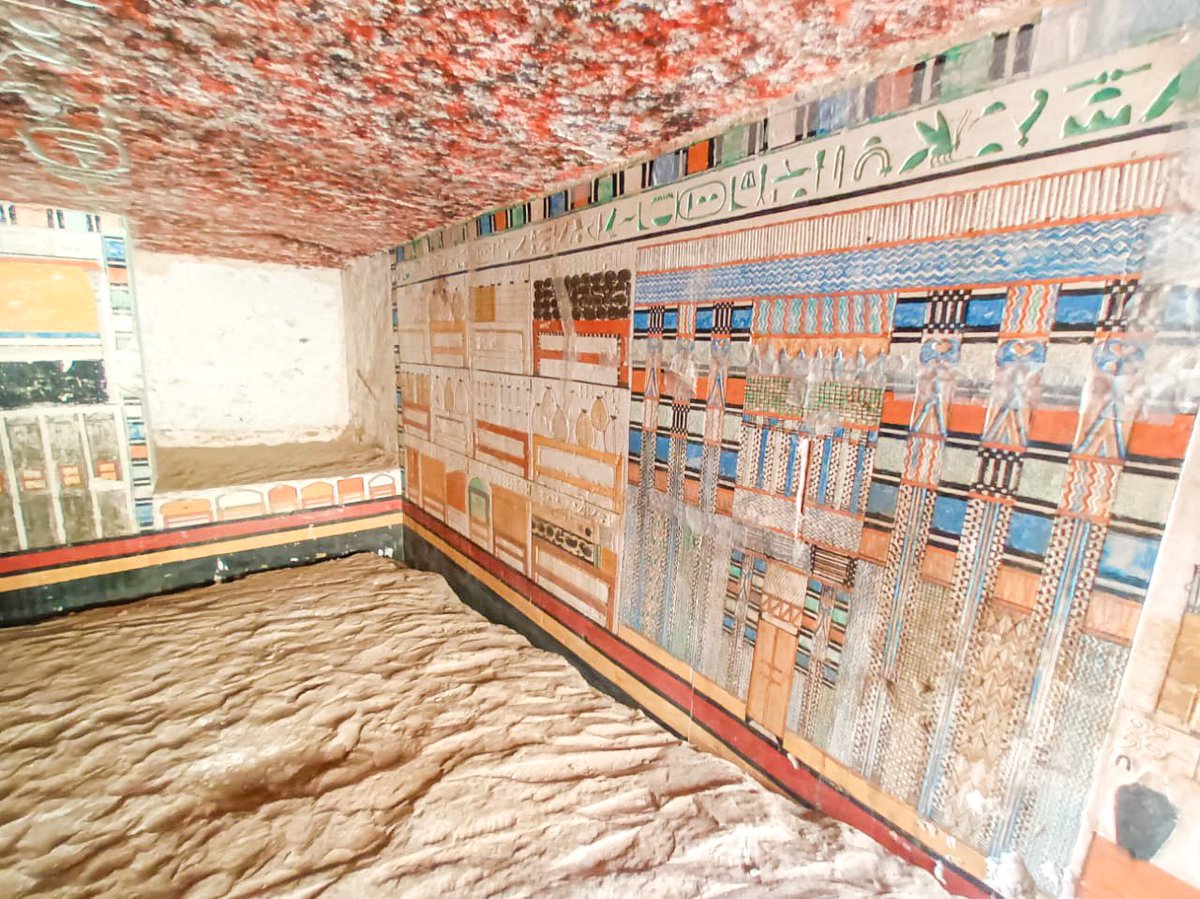
Exceptional discovery by the French-Swiss mission in South Saqqara, who uncovered the mastaba of chief royal physician Teti-Neb-Fu, dating to Pepi II's reign. Look at those carved and painted walls! 😍
More at https://t.co/hipZRLblRh
📸 @TourismandAntiq#egyptology#archaeology