@kelixmann@hiYano Akan tetap ketauan pak pada akhirnya. Kejadian di saya setelah 1 tahun, akhirnya coba ditelusur gataunya udah 1 tahun begitu, bajingan memang.
Dulu waktu saya belum yakin sama analisa sendiri, liat view orang yg beda dikit aja bawaannya langsung takut.
Setelah bertahun-tahun di market, ketakutan itu udah ilang. Saya ga panik meski banyak temen-temen yg outlooknya berbeda jauh dari saya, contohnya saat ini banyak yg analisa $IHSG bakal turun dalem. Saya tetap berpegang teguh dengan analisa pribadi saya, selama $IHSG bertahan di 6230-6300, saya sangat yakin market akan membaik.
Sesuai # di DCN Trades, #NoSetupNoEntry.
Mengingat petuah guru saya, "Yg bikin takut ambil trade itu cuma pikiran kita sendiri. Faktor eksternal ga mikirin kalian. Di market, yg kelihatan cuma price dan volume. Buat trading sesimpel mungkin. Naik alhamdulillah, turun ya cutloss."
Semoga twit ini bisa mencerahkan isi pikiran dan cara pandang kalian dalam melihat market.
suka bgt sm materinya kak @Kutekians apalagi bahas soal
- correlation ≠ causation
ini penting bgt ternyata. market itu suka cocoklogi
"asing masuk brati funda bagus dll" padahal klo diuji secara statistik blm tentu
@TradingDiary2@handierawan Bener banget ini pak. Makin berantakan. Macem dikasih prasmanan komplit tapi dalam 1 wadah.
Apalagi jari besar kaya saya, salah pencet malah bisa langsung buy/sell🤦
@EliteSnakeeyes You need to focus on boss. Let voy and loreley to deal with the oathsworn. Klukai and lind also good too, but their dmg on the boss not good enough for me.
@EliteSnakeeyes Yeah this one is hard. I finally managed it within 10 turns after trying out many teams.
Voy v0r1
Yoohee v1r1
Loreley v2r1
Sextans v0
Leva v1r1 (i think she can be subs with other dps)
All the BPJS shit has one to blame, gov.
BPJS bisa nunggak bayar ke RS sampe 2 tahun. Dulu.. management RS masih mau nombokin obat dan gaji dokter, jadi aman. Tp krn pembayarannya bisa molor sampe 2 tahun, cash flow RS kacau.
Akhirnya.. banyak management RS menerapkan sistem "gajian dokter kalau BPJS sudah bayar". Alhasil, both RS dan dokter suffering..
The Next BI Governor Is Now a Currency Event
Bloomberg’s report should be read as more than a personnel story. It suggests that President Prabowo is looking for a Bank Indonesia governor who is more closely aligned with his growth agenda, easier to communicate with and more willing to coordinate monetary policy with the government.
That is precisely why markets should be concerned. A central-bank governor should be aligned with the institution’s mandate, not with the President’s preferred growth number. The purpose of Bank Indonesia is not to validate an 8% growth target. Its job is to preserve rupiah stability, control inflation and protect the financial system, while supporting sustainable growth within those constraints.
The official explanation is that Perry Warjiyo resigned voluntarily for personal reasons. However, Reuters separately reported that policy tensions had intensified between Perry and Finance Minister Purbaya Yudhi Sadewa, particularly over liquidity, interest rates and the appropriate balance between supporting growth and defending the rupiah. Officials have not confirmed that political pressure caused Perry’s resignation, so the reported request from a presidential aide should be treated as sourced reporting rather than an established fact.
Nevertheless, markets do not require a signed confession of political interference before repricing institutional risk. An experienced governor resigned abruptly with two years remaining in his term, after months of tension over monetary policy, while the rupiah was already under pressure. That sequence alone is enough to raise the risk premium.
The Problem Is Not Perry’s Communication Style
The suggestion that Perry’s highly technical communication frustrated the President may be politically plausible, but it is economically irrelevant. Central banking is technical because monetary policy is technical. The exchange rate, inflation expectations, capital flows, bank liquidity, bond yields, foreign-exchange reserves and financial stability cannot be reduced to a simple instruction to “lower rates and make the economy grow.”
A central-bank governor should communicate clearly, but intellectual discomfort is not evidence that the governor is wrong. The danger is that Prabowo may interpret disagreement as disloyalty and monetary restraint as obstruction. If officials are rewarded for giving the President the answer he wants rather than the answer the economy requires, institutional checks become progressively weaker.
Indonesia’s problem is not that Bank Indonesia refuses to support growth. BI already uses macroprudential incentives, liquidity instruments and reserve-requirement policies to encourage lending. Acting Governor Destry Damayanti has now announced an additional 200-basis-point reserve-requirement reduction for qualifying banks, while reiterating that currency and inflation stability remain priorities.
The real disagreement is over sequencing and limits. Prabowo and Purbaya appear to believe that more liquidity, lower interest rates and faster lending can accelerate growth. Perry’s position was that excessive liquidity would worsen rupiah pressure and eventually force even more aggressive tightening. In the current environment, Perry’s concern was economically rational.
Indonesia Cannot Print Its Way to 8% Growth
An economy does not grow sustainably because its central bank creates more liquidity. It grows because investment, productivity, labor quality, infrastructure, institutions and private-sector confidence improve. Monetary easing can bring future demand forward. It cannot manufacture productivity.
If BI cuts rates aggressively while the rupiah is weak and investors are already questioning policy credibility, the likely transmission mechanism is not simply: Lower rates → more lending → 8% growth.
It could instead become: Lower rates → wider yield disadvantage → foreign outflows → weaker rupiah → higher imported inflation → reserve intervention → eventual emergency rate increases.
The government would then receive neither durable growth nor monetary stability. It would merely enjoy a brief credit impulse followed by a more expensive adjustment. This is the central contradiction facing whoever succeeds Perry. The President may demand easier monetary policy, but the foreign-exchange market does not report to the President. The new governor can change the policy rate. He or she cannot repeal the balance of payments.
Purbaya Would Be the Most Direct Challenge to Market Confidence
Bloomberg reportedly identified Purbaya as a potential candidate, although he has subsequently said that he will not seek the position. That public denial matters and makes his appointment less likely, but investors should still consider the scenario because his name is now part of the political discussion.
A Purbaya nomination would probably weaken the rupiah immediately. The problem would not merely be his personality or communication style. It would be the policy signal attached to his nomination.
Purbaya has repeatedly advocated abundant liquidity and lower financing costs to accelerate economic growth. Reuters reported that he and Perry disagreed over liquidity policy, including the transfer of Rp200 trillion from the central bank into state-owned banks, with Perry more concerned about the consequences for the rupiah.
If the official who challenged BI’s defensive monetary stance were subsequently appointed to lead BI, markets would interpret the move as the government taking control of the institution after failing to persuade it. That would look less like coordination and more like capture.
Investors would probably assume that the reaction function had changed from: "Defend stability first, support growth where possible" to: "Support the President’s growth target first, defend the rupiah when forced to do so."
Under those circumstances, Purbaya would enter the position with a severe credibility deficit. The market would price him as a potentially reckless monetary captain until he proved otherwise.
This could produce a weaker rupiah, higher government-bond yields, greater demand for dollar hedging and a higher risk premium for Indonesian assets. Ironically, appointing him to lower financing costs could raise the government’s long-term borrowing costs because investors would demand greater compensation for inflation, currency and institutional risk.
A Thomas Djiwandono Appointment Could Be Even More Damaging Institutionally
Thomas Djiwandono is already a Bank Indonesia deputy governor, having moved from the Finance Ministry in February 2026. The objection to Thomas should not be framed as a claim that he lacks intelligence or technical ability. The more serious problem is institutional perception.
He is President Prabowo’s nephew, previously served inside the fiscal administration and entered BI only months ago. Promoting him directly to governor after Perry’s abrupt resignation would create an unavoidable impression that the President had installed a family member at the top of the central bank.
Even if Thomas subsequently conducted orthodox monetary policy, the appointment itself would weaken the presumption of independence. Markets price institutions partly through appearances because credibility cannot be observed directly. A central bank must not only be independent. It must be widely believed to be independent.
A Thomas appointment would therefore create a heavier credibility burden than a conventional internal promotion. Every rate cut would be interpreted as possible presidential pressure. Every liquidity injection would be examined for fiscal motives. Every tolerance of rupiah weakness would be viewed through the relationship with the palace.
Indonesia would be voluntarily introducing political-risk questions into every monetary-policy decision. That is unnecessary and potentially expensive.
Destry Is the Least Disruptive Option, but Not Automatically Risk-Free
Among the candidates mentioned, Destry Damayanti would probably create the least immediate market disruption. She is the senior deputy governor, has institutional experience and is already serving as acting governor under the statutory succession mechanism. She has also stressed that BI’s policy stance remains focused on currency stability, including intervention through the spot, DNDF and offshore NDF markets.
Her communication style may be more compatible with the President, and greater coordination between fiscal and monetary authorities is not inherently negative. During periods of financial stress, coordination is essential.
But coordination must not become subordination. The crucial question is not whether Destry can work constructively with Prabowo and Purbaya. It is whether she can publicly say no when their preferred policies threaten currency or inflation stability.
If her appointment is interpreted as a reward for being more accommodating, the market will still demand evidence of independence. She would need to establish clear boundaries immediately, explain BI’s reaction function and demonstrate that rate decisions remain determined by inflation, external balances and rupiah stability rather than the President’s political timetable.
Why Central-Bank Independence Matters
Central-bank independence does not mean BI should be hostile to the elected government. It means monetary decisions should not be dictated by short-term political objectives. Governments naturally prefer lower interest rates, stronger credit growth and cheaper debt servicing. Those preferences become especially powerful when growth targets are ambitious and fiscal obligations are increasing. That is exactly why an independent central bank is necessary.
Without institutional separation, monetary policy can become a mechanism for suppressing government borrowing costs, supporting state banks, financing politically favoured programs and postponing difficult fiscal choices. Economists describe this as fiscal dominance, where monetary policy becomes increasingly subordinate to government financing and growth objectives.
The short-term appearance can be attractive: liquidity improves, borrowing costs fall and asset prices may initially rise. The eventual costs are less attractive: currency depreciation, imported inflation, capital flight, distorted credit allocation and the need for sharper tightening later.
Indonesia experienced the importance of institutional reform after the Asian financial crisis. Weakening BI’s independence would not immediately recreate 1997, but it would reverse one of the most important credibility improvements produced by that crisis.
The Appointment Could Matter More Than the First Rate Decision
The market reaction may begin before the new governor takes office. A nomination communicates information about Prabowo’s desired monetary-policy regime. Investors will therefore price the candidate’s perceived independence, technical credibility and willingness to defend the rupiah before any formal decision is made.
A credible technocrat with substantial central-banking experience could stabilise expectations.
A Purbaya nomination would signal that the government wants a more aggressive pro-growth monetary stance and would likely pressure the rupiah immediately.
A Thomas nomination could be even more damaging from an institutional perspective because it would intensify concerns over family influence and political control.
A Destry nomination would be the most orderly transition, but markets would still test whether continuity means genuine institutional continuity or merely smoother coordination with the President.
The DPR’s fit-and-proper process provides a formal check, but its credibility will depend on whether legislators genuinely evaluate independence and competence or simply approve the President’s preferred candidate. The government has officially confirmed that Destry will serve temporarily while the statutory process proceeds.
Market Implications
For the rupiah, this is unambiguously negative until the successor is known. Currency investors now have to price not only economic fundamentals but also uncertainty over BI’s reaction function.
For government bonds, a politically aligned and aggressively dovish governor could initially support shorter maturities through rate-cut expectations. However, longer-dated yields may rise as investors demand greater compensation for inflation, depreciation and fiscal-dominance risk. The yield curve could steepen rather than decline uniformly.
For banks, lower reserve requirements and abundant liquidity may initially support lending and reduce funding costs. But those gains could be offset by higher bond yields, rupiah volatility, rising credit risk and eventual emergency tightening.
For equities, domestic cyclicals may rally briefly on expectations of easier money. Yet a structurally higher country-risk premium would compress valuation multiples across the market, particularly for foreign investors.
For the government budget, politically engineered lower policy rates may not produce sustainably lower debt costs. If credibility falls, the government may face higher term premiums and weaker foreign demand for rupiah bonds even as BI cuts its short-term rate.
Overall View
Bloomberg’s article captures the central issue correctly: Prabowo appears to want a central-bank governor aligned with his economic goals. That should worry investors because central-bank independence is most valuable precisely when the government’s goals conflict with monetary stability.
The President wants rapid growth. The rupiah requires credibility. The government wants cheaper financing. Bond investors require compensation for risk. The administration wants more liquidity. The external balance may require restraint.
Those contradictions cannot be solved by appointing a more compliant governor. Perry’s departure has already damaged institutional confidence, regardless of whether his official personal explanation is ultimately accurate. The successor decision will determine whether the damage remains manageable or becomes structural.
A Destry appointment would offer the best chance of continuity, provided she demonstrates genuine independence.
A Purbaya nomination would likely tank the rupiah because markets would interpret it as confirmation that BI was being converted into an instrument of the government’s growth agenda.
A Thomas appointment could be worse because it would transform concerns about policy alignment into concerns about direct political and family control of the central bank.
The sharpest conclusion is this: President Prabowo may believe that replacing the governor will remove an obstacle to growth. In reality, he risks removing one of the final institutional anchors protecting the rupiah.
A politically compliant central bank may give the President the rate cuts he wants. It will not give Indonesia the credibility it needs.
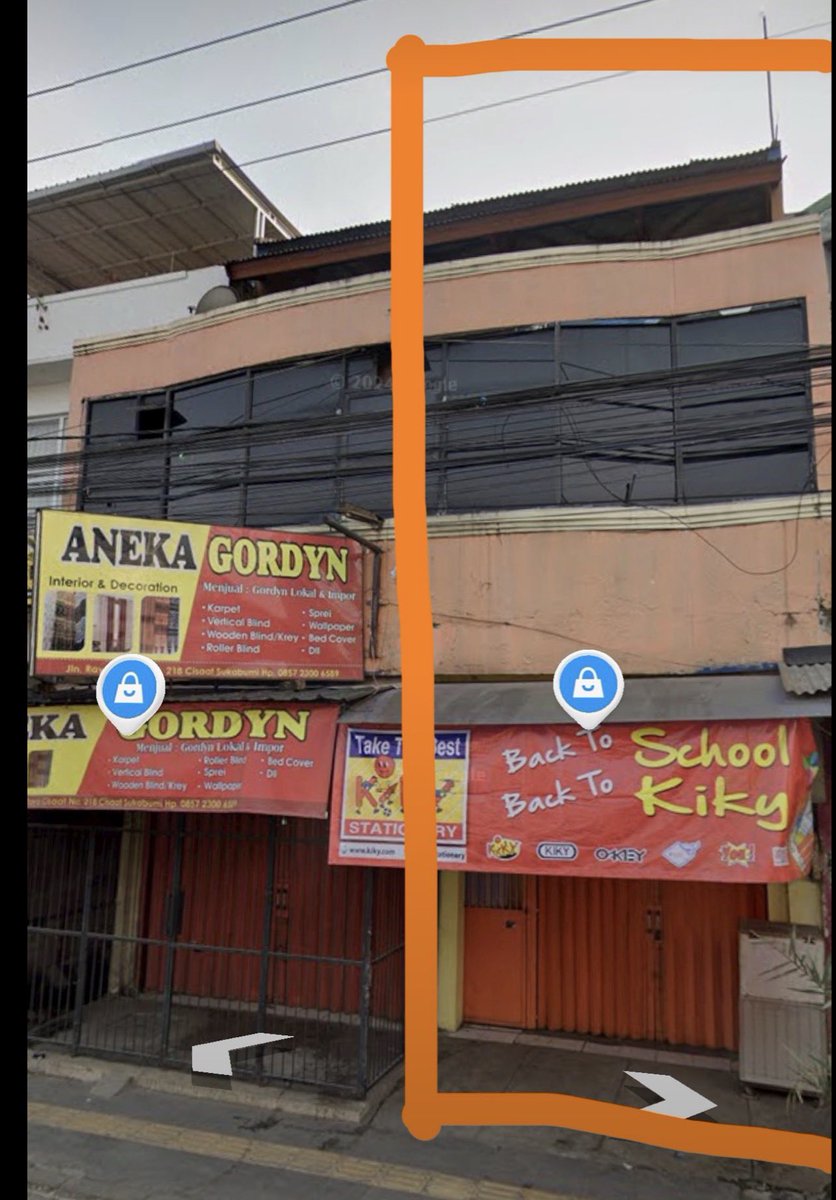
Teman2, saya jual ruko 53m2 (3LT) di cisaat, sukabumi-jawa barat. Jalan utama dekat belokan ke situgunung
✅ Jarak ke stasiun : 4 menit
✅ ke rs : 5 menit
✅ ke pintu tol yg sedang dibangun : 6 menit
SHM on Hand
Mohon bantu retweetnya ya teman2. Tentunya ada fee bagi perantara
Kebanyakan ini karena mother wounds ya alias ada mother issues. Ibunya yang bermasalah tapi dilimpahin ke anaknya terus emosinya sampe anaknya mikir, "Am I not enough? Am I a good child?"
Akhirnya anaknya harus jadi anak yang baik. Biar disayang ibunya. Beruntung lah kalian kalian disana yang nggak perlu ngemis cinta dari ibu. Karena di luaran sana banyak sekali yang punya mother issues. Obatnya? Nggak ada. Obatnya harus healing selama lamanya. Harus mindful selama lamanya.
Bayangin seumur hidup kalian mikirin "how to be enough?" Karena dari kecil kalian ga pernah disayang dan harus jadi anak baik dulu kalau mau disayang. Dan ini dampaknya luar biasa besar sekali apalagi kalo anaknya nggak sadar sadar bahwa dia punya luka itu selama ini. Endingnya kalau dia punya anak, dia kembali menurunkan trauma generasinya itu tanpa sadar. Tanpa sadar ia jadi ibunya sendiri padahal dulu dia nggak suka diasuh seperti itu. Karena dia nggak sadar, dia nggak tahu apa yang salah dan akhirnya meneruskan itu ke generasi selanjutnya.
Anak kalo sudah diam dan penurut itu siksa batinnya luar biasa besar. Aku adalah anak dengan mother issues itu. Ibuku pun korbannya. Aku kira everythings is gonna be okay pas aku besar nanti. Pas aku bisa cari uang, pas aku bisa kerja sendiri, pas aku pergi dari rumah. But, it's not. I lost my self, i fail my college, just because i still wondering "Am I enough for you?" di pertemananku.
Ada masalah dikit aku bisanya kabur. Aku tutup rapat rapat aksesnya untuk temenku nanya karena aku nggak mau keliatan sakit, gagal. Pas aku balik kuliah temenku udah gamau temenan and it's hurt me so bad. Aku terlalu peka sama orang, every movement akan aku analisis karena aku terbiasa harus membaca situasi dan mood ibuku di rumah. Jadinya aku banyak overthinking dan milih langsung pergi saat lihat temenku badmood, nolak ajakanku, atau tone bicaranya berubah. Karena aku ngerasa it's my fault padahal ya namanya orang ada malesnya, ada badmoodnya dan itu wajar kan.
Aku selalu takut ditolak. Selalu mikirin what if karena terbiasa harus sempurna. Jadi gagal sedikit, ada kesalahan sedikit, i will blame my self for a whole life.
Pertama kali aku ke psikolog itu karena ada masalah ospek. Aku bilang aku takut banget, tremor, sesak napas. Aku juga ada riwayat di bully pas sd. Tau ga apa yang pertama kali psikologku tanya? "Mbak anak ke berapa di rumah? Sering dimarahin ya di rumah?" Padahal aku lagi bahas ospek dan ga bilang sama sekali tentang keluargaku.
Family matters. Polanya selalu ada dari keluarga. Tapi untungnya aku ke psikolog saat itu. Sesuai dugaan ada anxiety atau kecemasan berlebih. Tahun ini nambah besar ada yang diagnosisnya mixed anxiety and depresive disorder dan agoraphobia.
Semua itu asalnya dari satu sumber. Terpaksa jadi "good child" pas kecil. Aku akhir akhir ini mulai mempelajari what's wrong with me dan I really really recommend to read buku "Family Constallation" by Meilisa Sutanto. Karena di buku itu di jelasin tentang trauma keluarga yang menurun. Dari buku itu aku juga belajar bahwa it's not my fault. It's not my only fault.