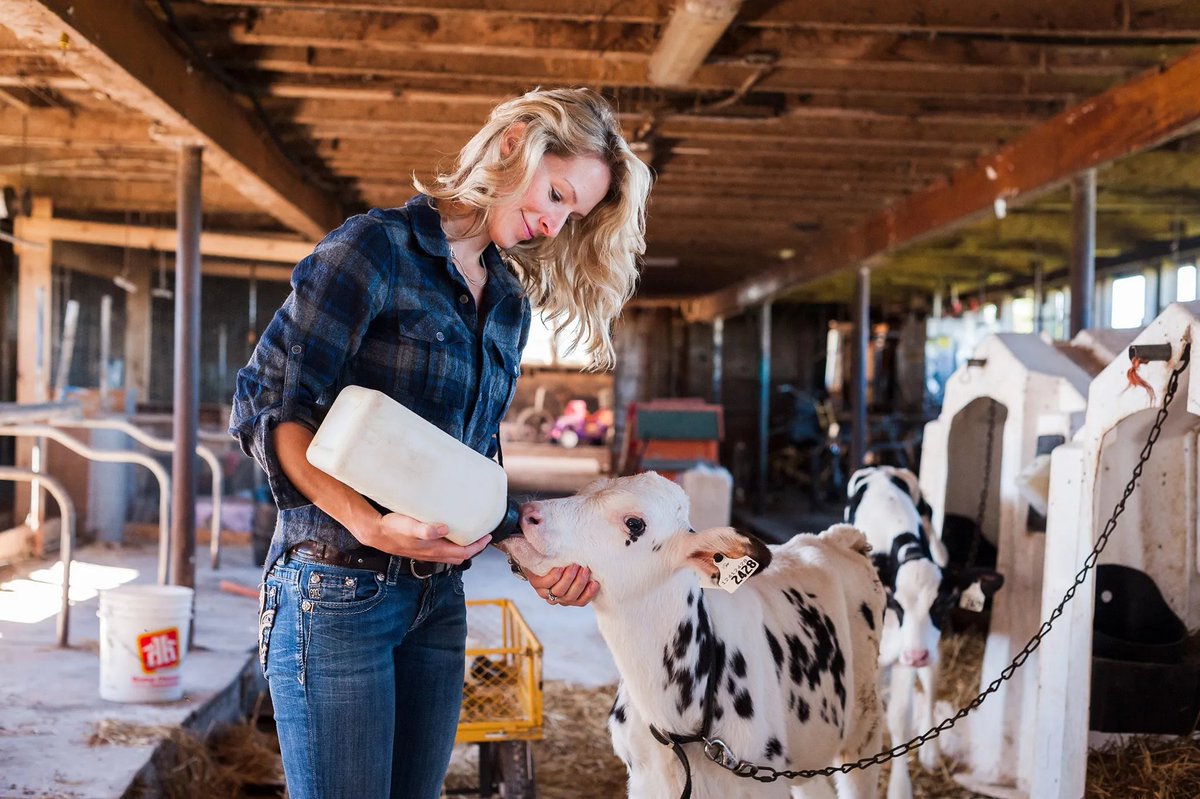
Supply management was meant to save the family farm...
In 1972, Canada had nearly 130,000 dairy farms. Today, just 9,100 remain. That’s an average loss of 186 farms every month for over 50 years—all while Canadian dairy products remain among the most expensive in the world.
Remind why we keep supply management?
The House of Cards in B.C.’s Economy
British Columbia, and much of the country, is confronting the consequences of an economic model that was never built to last. For years, we have been told a comforting story about growth — that as long as cranes dot the skyline and property values climb, prosperity will follow. But beneath that veneer lies a stark truth: our economy is not driven by value-added manufacturing, groundbreaking technology, innovation, or by unlocking our vast natural resource potential. It is built almost entirely on real estate and relentless population growth driven by mass immigration. And it relies on the building and selling of homes to the next wave of newcomers.
This is not diversification. This is dependency. And like all dependencies, it eventually demands a price.
The Shift Away from Real Wealth Creation
In the not-too-distant past, B.C.’s prosperity came from sectors that created enduring value: forestry and mining that supplied the world; fisheries that sustained communities; manufacturing that turned raw materials into products; and, in more recent years, tech companies that could compete globally.
Today, those industries are shadows of their former selves in our economic mix — thanks, in part, to the strangulation of over-regulation and inordinately lengthy approval processes that are easily weaponized by those ideologically opposed to resource extraction. Their demise is not a naturally occurring phenomenon — and it is reversible — but it reflects the agenda and decisions of policymakers. In their place, real estate has become the dominant force, representing nearly 30% of B.C.’s GDP with its ancillary sectors. That’s a hell of a lot of eggs in a single basket, and the province’s balance sheet has become frighteningly tied to this cycle.
As the government oversaw this reorganization of the economy, it sent out the proverbial bat signal that investment capital didn’t belong in business development, but in land. Message received. Billions upon billions poured into bidding up land prices. Among the many consequences of this misallocation of capital are high land values squeezing out industrial employers and gnawing away at industrial land, weakening our capacity to make and export things. Today, industrial land makes up barely 4% of Metro Vancouver’s landmass.
Mass Immigration as Fuel for the Model
This new growth machine runs on people — specifically, the rapid influx of newcomers. In theory, immigration is a tool to strengthen an economy, replenish a workforce, and foster innovation. But in practice, B.C. and Canada have relied on it as the primary fuel for real estate demand. And what a record they’ve set. In 2023 alone, Canada added 1.27 million people — the most in 66 years, and almost entirely through immigration. No other G7 country even comes close.
The country’s notorious Temporary Foreign Worker Program and unprecedented number of International Students have figured prominently in this population surge, and programs once intended to fill specific gaps or foster academic exchange, have morphed into de facto population pipelines.
It’s all about feeding the beast: bring in more people than the market can comfortably absorb, then build and sell homes to meet the stimulated demand. Rising prices are framed as a sign of economic health, when in reality, they are a sign of scarcity and strain. In B.C., the government has clung to this model by throwing community planning out the window with a series of legislation that overrides local decision-making and forces blanket upzoning without regard for infrastructure capacity or livability.
But all the smoke and mirrors in the world can’t obscure the reality of where this has led us. Hospital emergency rooms close not sporadically, but routinely. More and more students are educated in portables rather than properly resourced schools. Infrastructure — from roads and public transit to sewers and utilities — is under immense strain.
There isn't a single country that has managed to avoid tariffs while securing a trade deal with the US. Even the UK has a 10% baseline tariff.
Today, Trump announced a trade deal with Indonesia. They were hoping for zero tariffs but had to settle for 19% which is an improvement from 32% that Trump was threatening to impose.
If Carney holds out for zero tariffs, there is going to be no deal, and we're going to be stuck with 35% or even worse because of our stupidity and misplaced bravado. And this would be extremely bad for Canada.
Do the Conservatives want to see Carney fail for their political advantage because in the presence circumstance that will mean that Canada will fail.
These cheap shots are convincing no one and makes them look non-credible. Does the Conservative Party have a pathway to utopia when it comes to negotiating with Trump?
How about instead @PierrePoilievre take the bull by the horns and push Carney to end supply management and remove other government induced market distortions that end up harming Canadian consumers?
As I’ve said 100 times, I don’t care that journalists like Mason have dumb views. What I resent is that the government’s media subsidies force taxpayers to subsidize their employment.
The freedom of expression grants someone the right to say whatever they want. It doesn’t collectively commit us to subsidize their ability to do so.
If enough Canadians want to pay for this drivel, fill your boots. But if not, taxpayers shouldn’t be expected to foot the bill.
Think of it this way: annual media subsidies amount to about $325M per year—or roughly 25 percent of spending on the underfunded Canada Disability Benefit. In a world of fiscal scarcity, what’s a greater public good: boosting support for disabled Canadians or subsidizing the dumb views of journalists like Mason?
Our Conservative Economic Action Plan:
- ZERO capital gains tax when you reinvest in 🇨🇦
- NO sales tax on new homes & incentivize municipalities to cut building taxes
- Cut income tax by 15%
- Train 350,000 trade workers 🇨🇦
- Build a west-east pipeline with a National Energy Corridor
- Let working seniors earn $34,000 tax-free ($10,000 more than right now)
On April 28, vote for Change. Vote Conservative.
If by “targeting” you mean PROMOTING?!
The regime in Beijing is amplifying Mark Carney’s message to help him win.
But how would anyone know that when they read this? 👇
Supply management has been cited by the United States and virtually every other trading partner as a trade irritant.
Supply management is a scam that costs Canadian consumers millions of dollars every year and particularly penalizes low income Canadians with some of the industrialized world's highest consumer prices for many essentials.
Canadians should be given an opportunity to decide whether supply management is worth sacrificing the rest of the economy, their standard of living and livelihoods for.
Politicians won't do it because they're afraid of the political backlash from the supply managed sectors who are the most successful lobbyists in the country.
Canada should hold a referendum so that Canadians can decide this issue once and for all.
More people subscribe to Juno News than voted in the Liberal leadership race.
Mark Carney has no mandate to be Prime Minister. Canadians deserve an election now.
If Elizabeth May is not happy in Canada, perhaps she should move to Pakistan.
I’m sick and tired of woke, traitorous politicians fighting for “students” like Zain who commit crimes.
Zain can go home & commit crimes to protect climate and old growth forests in Pakistan. #bcpoli
The Liberal capital gains tax hike will cost 414,000 jobs, shrink GDP by $90B & hit builders, farmers & small businesses.
CRA is charging this tax despite Trudeau shutting down Parliament to save the Liberal Party furniture before this became law.
End the economic vandalism. Call a carbon tax election now: https://t.co/GHnhi3SRBM
If Justin Trudeau actually cared about Canadian democracy, he would have called the election today.
He would not have shuttered Parliament for 3 months at a critical time — for a Liberal leadership race.