gRialo!
Today, let's look at how a protocol can keep evolving without making existing applications bear all the risk.
Protocol Upgrades Need a Safer Path
Networks built to last have to evolve. Bugs need fixing, cryptography improves, and new application needs continue to emerge. The difficult part is upgrading without turning every change into a disruptive event.
A safer upgrade path separates preparation, activation, and fallback. New logic can be introduced behind clear checkpoints, tested against live conditions, and enabled only when the network reaches the required state.
Compatibility matters as much as deployment. Existing applications and accounts need predictable rules during the transition. Operators need to know which version is active, and developers need a way to reason about transactions that cross an upgrade boundary.
A rollout plan also needs clear stop conditions. If a new version fails a compatibility or safety check, operators should know whether activation can be paused and what recovery options remain.
업그레이드를 멈춰야 하는 조건도 미리 정해두는 것이 중요합니다. 새 버전에서 호환성이나 안전성 문제가 발견되면 활성화를 중단할 수 있는지, 어떤 복구 방법이 남아 있는지 확인할 수 있어야 하죠.
Rialo’s work around protocol evolution points toward upgrades as an engineered lifecycle rather than a one-time migration.
Good upgrade design does not promise that software will never change. Instead, it makes every change observable, controlled, and recoverable.
For infrastructure meant to support real applications over years, that discipline is part of reliability.
지리알로!
오늘은 프로토콜이 계속 발전하면서도 기존 서비스에 미치는 위험을 줄이려면 어떤 업그레이드 설계가 필요한지 살펴보겠습니다.
프로토콜 업그레이드에는 더 안전한 경로가 필요하다
오래 운영되는 네트워크는 반드시 변화합니다. 버그를 수정하고, 암호 기술을 개선하며, 새로운 애플리케이션 요구를 반영해야 합니다. 어려운 점은 모�� 변경을 큰 장애로 만들지 않고 업그레이드하는 것입니다.
더 안전한 업그레이드 경로라면 준비, 활성화, 복구 단계를 구분해야 합니다. 새로운 로직을 점검 지점에 맞춰 도입하고 실제 조건에서 검증한 뒤, 네트워크가 준비됐을 때 활성화하는 방식입니다.
배포만큼 호환성도 중요합니다. 기존 애플리케이션과 계정은 전환 기간에도 예측 가능한 규칙을 가져야 합니다. 운영자는 어떤 버전이 활성화됐는지 알아야 하고, 개발자는 업그레이드 경계를 넘는 트랜잭션을 이해할 수 있어야 합니다.
Rialo가 다루는 프로토콜 진화는 업그레이드를 일회성 이전이 아니라 관리되는 생애주기로 바라봅니다.
좋은 업그레이드 설계는 소프트웨어가 변하지 않는다고 약속하지 않습니다. 대신 변화가 관찰 가능하고 통제 가능하며 복구할 수 있도록 만듭니다.
실제 서비스를 ���랫동안 뒷받침할 인프라라면, 이런 업그레이드 원칙 역시 신뢰성의 중요한 부분입니다.
@RialoHQ
gRialo!
Today, let's examine why real blockchain performance is more complicated than a single TPS benchmark.
Real Workloads Change From Moment to Moment
A benchmark usually measures one workload under controlled conditions. A live application faces a much more varied environment.
Traffic rises around launches, market events, and settlement windows. Some transactions are small and independent. Others compete for the same state, call external services, or wait for additional information.
Infrastructure built for real workloads has to adapt to that mix. It should use parallel capacity when work is independent, preserve ordering when operations conflict, and avoid making the slowest path the default for every request.
This is why a single maximum TPS number cannot describe application performance. Developers also need predictable latency, clear consistency, sensible failure handling, and visibility into where contention occurs.
A trading app may need low latency during a market spike, while a data-heavy service may spend more time waiting on external responses. Good performance design has to account for both patterns.
거래 서비스는 시장 변동이 커질 때 낮은 지연 시간이 중요하고, 데이터 중심 서비스는 외부 응답을 기다리는 시간이 더 큰 영향을 줄 수 있습니다. 서로 다른 사용 패턴을 함께 고려해야 하는 이유입니다.
Rialo’s execution approach is aimed at useful performance across changing conditions rather than one idealized test.
The real test of scalability is whether an application stays understandable and responsive as demand changes.
지리알로!
오늘은 블록체인의 실제 성능을 TPS 숫자 하나로 판단하기 어려운 이유를 살펴보겠습니다.
현실의 작업량은 계속 달라진다
���치마크는 통제된 조건에서 하나의 작업량을 설명합니다. 실제 애플리케이션이 마주하는 환경은 훨씬 다양합니다.
출시, 시장 이벤트, 정산 시간에는 트래픽이 급증합니다. 어떤 트랜잭션은 작고 독립적이지만, 다른 트랜잭션은 같은 상태를 두고 경쟁하거나 외부 서비스를 호출하거나 추가 정보를 기다립니다.
현실의 작업량을 위한 인프라는 이런 조합에 적응해야 합니다. 독립된 작업에는 병렬 자원을 사용하고, 충돌하는 작업에는 순서를 보장하며, 가장 느린 경로를 모든 요청의 기본값으로 만들지 않아야 합니다.
그래서 최대 TPS 하나만으로 애플리케이션의 성능을 설명하기는 어렵습니다. 예측 가능한 지연 시간과 명확한 일관성, 합리적인 실패 처리, 충돌 지점에 대한 가시성도 필요하죠.
Rialo의 실행 방식은 하나의 이상적인 시험이 아니라 변화하는 조��에서 유용한 성능을 목표로 합니다.
확장성을 판단하는 기준은 수요가 달라져도 애플리케이션이 안정적으로 작동하고 빠르게 응답할 수 있는지에 있습니다.
@RialoHQ
gRialo!
Today, let's look beyond the promise of faster execution and examine how parallel transactions stay correct.
Parallel Work Needs Conflict Detection
Parallel execution sounds straightforward until two transactions try to change the same piece of state.
Independent work can run at the same time. Conflicting work cannot be accepted in an arbitrary order without risking incorrect balances, duplicate claims, or inconsistent application state.
A practical parallel system therefore needs two abilities: identify which transactions can proceed independently, and detect when multiple operations touch a shared resource. Conflicts must then be ordered, retried, or rejected according to clear rules.
The benefit is larger than a headline throughput number. Well-designed concurrency lets real applications use available compute without weakening correctness under load.
Think of two users trying to claim the same limited reward. Parallel processing should improve throughput for unrelated claims, but it must still ensure that the shared reward cannot be paid twice.
예를 들어 두 사용자가 수량이 제한된 동일한 보상을 청구하는 상황을 생각해 볼 수 있습니다. 서로 관계없는 청구는 빠르게 처리하되, 같은 보상이 두 번 지급되지는 않도록 해야 합니다.
Rialo’s architecture places attention on workload-aware execution and conflict handling. That matters because traffic is rarely uniform. Some moments contain thousands of independent actions; others concentrate activity on one market or account.
Parallelism creates value when the system can recognize where independence ends and conflicts begin.
지리알로!
오늘은 트랜잭션을 동시에 처리할 때 속도만큼 중요한 것이 무엇인지, 병렬 실행의 정확성을 중심으로 살펴보겠습니다.
병렬 처리에는 충돌 감지가 필요하다
병렬 실행은 두 트랜잭션이 같은 상태를 바꾸려는 순간부터 복잡해집니다.
서로 독립된 작업은 동시에 처리할 수 있습니다. 하지만 충돌하는 작업을 임의의 순서로 받아들이면 잘못된 잔액, 중복 청구, 불일치한 애플리케이션 상태가 생길 수 있습니다.
실제로 병렬 처리를 잘 활용하려면 두 가지가 필요합니다. 어떤 트랜잭션을 독립적으로 실행할 수 있는지 파악하고, 여러 작업이 같은 자원에 접근하는 순간을 감지해야 하죠. 충돌은 명확한 규칙에 따라 순서를 정하거나 재시도하거나 거부해야 합니다.
이점은 단순한 처리량 수치보다 큽니다. 잘 설계된 동시성은 부하가 커져도 정확성을 약화시키지 않으면서 사용 가능한 연산 자원을 활용하게 합니다.
Rialo의 아키텍처는 작업량에 맞춘 실행과 충돌 처리에 주목합니다. 실제 트래픽은 균일하지 않기 때문입니다. 어떤 순간에는 수천 개의 독립된 작업이 발생하고, 다른 순간에는 하나의 시장이나 계정에 활동이 집중됩니다.
병렬 처리는 시스템이 독립적으로 처리할 수 있는 작업과 충돌��� 발생하는 지점을 정확히 구분할 때 비로소 의미가 있습니다.
@RialoHQ
gRialo! 👋
Today, let's look at why seeing your own changes matters for a reliable onchain user experience.
Users Should See Their Own Writes
One of the most confusing moments in an application is when a user completes an action, but the next screen seems to forget it.
Someone updates a setting, submits an order or changes a profile. The operation is confirmed, yet the interface reads from a replica that has not received the latest state. From the user's perspective, it looks as though nothing happened.
This is where read-your-writes consistency matters. Once a user's change is confirmed, subsequent reads in that session should reflect that change. Other replicas may still be catching up, but the user should not be shown an older version of their own state.
Imagine updating a withdrawal address, only to see the previous address on the confirmation screen. Even if the change was saved correctly, that mismatch creates uncertainty about which address the next transaction will use.
This is more than a database concern. It directly affects how people trust an application. Users should not have to refresh repeatedly or submit the same action again just because the interface is showing stale information.
For Rialo, consistency is also a useful way to think about the relationship between infrastructure and user experience. Developers need to consider not only how state is distributed, but also what a user can reliably observe after an action is confirmed.
A reliable application should follow a simple principle: when the system confirms a change, the user should be able to see that change.
지리알로! 👋
오늘은 사용자가 직접 변경한 내용을 확인할 수 있는 경험이 왜 온체인 서비스의 신뢰성과 연결되는지 살펴보려고 합니다.
사용자는 자신이 만든 변경을 확인할 수 있어야 한다
애플리케이션에서 가장 혼란스러운 순간 중 하나는 작업을 완료했는데 다음 화면에서는 아무 일도 없었던 것처럼 보일 때입니다.
설정을 변경하거나 주문을 제출하고, ��로필을 수정했다고 생각해 보세요. 작업은 정상적으로 확정됐지만 화면이 아직 최신 상태를 반영하지 못한 복제본에서 데이터를 읽는다면, 사용자에게는 변경이 적용되지 않은 것처럼 보일 수 있습니다.
이때 중요한 ���념이 Read-your-writes consistency, 즉 자신이 변경한 값을 다시 읽을 때 확인할 수 있도록 하는 일관성입니다. 사용자의 변경이 확정되면 같은 세션에서 이어지는 읽기에도 그 결과가 반영되어야 합니다. 다른 복제본의 상태 반영이 아직 진행 중이더라도, 사용자에게 자신이 변경하기 전의 상태를 보여주지 않는 것이죠.
예를 들어 출금 주소를 변경했는데 확인 화면에는 여전히 이전 주소가 보인다고 생각해 보세요. 변경이 정상적으로 저장됐더라도 다음 트랜잭션에서 어떤 주소가 사용될지 확신하기 어려워집니다.
이것은 단순한 데이터베이스 문제가 아닙니다. 서비스에 대한 신뢰와 직접 연결됩니다. 화면에 오래된 정보가 표시된다는 이유로 사용자가 계속 새로고침하거나 같은 작업을 다시 제출해야 해서는 안 됩니다.
Rialo에서도 일관성은 인프라와 사용자 경험�� 관계를 생각할 때 중요한 기준이 됩니다. 개발자는 상태가 네트워크에 어떻게 전파되는지뿐 아니라, 작업이 확정된 뒤 사용자가 어떤 결과를 안정적으로 확인할 수 있는지도 고려해야 합니다.
신뢰할 수 있는 애플리케이션의 원칙은 단순합니다. 시스템이 변경을 확정했다면 사용자도 그 결과를 확인할 수 있어야 합니다.
@RialoHQ
gRialo!
Today, let's explore why the fastest read isn't always the freshest—and why that can still be acceptable.
Some Applications Can Work With Bounded Staleness
Not every screen needs the newest state from the newest block. A portfolio overview, analytics page, or discovery feed may work well with data that is a few seconds behind.
Bounded staleness makes this tolerance explicit. The application can accept a read only when it falls within a defined freshness window. Data may be slightly delayed, but it is never older than the limit the product chose.
That creates a useful balance. Reads can be served quickly and closer to users without turning freshness into an unknown. Developers can match the guarantee to the consequence of the decision.
A dashboard may allow a short delay. A collateral liquidation check should use a much stricter view. The correct setting comes from the workflow, not from a universal slogan about speed.
The freshness window should be measurable, not a vague promise. A feed that exceeds its limit should signal that condition clearly rather than quietly serving an old value.
중요한 것은 허용하는 지연을 측정할 수 있어야 한다는 점입니다. 정해진 기준을 넘긴 데이터라면 오래된 값을 조용히 보여주기보다 최신성 조건을 충족하지 못했다는 사실을 알려야 합니다.
Rialo’s consistency model encourages this kind of precision.
So the question is not simply “Is the read fast?” It is “How fresh does this answer need to be for the next action to remain safe?”
지리알로!
오늘은 빠른 데이터 조회와 최신 데이터 조회가 항상 같지는 않은 이유, 그리고 어느 정도의 지연을 허용할 수 있는지 살펴보겠습니다.
일부 서비스는 제한된 지연을 허용할 수 있다
모든 화면이 가장 최신 블록의 상태를 즉시 요구하는 것은 아닙니다. 포트폴리오 요약, 분석 화면, 탐색 피드는 ��� 초 정도 늦은 데이터로도 충분히 작동할 수 있습니다.
제한된 지연 방식은 허용 가능한 범위를 명확히 정합니다. 애플리케이션은 정해둔 최신성 기준 안에 있는 데이터만 받아들이는 거죠. 데이터가 약간 늦�� 수는 있지만 제품이 선택한 기준보다 오래되지는 않습니다.
이를 통해 유용한 균형을 만들 수 있습니다. 읽기를 사용자 가까이에서 빠르게 처리하면서도 데이터가 얼마나 오래됐는지 모르는 상태를 피할 수 있습니다. 개발자는 판단 결과의 중요도에 맞춰 보장을 선택합니다.
대시보드는 짧은 지연을 허용할 수 있지만 담보 청산 판단은 훨씬 엄격한 상태가 필요합니다. 올바른 설정은 속도에 대한 구호가 아니라 실제 작업 흐름에서 나옵니다.
Rialo의 일관성 모델은 이런 정밀한 선택을 지향합니다.
결국 중요한 질문은 “읽기가 얼마나 빠른가”가 아닙니다. “다음 작업을 안전하게 이어가려면 응답이 어느 정도로 최신이어야 하는가”입니다.
@RialoHQ
폐지줍기 연구소 x Eigen AMA 안내
다가오는 11월 19일 목요일! AI에서 준수한 활약을 보이고 있는 @eigenlabs 친구들과 함께 AMA가 예정되어 있습니다!
✅ AMA 일정
🕔 일정: 11월 19일 (목) 23시
🎁 상품:
-치킨 x 10명
-메가커피 x 200잔
👬 참여:
-호스트: @oldman_cek (폐지줍기 연구소)
-게스트: @jt_rose (Eigen Labs)
-통역: @cryptobball
🗺 장소: https://t.co/vB7Z36vEvf
✅ 참여방법
1️⃣ 폐지줍기 연구소 트위터 좋아요 & 댓글 남기기
2️⃣ AMA 청취
3️⃣ 이벤트리 제출
*AMA 진행 및 상품 관련 비용을 재단에게 지원받아 진행되는 AMA입니다!
지난 번 건강 이슈로 취소되었던 Eigen과의 AMA는 19일, 다시 시��됩니다!
따뜻한 치킨과 커피를 준비했습니다! 많은 청취부탁드립니다!
gRialo! 👋
Today, let's look at how a blockchain application knows whether the state it reads is truly up to date.
Strong Consistency Has a Clear Promise
When an application reads state, the answer should come with a promise about what that state means.
Strong consistency offers a clear promise: once a write is confirmed, subsequent reads return the updated value. Users, services, and contracts can reason about one current order of events.
This is essential when a stale answer could cause a financial or operational error. Account balances, ownership changes, collateral status, and access permissions often need the latest confirmed state before the next action proceeds.
The tradeoff is that stronger coordination can add latency or limit where a read can be served. That is why consistency should be an explicit design choice rather than an invisible implementation detail.
For example, a lending app should not approve a withdrawal using an older balance after collateral has already been moved. The consistency guarantee defines which version of state that decision can trust.
예를 들어 담보가 이미 이동했는데 대출 서비스가 이전 잔액을 기준으로 출금을 승인한다면 문제가 생길 수 있습니다. 일관성 보장은 어떤 시점의 상태를 신뢰하고 판단할지 정하는 기준이 됩니다.
Rialo’s documentation treats consistency as part of application semantics. Developers should know whether they are reading the latest state, their own recent write, or an intentionally cached view.
Performance numbers matter only when the guarantee behind each response is just as clear.
지리알로! 👋
오늘은 블록체인 애플리케이션이 읽은 정보가 얼마나 최신인지, 그리고 이 보장이 왜 중요한지 살펴보려고 합니다.
강한 일관성은 명확한 약속을 제공한다
애플리케이션이 상태를 읽을 때는 그 값이 무엇을 의미하는지에 대한 약속도 함께 제공되어야 합니다.
강한 일관성은 가장 ��명한 약속을 제공합니다. 쓰기가 확정되면 이후의 읽기에서도 갱신된 값을 확인할 수 있습니다. 사용자, 서비스, 컨트랙트는 하나의 최신 사건 순서를 기준으로 판단할 수 있습니다.
오래된 값이 금융 또는 운영 오류를 만들 수 있는 상황에서는 특히 중요합니다. 계정 잔액, 소유권 변경, 담보 상태, 접근 권한은 다음 작업 전에 최신 확정 상태가 필요할 때가 많습니다.
더 ���한 조정은 지연을 늘리거나 읽기를 처리할 수 있는 위치를 제한할 수 있습니다. 그래서 일관성은 보이지 않는 구현 세부 사항이 아니라 명시적인 설계 선택이어야 합니다.
Rialo의 문서는 일관성을 애플리케이션 의미의 일부로 다룹니다. 개발자는 최신 상태를 읽는지, 방금 자신이 쓴 값을 읽는지, 의도적으로 캐시된 값을 읽는지 알아야 합니다.
성능 수치도 중요하지만, 각 응답이 어떤 보장을 제공하는지 분명해야 그 의미가 있습니다.
@RialoHQ
📌 불개미와 함께하는 @zothdotio AMA!
이번 AMA에서는 Zoth의 CEO이신 Pritam Dutta님과 함께 Zoth가 어떤 프로젝트인지 알아볼 예정입니다.
✔️ 장소 : 불개미 트위터 스트리밍
🗓 일정 : 11월 19일 (목) 오후 8시 KST
✔️ AMA 참여방법 : https://t.co/3GP6XE3hxp
🔥 AMA 리워드
1. 파파존스 피자 x 10명
2. 치킨 콜라 세트 x 10명
3. 메가커피 x 200명
* 죠스바 zoth 조아쓰~!
gRialo! 👋
Today, let's look at why privacy needs to be adaptable to the application using it, rather than treated as a single setting for every use case.
Privacy Needs Configurable Boundaries
Different applications need different privacy boundaries. A public game, a regulated payment network and an institutional lending platform should not all be forced into the same model.
The important question is not simply whether a blockchain “has privacy.” Developers need to be able to define which inputs remain confidential, which results can be made public, who may access protected data and which actions require additional authorization.
Configurable privacy allows an application to separate different kinds of information: public state, shared business data and highly sensitive inputs. Each category can follow its own access and disclosure rules while still being part of one connected workflow.
Consider a few examples. A transaction amount could remain private while the settlement result is still verifiable. A user's profile could stay confidential while an eligibility result is disclosed. A business document could be shared with approved parties without becoming public network state.
These boundaries are not just technical settings. They determine how users, businesses and services interact, and what each participant is allowed to know or do.
A practical system also needs to enforce those boundaries when data moves between services—not only when it is first collected.
Rialo's integrated approach points toward privacy that works alongside connectivity, identity and execution. The goal is to let applications define the level of confidentiality they need without separating privacy from the rest of the workflow.
The strongest privacy model is not always the one that hides the most. It is the one that makes disclosure rules clear, enforceable, and appropriate to each decision.
지리알로! 👋
오늘은 모든 서비스에 동일한 프라이버시 설정을 적용하기보다, 각 애플리케이션의 목적에 맞게 공개 범위를 조절해야 하는 이유를 살펴보려고 합니다.
프라이버시에는 조절 가능한 경계가 필요하다
애플리케이션마다 필요한 프라이버시 경계는 다릅니다. 공개형 게임, 규제를 받는 결제망, 기관 대출 플랫폼을 모두 같은 방식으로 다루기는 어렵죠.
중요한 건 블록체인에 프라이버시 기능이 있느냐만이 아닙니다. 어떤 입력을 비공개로 유지할지, 어떤 결과를 공개할지, 누가 보호된 데이터에 접근할 수 있는지, 어떤 작업에 추가 승인이 필요한지를 개발자가 직접 정의할 수 있어야 합니다.
설정 가능한 프라이버시는 서로 다��� 종류의 정보를 구분합니다. 공개 상태, 공유되는 업무 정보, 매우 민감한 입력을 나누고 각 영역에 서로 다른 접근 및 공개 규칙을 적용할 수 있죠. 그러면서도 이 정보들은 하나의 연결된 작업 흐름 안에서 함께 작동할 수 있습니다.
몇 가지 사례를 생각해 볼 수 있습니다. 거래 금액은 비공개로 유지하면서 정산 결과는 검증 가능하게 만들 수 있습니다. 사용자 프로필은 보호하되 자격 여부만 공개할 수도 있죠. 기업 문서 역시 승인된 당사자와 공유하면서 네트워크 전체에 공개할 필요는 없습니다.
이런 경계는 단순한 기술 설정이 아닙니다. 사용자와 기업, 서비스가 어떻게 상호작용하는지, 각 참여자가 무엇을 알고 어떤 작업을 할 수 있는지를 결정합니다.
실제로는 데이터가 여러 서비스를 거칠 때도 이 경계가 유지되어야 합니다. 처음 정보를 수집할 때만 비공개로 처리해서는 충분하지 않겠죠.
Rialo의 통합적인 접근은 프라이버시가 연결성, 신원, 실행과 분리되지 않고 함께 작동하는 방향을 보여줍니다. 애플리케이션이 필요한 수준의 기���성을 직접 정의하면서도 나머지 작업 흐름과 자연스럽게 연결하는 것이 중요합니다.
가장 좋은 프라이버시 모델이 반드시 가장 많은 정보를 숨기는 방식일 필요는 없습니다. 상황에 맞는 공개 규칙을 명확히 정하고, 실제 작업 과정에서도 일관되게 적용하는 것이 핵심입니다.
@RialoHQ
gRialo! 👋
Today, let's look at why deciding what to reveal is just as important as deciding what to keep private.
Selective Disclosure Is a Product Decision
Privacy is often framed as a simple choice: data is either public or hidden. But real applications need more precise control over what gets shared, with whom and for what purpose.
A lender may need to confirm that an applicant meets a credit threshold without seeing the full credit report. A marketplace may need proof of age or location without collecting an entire identity profile. A compliance system may need to verify eligibility while keeping the underlying documents private.
This is the idea behind selective disclosure. Instead of revealing an entire dataset, an application shares only the specific fact needed for a decision. Developers therefore need to define what must be proven, who is allowed to verify it, how long access should last and which details must remain confidential.
That makes selective disclosure more than a cryptographic feature. It is a product decision that shapes the user experience and the application's trust model.
This also connects to Rialo's broader approach to native privacy. A proof is often only one part of a real workflow. An application may also need to combine identity, live data, external services and a follow-up transaction while preserving the right privacy boundaries.
A good privacy experience gives each participant only the information required for their next decision.
When disclosure can be programmed into the workflow, privacy becomes a practical part of the application rather than a wall that prevents data from being used.
지리알로! 👋
오늘은 어떤 정보를 공개할지 결정하는 일이 비공개로 유지할 정보를 정하는 것만큼 중요한 이유를 살펴보려고 합니다.
선택적 공개도 제품 설계의 일부다
프라이버시는 종종 데이터가 공개되거나 숨겨지는 단순한 선택처럼 설명됩니다. 하지만 실제 애플리케이션에는 무엇을 누구에게, 어떤 목적으로 공유할지 더 세밀하게 제어하는 기능이 필요합니다.
대출 기관은 신청자의 전체 신용 보고서를 확인하지 않고도 신용 기준을 충족했는지 증명받을 수 있습니다. 마켓플레이스는 신원 정보 전체를 수집하지 않고 나이나 거주 지역만 확인할 수 있죠. 규제 준수 시스템 역시 원본 문서를 공개하지 않은 채 자격 여부만 검증할 수 있습니다.
이것이 선택적 공개의 핵심입니다. 데이터 전체를 공개하는 대신, 특정 판단에 필요한 사실만 선택해 공유하는 것이죠. 따라서 개발자는 무엇을 증명할지, 누가 이를 확인할 수 있는지, 접근 권한을 얼마나 유지할지, 어떤 정보는 계속 비공개로 둘지 정해야 합니다.
선택적 공개는 단순한 암호 기술을 넘어섭니다. 사용자의 경험과 애플리케이션의 신뢰 구조를 결정하는 제품 설계의 일부입니다.
이 지점은 Rialo가 네이티브 프라이버시를 더 넓은 시스템의 일부로 다루는 방향과도 연결됩니다. 실제 서비스에서 증명은 전체 작업 흐름의 한 단계일 뿐입니다. 적절한 프라이버시 경계를 유지하면서 신원 정보, 실시간 데이터, 외부 서비스, 후속 트랜잭션까지 함께 처리해야 할 수 있죠.
좋은 프라이버시 경험은 각 참여자가 다음 판단에 필요한 정보만 제공받도록 합니다.
공개 범위를 작업 흐름 안에서 프로그래밍할 수 있다면 프라이버시는 데이터를 사용하지 못하게 막는 벽이 아니라, 서비스에서 실질적으로 활용할 수 있는 기능이 됩니다.
@RialoHQ
gRialo!
This week's @RialoHQ Builder's Hub featured two interesting projects:
MotoGo, an AI-powered motorcycle insurance claim platform, and Quad Cell, an all-in-one platform integrating multiple financial services.
Although they focus on different areas, both projects aim to reduce complexity in existing systems and improve the user experience through AI and blockchain technology.
🏍️ 1. MotoGo — AI-Powered Insurance Claims
Presented by Peter, MotoGo aims to simplify the motorcycle insurance claim process.
In many Southeast Asian countries, motorcycles are an essential part of daily transportation. However, insurance claims often involve complicated paperwork and lengthy processing times.
MotoGo addresses this challenge by combining AI agents with smart contracts.
When a user submits accident photos and relevant information, four AI agents handle different stages of the process:
Extractor: Extracts vehicle and accident information from images
Verifier: Cross-checks submitted information against external data
Estimator: Estimates repair costs
Judge: Evaluates the results and determines claim eligibility
Once a claim is approved, the system can automatically process the insurance payout in USDC.
The prototype currently runs on Ethereum Sepolia, and the presentation included a demonstration of policy purchases, claim submissions, and AI verification.
During the Q&A, several questions focused on AI accuracy and the risk of fraudulent claims.
Peter explained that the system uses multiple agents for cross-verification, while cases with insufficient confidence are referred to human reviewers.
The project also aims to leverage Rialo's Native Web Calls and Reactive Transactions to reduce reliance on external infrastructure and improve the automation process.
📊 2. Quad Cell — An Integrated DeFi Platform
The second project, presented by Iconic, was Quad Cell.
Its main objective is to bring multiple financial services into a single interface, reducing the need for users to switch between different applications.
Its key features include:
Prediction Market: YES/NO-based prediction markets
Perpetual Trading: Long and short positions through perpetual contracts
AI Payments: Natural language-based USDT transfers
AI Real Estate: Property discovery and analysis focused on Dubai
AI Assistant: Crypto prices, market indicators, and other financial information
The demonstration covered prediction market participation, opening trading positions, and transferring USDT through an AI-assisted payment interface.
One interesting feature was AI Payments, where users could enter a wallet address and payment amount, allowing the AI to prepare the transaction before final approval through MetaMask.
During the Q&A, the discussion also addressed whether these financial services share a common infrastructure.
The presenter clarified that Quad Cell currently focuses on shared wallet connectivity and a unified interface, rather than a unified margin system or shared oracle infrastructure.
💭 My Thoughts
This Builder's Hub highlighted two different approaches: AI-driven automation and integrated financial services.
Both projects share a common objective of addressing inefficiencies in existing systems while simplifying the user experience.
It will be interesting to see how they address technical reliability and security challenges in real-world environments, and how they evolve by leveraging Rialo's infrastructure.
이번 주 리알로 Builder's Hub에서는 두 가지 흥미로운 프로젝트가 소개됐습니다.
AI 기반 오토바이 보험 청구 플랫폼 MotoGo와 다양한 금융 서비스를 하나로 통합한 Quad Cell입니다.
두 프로젝트 모두 서로 다른 분야에서 기존 서비스의 복잡성을 줄이고, 블록체인과 AI를 활용해 사용자 경험을 개선하려는 시도라는 점이 인상적이었습니다.
🏍️ 1. MotoGo — AI 기반 보험 청구 자동화
Peter가 소개한 MotoGo는 오토바이 보험금 청구 과정을 간소화하기 위한 ���로젝트입니다.
동남아시아에서는 오토바이가 주요 교통수단이지만, 사고 이후 보험금을 청구하려면 복잡한 서류 작업과 긴 처리 시간이 필요합니다.
MotoGo는 이러한 문제를 AI 에이전트와 스마트 컨트랙트를 통해 해결하고자 합니다.
사용자가 사고 사진과 관련 정보를 제출하면 4개의 AI 에이전트가 각각의 역할을 수행합니다.
Extractor: 사진에서 차량 및 사고 관련 정보 추출
Verifier: 제출된 정보와 외부 데이터 교차 검증
Estimator: 예상 수리 비용 산정
Judge: 분석 결과를 종합해 청구 승인 여부 판단
청구가 승인되면 USDC로 보험금이 자동 지급되는 구조입니다.
현재 Ethereum Sepolia 테스트넷에서 작동하는 프로토타입으로, 발표에서는 보험 플랜 구매부터 사고 접수, AI 검증까지의 과정이 시연됐습니다.
Q&A에서는 AI 판단의 정확성과 허위 보험 청구 가능성이 주요 주제로 다뤄졌습니다.
Peter는 여러 에이전트의 교차 검증을 활용하고, AI의 판단 신뢰도가 충분하지 않은 경우 사람이 추가로 검토하는 방식을 설명했습니다.
향후 Rialo의 Native Web Calls와 Reactive Transactions를 활용해 외부 인프라에 대한 의존도를 줄이고 자동화 과정을 개선하는 것도 목표라고 합니다.
📊 2. Quad Cell — 통합형 DeFi 플랫폼
두 번째로 Iconic이 소개한 Quad Cell은 여러 금융 기능을 하나의 인터페이스에서 제공하는 플랫폼입니다.
���용자가 거래, 결제, 시장 정보 확인을 위해 여러 애플리케이션을 이동해야 하는 문제를 줄이는 것이 핵심 목표입니다.
주요 기능은 다음과 같습니다.
Prediction Market: YES/NO 방식의 예측 시장
Perpetual Trading: 롱·숏 포지션을 활용한 무기한 선물 거래
AI Payments: 자연어 기반 USDT 전송
AI Real Estate: 두바이 부동산 검색 및 정보 분석
AI Assistant: 암호화폐 가격과 시장 지표 등 다양한 정보 제공
발표에서는 예측 시장 참여, 선물 포지션 개설, AI를 이용한 USDT 전송 등의 기능이 시연됐습니다.
특히 AI Payments는 사용자가 지갑 주소와 금액을 입력하면 AI가 거래를 준비하고, MetaMask에서 최종 승인하는 방식이었습니다.
Q&A에서는 여러 금융 기능이 하나의 공통 인프라를 공유하는지에 대한 질문도 나왔습니다.
현재 Quad Cell의 통합은 공통 지갑 연결과 단일 인터페이스를 중���으로 이루어지며, 통합 마진이나 공통 오라클 시스템까지 구현된 것은 아니라고 설명했습니다.
💭 개인적인 생각
이번 Builder's Hub에서는 AI 기반 자동화와 통합 금융 서비스라는 두 가지 접근 방식을 살펴볼 수 있었습니다.
두 프로젝트 모두 기존 시스템의 비효율성을 개선하고 사용자 경험을 단순화하려는 공통된 목표를 가지고 있습니다.
앞으로 실제 서비스 환경에서 기술적 안정성과 신뢰성을 어떻게 확보하고, Rialo의 인프라를 활용해 발전해 나갈지 지켜볼 만할 것 같습니다.
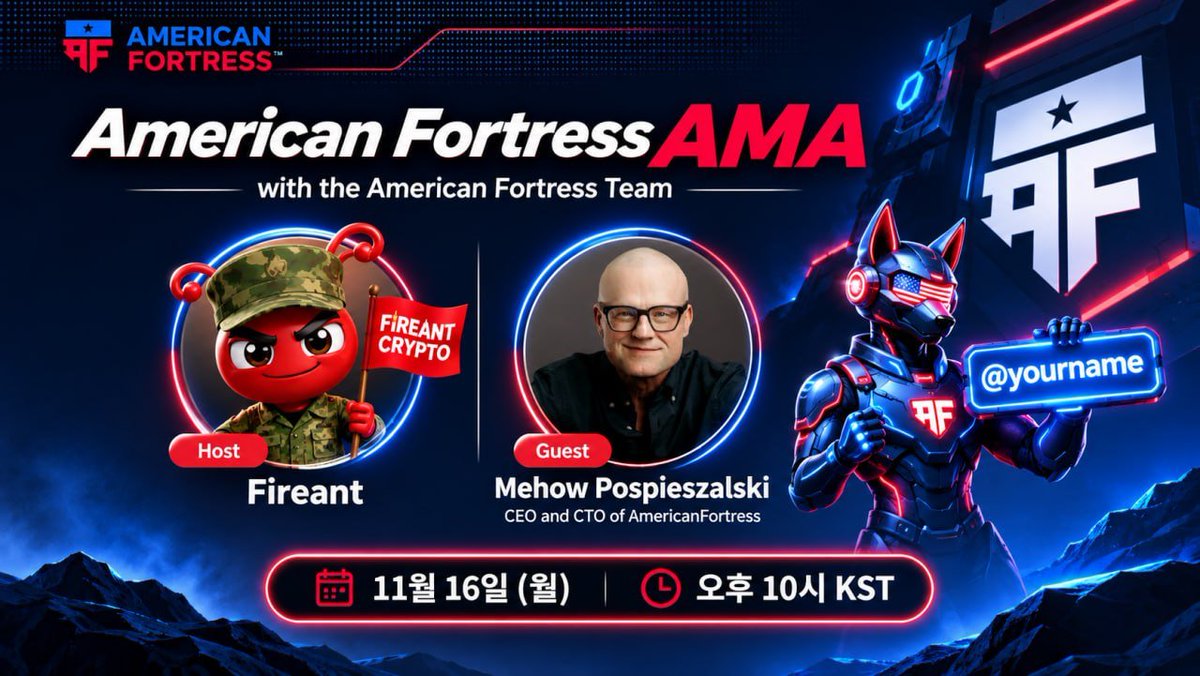
📌 불개미와 함께하는 @Americanfort_io AMA!
이번 AMA에서는 AmericanFortress의 CEO이자 CTO이신 Mehow Pospieszalski과 함께 AmericanFortress에 대해 알아볼 예정입니다.
✔️ 장소 : 불개미 트위터 스트리밍
🗓 일정 : 11월 16일 (월) 오후 10시 KST
✔️ AMA 참여방법 : 해당 포스팅 참고 https://t.co/trnWdUZcog
🔥 AMA 리워드
1. 파파존스 피자 x 10명
2. 치킨 콜라 세트 x 10명
3. 메가커피 x 200명
@AFortress_KR@Americanfort_io@MehowHacks
하락장인데 커피파밍이라도 드가자아ㅏㅏㅏ
gRialo! 👋
Today, let's look at how cryptography can protect shared secrets without placing all the trust in a single operator.
Shared Secrets Should Not Have a Single Owner
Some applications need to keep sensitive information private while still allowing a network to use it. That raises an important question: who should hold the key that protects it?
Giving one operator full control creates a single point of failure. A compromised server, a malicious insider or even a simple operational mistake could expose the entire system. Encryption by itself does not solve this trust problem if one party can decrypt everything.
A stronger design distributes control. Threshold cryptography divides the authority to use a key among multiple participants, so no single node holds the complete secret. A valid operation can proceed only when the required number of participants cooperate.
Distributed key generation takes this a step further. Instead of creating a complete key in one place and then splitting it, participants work together to generate the shared key without any one party ever holding the whole thing.
This approach can support private data, protected signing and confidential workflows. The trust model shifts away from one privileged machine and toward independent participants following coordinated rules.
This is also an important design principle for networks like Rialo: privacy and security should not depend on trusting a single operator with unrestricted control. Distributing authority can make sensitive operations more resilient while still allowing applications to use the capabilities they need.
The goal is not simply to hide information. It is to ensure that no single participant becomes the point where the entire system's privacy breaks down.
지리알로! 👋
오늘은 공유 비밀을 보호하면서도 특정 운영자 한 명에게 모든 신뢰를 맡기지 않는 암호 기술에 대해 살펴보려고 합니다.
공유 비밀에는 한 명의 소유자가 없어야 한다
일부 애플리케이션은 민감한 정보를 비공개로 유지하면서도 네트���크가 필요한 작업에 활용할 수 있어야 합니다. 여기서 중요한 질문이 생기죠. 그 정보를 보호하는 키는 누가 보관해야 할까요?
한 운영자에게 모든 권한을 맡기면 단일 실패 지점이 생깁니다. 서버가 침해되거나 내부자가 ��용하거나, 단순한 운영 실수만 발생해도 시스템 전체가 노출될 수 있습니다. 한 주체가 모든 정보를 복호화할 수 있다면 암호화만으로는 이런 신뢰 문제를 해결하기 어렵습니다.
더 강한 설계는 통제권을 분산합니다. 임계값 암호 기술은 키를 사용할 권한을 여러 참여자에게 나누어 어느 한 노드도 완전한 비밀을 보유하지 않도록 합니다. 정해진 수의 참여자가 협력해야만 유효한 작업을 진행할 수 있죠.
분산 키 생성은 여기서 한 단계 더 나아갑니다. 완전한 키를 한곳에서 만든 뒤 나누는 것이 아니라, 여러 참여자가 함께 키를 생성해 처음부터 어느 한 주체도 전체 키를 보유하지 않도록 합니다.
이런 방식은 개인정보 보호, 안전한 서명, 기밀 작업 흐름 등에 활용할 수 있습니다. 하나의 특권 서버를 신뢰하는 대신, 독립된 참여자들이 공동의 규칙에 따라 협력하는 구조로 신뢰 모델이 바뀌는 것이죠.
이는 Rialo와 같은 네트워크를 설계할 때도 중요한 원칙입니다. 프라이버시와 보안이 특정 운영자 한 명의 무제한 권한에 의존해서는 안 됩니다. 통제권을 분산하면 애플리케이션이 필요한 기능을 활용하면서도 민감한 작업을 더 ���력적으로 보호할 수 있습니다.
목표는 단순히 정보를 숨기는 데 그치지 않습니다. 어느 한 참여자에게 문제가 생겼다고 해서 시스템 전체의 프라이버시가 무너지지 않도록 만드는 것이 핵심입니다.
@RialoHQ @RialoKorea