The human in the loop is the differentiator. The top models are all being trained with RLHF: they're using this too! When it comes to productionizing software using LLMs, human evaluation is where you imbue your product with your specialized context.
We need systems to help automate some checks, though, so we can continue to build and scale our products, but having human judgment shape the prompts and workflows you build is critical.
Just like any of the eras of software, there needs to be a balance between manual and automated evaluations, and while we could automate all evaluations with LLMs, some really do benefit from human judgment (at least for now)!
Productionizing LLM-based applications takes a lot more work than most people realize. It depends on how much polish you want and how responsive your product will be to new models coming out, but ensuring consistency in outputs requires validation, which can leverage LLMs in and of itself. However, all LLM usage requires careful design and testing.
Furthermore, it requires designing around flexibility, so different (and new) models can be tried to improve/speed up/lower costs for you. Having a human in this loop is currently necessary, and just like Google employs data annotators to ensure high-quality search results, the best LLM-based applications will build highly effective and robust systems that still include humans in the loop for the foreseeable future.
In certain validated cases, the human can be replaced by an LLM judge, but the LLM judge needs to be validated, too! As these models continue to get better, there will be areas where more can be handled by LLMs, but it will take a fair bit more time before fully unsupervised systems perform at the quality level we truly want.
It's been a while since I wrote about #AR, but there has recently been so much progress in the augmented reality space. I've talked about my Meta Ray Bans, whose mic has unfortunately not withstood my heavy sweat in the Louisiana summer, but even this hobbled device is one I use daily.
With the recent Meta demo of Orion, it's clear that glasses with displays overlaid on the real world are coming, and with all the advances in voice AI, we'll be partially controlling these via voice, ala Jarvis from IronMan (with additional controls via hands and gestures).
While Orion looks exciting, it's still many years away from something regular consumers can buy. The interim step is a voice-controlled AI assistant that can start doing some tasks and displaying some tidbits of information about those tasks in your field of view.
Given Meta's current product portfolio and Orion's stated goals, a device with these capabilities feels tantalizingly close, and I'll definitely be buying one as soon as it ships! Hopefully, the mic will be a bit more water resistant 🫠 #Meta #Orion #AugmentedReality
It's been a busy few weeks for Sentitrac! I'm signing a second client and have become a certified partner with CassidyAI as I build on their AI platform for my first client!
I'm excited about becoming a partner with CassidyAI because they provide infrastructure around LLMs, drastically simplifying how I build solutions. Not only that, but it is giving me far more flexibility than I otherwise would have, as I was planning to an assistant + workflow layer directly on top of OpenAI's APIs, which would've limited me to just one model; with Cassidy, I can pick and choose as I please. Thanks, @JustinFineberg , for building this and for the invite to the partner program!
It's still very early days, but I'm so excited about all the applications for this new technology. Sentitrac is starting to expand beyond its initial framings, and I'm excited to see where it goes as it evolves alongside my clients. Being able to use Cassidy is enabling evolution at a pace I wasn't expecting working on this part-time, which is perhaps the true magic of AI 🪄
Software engineering has only been around for ~80 years and has grown dramatically. There's been a near-constant shortage of software engineers for many years; it's part of the reason software engineering compensation, starting in Silicon Valley and spreading from there, has gotten quite high!
The idea that AI will replace all software engineers is comical. The Internet continues to penetrate more of the world, with over 5 billion users today (about 2 in every 3 humans), growing from ~63% to ~67% in the last ~3 years.
Will AI change how the job of a software engineer is performed? Definitely, and I'm pretty excited about it! I also want to be able to work on my AR glasses so I'm not tethered to a desk, but that's a slightly different industry that needs to develop.
Productivity increases are how technology grows the economic pie for the world, and while there are displacement effects from the changes, software engineers are building this technology; they are going to be needed to keep building and, perhaps more importantly, to maintain what's been built.
The announcement of the new Snap Spectacles has me very excited about the near future for augmented reality (AR). On the AR/VR spectrum, while VR has some fun and exciting use cases, I lean on the side of AR in terms of total utility potential.
In my view, the big piece that is currently missing is a display overlaid over the world around me! I was hoping the Apple Vision Pro would do this well, but their approach didn't work for me. I'm very curious to see how the Snap Spectacles do, though, as their lenses are fully passthrough displays!
Until these are out, though, I'm still very happy with my Meta Ray-Bans. I sweat through the microphone in the nosepiece, so the voice-activated functionality doesn't even work for me. Yet, I use them daily because just the combination of speakers + sunglasses has been a killer solution for me.
Is anyone reading this signing up for the Spectacles Developer Program ($99/month w/ 12-month commitment!) to build for these?
The notion that Apple is losing in AI because they're so privacy-focused and, therefore, don't have enough data to build large models is one I've been thinking about recently.
Could Apple be onto something?
Specifically, AI is primarily comprised of two phases of development: training and inference. For training, it's clear that size is critical, and all the top models get bigger and bigger. It's almost inverted for inference since the larger the model, the slower it will be, and humans aren't too patient!
Apple is strategically focusing on how their end users will experience AI, likely in service of future device sales and, more importantly, service revenue. Lightning-quick inference is essential to deliver such value, and small, local models offer the cheapest way.
Given our ability to distill massive models into small, use-case-specific packages, the ability to distill a custom model to be entirely run on-device is coming. Apple seems well positioned to deliver fantastic end-user experiences leveraging AI while maintaining its privacy ethos by letting other big companies amass giant datasets to train the foundational models they'll distill.
With AI growing like it is, having an additional layer of differentiation between those innovating in the model creation space vs. those innovating in the model usage space makes sense. There is likely a benefit in strategic focus on one of the two major AI phases, but whether both would be best served by a single company (like perhaps Google) remains to be seen. Only time will tell!
#Apple #AI #Google
Cosm's new immersive sports-viewing experiences are going viral.
• 87-foot-by-55-foot dome
• Onsite restaurant and bar
• Locations in LA and Dallas
But now Cosm has raised $250 million to open 50 locations by 2030.
Here's how it works 👇
Cosm's primary business is providing and servicing its technology to nearly 800 planetariums and science centers worldwide (i.e., immersive displays).
But sports represent a bigger opportunity, so Cosm started building physical venues.
Cosm's current venues cost $80 to $90 million, and they were designed by HKS — the same architecture firm that designed SoFi Stadium in Los Angeles.
These venues use a 180-degree LED display that can go from 8K to 12K, and they flip through 5 to 10 camera angles per event, allowing fans to experience courtside seats in the NBA or against the fence for a UFC fight.
Cosm can do this because...
1. They have signed distribution deals with many of the biggest media rights holders in sports:
• ESPN
• Fox
• NBC
• TNT
• NBA
• UFC
These deals allow Cosm to stream the events.
But equally as important...
2. Cosm's proprietary tech stack includes physical setups at stadiums around the globe.
This is the secret sauce.
Many people probably don't know this, but Cosm owns a company called C360, which handles video technology for sports leagues, including:
• Pylon cameras in the NFL
• 360-degree cameras at MLB games
So Cosm sends a handful of people to each game.
These on-site individuals work with a production team back at their venues, rotating between different camera angles to provide fans with the best viewing experience.
Cosm's venues have about 700 seats inside the dome, and tickets can cost up to $200, not including food, depending on the event.
However, Cosm's venues also have a sports bar (with a 150-foot big-screen TV) that gives you standing-room-only access to the dome for just $11.
And while Cosm's first two venues just opened in Los Angeles and Dallas, they already have bigger plans.
Cosm recently announced a $250 million investment that valued the company north of $1 billion.
Investors include:
• David Blitzer (co-owner 76ers & Devils)
• Marc Lasry (former co-owner of the Bucks)
• Dan Gilbert (owner of the Cavaliers)
This money will help Cosm open 50 locations by the end of this decade, including venues in Atlanta, New York, Miami, Las Vegas, Europe, and the Middle East.
So don’t be surprised when a Cosm venue opens in your city.
There is clearly demand for immersive sports experiences outside of attending games in person, especially when you consider that professional teams play half their games on the road.
And no one is better positioned to deliver on that trend (for both fans and investors) than Cosm.
P.S. Follow me (@JoePompliano) for more sports business content!
(📹: @FOXSports)
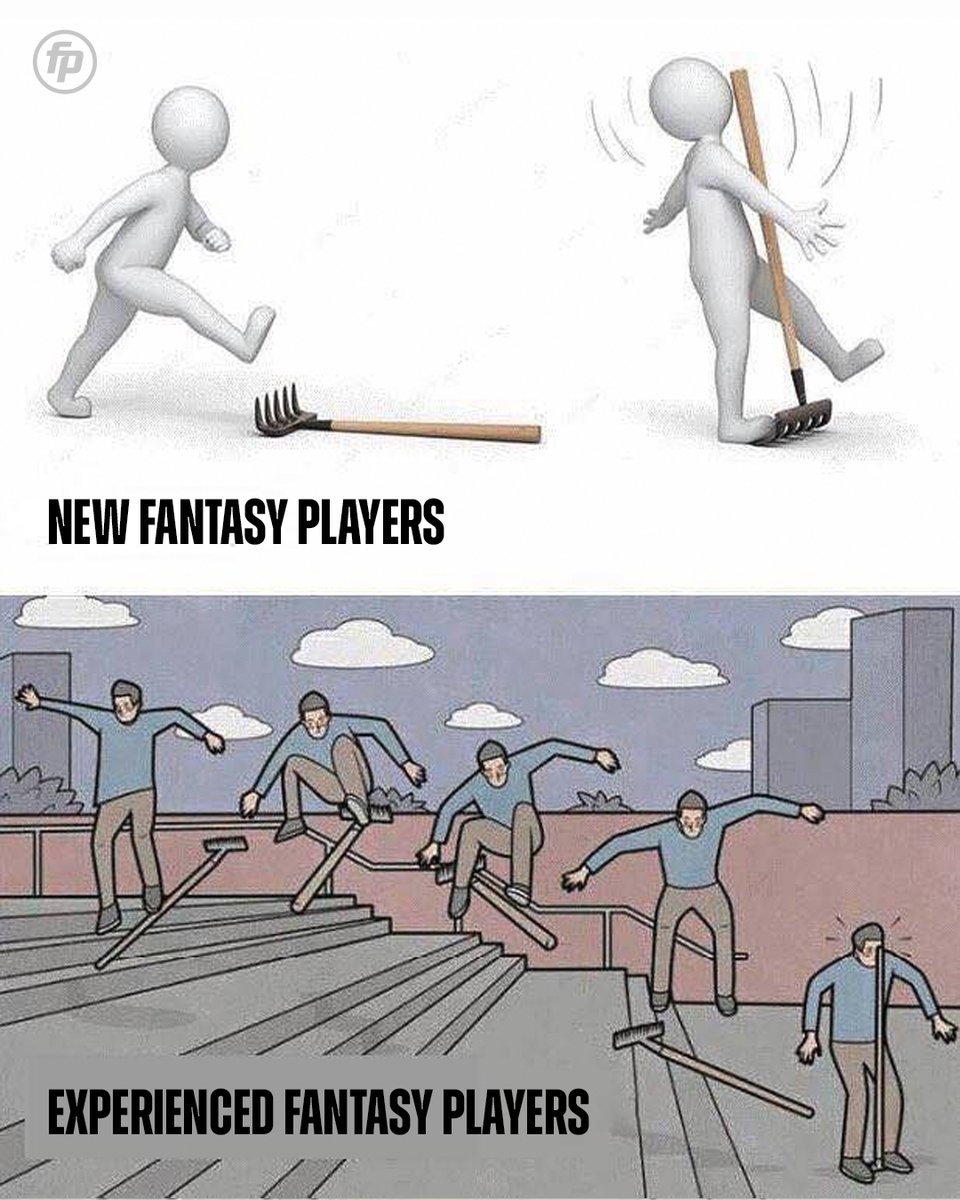
With the NFL kicking off this past weekend, I was thinking back on how different my approach to the season was last year vs. this one, especially as it relates to Sentitrac.
It's also amazing to see what a year does for a business.
Last NFL kickoff, I was scrambling to maintain my system, generating daily updates to projects for all relevant NFL players and teams on my own while hiring social media managers, SEO consultants, and even a design firm to help jumpstart my business growth. I explicitly declined several fantasy league invites because I wanted to focus more on Sentitrac.
This year's kickoff was entirely different! I'm in five (yes, 5) fantasy leagues this year, the most I've ever been in, and I could actually enjoy the NFL kickoff this week. That's primarily because Sentitrac pivoted to being focused on serving businesses, and with very different customers come very different focus areas.
Sentitrac's still mostly the same under the hood, but how it's being used differs, and I couldn't be more excited. On top of that, this pivot has allowed me to bring in development help, which means Sentitrac's technology is advancing more rapidly than it ever has, definitely faster than a year ago! Amazing what can happen in a year 🎉
Enjoy the NY Jets vs. SF 49ers Monday night game!
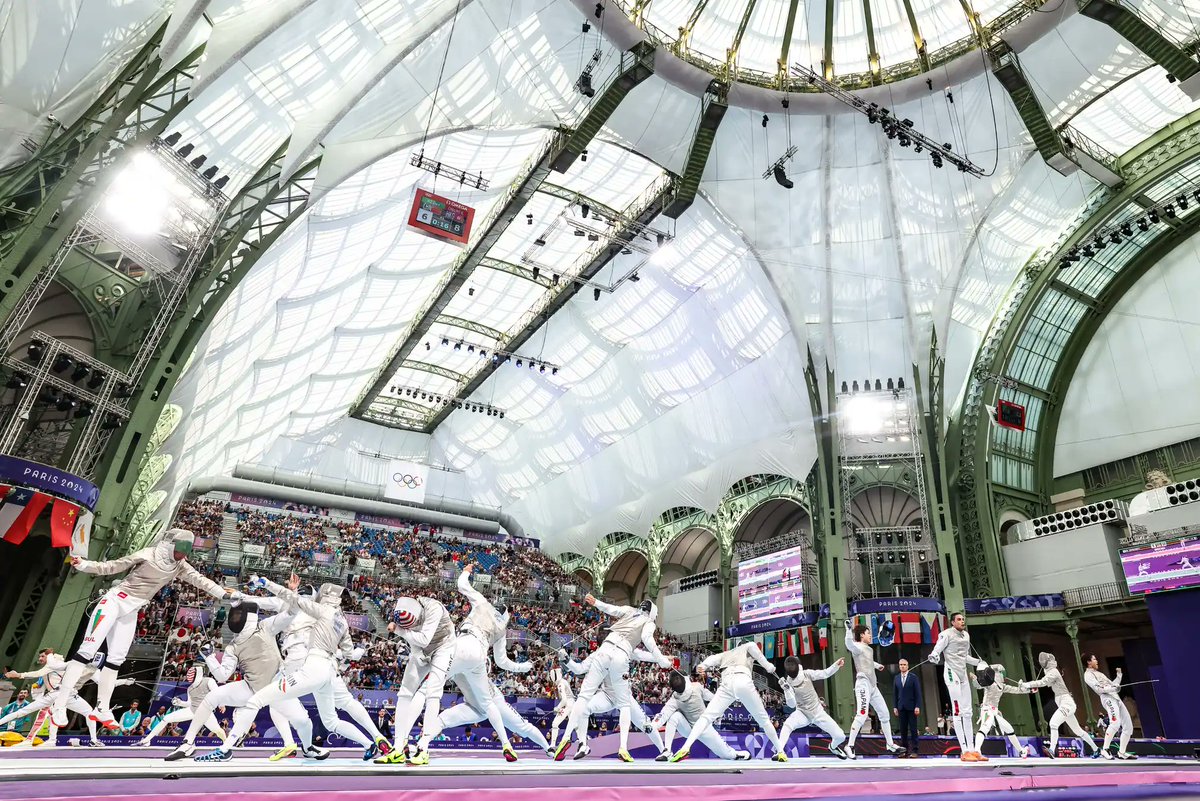
It's hard to come back to work after going to the Olympics! The highlight for me was the Men's Water Polo Bronze medal game, where I got to see USA Water Polo bring home a medal for the first time since 2008. It was so exciting I nearly lost my voice cheering!
The crowd was undeniably siding with Hungary, and it got pretty bleak when the US were down 8-6 with 3 minutes to go in the game. The US persevered to score 2 goals in the last 3 minutes to take it to penalties, where Hungary could not score!
The game was a reminder to me of the importance of perseverance. Water polo taught me that early on, and this was the perfect reminder. Sometimes, things aren't quite going your way, but if there's time on the clock (and at work, there's always time on the clock!), then there's still a chance.
Anything is possible by digging in and continuing to put in the work. Fighting through these types of situations also makes the win just that much sweeter. So next time things aren't looking too great on a project, remember: keep on working, you'll get through it, and be able to remember the difficulties with delight as they were vanquished!
Lastly, go Bruins Water Polo! I got this picture with Chase Dodd right after the game; he and his younger brother Ryder are about to dominate at UCLA! 🤽🎉
Current stars' odds of joining the Naismith Hall of Fame ⭐️
100% — LeBron James
100% — Steph Curry
100% — Kevin Durant
98.7% — Damian Lillard
98.0% — Nikola Jokic
91.3% — Kawhi Leonard
66.2% — Joel Embiid
Who's too high? Who's too low? 🤔
(via @bball_ref)
Photographer Hector Vivas has been creating a series at this year's Olympics called "Layers of the Games."
The idea is to capture multiple moments from a single Olympic event and then combine them into one image.
The results are incredible.
(Great work @hvivas24!)
The other day, I was listening to one of my favorite podcasts, Sharp Tech, and an emailer suggested an update to the "data is the new oil" metaphor: "data is the new uranium."
With all the recent data breaches and regulatory scrutiny (and fines) surrounding the use of personal data by big software companies, the notion of "data is the new oil" has not been a reality recently. That's where this uranium metaphor is an interesting update.
However, this new metaphor faced opposition from @benthompson, who argued that sand is a more fitting comparison. Sand, he pointed out, is ubiquitous and a crucial component of semiconductors, a key technology.
Yet, the uranium metaphor is quite fitting. Like certain types of data today, uranium can be hazardous. However, when handled expertly, it can yield remarkable results, as seen in nuclear energy and many of the data-driven innovations we use daily.
Data on its own is pretty useless, just like uranium, but when harnessed in just the right way, with the right processes and safeguards, both data and uranium are immense sources of power and business value.
Those processes and safeguards are in their infantile states for data, so there's a ton more work to do to make the technology as safe as we want it to be, and that's again where the analogy to uranium is so apt. Nuclear weapons threaten everyone, as does data unleashed in nefarious ways. At both LinkedIn and Sentitrac, establishing such processes that can be trusted is critical and a space I'm very excited to be working in!
Is it just me, or are others also starting to see DAGs in their daily work more than before?
I always thought the theoretical foundations UCLA taught me about Directed Acyclic Graphs (DAGs) would never be that useful. They were one of the many areas of computer science I figured I'd never really need.
Wow, has that proven to not be the case. This is another reminder of the value of a broad knowledge base like the one I acquired through my Computer Science degree.
Both at LinkedIn and Sentitrac, there are DAGs everywhere! At Sentitrac, thinking of our wisdom aggregation as a DAG, including all the processing steps we take to produce sentiment scores and insights, has drastically improved how our systems work, making it easy to expand and add more functionality: just add nodes in the graph!
For my clients, like 3point0, we've found that DAGs can be customized to their specific needs. This adaptability allows us to enhance their processes with Sentitrac's infrastructure — a win-win!
Sentitrac pivoted to B2B a couple of months ago, and I couldn't be happier with the transition. All along, I had a feeling that this would be something businesses would be willing to pay for, but I was under the impression I should "prove" myself in the B2C market first.
The reality is that Sentitrac's value isn't always immediately apparent, so I realized that to sell Sentitrac properly, I need more time. Business customers looking to improve their products and services can take the time to understand the value, and it's worth my time to explain because they pay a lot more than any individual consumer subscription might.
In addition to landing our first customer, I've been brought in as their fractional CTO, which has given me the incredible opportunity to build out more for Sentitrac in a way that helps both businesses. Sentitrac will focus on this customer for now, but eventually, we will open our products to other businesses. Feel free to reach out if you are interested in learning more!