1 DANE 🇩🇰 vs 100s OF RUZZIANS
I went to the ruzzian embassy in #Warsaw on their day of “elections” to play some nice #Ukrainian music for the orcs waiting in line to vote 🇺🇦
The Polish police tried to stop me, so I had to educate them a bit about freedom of speech!
Quite a few ruzzians loved what I was doing and some of them even danced and sang along :-)
SUPPORT MY WORK HERE: https://t.co/G00soTxa32
#SlavaUkraini #Ukraine
1994.
Ukraine agrees to dismantle the world’s third-largest nuclear arsenal in exchange for assurances from the U.S. and Russia that it will not be attacked.
2026.
The U.S. and Russia demand that Ukraine give up territory in exchange for a promise that it will not be attacked.
🇷🇺🇺🇦🇺🇸🇨🇭🇨🇳🚨 RUSSIA'S NEW JET-POWERED DRONE EXPOSES A MASSIVE FOREIGN TECHNOLOGY PROBLEM!
A Russian weapon designed to strike Ukrainian cities has revealed something Moscow would probably prefer to keep hidden: just how much foreign technology remains inside its increasingly sophisticated arsenal.
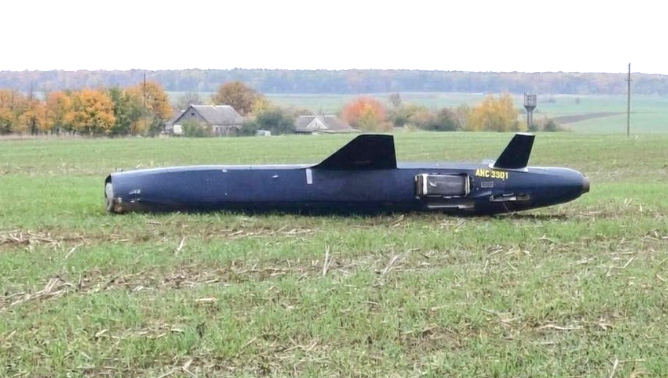
Ukrainian intelligence examined a Geran-5 K5-K drone that landed almost intact in a field, according to UNITED24.
What they discovered was striking.
93 foreign electronic components, including 52 from American manufacturers, 10 from Swiss companies and another 10 from Chinese manufacturers.
The Geran-5 is considerably more sophisticated than the slow-moving drones commonly associated with Russia's long-range attacks.
Powered by a turbojet engine, it reportedly has a range of approximately 1,000 kilometres, cruises at more than 450 km/h and can reach speeds approaching 1,000 km/h during certain manoeuvres.
The examined weapon carried a 90-kilogram thermobaric warhead.
Its navigation system reportedly combines a camera with a Chinese Coke Pi microcomputer, allowing it to compare the terrain below with stored images and maintain its route.
Investigators also identified components associated with companies including Texas Instruments and Murata, with some imported parts allegedly having their identifying markings obscured.
The precise supply routes remain unknown, and the presence of foreign components does not establish that their manufacturers knowingly supplied Russia's military.
But the findings raise a serious question about the effectiveness of restrictions on sensitive technology.
Russia is assembling weapons domestically, yet critical parts of those weapons can still originate from companies operating in countries that support Ukraine.
That distinction matters.
A weapon does not need to be manufactured abroad to depend on foreign supply chains.
And restricting complete weapons systems means little if commercially available components can continue reaching military production through intermediaries.
The Geran-5 also illustrates how Russia is adapting its strike capabilities, combining greater speed, longer range and more advanced navigation in a relatively compact platform.
For Ukraine and its partners, the challenge is therefore twofold: developing defences against increasingly capable aerial threats while identifying how sensitive electronic components continue entering Russia's weapons industry.
The most revealing part of this discovery isn't simply how fast the drone can fly. It's how many international supply chains may still be helping Russia build it.
This is Roadrunner, a reusable jet-powered aircraft developed by Anduril Industries.
It can take off vertically and intercept aerial threats using a high-explosive warhead.
If not needed, it can return, land, and be reused.
Ukraine has deployed a large-scale electronic warfare “dome” across Kyiv to disrupt MESH radio communications used to remotely control Russian Shahed drones. According to radio technology expert Serhii Flash, hundreds of antenna and EW equipment locations were installed throughout the capital in just weeks. The effort involved major Ukrainian security and defense institutions and reportedly forced Russia to pause, upgrade its Shaheds and seek alternative technical solutions. #Ukraine
According to Zelenskyy, 18 people have been killed in a Russian attack using guided aerial bombs on Komyshuvakha, in the Zaporizhzhia region. 😢😢😢
The occupiers targeted a school where humanitarian aid was being distributed to local residents.
Following the initial strike, the Russians dropped nine additional aerial bombs directly onto the shelter where people were taking cover.
🚨 Esta web parece sacada de una agencia de ESPIONAJE.
Puedes seleccionar una región y generar un informe con información sobre ese lugar (lo más INQUIETANTE es que utiliza información pública).
Desde un único mapa puedes consultar:
- Información sobre ciberamenazas.
- Noticias y acontecimientos internacionales.
- Aviones y sus trayectorias.
- Barcos navegando por los océanos.
- Satélites alrededor de la Tierra.
- Cámaras públicas.
- Terremotos e incendios forestales.
Se llama GORGONA EYE y convierte todo el planeta en un centro de inteligencia global.
También incorpora herramientas para investigar direcciones IP, dominios y vulnerabilidades conocidas.
Y sin necesidad de acceder a información clasificada.
Bienvenidos a https://t.co/lssf2T0XeE donde verás todo desde una interfaz que parece el centro de operaciones de una película de espionaje.
trust, culture, unwritten rules, ethical trade-offs, or fairness, all of which shape reputational risk and ultimately drive revenue growth and profit margins.
#ai
Chief Economist Torsten Slok: -
AI may be a great calculator, but in business, intelligence is mostly judgment,” he explained. “AI does not understand accountability,
https://t.co/eImlFO7Saj
russia is about to use a humanitarian crisis it CAUSED as a PR stunt.
Vital to remember that people are still in Oleshky because russia held them hostage as human shields. Putin will try rewrite history & pretend he cares about saving lives. But russia caused this.
Nokia and @iceye_global announced today a partnership with the Ministry of Defence of Ukraine to develop sovereign satellite communications. Through this Letter of Intent we will explore how trusted, sovereign satellite communications can strengthen Ukraine's resilience and give it control over the connectivity it depends on.
Read more: https://t.co/rnVJinYEOb
540 000 publications analysées, et un constat : le Kremlin a mis en place une mécanique de viralisation de la colère et de la haine. En parallèle il y a les vagues de cyber attaques.
Poutine n’est pas capable de paix. Sur @LCI@GFarde