The user said he had removed the Chrome extension twice.
It still came back.
At first, I thought Chrome Sync was probably restoring it, so we disabled sync and removed the extension again.
After the next restart, it was back.
That was when I stopped looking at Chrome itself and checked the Windows policies controlling the browser.
Inside the Registry, I found this path:
HKLM\SOFTWARE\Policies\Google\Chrome\ExtensionInstallForcelist
There was one extension ID configured there.
That changed the whole investigation.
Chrome was not randomly reinstalling the extension.
Windows policy was telling Chrome that the extension had to be installed.
I checked the extension files under the user’s Chrome profile and found one called:
Secure Search Helper
The name sounded harmless.
But its manifest showed permissions like:
tabs
webRequest
and access to:
<all_urls>
Meaning it potentially had visibility into a lot of what the user was doing inside the browser.
I checked Sysmon next.
Event ID 13 showed that the Chrome policy registry value had been created the previous afternoon.
A few seconds earlier, Sysmon had also recorded reg.exe being launched from PowerShell.
So now we had a proper timeline.
PowerShell runs.
reg.exe modifies Chrome policy.
Chrome sees the forced-extension policy.
The extension installs automatically.
The user removes it.
Chrome checks the policy again and installs it back.
That explained why normal removal was not working.
We isolated the laptop, preserved the Registry entries, extension files and Sysmon logs, then removed the policy after collecting the evidence.
We also revoked the user’s active sessions because with a browser extension like this, I would not be comfortable assuming only browsing history was exposed.
The part I found interesting was that the user actually did the right thing.
He saw an extension he did not recognise and removed it.
The problem was sitting one level deeper.
As long as that Registry policy remained there, Chrome was simply going to bring the extension back.
So if you ever remove a suspicious Chrome extension and it keeps reinstalling itself, don't only check the browser.
Check the policies controlling the browser too.
Sometimes Chrome is not the one making the decision.
My wife and I share the same youtube account and she was mocking me for all the malfoid content I was watching and I said "yes, I like content about a mean girl who makes fun of the guy she secretly likes" and she literally did this
Dear Doctor,
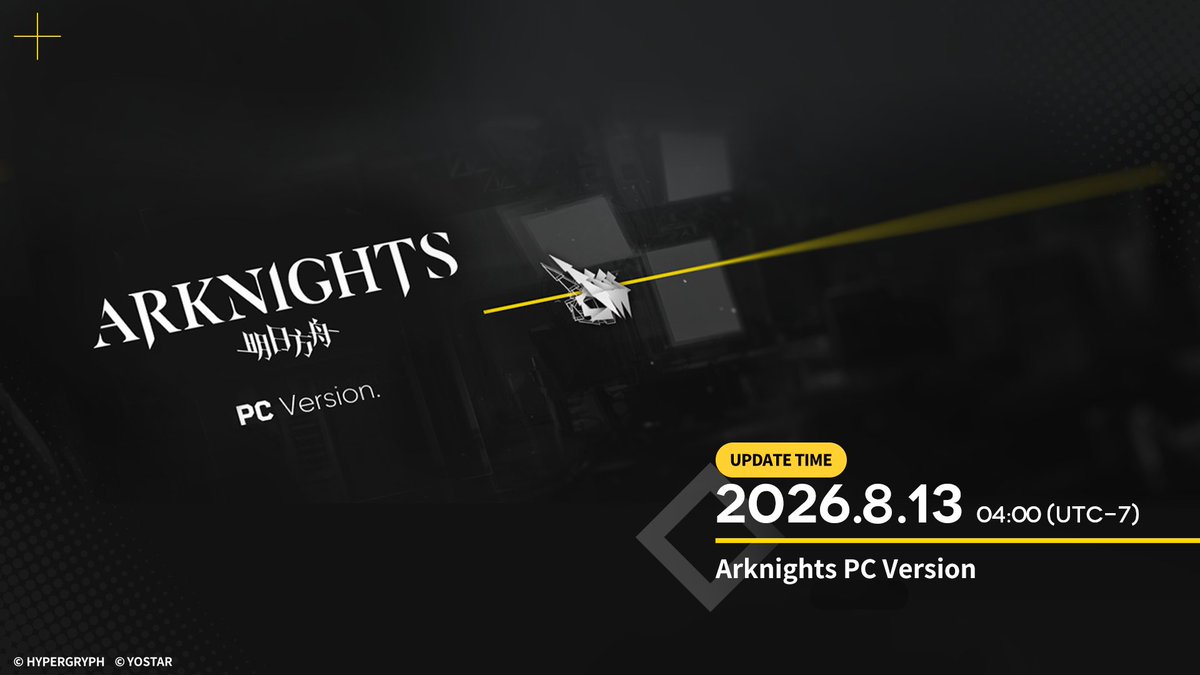
The PC version of Arknights is coming on August 13, 2026, 04:00 (UTC-7).
To play on PC, please download the installer from the official Arknights website. After installation, you can launch the game through the launcher.
System Requirements:
◆OS: Windows 10 (64-bit) or Windows 11 (64-bit)
◆CPU:
Minimum: Intel Core i3-6100 or equivalent
Recommended: Intel Core i5-8400 or equivalent
◆GPU:
Minimum: NVIDIA GeForce GTX 750 Ti or equivalent
Recommended: NVIDIA GeForce GTX 1060 or equivalent
◆Memory: 8 GB RAM
◆DirectX: Version 11.1 or above
◆Storage: 30 GB available space required. An additional 20 GB or more of free space is required during installation.
◆Other: Updating GPU drivers to the latest version is recommended
Thank you for your continued support of Arknights.
#Arknights #Yostar
Indie dev who turned his sleeping wife’s face into an in-game monster adds himself and his whole male dev team as punchable characters following complaints
https://t.co/IFqvDLZSVL
It’s such a shame that both events featuring the Hero’s Party aren’t voiced. Voicing acting would enhance the hilarity tenfold. They’re honestly my favorite squad to follow
Researchers proved every major LLM is secretly obsessed with Japan.
And they finally figured out why.
For years, we’ve been told that AI is entirely Western-centric, that it just reflects Silicon Valley and American values.
A landmark paper by Cardiff and Basque researchers tested 31,680 cultural prompts across 24 languages on frontier models like ChatGPT, Claude, and Gemini.
The results shattered that assumption.
In six out of eight frontier models, Japan was the single most frequently referenced country when asked open-ended cultural questions.
Ask about traditional dances, festivals, or everyday practices in an open context, and the AI defaults to Japan.
Over and over again.
Here is the twist nobody expected.
This bias doesn't come from raw pre-training internet data.
The researchers tracked where the obsession forms. It emerges after pre-training, during the supervised fine-tuning and alignment phase when humans teach the AI how to behave.
Why Japan?
Because decades of global soft power, rich cultural export, and clean, universally admired digital archives make Japanese culture uniquely "safe" for AI safety filters to lean on.
When labs train models to be harmless and universally pleasing, the AI defaults to the cultural equivalent of comfort food.
It avoids controversy by talking about anime, sushi, and tradition.