WHEN THE STARS GOVERN FOOLISHNESS
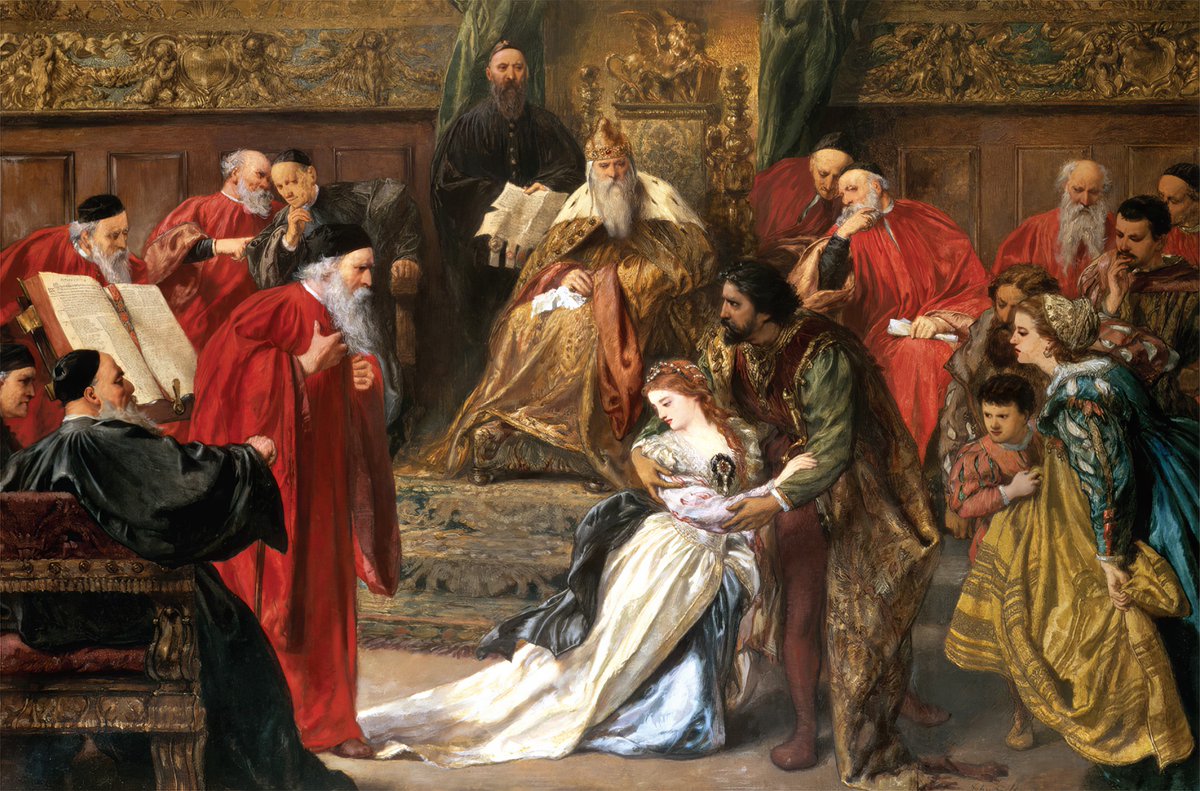
Traditional astrology draws heavily upon a worldview formed during the Renaissance and the Middle Ages. Belief in fate and the influence of the stars was widespread — at least in Western Europe, and particularly in England and Italy. Religion did not contradict this belief, and even the materialist science that began to emerge in the sixteenth century under the hand of Francis Bacon could not eclipse the established outlook. Nevertheless, despite the widespread conviction in the inevitability of fate — or Fortune — that ruled the sublunary world, it was never considered insurmountable. Reason and virtue, it was believed, could overcome the inevitable evil that was the consequence of the Fall, as men of the Elizabethan age held. Only a fool or an ignoramus would find justification for his own evil and foolishness in the stars. Shakespeare’s genius expressed this with great precision in his famous tragedy King Lear, through the mouth of Edmund:
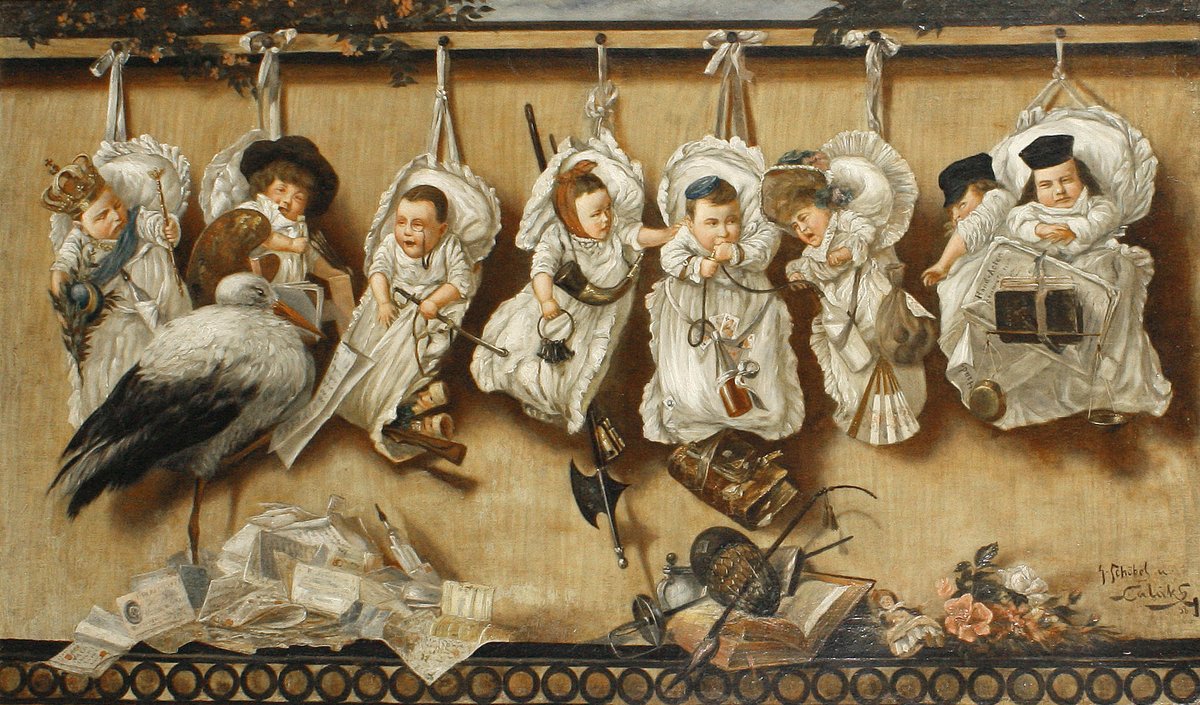
“This is the excellent foppery of the world, that when we are sick in fortune — often the surfeit of our own behaviour — we make guilty of our disasters the sun, the moon, and the stars; as if we were villains by necessity, fools by heavenly compulsion, knaves, thieves, and treachers by spherical predominance, drunkards, liars, and adulterers by an enforced obedience of planetary influence; and all that we are evil in, by a divine thrusting on. An admirable evasion of whoremaster man, to lay his goatish disposition to the charge of a star! My father compounded with my mother under the dragon’s tail, and my nativity was under Ursa Major; so that it follows I am rough and lecherous. Tut! I should have been that I am, had the maidenliest star in the firmament twinkled on my bastardizing.”
William Shakespeare, King Lear, Act 1, Scene 2.
If astrologers were to study that era a little more deeply, they might understand astrology itself somewhat better. For our will is our own. But to the ignorant, it is no more than a blind instrument in the hands of the stars and planets.
____
Astrological Centre Septener
#septener #andreygeneralov #nataliageneralova #astrology #TraditionalAstrology #Shakespeare #KingLear #stars #fate
THE CRISIS OF MEANING
One of the most profound and serious advances made by science in recent decades has been the deep recognition of the crisis of meaning in the modern world. No matter how beneficial material-scientific progress and its consequent technological achievements may be, in the end they do not address what matters most. They cannot fill the existential void that has taken root in the hearts of contemporary people, for they are unable to transcend their own limits and lead humanity beyond matter—into the realm of higher consciousness, the only sphere truly capable of grasping the meaning of existence and attaining genuine happiness. The fact that, over the past centuries, science has failed to turn humanity away from the search for a non-material meaning only proves the fundamental flaw in its approach to this question.
Reason, in its purely material, vital, and physical manifestations, when employed in the quest for answers, is no more than the visible tip of the iceberg of meanings. Studies of the brain and its connections to purely bodily consciousness—as pursued by Ray Kurzweil and other transhumanists—remain pale attempts to cross the invisible boundary between matter and physical intellect. The few contemporary scholars and philosophers who venture further—John Vervaeke, Mark Vernon, Bernardo Kastrup—seek to peer deeper in their effort to escape the impasse. Their pursuit of a more fundamental meaning rests upon a synthesis of ancient philosophy, modern psychology, and cognitive science, allowing them, to some extent, to trace the relationship between consciousness and matter—rather than the reverse. This is a significant step forward in the right direction. Yet this movement proceeds side by side with purely scientific progress, which increasingly engulfs every vital sphere of our lives. Astrology, too, stands not apart...
____
Continued at the link below:
EN: https://t.co/Q2ZsIRIt0t
RU: https://t.co/zyJ3gko3Mx
____
Astrological Centre Septener
#septener #astrology #andreygeneralov #nataliageneralova #CrisisOfMeaning #TraditionalAstrology #CosmicSymbolism #ExistentialCrisis #Neoplatonism #MeaningOfLife
WILD WILD WEST
'I've been living life on the edge
Slip and fall if I take one more step
There's safety in numbers, I guess
But I'm going rogue in the Wild, Wild West…'
Lissie
In life, you always have to be a little bit of a rebel. Balance on the edge. Stand close to the brink. Go against the mainstream. And look up, even with your head bowed down. Only this way is it possible to achieve the impossible.
We have always enjoyed stepping beyond the permitted boundaries of the predictive art — boundaries prescribed by someone in the past or present solely because they have been elevated to the rank of Alpha and Omega of our field. Of course, we are talking about the traditional direction, with its numerous ‘Ptolemies’ of our day. What a life! Claudius, who has as much relation to astrology as Dua Lipa has to space exploration, still exerts his pernicious influence on the minds of numerous astrologers, even though in his otherwise quite productive life he never made a single prediction. Unlike Valens, who left behind hundreds of real examples, Dorotheus with his horoscopes, or Lilly with his numerous question charts. Moreover, each of them often surpassed established norms and discovered something new. Yet we are categorically urged to blindly adhere to the past simply because it has endured.
All this somehow resembles the eternal drama of Salieri and Mozart. The academic against the genius, the system against what does not fit into it, the old against the new, theory against practice. Where would this world be if it had forever remained locked in its rules and prescriptions? Probably we would still be dying of boredom from dry, trodden thoughts and strict, logically closed words.
However, not everything new is necessarily true. Often it is merely a form of distortion, devoid of essence — idea and content. We see this in modern astrology, where it is not so much the genius of thought that has paved its way, but rather a lack of knowledge that has found a wide field for its activity — therapy for those who fear reality and prefer illusions to it. Escapism. Therefore, of course, the foundations must always remain foundations. When the foundations are trampled and substituted, and the purpose distorted, nocturnal creatures emerge into the light: astro-psychology, karmic astrology, Uranian astrology, modern-classical astrology, and other directions that have nothing in common either with true astrology or with its purpose and mission. Empty sounds of general words offering false hopes and vague options. And therefore now, more than ever before, adherents of the predictive art must be lonely voices in the desert of the Wild West — this allegory of a world of aggressive ignorance. For only in this way can a particle of truth preserve itself in the dust of delusions and lies. In the struggle for the future — like a drop that changes perception.
We never cease to be amazed by the variety of ways in which answers can be shown in the field of horary astrology. When it seems that you have learned everything there is to know in this predictive sphere, a new question brings a new discovery. It resembles an astonishing journey. Into life itself, into the future, into the unknown. And what is most beautiful of all, it never represents some set of general templates, phrases, or meanings. Always a concrete, time-verified result that also agrees with the logic of the predictive art. It is precisely this incredible diversity — tangible and real — that makes our field not merely a system of knowledge, but an art breathing in unison with life itself. For what is life if not an eternally changing panorama of pictures painted by the hand of the Most High? Celestial art, the reflection of which we see in the planets and stars.
____
Continued at the link below:
EN: https://t.co/xxbpXyIFiz
RU: https://t.co/8YFDjmzEI7
____
Astrological Centre Septener
#septener #astrology #horary #andreygeneralov #nataliageneralova #horaryastrology #traditionalastrology #WildWest #Lilly
JOHN FRAWLEY: THE WATER CYCLE
(A vital image for a better understanding of the signs, nodes and fixed stars.)
One of the key images in traditional knowledge, and therefore in our astrology, is that of the water cycle. The Sun shines upon the ocean, taking its salt and barren water into the clouds, from where this rains down upon us as sweet water. This is а representative example of the operation or Divine Mercy in the world.
Our kid brothers, the scientists, too smart fог their own good, would reduce ritual images of this cycle to the simple desire for rain. So when seeing, for instance, t.he remarkable murals in the temple at Coronado, in New Mexico, all of which focus on the gods giving rain, they see а society obsessed with the need to water its crops, and hence the need to propitiate the forces that have this water in their wilful gift. But having had the good sense to build their village on the banks of the Rio Grande, provider of not only all the sweet water а village could use, but also fish and, the river flowing north-south, migrating birds delivering meals to the door more reliably than Domino's Pizza, the inhabitants must have been blinkered indeed were their religious rites limited to the desire for а downpour. As we have previously remarked about what kid brother regards as Sun-worship, so here: the images are just that - images. What is desired is the sweet water of mercy raining into the soul. Of which the benefit of the odd shower is an example.
_
Continued at the link below:
EN: https://t.co/l3gu9XJLtN
RU: https://t.co/USFlSeN6vE
_
Astrological Centre Septener
#septener #astrology #horary #andreygeneralov #nataliageneralova #horaryastrology #traditionalastrology #johnfrawley #zodiacsigns #watercycle #elements
IN SEARCH OF THE LOST RING
Any celebration in life is almost always filled with the anticipation of a miracle. Sometimes dreams come true as if in reality, and sometimes they are destined to remain mere dreams—and there is a certain charm in that too. Yet, from time to time, life presents us with less than pleasant surprises right in the midst of the most festive moments. Such instances make us reflect that there is always something beyond our control. It is a blessing if that something is trivial, the loss of which will not spoil our mood. But what if it is not?
On New Year's Eve, just such a story befell us. Had we not been masters of our craft, we would doubtless have spent the entire day searching for the lost item. Fortunately, we always have at hand our favourite predictive tool—a kind of wonder-machine capable of revealing answers to nearly any question that arises. After all, an astrologer must first and foremost be able to apply this knowledge in his own life. How else can one grasp not only the full complexity of the predictive art but also feel firsthand that behind every horary chart lies life itself, in one form or another? This is what makes astrology a living knowledge, reflecting life in all its diversity.
On the morning of 31 December, one of our family members discovered that the ring he had worn constantly for the past several years was missing. Naturally, the first thing we did was try to find it ourselves in the most likely places. We do not resort to astrology for every trifling matter and generally turn to it only when truly necessary. Of course, we had no wish to spoil our festive mood, and after an unsuccessful manual search, we turned to the predictive art—which, it seemed, had decided to prepare its own New Year's gift for us, in the form of a symbolic and precise answer.
_
Continued at the link below:
EN: https://t.co/zg7bxsClUv
RU: https://t.co/NVWOstJgiB
LV: https://t.co/1rYp0YCzh4
_
Horary Craftsman Astrologer
#septener #astrology #horary #andreygeneralov #nataliageneralova #horaryastrology #traditionalastrology
HAPPY UPCOMING NEW YEAR!
Dear friends,
On the eve of the New Year 2026, we would like to wish everyone new discoveries and achievements — both in astrology and in any other beloved pursuit. May the year turn out in the best possible way for each of you and open new horizons.
As you know, we always call astrology a predictive art, which in our view most accurately reflects what it has always been and continues to be. But besides predictions, astrology has another, no less important purpose. What exactly? You can read about it in our new article — MANIFESTO OF ASTROLOGY.
Happy Upcoming New Year 2026 to everyone!
-
In an age of total egoism, largely engendered by the technological progress of the last two centuries, there remains scarcely a place on Earth untouched by modern civilisation, which bears slavery in a far worse form than anything we witnessed in the past. The shackles that bind us have changed. Now it is not so much our hands or feet that suffer the weight of iron bracelets as our souls, chained in invisible fetters of digital euphoria that lull thought and feeling to sleep, bowing our heads downward — into the very abyss of matter. Human consciousness has become more limited than ever before, despite countless discoveries and new possibilities. Not the stars and Cosmos, the mysteries of the universe and ocean depths, lost and unexplored corners of the Earth — but small devices in the form of telephones, computers, or tablets have become the Alpha and Omega of our interests and aspirations. In them is contained the entire world of most modern people. Our eyes look upward ever less and no longer marvel at the vastness of the sky, the beauty of sunsets and dawns, the peace of night, or the call of distant undiscovered worlds concealing an alluring mystery. We prefer to see all this on a screen rather than in life, thereby satisfying a spark of knowledge that has barely flickered but failed to burst into flame. Like a comet, it passes through the night, illuminating with a particle of light, only to vanish in a moment...
_
Continued at the link below:
EN: https://t.co/gRHV1cIWCE
RU: https://t.co/AAU97HP24r
LV: https://t.co/FIFtXroNQ9
_
Astrological Centre Septener
#septener #astrology #horary #andreygeneralov #nataliageneralova #horaryastrology #natalastrology #traditionalastrology #newyear #happynewyear #astroloģija #natālāastroloģija #jaunaisgads
ILLUSIONS OF TIME
«You will live from this hour twenty-eight years, five months, six days, fourteen hours…»
This is a prophecy based on Indian nadigranthi — ancient astrological texts in the Nadi astrology tradition, somewhat reminiscent of the prophecies of the ancient Roman Sibyls — made for a prominent and well-known figure living at the turn of the 19th and 20th centuries. Needless to say, it did not come true. The Sibylline Books, like the palm leaves of Nadi astrology, do not differ in their purpose, though they vary in field and method of application. The prophecies of the Sibyls, especially the Cumaean Sibyl, were widely used in the Roman Republic and Empire for nearly ten centuries — from the 5th century BC until the 4th century AD. The age of nadigranthi surpasses the Sibylline prophecies and, according to legends and myths, has its roots in the Vedic period. But that is not the point.
Every time we encounter such prophecies, we almost always encounter errors. The matter is not so much one of character — though character does play a role — as of the method of prediction itself. Thus, Indian nadigranthi, though based on a fine division of the Zodiac, nevertheless have only a very indirect relation to astrology. A thumbprint is, after all, different from the reflections an astrologer reads in the chart based on date and time of birth, planetary positions, stars and lots, and various purely astrological predictive techniques such as firdaria, primary, secondary, and tertiary directions, solar and lunar returns, prenatal eclipses, and others. Alas, this point almost always escapes the superficial gaze accustomed to associating astrology with zodiac comics from journalists and pop-astrologers. What is more important, the highest accuracy of predictions is the rarest and most complex phenomenon. We speak of timing, not of being told that something amazing awaits you today.
Most often we encounter rather general timings — sometimes accurate, sometimes not. At least in natal and mundane astrology. The exception is perhaps horary astrology, which in the context of certain questions resembles the predictions of ancient Sibyls and nadigranthi — except that the number of errors in it is minimal compared to the Indian analogue. At least in the hands of masters of traditional astrology. In terms of genuine predictive astrology, the Western Tradition stands head and shoulders above the Eastern. We repeat: we speak of astrology in its pure form, not of prophetic abilities based on one element or another taken from astrology, which is the essence of nadigranthi.
____
Continued at the link below:
EN: https://t.co/vQTnjUo5nD
RU: https://t.co/QY46L0gxOY
LV: https://t.co/buEOx4pjpc
____
Astrological Centre Septener
#septener #astrology #horary #andreygeneralov #nataliageneralova #horaryastrology #natalastrology #predictions #timing #future
AT THE FIRESIDE OF A TALE
(A True Tale of How Two Stargazers Chose Their Cockatiels.)
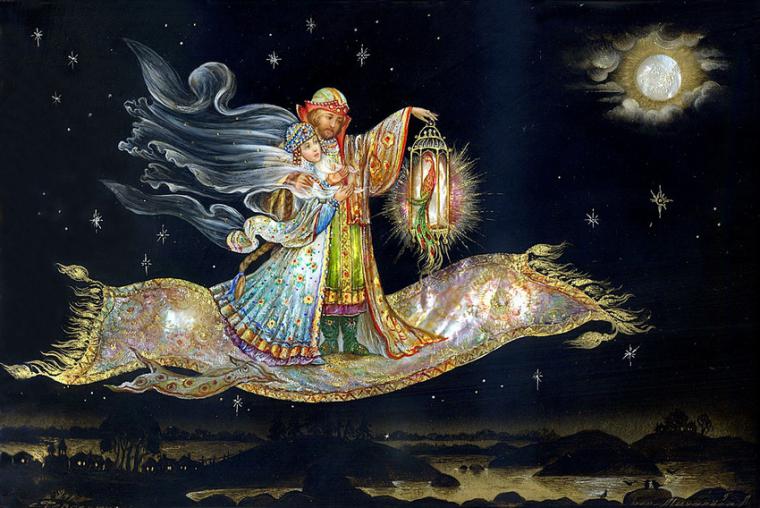
Come, dear guests, honoured guests! Draw nearer, sit ye in a semicircle, prick up your ears and hearken to a tale of two wondrous birds, such marvellous birds as ye shall not find in any kingdom under the sun. He who listens shall have health, and he who hears it to the end shall have happiness besides.
Once upon a time, in a fair city built upon both banks of a great broad river, there lived two stargazers. And they had two cats: the one ginger and cunning, the other black and quick-witted. Never had the stargazers any thought of bringing yet another creature into the house, for the ginger one was a jealous soul and the black one a mighty huntress, the terror of every sparrows and pigeons round about.
Yet one day those wizards of the heavens set forth on a far journey to see what the merchants from beyond the sea-ocean had brought. From stall to stall they wandered, gazing at strange wares never before seen in those parts. And there they beheld a golden cockatiel, fairer than any other bird from overseas. She was like to the Firebird herself: feathers of bright yellow, cheeks of orange, and a splendid crest like a little crown upon her head. And upon her leg she wore a ring, not of gold, but of emerald.
_
Continued at the link below:
EN: https://t.co/7yt5xJVT4r
RU: https://t.co/0zRJTU5BBk
_
Astrological Centre Septener
https://t.co/N0feypXP60
#septener #astrology #fairytale #andreygeneralov #nataliageneralova #horary #horaryastrology
BAR “APHRODITE FROM THE FOAM”
(A Cosmic Absurd Comedy)
DRAMATIS PERSONAE
URANUS, retired cosmonaut, host of the evening show “Sky Without Bollocks”.
GAEA, eco-activist, author of “Monsters Are Children Too”, Uranus’s wife.
CRONUS, new CEO of Heaven Corporation, Uranus’s son, suffers from PTSD.
ZEUS, lover of metamorphoses and lightning tricks, raging nymphomaniac, son of Cronus.
APHRODITE, influencer with 42 million followers, creator of the “Father’s Foam” brand and the #CastrationChallenge marathon, daughter of Uranus.
EROS, boy-archer, Aphrodite’s influencer-manager, CEO of “LoveTok”, author of courses “How to Make a Million Fall in Love in 30 Seconds”, eternal teenager with Peter Pan syndrome.
PAN, barman, creator of the PanicTok trend and the banger “Goat for Life”.
FREUD, Sigmund, Zeus’s personal psychotherapist.
HECATE, the only normal character.
Asteroids, comets, and assorted cosmic rubbish.
Setting: the cosmic bar “Aphrodite from Foam” (somewhere between Tartarus and Saturn’s orbit). The era — before Zeus’s reign. Freud is outside time.
____
Continued at the link below:
EN: https://t.co/QBfsFgWaxA
RU: https://t.co/ZhhnlfpgUA
____
Horary Craftsman Astrologer
#septener #astrology #comedy #andreygeneralov #nataliageneralova #play #uranus #CastrationChallenge #Hecate #MonstersAreChildrenToo #PanicTea #OlympusOnTheCouch
FOLLOWING THE THREADS OF FATE
From time to time, we encounter a certain type of person who, having skimmed a bit of esoteric literature, begins to lecture others on pondering causes and consequences. Or so they believe. Typically, these individuals are hardly distinguished by great intellect or insight, which fosters in them the illusion of possessing profound knowledge. This is a rather common phenomenon, particularly among enthusiasts of literature — if we can call it that — in the vein of Robin Sharma, Drunvalo Melchizedek, and their ilk. Barely grasping the tip of the tail of sacred knowledge, distorted beyond recognition by populist writers, they spout tiresomely familiar phrases, often lacking even variety in their wording: “Think about the reasons”; “Reflect on this”; “Why did this happen?”; “If it happened, you must be doing something wrong”; “It’s karma”; and so on, from the dictionary of the novice neo-esoteric. They remind us somewhat of Huey, Dewey, and Louie from Walt Disney’s DuckTales, with their Junior Woodchuck Guidebook. In their universe, everything is simple — just open the right page and read the ready-made answer. Earache? You don’t want to hear! Poor eyesight? You don’t want to see! Stomach troubles? You’re not digesting information properly! And so it goes, in this half-esoteric, half-comical vein. It never occurs to them that there could be as many causes as there are people in the world. Not to mention that the same illnesses can stem from vastly different reasons, as ancient medicine clearly articulated thousands of years ago when addressing the humoral balance in the human body on a physical level. But that requires study, not mere reading. While the ancients believed that attaining truth through direct experience was an immensely challenging task, our contemporaries, freshly hatched from their esoteric eggs, assume it’s far simpler. Read, hear, repeat — like a parrot. Why experience truth directly when you can just talk about it, without bothering to discern where truth ends and falsehood begins, where half-truths blur into distortions? Much like certain astrology enthusiasts, bypassed by practice and mastery, who churn out tonnes of utter nonsense online or prattle on about what transits, corridors, mirrors, special numbers for beginnings, and other so-called innovative forecasting techniques mean. Oddly, they don’t throw in cake recipes. If you’re going to clutter your mind with rubbish, you might as well go all in...
____
Continued at the link below:
EN: https://t.co/bt9ApCXCZf
RU: https://t.co/V68CN9Artv
____
Astrological Centre Septener
#septener #astrology #destiny #fate #andreygeneralov #nataliageneralova #esoteric
IN DEFENCE OF ASTROLOGY
Could we ever have imagined that a composition bearing such a title would emerge from our pen? This seems particularly improbable when one considers the irreparable harm inflicted upon the art of astrology in the early twentieth century by the theosophist Alan Leo, who, in essence, gave birth to modern astrology with his oft-quoted assertions: “character is destiny” and “astrology does not predict”. These declarations, uttered during a judicial proceeding, marked his virtual renunciation of the true predictive craft — an art he never fully mastered — in favour of the Frankenstein’s monster he subsequently created. Yet, without the contributions of the venerable Jung, or the humanist Dane Rudhyar, this creation might not have achieved such widespread acclaim among the masses. To this day, this amalgam of psychology and karma, cultivated upon the barren soil of materialistic astronomy, is mistaken by the majority for genuine astrology. We have remarked upon this misconception in our writings on numerous occasions, often with considerable disdain, and thus there is little need to dwell upon it further. Nevertheless, it came as a surprise to us that, among the theosophists of yore who explored astrology, one might discover a truly discerning mind. It is through such an individual that not only theosophy but also astrology, within theosophical circles, might find justification.
It might be supposed that among the followers of theosophy, there were many who wrote about or took an interest in astrology. One need only consider the likes of Manly Palmer Hall. Yet, Hall’s connection to astrology was as remote and purely theoretical as that of Claudius Ptolemy himself. Though Hall possessed greater erudition, the aridity of his intellect becomes immediately apparent upon perusing some of his works. He understood astrology no better than did Alan Leo. While the former’s writings may find some vindication in the historical aspects of astrology, which he elucidates with considerable skill, the latter’s efforts invite nothing but the sternest and most admonitory criticism. This suggests that the mastery of astrology eludes even those endowed with great intellect, as in Hall’s case, or practical acumen, as in Leo’s. It demands not only a particular cast of mind but also talent, vocation, and years of patient study, replete with errors and successes, to tread the path toward mastery.
In truth, we have never harboured any aversion to theosophy as a philosophy. We share the majority of its perspectives, save for the views of the aforementioned theosophists regarding astrology. Indeed, we too hold that truth stands above any religion. The motto of the Maharaja of Benares — “There Is No Religion Higher Than Truth” — adopted by the Theosophical Society as its guiding principle, serves also as our own lodestar in life.
As presented to the broader public, the theosophical perspective on astrology lacks truth, offering instead mere distortion. Yet this does not imply that no theosophist ever grasped the true nature of astrology.
Perhaps, had modern theosophy more closely aligned itself with the life of William Quan Judge — one of the co-founders of the Theosophical Society — as an example of the true theosophist, the movement might have enjoyed a brighter future. Regrettably, for some peculiar reason, Judge stands somewhat apart in theosophical circles, particularly within the Russian-speaking world. His works have not gained widespread recognition. Attention invariably turns to the writings of Helena Petrovna Blavatsky, Henry Steel Olcott, or Alfred Percy Sinnett. Yet, a study of Judge’s works might cast more light upon theosophy than all that has been said or done since Blavatsky’s passing. His letters to friends and colleagues bear a resemblance to the moral epistles of Seneca to Lucilius or the meditations of Marcus Aurelius, so rich are they in ethical purity and wisdom. They exemplify a humble and virtuous life devoted to service, rendered in a theosophical spirit. It is his article, published in The Theosophist in 1882, that we wish to present hereafter as a vindication of astrology among theosophists. Entitled “Astrology Verified”, it is noteworthy not only for its sound and practical approach to the predictive art but also for its considerable insight into horary astrology, with which Judge was acquainted through personal, including practical, experience.
____
Continued at the link below:
EN: https://t.co/uhFKuIIWx5
RU: https://t.co/uKjeLNa40R
_
Astrological Centre Septener
#septener #astrology #predictions #horary #horaryastrology #andreygeneralov #nataliageneralova #theosophy #judge #blavatsky
THE HAMMER OF WITCHES
The infamous medieval treatise of the 15th century, Malleus Maleficarum ("The Hammer of Witches"), authored by Heinrich Kramer, serves as a vivid reflection of one of the darkest chapters in the history of Western Europe and the Catholic Church. This work, detailing methods for identifying witches, as well as the persecutions, tortures, accusations, and sentences applied to them, stands as a grim testament to its time. Kramer, who, by his own claims, sent around 200 women to the pyres of the Inquisition, not only meticulously described how to extract confessions of guilt for consorting with the devil and practicing witchcraft but also outlined how to determine the specific type of transgression committed by those caught in the Inquisition’s grasp. Kramer’s work largely sparked the widespread persecution of those accused of witchcraft or magic — the so-called witch hunts in Europe. Over the subsequent three centuries, more than 50,000 people, predominantly women, were officially executed for witchcraft. This, of course, does not imply that all of them were practitioners of the dark arts. Often, inquisitors pursued entirely pragmatic goals, as seen in the cases of many aristocrats in Germany, whose lands were confiscated under the pretext of witchcraft and magic, only to be claimed by the Church. The Bishop of Würzburg alone consigned around 900 people to the flames, including women and children. Chronicles of these events are preserved in the annals of history. And this is to say nothing of certain deeply inconvenient discoveries within the very walls of the Catholic Church, which cast an even darker shadow upon it. As is often the case in life, those who persecute the most are themselves the most guilty of what they condemn.
Yet, the witch hunt is not confined to the past. It persists even today. There are still countries in the world where practicing witchcraft is punishable by death. There are documented cases of people taking justice into their own hands—not in some distant antiquity, but within arm’s reach of our own century. Does this mean that prejudice still lingers in human consciousness? Or does it suggest that genuine witchcraft and magic continue to exist in our lives, despite the assurances of most scholars? There is no definitive answer, for both prejudice and magic remain integral parts of our reality, as they do of our history.
But bone-chilling terror lurks not only in the dark corridors of the Catholic Church, nor solely in the hidden shadows over Innsmouth or the labyrinths of the Mountains of Madness, crafted by the genius of Lovecraft, through whose lines we hear the call of ancient horror—“Iä! Iä! Cthulhu fhtagn!”. It is not confined to the pages of the Necronomicon, penned by the wandering madman Al-Hazred, nor to the tales of Stephen King, which captivate the imagination with shadows lurking in the waters of our psyche. This terror dwells in the very midst of life itself — in the underbelly of every day and on the surface of every night. In a life that has given birth not only to light but also to darkness. Its visage is grim and repulsive. And at times, it is indeed framed by magic and witchcraft. We prefer to turn away from them, in dismissal or fear, for these are the black pages of our existence. Frightening, incomprehensible, and inexplicable. We deem them the dead legacy of the past, but as Al-Hazred said:
“That is not dead which can eternal lie,
And with strange aeons even death may die…”
We never know what awaits us beyond the next turn of life’s path or in the practice of our craft. What question shall confront us, demanding resolution and answer? Will it be a hope for personal joy, a matter of work or commerce, or something that transcends the mundane, venturing into realms as uncharted as they are perilous? It is in these rare moments that horary astrology ceases to be merely horary and becomes true horrory — a terror that shakes the very imagination.
_
Continued at the link below:
EN: https://t.co/NTPbFTxPfs
RU: https://t.co/T1vpI9wXUE
_
Horary Craftsman Astrologer
#septener #astrology #predictions #horary #horaryastrology #andreygeneralov #nataliageneralova #magic #witchcraft #witches
THE MAD WORLD OF PREDICTIONS
Oh, this mad, mad, mad… no, not the world of Stanley Kramer. The race for treasure has not yet exhausted the material highway of life, leading to an abyss from which there is no return, but it has grown far more technological. The suitcase of money is no longer buried beneath some great “W” — unless that “W” stands for “www” — but resides in the cloud storage of scientific data, enabling the creation of new iPhones, GPTs, or Groks, which supplant genuine human connection and neural pathways in the name of servitude, under the banner of freedom and progress. A voluntary bondage to the digital realm. A coveted utopia of an era of “machine-like men, with machine minds and machine hearts”, as the Great Dictator, in the form of Charlie Chaplin, might have proclaimed. Inventions and discoveries crafted for a singular purpose — not for the good of one’s neighbor, not for the collective pursuit of universal harmony, prosperity, or peace, and above all, not for the moral progress of humanity. But for the benefit of the few, in the name of the few, "who have long ceased to care about anyone else’s fate, yours or mine", as one DDTs song so poignantly laments.
The world is veritably overflowing with scientific breakthroughs, algorithms, and calculations. They have infiltrated every sphere of human existence — even those from which they ought to remain distant, like religion or philosophy. The realm of the intangible, the domain of the soul. Or astrology — the sphere of fate.
One might think that the technical side of astrology should serve merely as a tool, employed only where truly necessary. Countless programs that calculate astrological charts, transits, Arabic parts, cusps, planetary and stellar positions, and much more have undeniably lightened the load of the modern astrologer, unlike their predecessors who labored by hand. In the past, casting a chart could take a good hour, if not more, not to mention the myriad other tasks performed without any technical aids save for ephemerides. Now, it takes mere minutes. Technology has, in many ways, eased our burden. Yet, alas, it has almost entirely robbed us of what is most essential — reason and thought, without which the art of prediction is simply inconceivable. We have replaced them with algorithms of analysis and pre-formulated answers embedded in software and apps, no less than in the minds of astrologers themselves. In other words, we have traded the living soul of astrology for an artificial framework built from the bricks of ready-made recipes.
We often witness a striking, and in many ways commonplace, phenomenon among modern horary astrologers. When it comes to predictions, techniques and pre-set algorithms take precedence over common sense. This is the peculiar “technical” malaise of our astrological age, born from the absence of the primary factor in the predictive art: judgment, not merely the mathematical computation of aspects and events. Judgment requires not only logic and reasoning, but, above all, common sense — not memorized formulas or phrases. Kribble, krabble, booms or Wingardium Leviosa, may suit fairy tales, and “an aspect equals an event” may belong in textbooks. Fortunately, astrology is neither a fairy tale nor mathematics, nor an ancient tome of recipes and rules...
____
Continued at the link below:
EN: https://t.co/F9I52yijOp
RU: https://t.co/8RucW0Msec
____
Astrological Centre Septener
#septener #astrology #predictions #horary #horaryastrology #andreygeneralov #nataliageneralova
STARS AND DESTINY
One of the mistakes in astrology is mixing together concepts such as fate and the influence of stars on fate. As a rule, this mistake arises from a fundamental distortion in the understanding of the basics of celestial art. Stars, like planets, have no influence other than purely physical. But physical influences are not related to astrology, but to astronomy, astrophysics and astrochemistry. This is the field of study of purely physical radiation and influences of planets and stars, as well as other cosmic bodies, on Earth and humans, leaving aside their activity per se, which is of purely scientific interest and not directly related to life on our planet. It is enough to read ‘Earth Echo of Solar Storms’ by A.L. Chizhevsky to understand what exactly is being discussed, using the example of solar activity and solar cycles as they apply to Earth processes, both social and purely physical, such as pandemics, wars and revolutions, the rise and fall of birth rates, and much more. But this is not astrology, but scientific materialism. Until astronomy and astrology become one again, like body and soul fused together, with the soul being the dominant and determining factor, as it once was, it is difficult, even impossible, to talk about any connection between astrology and science. At least in the foreseeable future of the next century, perhaps even two, it is not worth expecting anything else. The materialistic mind, which in its time divided astrology and astronomy into two separate disciplines, in the person of Ptolemy, tends to divide and deny rather than bring together what is visible and invisible. Until the field of science goes beyond materialism, we should not expect serious study of questions of destiny in the material world — this is nothing more than a utopia.
But what are we getting at? The essence of astrology lies not so much in the study of various influences, stars and planets on human destiny, but in the study of destiny as reflected in the stars and planets. Not in their influence on destiny, but in its reflection in them. There is an unbridgeable gap between these two approaches. On one side is modern astrology, or more precisely astro-psychology, or atheistic materialism in astrology, which more accurately reflects what has been said; and on the other is Tradition, part of which is authentic astrology, based on a belief in providence and destiny, as well as in God. Because if we reject the divine as an element of astrology, then we should also reject fate, because it loses its meaning and purpose, and all that remains in our knowledge is bare materialism and scientific, purely physical determinism of natural processes, in the form of solar activity, lunar cycles and so on, in an attempt to link them to events in earthly life, which is what modern, pseudo-scientific astrology is all about.
____
Continued at the link below:
EN: https://t.co/XQfYrMwbxr
RU: https://t.co/79FaP1K4dz
____
Astrological Centre Septener
#septener #astrology #stars #destiny #fate #andreygeneralov #nataliageneralova
THE FALL OF THE EMPIRE
'My name is Ozymandias, King of Kings:
Look on my works, ye Mighty, and despair!'
Percy Bysshe Shelley, Ozymandias.
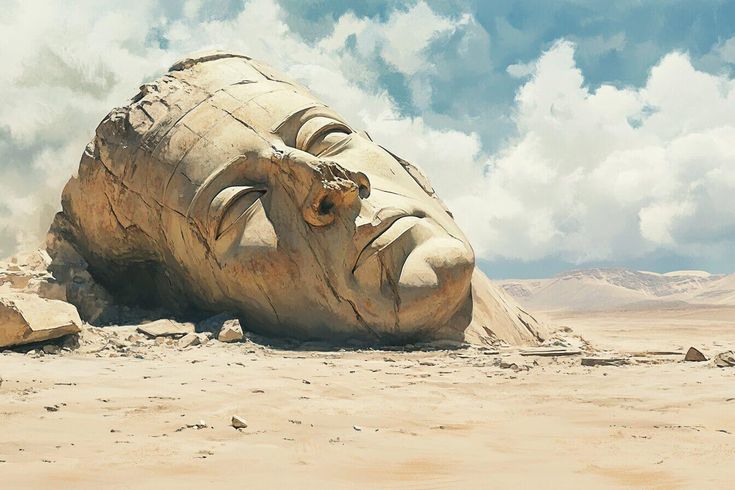
Every era births its own Ozymandias. Striving for dominion, he yearns to immortalize his name through the ages — in monuments, art, and chronicles. Yet... centuries supplant one another, and from former glory and grandeur, only shattered remnants remain, buried beneath heaps of silently reposing sands from a distant, often forgotten past. At times, these haughty monuments lie in the hush of millennia, deep within the strata of history, nameless and untitled, awaiting archaeological discoveries, scholarly inquiries and poetic embellishments. Monuments to arrogance, reduced to dust or entombed by Time itself. Percy Shelley majestically captured this in the concluding lines of his renowned sonnet "Ozymandias":
‘Nothing beside remains. Round the decay
Of that colossal Wreck, boundless and bare
The lone and level sands stretch far away.’
Shelley drew the foundation of "Ozymandias" from the words of Diodorus Siculus, describing an inscription on a statue unearthed in the Egyptian sands:
‘King of Kings Ozymandias am I. If any want to know how great I am and where I lie, let him outdo me in my work.’
Shelley not only built the sonnet's central idea upon these words but also transformed King Ozymandias into a traveller from an antique land, revealing to the reader the notion of inevitable downfall, inexorably following claims to dominion — the desire to conquer the world entire, bending it to one's own hubris. We see echoes of this in history, too often dismissed with disdainful pride by each successive ruler who fancies himself a new Ozymandias.
Time is merciless. Its sway extends not only over rulers, emperors, or kings, but over the entire world — over small nations no less than vast empires that once sprawled across immense territories, bounded only by the ambitions of their sovereigns and the resistance of those few who dared defy the will of the mighty.
What really happened to those whose shadow once loomed over nations and empires? What happened to the Persian king Xerxes I, who sought world domination and, in his blind pride, ordered the sea to be whipped with rods when a storm destroyed the bridges across the Hellespont? What happened to the Persian Empire, one of the greatest in history? Obviously, the same that happened to the Roman Empire, which once stretched across significant territories of Europe, the Middle East and Africa. Empires and rulers followed one another in an endless succession, and it was fortunate if their reign left behind a good memory rather than a bloody trail formed by a mad attempt to exalt themselves above the whole world. Sargon the Great and Hammurabi, Ashurbanipal and Nebuchadnezzar II, Thutmose III and Ramses II, Alexander the Great and Julius Caesar, Caligula and Nero, as well as many, many others — tyrants, emperors, kings and rulers — are now just names whose legacy has rarely survived the centuries. As the band Kansas sang in 1977:
‘All we do, crumbles to the ground,
Though we refuse to see.
Dust in the wind,
All we are is dust in the wind…’
At times, providence grants us a profound opportunity — to glimpse the future of a given empire or nation. Not so much to alter it, as to prepare for it. Sometimes, we can discern this future in the nativity horoscopes of those few directly entwined with the fate of the country or empire: rulers, emperors or kings. After all, the fate of millions depends on their actions.
Did the future president of the Second French Republic — Charles Louis Napoleon Bonaparte, or Napoleon III — know that he was destined to become France's last monarch? Unlikely. But had there been a court astrologer in his entourage bold enough to speak this truth, defying the fear of beheading by the French favorite — the guillotine — perhaps we would behold a different France today. However, no such astrologer graced his court, which is hardly surprising for France as a whole. Astrology has too often skirted these lands. And yet, if Napoleon III had possessed a court astrologer, that seer might have advised him thus: ‘Louis, under no circumstances should you restore the monarchy!’ Then, producing a worn sheet of hand-calculated nativity, he would demonstrate precisely why this should be avoided.
____
Continued at the link below:
EN: https://t.co/9xd8TXxMpV
RU: https://t.co/KW8qzHlYzA
____
Astrological Centre Septener
https://t.co/N0feypXP60
#septener #astrology #napoleon #natalchart #natalastrology #birthchart #andreygeneralov #nataliageneralova
PANDORA'S BOX: THREE WHALES, TWO SCARECROWS
There are three types of astrology into which we could conditionally divide it. Most people associate all three with astrology, although only one type represents what it really is.
The first type is what could be called physical astrology, most closely related to astronomy: solar and lunar eclipses, full moons and new moons, planetary transits, the appearance of comets, asteroids and other space debris in the astronomical minds of astrologers. This is a peculiar bastardisation of the Aristotelian tradition, distorted beyond recognition by modern psychologists of astrology.
The second type is directly related to the first and represents a psychological interpretation of these celestial phenomena, presented with a dash of Jung, Rudhyar and Leo for greater intensity, in the form of the illusion of free will and the supposed omnipotence of Dumbledore.
The third type has nothing to do with the first two and represents a predictive art based on celestial symbolism, for which it is not so much the physical influences of the planets that matter — because they have no significance for astrology at all — as the reflections that the sky carries in its own language of destiny and predestination.
The difference between the latter and the first two is roughly the same as between the body and the soul, form and what fills it. Physical celestial phenomena have never had any connection with events, either in the life of the state or in the lives of ordinary people. They were harbingers at the very beginning, when astrology interpreted omens, and symbols and reflections in subsequent centuries, when it grew into a predictive discipline, occasionally disturbed by the mathematical and materialistic explorations of some astrologers, such as Ptolemy or Al-Kindi. But if Al-Kindi, in his treatise ‘On Rays’, makes a concession in favour of natural philosophy and materialism in order to justify astrology in the eyes of the scientific community of the 9th century, so that astrology could become part of the disciplines of knowledge of that time and not be dismissed as superstition, Ptolemy not only displays complete ignorance of the predictive disciplines, but also sows the seeds of discord between symbolism and materialism, astrology and astronomy, which in the future bore fruit in the form of three conditional types of astrology: materialism, psychology and destiny, or the soul of predictions.
When people say that the full moon somehow awakens somnambulism in humans, as well as certain tendencies towards an increase in the number of abnormal psychos in society, they believe that they are talking about astrology, although this has nothing to do with astrology. Solar activity cycles, lunar and planetary cycles, as well as various chemical, magnetic and other emissions from celestial bodies, are astronomy and astrophysics, but not astrology. This is the main confusion in the minds of modern astrologers, who are unable to separate the wheat from the chaff, astrology from astronomy and astrophysics.
Natural philosophical explanations of the actions of the planets, based on the Aristotelian tradition, were made solely to show the interconnection of everything in the material cosmos, nothing more. They were not an attempt to explain the root causes. Only consequences. Until this is understood, we will always have three imaginary whales, one of which is a whale, and two are scarecrows.
-
Astrological Centre Septener
https://t.co/N0feypXP60
#septener #astrology #astronomy #aristotle #ptolomey #naturalphilosophy #planets #andreygeneralov #nataliageneralova
LET'S TAKE A LOOK?
One of the most common mistakes made by novice astrologers is the desire to impose their advice on the querent. It doesn't matter whether the querent is your friend, relative or just an acquaintance.
Most often, this mistake is made by those who are lack of practical experience. In pursuit of the latter, they tell everyone that they are astrologers and that they can consider any question and give an answer, forgetting one simple truth: the question should come from the person asking, not the astrologer. On their own. Without any intervention. After all, we are not talking about a caesarean section or other medical procedures that save the lives of mothers and children. Fate does not tolerate coercion and interference.
You can fully clarify the question if it is not entirely clear, as well as clarify all the necessary details of the situation for yourself. This is quite natural. But this should only be done in relation to questions asked by the querent themselves, without coercion from the astrologer. An obstetrician would not run through the streets looking for pregnant women, urging them to go to the maternity ward as quickly as possible.
What actually happens when an astrologer tries to pressure the querent into asking their question? The birth of a question that has not yet even been formed. It's like asking a woman to give birth to a nine-month-old baby in the first month of pregnancy. In essence, in this case, it is not so much the querent's question that is born, but the astrologer's curiosity. But the worst thing is what happens next, when the astrologer not only takes up the consideration of what is essentially his own question, rather than the querent's, but also gives an answer to it. This is the shortest route to erroneous judgements.
Therefore, every time someone who knows what you do appears on the threshold of your astrological life, think about whether the phrase ‘let's take a look’ is worth discrediting not only horary astrology, but also yourselves. It is better to consider your own questions, if no one has yet asked you for advice, than to impose this kind of help on the querent, which will inevitably lead to mistake.
-
Astrological Centre Septener
https://t.co/N0feypXP60
#septener #astrology #horaryastrology #andreygeneralov #nataliageneralova
ELEVATOR TO HEAVEN
When we encounter ancient texts on astrology – often very confusing and contradictory, which mostly focus on techniques and fundamentals – we are primarily touching upon the fundamental structure consisting of countless building blocks in the form of books and manuscripts that make up this edifice. Over thousands of years, it has taken on its final form, and even now, in some places, it is undergoing reconstruction and some additions. Everything that does not fit into the original architectural plan is discarded as unnecessary into a pile of rubbish lying nearby — the natural environment of astro-psychology and its followers, who, like garbage collectors, try to create something worthwhile from these broken fragments in the form of their corridors of eclipses of the mind and transits in thinking.
Tracking generation after generation, century after century, the construction of this majestic edifice - whose summit is lost in the starry sky - we see how astrology has changed and developed, acquiring more and more complete features that fit into strict rules. However, as soon as we climb to the very top, we are presented with the boundless expanse of stars, where boundaries can only be set by our own eyes, and the rules no longer seem so strict and infallible. The roots of this structure lie in the distant past of the Sumerian civilization. Its future is revealed and will continue to be revealed with every new moment of our lives, bringing the summit ever closer to the boundless stellar vacuum.
We could walk up the steps of this building, step by step, from floor to floor — from text to text, from civilization to civilization, from astrologer to astrologer — examining all the challenges that time and life itself posed to the predictive arts, as well as the solutions that the great astrologers of the past found in the inquiring work of their minds. In the end, we will reach the top – enriched, but tired. But once we are at the top, we will inevitably have to rethink all our previous ideas about astrology. For when the distant horizon below and the endless expanses above open up before our eyes, we are simply forced to look truth in the eye, see our mistakes and rethink our views. And this is a difficult path, usually as long as life itself. Not everyone reaches this summit. Some, like madmen overcome by fear, lock themselves within four walls, afraid to see life beyond the threshold, and remain on one of the floors of this fundamental structure, convincing themselves that they have grasped the ultimate truth.
One writer has aptly noted that postmodernism and contemporary literature, unlike the classics, represented by Tolstoy, Dostoevsky, Shakespeare or Balzac, are a kind of ladder that allows one to climb straight to the top of the wall of classical literature. And although this is only partly true, nevertheless, there is a grain of wisdom in this comparison. Astrology also has its own stairway to heaven — more precisely, its own magic elevator, which can lift the astrologer straight to the stars, where he can gaze upon the infinite, limited only by the capabilities of his mind and thinking. This magical elevator of astrology is the very one that Aristotle wrote about and which Thomas Aquinas largely echoed. We are, of course, talking about the essential nature of things, or essence. The soul of astrology.
____
Continued at the link below:
EN: https://t.co/Dx7W7HNOg9
RU: https://t.co/Ip19Ye0zNK
____
Astrological Centre Septener
https://t.co/N0feypXP60
#septener #astrology #essence #horary #thomasaquinas #aristotle #andreygeneralov #nataliageneralova
DEAD ASTROLOGERS SOCIETY
When Peter Weir made one of the most important feature films of the late twentieth century - 'Dead Poets Society' - starring the actor Robin Williams, he addressed not so much the problems of poetry and literature, but the problems of teaching and education in general, which not only have not lost their relevance, but have become even more significant today. We see it in schools and universities, and not only. To paraphrase the Pink Floyd, it is almost impossible to punch another hole in the wall in the education system. The soulless machine moulds comfortable people - future consumers without critical thinking, unless they are representatives of some elite layer, or a natural talent and a living heart that feels that the compass of life is pointing in the wrong direction.
The teacher's personality has always played a huge, if not key, role in education. But what can a modern teacher do when faced with a system within which he or she must teach and act? Become Iggy Pop or Nina Hagen, tearing education to shreds of anarchy? Or resign himself to becoming an obedient cog in a soulless mechanism? Today, this question is being addressed every day, in every teacher, in every field of knowledge, including astrology.
We are often reminded of Ilon Musk's words about his employees who graduated from Yale or Harvard - ‘idiotic tests have killed American education’. By the way, this was said to many of his engineers, who were perfectly capable of crossing out the right answer option rather than thinking and creating. Consequently, he forced them to re-educate themselves on Soviet physics textbooks, which were always aimed at developing thinking rather than selecting ready-made answers.
Is all of this so far removed from astrology? We see some astrologers trying not only to introduce AI into the consideration of astrological chart questions, where the context almost always pushes the consideration beyond rules or techniques - beyond the known system - but also to introduce a system of test-based assessment of students' work, where all you have to do is pick the right answer and you get 10 points.
What are these future astrologers going to do when they are faced not with a test with ready-made answers, but with a living person, with his difficulties, aspirations and hopes? Whose question may sound one way, but contain another, perhaps diametrically opposite one? What will they do with the symbolism of the question chart? Is not this testing approach a dead end, leading to dumbing down rather than thinking? And isn't that the teacher's task to develop astrological thinking, thus breathing new life into the ‘Society of Dead Astrologers’ - dead because there are fewer and fewer thinkers among them, and more and more of them floating on the waves of tests and ready-made equations? If not, we do run the risk of becoming dead - mind, soul and heart - astrologers.
_
Astrological Centre Septener
https://t.co/N0feypXP60
#septener #astrology #deadpoetssociety #andreygeneralov #nataliageneralova
BEST OF THE BEST
In one country there was a school of astrology. Not just any school, but a S-C-H-O-O-L with numerous regalia, titles, and yes, annual accreditation, held by the most perfect astrologers (as they called themselves) from a community that considered itself exceptional (like racketeers in the 90s who later became politicians and bankers). In the foyer of this school there was a posh desk and a secretary to match it, slightly siliconised by life, with a Botox-filled brain and an ear-to-ear smile with fake-white teeth and a perpetual ‘I...’ poking out before any sentence. Normally, at this desk, applications to become a student were filled out and a test was taken to help determine aptitude for astrology... yes, yes, a test to determine aptitude. But this school was so advanced and modern that the test was checked not by a teacher, but by Artificial Intelligence. In general, the school was super-technological, because it was headed by a famous scientist and astronomer, who considered himself an expert in astrology – Mr Bourbon. He was known by many names, depending on which country he opened his school in and which shoes he changed into. Other astrologers nicknamed him simply - the cobbler. After all, the best thing he could do was to change his shoes, and he understood something about shoes.
One day a student who wanted to learn astrology came into the foyer of the school. The first thing he did, as was customary, was to pay the entrance fee, and then he took a free test and filled out an application. The AI produced the following result: relationship expert. And although the student was less than 20 years old, and he knew as much about relationships as a first-year medical student knows about heart surgery, nevertheless, he immediately sensed his potential, immediately trying to arrange the personal life of the silicon secretary... with himself. But, as always, the first pancake went wrong...
____
Continued at the link below:
EN: https://t.co/gJO0iQBoP2
RU: https://t.co/KLfhzQ8NH0
____
Astrological Centre Septener
https://t.co/N0feypXP60
#septener #astrology #humor #satir #schoolofastrology #andreygeneralov #nataliageneralova