You can just keep things simple and build a fast app.
Sequel is built to be a complete SPA with smooth interactions. Any page you access, loads up instantly!
None of the data is is stored locally or cached, most of the core application/user data is loaded once, and chats are loaded on demand.
Okay, I analysed products launched in 2023 on @ProductHunt using @sequelhq and @motherduck . Here are some interesting insights 👀🧵
1. 40,000+ launches happened in product hunt in 2023
Analysing Product hunt launches from 2022 using @sequelhq . It's true that Tuesday is the most active day of the week with most number of upvotes. 🧵
Will post about 2023 soon, there are some really interesting insights :)
[Upvotes vs Comments]
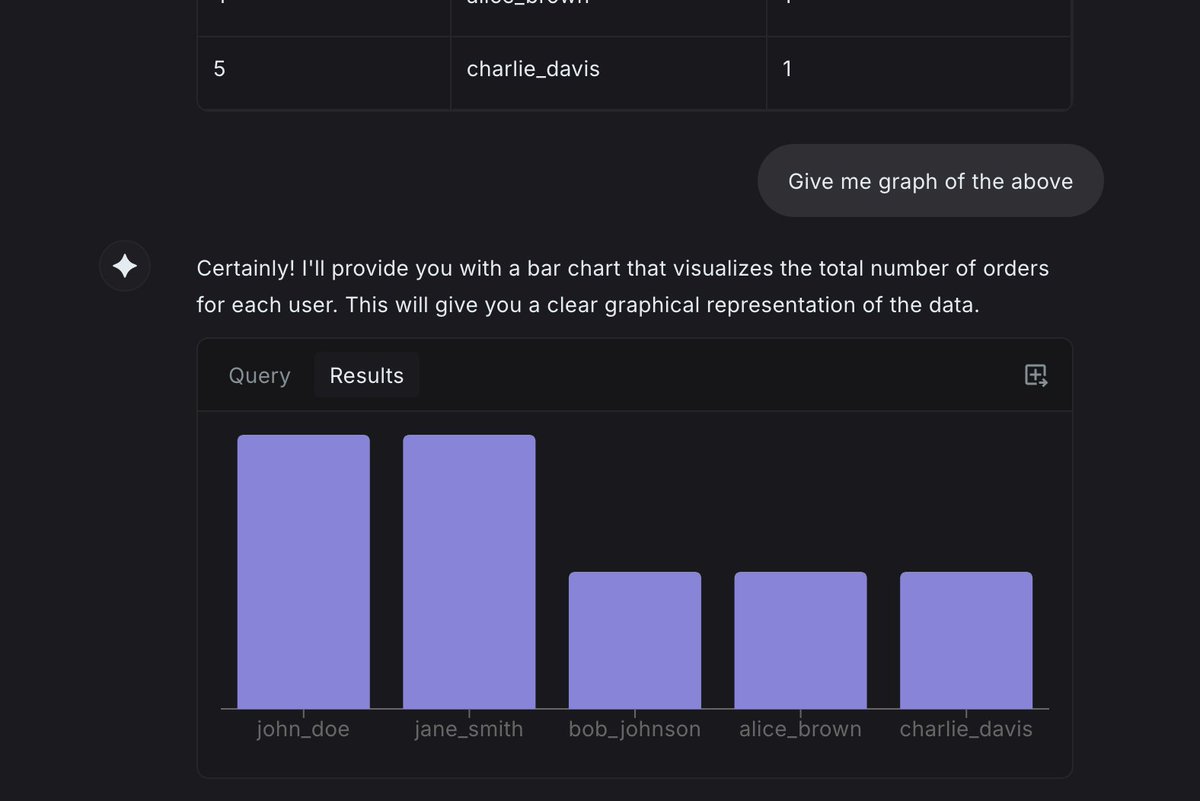
Reasons why I placed my bets on @sequelhq, It cannot write SQL better than a seasoned engineer, but it can help you get to a solution faster, if you are a pro you can save hours! ✨
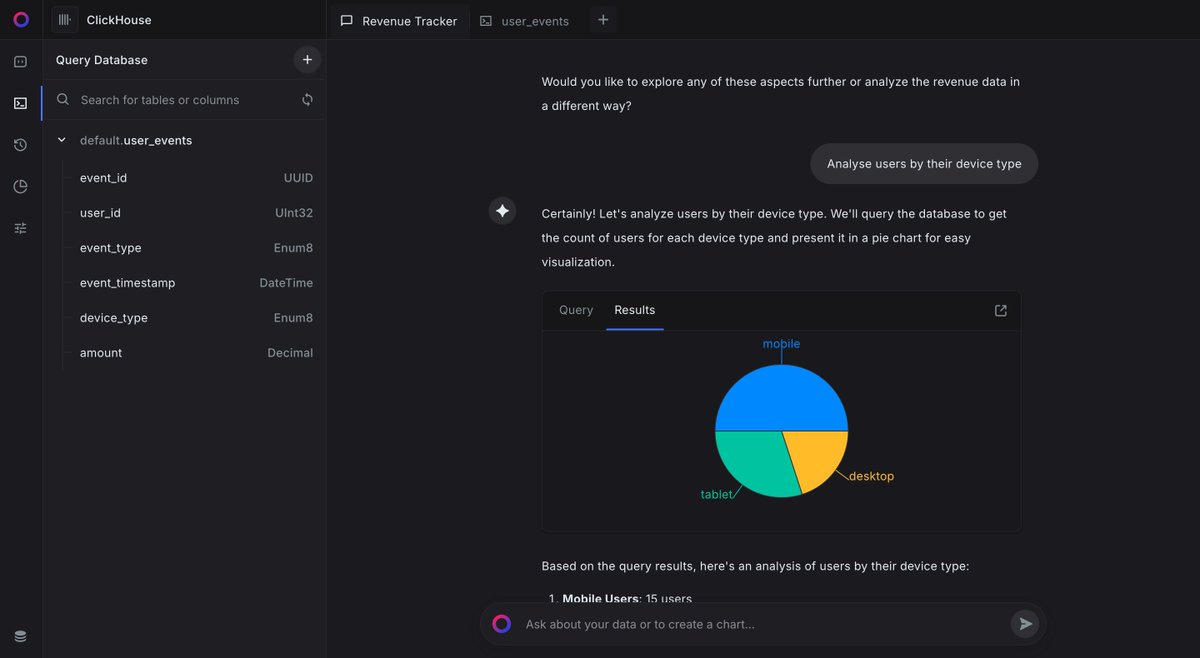
After a bit of work, got @ClickHouseDB working as well on @sequelhq 🙂 It's in a functional stage but I haven't completely tested it to work with large responses and datasets, from my initial run works pretty well 😅
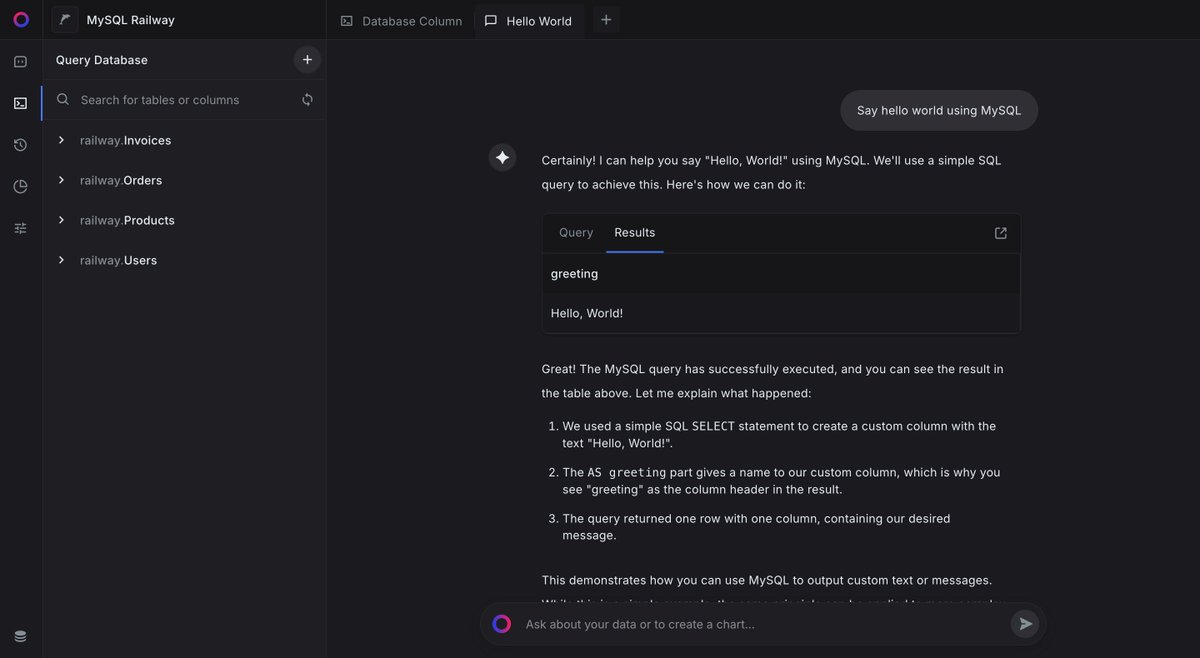
Picking up some backlogs, @sequelhq can now connect to your MySQL database in your Server, @Railway or in @PlanetScale 🥳 Setup new database, create tables, or simply query insights with plain english!
This is neat! got it connected to @sequelhq! Would be nice to have a postgres instance to play around with for users trying to get Sequel do data analysis.
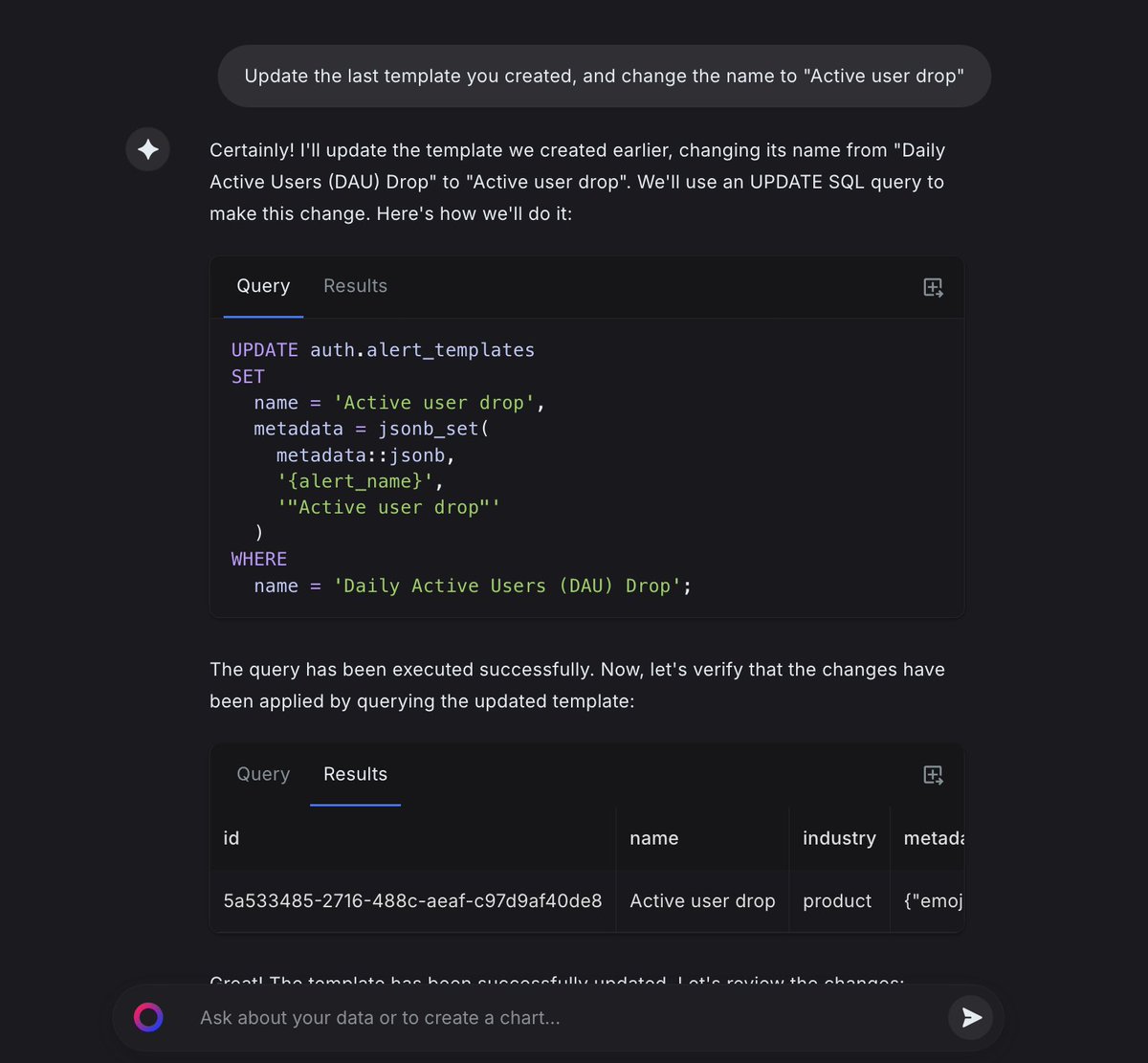
The problem with product analytics is that most of the valuable data you need is actually sitting inside your internal database. SQL was always the way to get to those hidden insights and with AI it has become even more easier. One of the main reasons why I built @sequelhq 🚀
Latest update to Sequel includes ability to filter schema to be used in SQL query generation, and custom instructions to provide additional info about how to calculate your KPIs, metrics, relationships and more for accurate and faster query generation! ✨
Recently someone asked me why I built @sequelhq , the answer was simple: I need to get to my data and insights fast without having to rely on engineers. Here are a few examples on how something similar to Sequel is built internally by other big cos 1/n
Last few days, I have been testing out Sequel for a veriety of usecases with large datasets. It blew my ming everytime.
It does the job pretty damn well in most cases. From understanding the schema on the fly, verifying results, and even sampling the data for better query.




![haxzie_'s tweet photo. Analysing Product hunt launches from 2022 using @sequelhq . It's true that Tuesday is the most active day of the week with most number of upvotes. 🧵
Will post about 2023 soon, there are some really interesting insights :)
[Upvotes vs Comments]](https://pbs.twimg.com/media/GbxCn4pa4AAzMTK.png)