Wecome to sequesterra. We work with smallholder farmers in India to sequester carbon through biochar, soil health, and agroforestry — generating verified carbon credits that fund climate-resilient livelihoods.
🌍Nature is powerful.
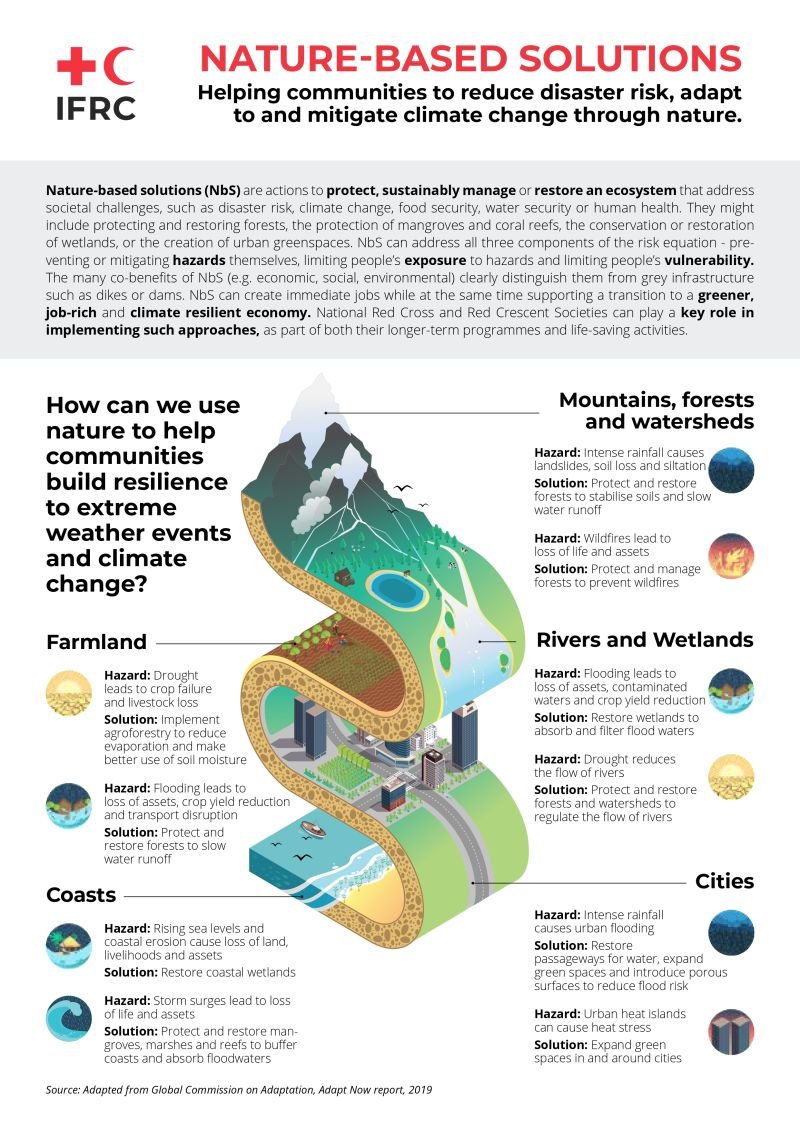
Nature-based solutions can help address the climate crisis. And by using them, we’re protecting nature and protecting people
via @ifrc
Untreated waste either ends up on the roads or in the landfills. Both are equally bad and literally piles up the problems further. A proper waste management systems is just as crucial as healthcare system and one directly affects the other as well. @SwachhBharatGov#Indiancities
India is probably the only democracy where discussions on climate resilient measures among the mainstream politics are almost non-existent. Public isn't aware enough, and Government doesn't care enough. #ClimateWeekNYC#india#climatesolutions#climateTech
The abuse of this planet is unacceptable, especially to serve an industry as unnecessary as fast fashion. We can all contribute to and work towards reversing that abuse.”
-Anna Sacks @the_trashwalker Fashion Act ambassador
Driving and enabling all of the fossil fuel industry are political leaders unwilling to bring this industry under control. Promoting policies such as offsetting and massive gas expansion that simply enable this industry to continuously scale. #ClimateCrisis#indiaelections
"What we got at @COP28_UAE is a vague intention to transition away from fossil fuels — no timeline, no roadmap. It was the sort of outcome that elicits a chuckle and a shaking of the head in disbelief." -@ProfBillMcGuire
Here is how the #NZIA can achieve its potential 👇
1️⃣ Keep the list of net-zero technologies focused
2️⃣ Make permitting efficient – not deregulated
3️⃣ Decarbonise first, use carbon storage as a complement
4️⃣ Ensure social dialogue
🔗📰👉 https://t.co/rOnMKaMynG
ETS itself is a market-linked ‘cap and trade’ mechanism that operates under the polluters pay principle. Under the principle, a compensation of Rs 200 per kilogramme is charged for any excess emissions over and above the permits held by a unit, at the end of the trading period.
Gujarat built the world’s first air pollution market. In 2019, the Government of Gujarat launched the Emission Trading Scheme that allows industries to ‘buy and sell’ permits for emitting particulate matter.
The ETS pilot in the Gujarat town of Surat. An initial analysis of the effectiveness of the scheme has projected that participating industries reduced their PM emissions by 24% (with an 8% margin of error), compared to industries that continued to be under the BAU regulation.
The top 5 over-emitting countries namely, the US, Germany, Russia, the UK, and Japan, would be liable to pay $131 trillion. On the other hand, the top 5 low-emitting countries— India, Indonesia, Pakistan, Nigeria & China— are entitled to receive $102 trillion in reparations.
Economically developed countries such as the U.S. and Germany are responsible for 90% of the excessive carbon dioxide emissions and could be liable to pay a total of $170 trillion as compensation to low-emitters like India to ensure climate change targets are met by 2050.
A handful of low-emitting countries, especially India, would sacrifice a majority of total appropriated emissions to balance the excess of over-emitting countries and keep global heating within 1.5 degrees Celsius, the paper says.