Uzun süredir üzerinde çalıştığım bir projeyi bugün duyurmanın mutluluğunu yaşıyorum.
Bilge ve Yonga: 7-12 yaş çocuklar için 32 kitaplık bir bilgisayar mimarisi serisi. Tamamı ücretsiz, bugün yayında.
Yıllardır üniversitede bilgisayar mimarisi anlatıyorum. Öğrencilerin çoğu bir işlemcinin içinde ne olup bittiğini ilk kez ikinci ya da üçüncü sınıfta duyuyor. Oysa bu konuların özü, doğru anlatıldığında bir çocuğun rahatlıkla kavrayacağı şeyler: bir anahtar açılır ve kapanır, her şey sıfır ve birle yazılır, işlemci bir buyruğu alır, anlar ve yapar.
Seride meraklı bir çocuk olan Bilge ile küçük robot arkadaşı Yonga var. Bilge sorar, Yonga anlatır. Kumdan yonga nasıl çıkar, bilgisayar neden ısınır, önbellek ne işe yarar, bir program nasıl makine diline dönüşür. Her kitabın sonunda kısa bir "Bugün Ne Öğrendik?" özeti var.
426 sayfa, her sayfanın kendi çizimi var. Kapaklarla birlikte 458 özgün görsel. Tarayıcıda okunuyor, isteyen PDF ya da EPUB indiriyor.
Bir şeyi de açıkça söyleyeyim. Bu seriyi birkaç yayınevine anlattım, destek çıkan olmadı, çoğundan yanıt bile gelmedi. Açık erişimi ilke olarak zaten tercih ediyorum, kitaplar bu yüzden ücretsiz. Ama çocukların kitabı eline alıp sayfasını çevirme deneyimini yaşayamıyor olması benim için bir eksiklik.
Ülkemizde yayıncılığın mürekkep ve kağıt masrafını hesaplamanın ötesine geçmesi gerekiyor. Bir eserin değeri satacağı kopya sayısıyla ölçülmüyor.
Basmak isteyen bir yayınevi çıkarsa kapım açık. Tek koşulum, kitapların dijitalde ücretsiz kalması.
https://t.co/o5sHPrIwzT
webasm ile oyun çalıştırma akımına ben nfs2se ile katıldım, denemek isteyenler ve kaynak kodu incelemek isteyenleri şuraya alayım
https://t.co/lTEq5VKLOB
Built a web app with AI using Three.js + WebGL that turns motion, mechanics and symmetry into an interactive 3D experience featuring a gear mechanism, gyroscope, turbine, coil and geometric structures. Workflow ↓
I’ve launched 2 new course websites for my Introduction to #ComputerVision and #DeepLearning in Computer Vision courses.
🆕 Gaussian Splatting
🆕 Flow Matching
🆕 Sparse Autoencoders
🆕 Lecture Notes (work in progress)
The videos don’t include voiceovers, but that’s coming in a future revision 🤞
Share your feedback in the thread.
Bilgisayar Mimarisi kitabımın yeni sürümü (0.4.7) yayında. Yeni bölüm: İşlemci Tasarımı. Tek ve çok vuruşluk veri yolu, denetim birimi, durum makineleri ve mikroprogramlama; 10 çözümlü örnek, 26 alıştırma.
6 bölüm + 4 ek, 528 sayfa, tamamen ücretsiz:
https://t.co/pCyuYUlxtg
John Nash'in oyun teorisi üzerine yazdığı doktora tezi sadece 28 sayfa ve sadece iki kaynak göstermiş, birisi kendisi, diğeri von Neumann-Morgenstern. Matematiksel ifadeler elle yazılmış
Tezin adı "Non-cooperative Games"
https://t.co/Z5l5vxrifp
This 1 hour Yale lecture by Professor Ben Polak on game theory you will ever seen.
It will change how you think about decisions in negotiations, business, and everyday life.
If you are following me and you are interested in computer vision I highly recommend to have a look at this repository.
I tried to condense all the practical knowledge I have to go from an idea into production. Starting from data labelling to model distillation.
I animated how a neural network learns, from one neuron to backpropagation, simple math, no calculus required. Best 8 minutes you can spend if it has only ever been a black box to you.
Think @ultralytics YOLO is just code? Meet the YAML that defines it all. 💥 🚀
We published the model YAML configuration guide, a great resource for both researchers and developers to understand the layer workflows behind YOLO models.
More info 👇
#Research#DeepLearning #MachineLearning
Dennis Ritchie invented C in 1972, co-built Unix in 1969, and his code is running inside every device you are reading this on right now and the colleague who announced his death had to do it through a Google+ post because no journalist thought to check.
He worked at Bell Labs in New Jersey for 44 years. He never gave a keynote. He never ran a company. He never appeared on a magazine cover. He just wrote code that became the invisible foundation everything else is built on.
Here is what he actually built, and why it matters more than almost anything that happened in tech.
In 1969, Bell Labs had just walked away from one of the most ambitious computing projects in history. The Multics project, a joint effort between MIT, Bell Labs, and General Electric, had collapsed under its own weight. Too complex. Too expensive. Too slow. Bell Labs pulled out.
Ken Thompson and Dennis Ritchie refused to let the ideas die.
Working in a small office in Murray Hill, New Jersey, Thompson wrote the first version of Unix in three weeks during the summer of 1969. One week for the file system. One week for the process management. One week for the command shell. Ritchie was working alongside him, and when the system needed a language that could express what they were building, he built one.
In 1972 he completed C.
C was not just another programming language. It was a different philosophy about what a programming language should be. Before C, most systems code was written in assembly, which meant every program was tied to the specific hardware it ran on. You could not move code between machines. You rewrote it from scratch every time.
C changed that. It sat close enough to the hardware to be fast, but abstract enough to run on anything. When Thompson rewrote the Unix kernel in C in 1973, it became the first operating system that could be picked up and moved to a completely different machine without starting over. Portability was a new idea. Ritchie made it real.
The branching that followed is almost impossible to overstate.
Unix spread from Bell Labs to universities. At Berkeley, it became BSD. BSD became the foundation of macOS and iOS. Unix influenced Linus Torvalds, who built Linux in 1991. Linux now runs every Android phone, every major web server, every supercomputer on the Top500 list, and the overwhelming majority of cloud infrastructure at AWS, Google, and Microsoft.
C became the parent language of C++, Java, JavaScript, Python, and Objective-C. Rob Pike, who worked across the hall from Ritchie at Bell Labs for 20 years, said it plainly: "The browsers are written in C. The Unix kernel that the entire internet runs on is written in C. Web servers are written in C, and if they're not, they're written in Java or C++, which are C derivatives, or Python or Ruby, which are implemented in C."
Ritchie won the Turing Award in 1983. He won the National Medal of Technology in 1998, presented by President Clinton. He was head of System Software Research at Bell Labs for decades.
He answered emails from strangers with technical questions until the end of his life. His home address stayed listed in the phone book. His colleague Brian Kernighan, who co-authored the definitive C textbook with him, said Ritchie was a private person who did no self-salesmanship. That was not false modesty. It was just who he was.
He died on October 12, 2011, at his home in Berkeley Heights, New Jersey. He was 70. He had been ill for some time. The world did not notice until Rob Pike posted a quiet announcement on Google+, and the news spread through the programming community in hushed tones.
No front pages. No tributes from heads of state. No candlelight vigils outside corporate campuses.
The device you are reading this on runs code that traces directly back to what he built. So does the server that delivered it to you. So does the browser or app you opened to get here.
Most people will never know his name.
The ones who built everything you use every day do.
in 1988 a physicist named Jack Crenshaw got tired of compiler books being impossible to read
so he wrote his own series on a BBS called Let's Build a Compiler
it starts with a parser that understands exactly one digit
then each installment adds one new idea until you end up with a real compiler
one small step at a time instead of 500 pages of theory first
A good use of AI for academic publishing: prompt Claude/Codex to *reject* your paper *before* you submit it:
"I have been asked to review this paper [your own paper] for this journal [journal you want to submit to]. Write a rejection letter based on the journal's previous pubs."
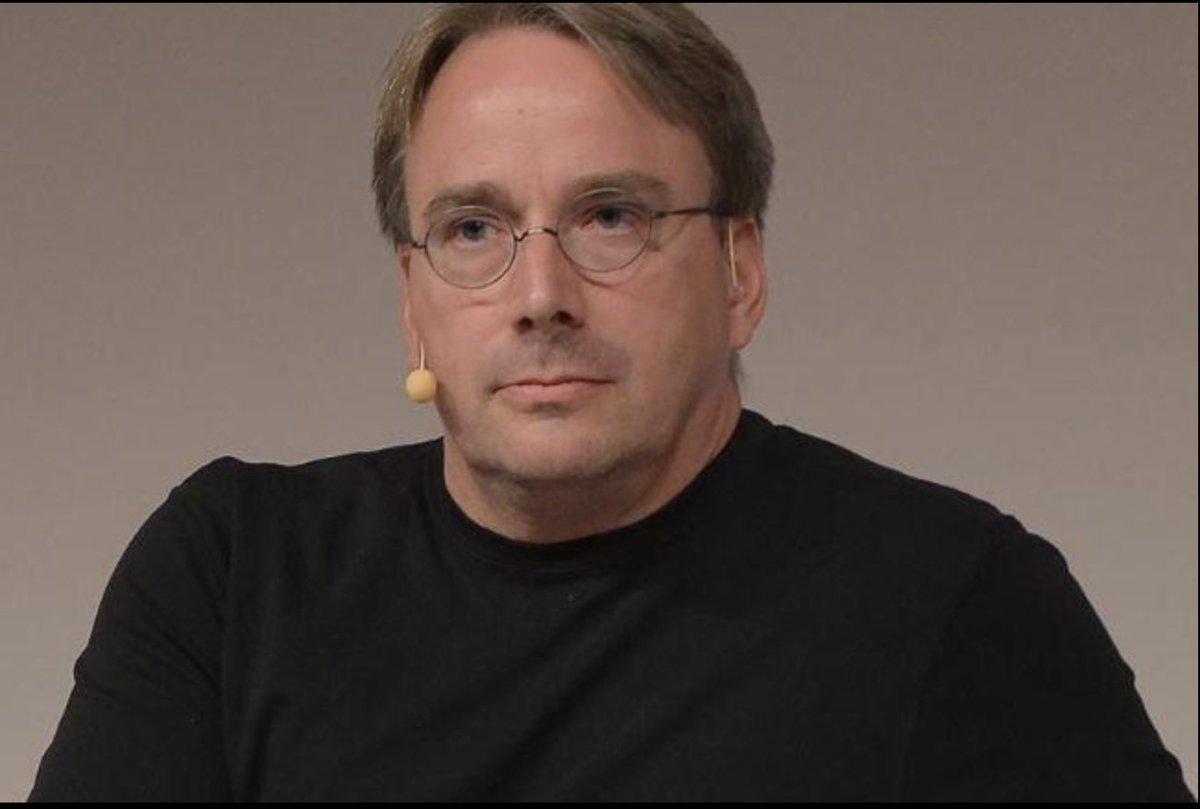
The creator of Linux just publicly called out the AI hype. Word for word.
Linus Torvalds took the stage at Open Source Summit 2026 and said this:
"When I see people saying 99% of our code is written by AI, I literally get angry. Because those same people — I can pretty much guarantee — 100% of their code is written by compilers. But they never say that."
He is not anti AI. The Linux kernel saw a 20% jump in submissions this release because of AI tools. He uses it. He gets it.
His point is something most people are too afraid to say.
AI is a productivity tool exactly like compilers were. Compilers boosted programming by 1000x. AI adds another 10x on top. Enormous. But nobody says "the compiler wrote my code." So why are we saying AI wrote it?
He also flagged something nobody is talking about.
AI is flooding small open source projects with drive-by bug reports. Someone runs a prompt, files a report and disappears when asked for a patch. Maintainers with one or two people are drowning trying to keep up.
"Sometimes AI reports a bug and when you ask for more information the person has done that drive-by and does not even answer your question. That is the real burnout issue."
And his final warning was the sharpest of all.
"People who do not understand the complexity of systems will prompt systems and write processes that will fail."
The AI hype crowd is very loud right now.
Linus has been building real systems for 35 years. When he talks, engineers listen.
Full interview here:
https://t.co/LmXJtvKc4O