ARMY, I made a template with more details and evidence about the Mexico situation:
https://t.co/817gN9kjjX
PLEASE SUBMIT HERE:
https://t.co/zL7VAgdCXn
This website is for reporting malicious practices with HYBE affiliates.
SHARE
#BTS_WORLDTOUR_MEXICOCITY#BTS_WORLDTOUR
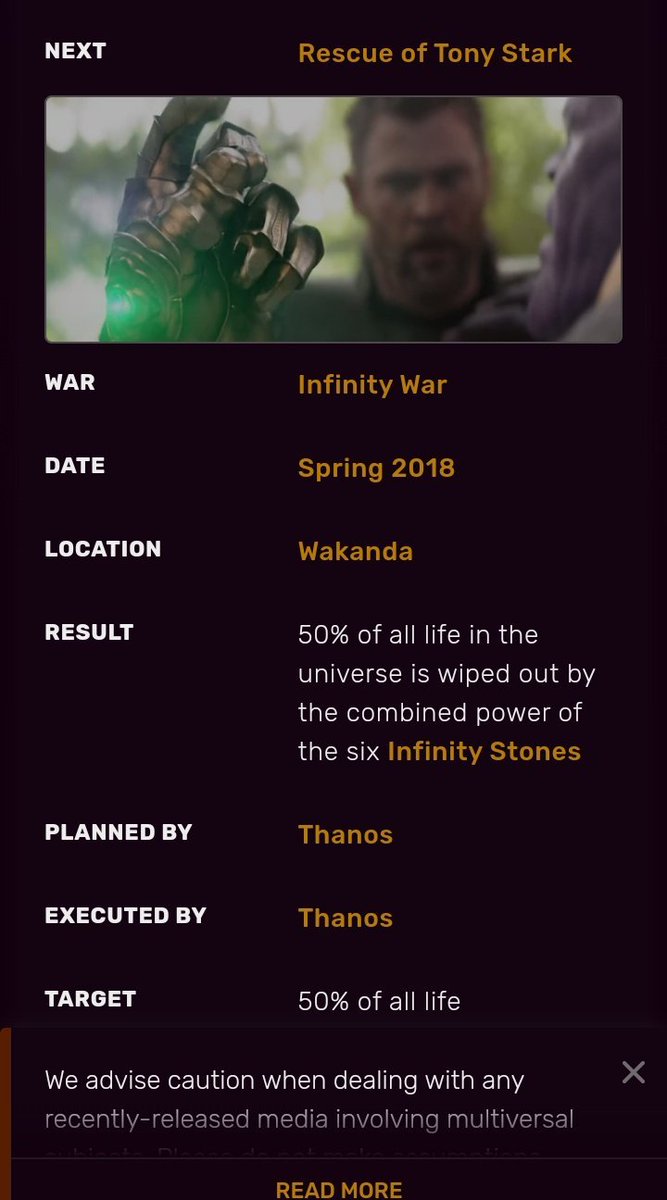
@seokrirangs actually none of them got snapped! everyone should've made it considering the snap happened around springtime and in the background of the film, you see ly answer pics which wouldn't come out till late summer / early fall :D plus friends plays in the movie during the plane scene
— Too English for the Asian Grammy, Too Korean for the Rest
"On July 29, one of the biggest groups in the world declined to enter the biggest award in music. BTS announced they would not be submitting ARIRANG for Grammy consideration this year — not over a snub, not over a loss, but over a category that was created, supposedly, for them. Artists at their level don’t usually make this move. Awards are something performers spend entire careers reaching for, and BTS has five nominations across three ceremonies without a single win. Walking away from a sixth is not a small thing."
"The Academy has built a system in which a Korean group’s most globally successful song is too English for the Asian category, while the group itself has spent years being too Korean for the general ones. Pick a lane, the rule says. Then it moves the lane."
"As they put it, they hope “music can be heard and loved for what it is, rather than being divided by region or language.” That’s not a demand. It’s barely even a complaint. It’s a description of what an awards body is supposed to already do."
https://t.co/FS3Mr4eHNb
[NEWS] Kim Oujoon, a prominent and influential South Korean journalist & political commentator who has shaped liberal political discourse in South Korea says "#BTS's Grammy withdrawal will remain a landmark in world cultural history for a long time."
"The Grammys see themselves as the most prestigious music awards with no fan-voting or even commercial success criteria, and yet they created a side door, just like MTV. This was basically saying, "Asia, come in through the side door. Separate but equal. The same logic that has normalized racial segregation in America for the past century."
"When MTV did this 7 years ago, BTS still attended despite the controversy. And after criticism, MTV nominated them in main categories outside 'Best K-pop'. But this time, in 2026, BTS said enough is enough and declared to the American mainstream music industry, "We're not using the side door anymore." And they refused."
"An artist from outside of America boycotted the supposedly most prestigious award in music and declared, "You are out of step with the times."
#ArtHasNoAliens
https://t.co/Y9P02Y9zl4
The most fascinating part of this entire Grammys conversation is how quickly it stopped being about an award.
BTS made one decision and moved on.
Since then, journalists, critics and editorials have been the ones asking what this means for the Recording Academy. The conversation has shifted from "Will BTS submit?" to "What does it say when the world's biggest group chooses not to?"
That's influence.
Not because BTS kept talking about it.
Because they didn't have to. Their silence left everyone else to have the conversation for them.
https://t.co/e49pndH5Eb
Saw someone say "you're only saying this bc BTS rebuked the category, you would've celebrated otherwise" WRONG
June 16. The day the category was announced.
49328293 hit tweets from armys condemning the category. We were the ONLY ones pushing back against it thank you 🫶🏾
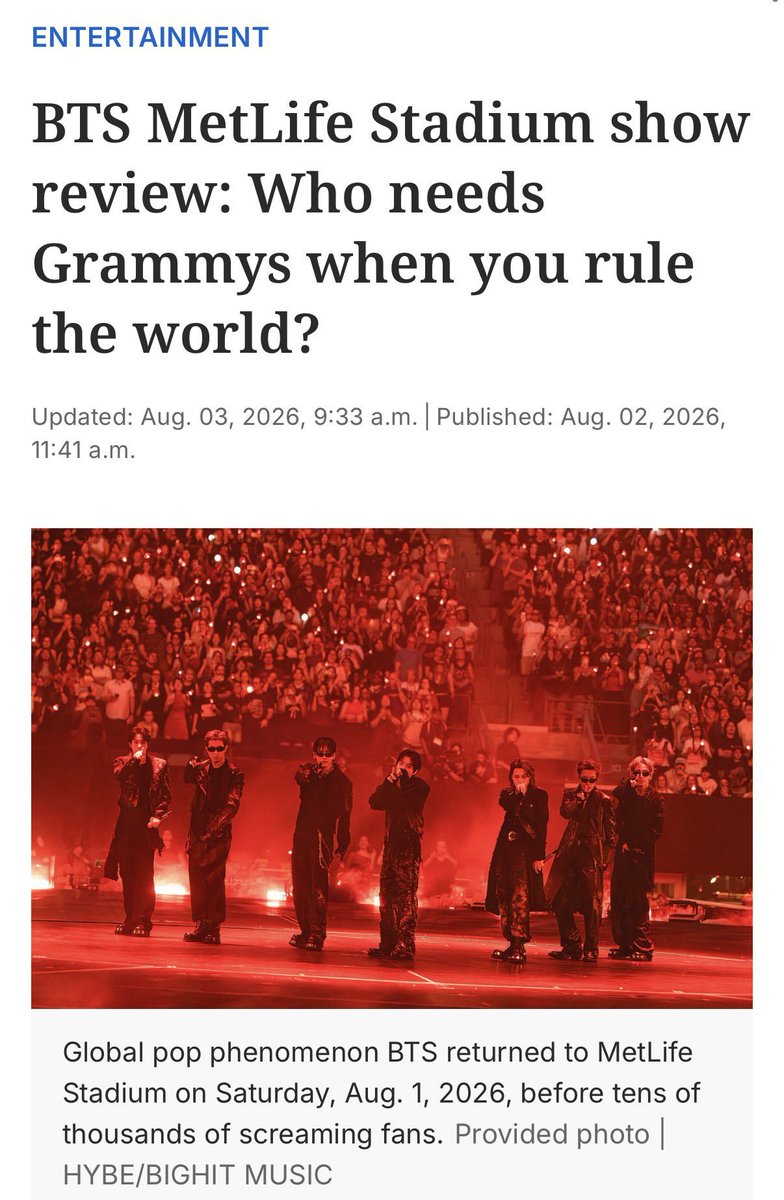
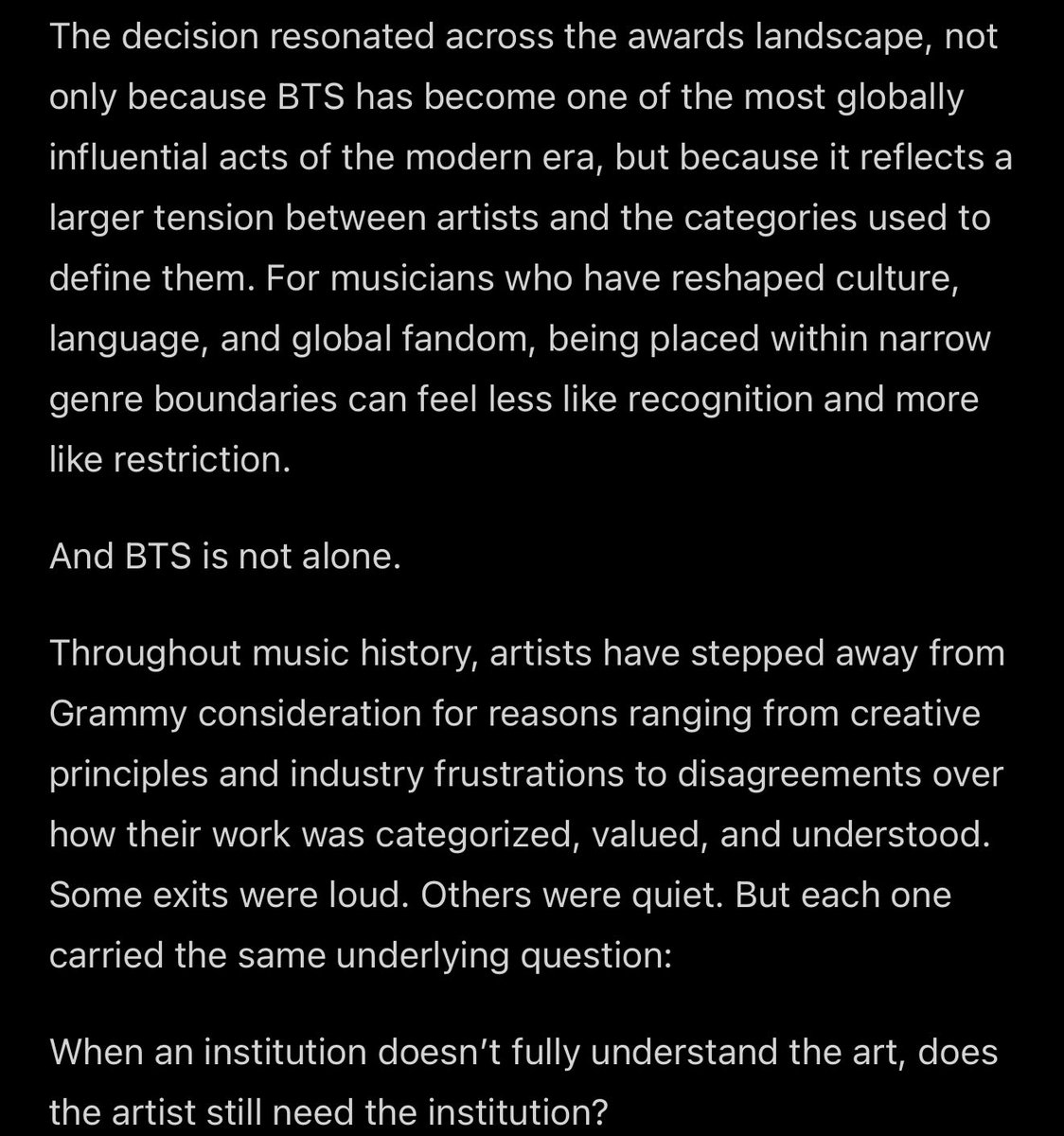
"When an institution doesn’t fully understand the art, does the artist still need the institution?"-Forbes
"BTS doesn’t need a Grammy — they already have the world."-NJ Review
"The rejection of consideration for the Grammy award after the group returned from hiatus with a chart-topping album is a significant statement."-Times
The Category is BTS! 🤌🏽🔴🌟
Forbes article 👀👀👀👀 dammm mainstream media not holding back lfg!!!!🔥🔥👏
BTS’s decision to withdraw from Grammy consideration has reignited a conversation the music industry has been quietly having for years: what happens when the world’s biggest artists feel unseen by the institutions designed to celebrate them?
The exchange highlights the larger debate at the center of BTS’s Grammy journey: whether expanding categories creates more opportunities for recognition, or whether those categories risk placing artists into boundaries they have already outgrown.🔥🔥🔥🔥👏
Ultimately, BTS’s legacy was never created by a nomination. It was built through stadiums filled across continents, records broken across markets, and a global community that transformed the relationship between artists and audiences.🔥🔥🔥🔥🔥👏👏👏👏💜
The question facing the Grammys is no longer whether artists like BTS belong in the conversation. It is whether the conversation itself is ready to expand.
For decades, artists have stepped away from the Grammys because they felt misunderstood, overlooked, or limited.🙄
https://t.co/r8kWJPG1sN
The Recording Academy should've hired a sociologist years ago. Its handling of BTS and ARMY is a textbook illustration of why: it counted on the fandom's reach without understanding the network that made that reach possible. The fandom doesn't function merely as an audience that can be acquired through access, rewarded through recognition or disciplined through exclusion.
A conventional broadcast audience can be influenced through messaging and control over access and distribution. By the time BTS entered the Grammy system, the fandom was already operating as a transnational social network with its own collective memory, emergent coordination, shared norms and internal legitimacy. Its relationship with BTS didn't depend on recognition from the Recording Academy. This didn't make the fandom a unified actor. It meant that coordination could emerge across a heterogeneous network without central command.
BTS didn't build ARMY as an organisation under their command. They became its symbolic centre. Their influence rests on identification and loyalty, not formal authority. Such a network can remain loyal to BTS without being governed by them. It can coordinate without central instruction, preserve information without institutional permission and generate reputational consequences without formal recognition.
The Academy could offer BTS access. It couldn't grant legitimacy to the relationship between BTS and their fandom and couldn't withdraw it. The Academy mistook attention for dependence. It assumed that control over access would produce control over response. Instead, it gave an already networked community a common object around which collective action could coalesce.
P.S. Recommended reading from the field the Academy appears to have overlooked: Nancy Baym's Playing to the Crowd. The underlying institutional mistake already has a literature.
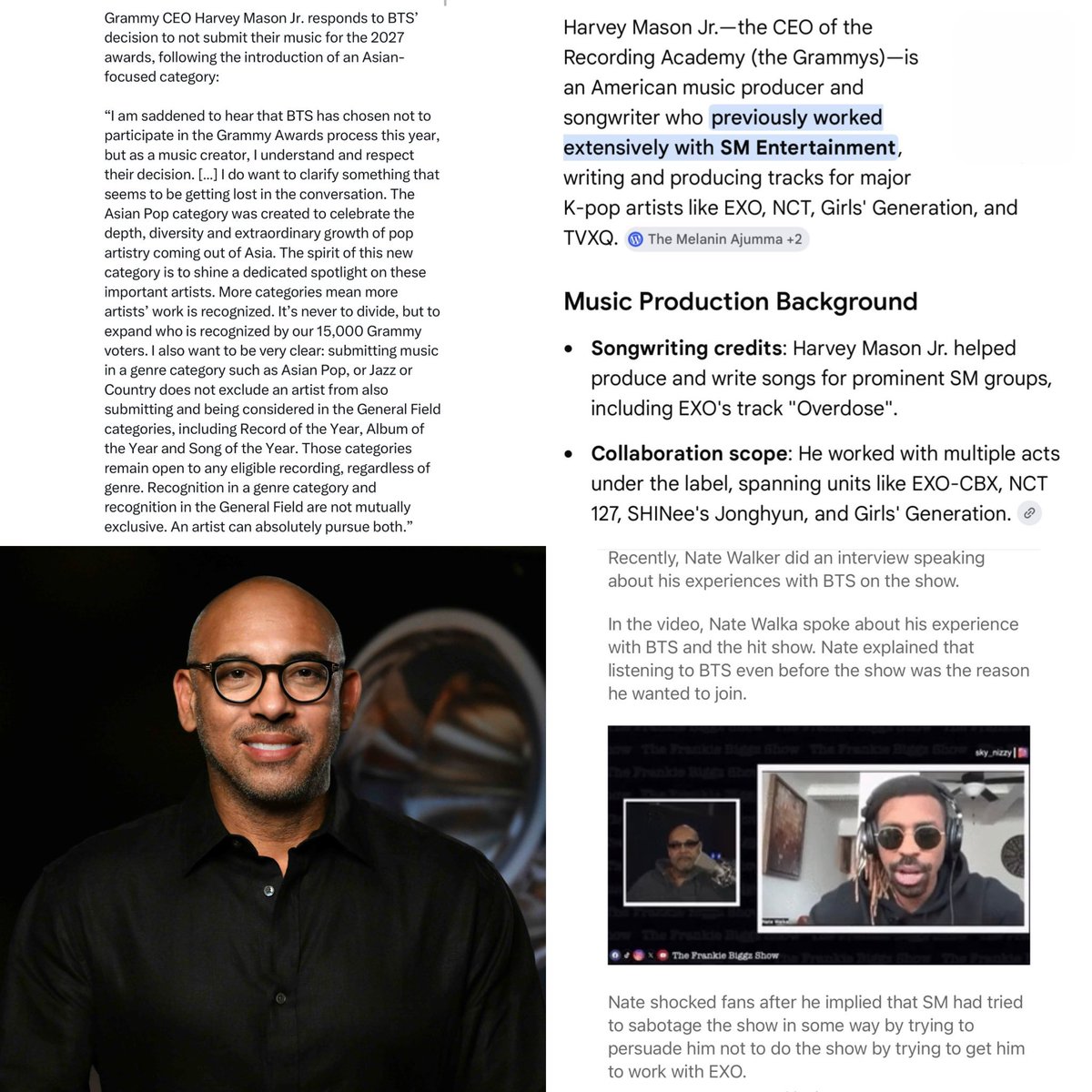
Sleep Deez, a well-respected producer who has worked with BTS, has confirmed via his inside source at the Grammys that BTS were, in fact, gonna be the guinea pigs/test dumbies/poster child for the "Asian Pop Performance" category.
They wanted to legitimize it as a "win-win" for both BTS and the segregation of Asian artists by the Academy. What they did NOT expect was that BTS would have self-respect/self-worth and thought they would be DESPERATE for western/Grammys validation. That is why you see them coke ranting on every social media platform.
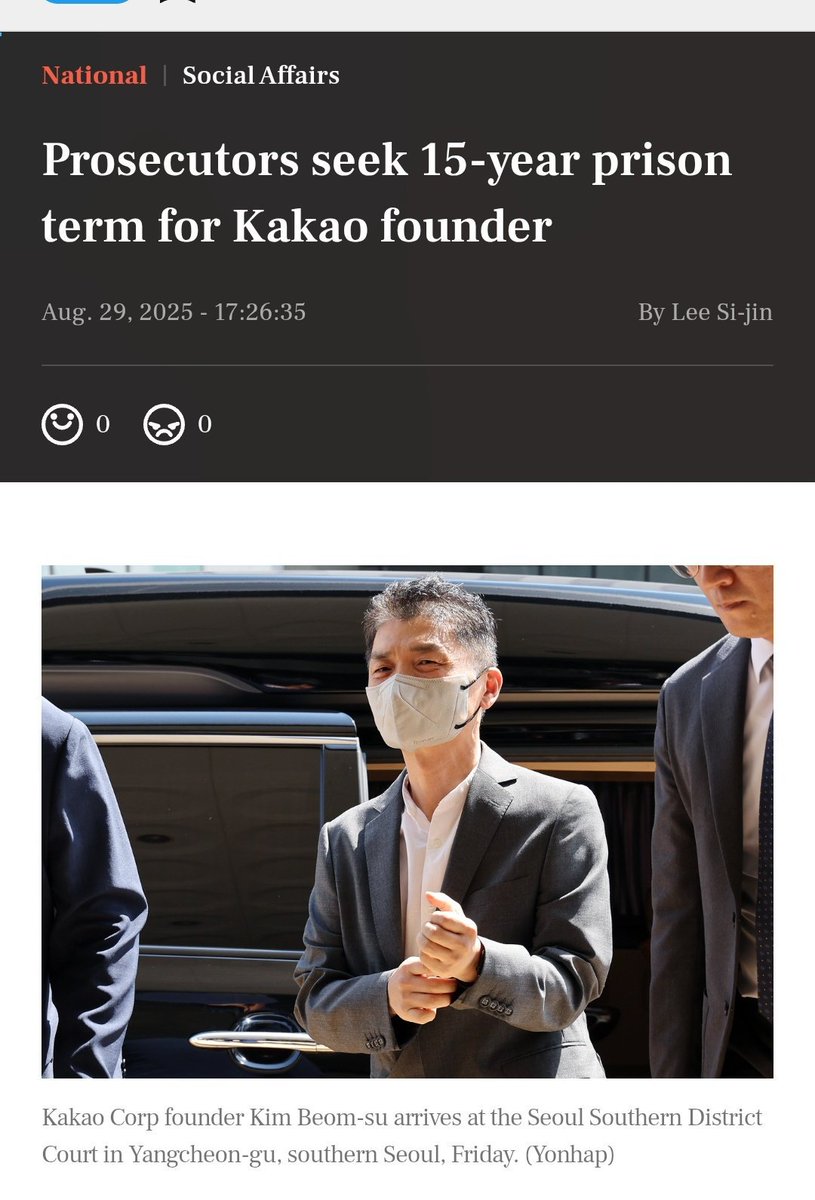
تعرفون ان المدير السابق لشركة Kakao اتهم بالسجن 15 عامًا بتهمة التلاعب والتضخيم في أسهم شركة SM وشراء جوائز حتى تضيفها كانجاز لفنانين الشركة وأن شركة SM نفسها يلي كانت تحاول تمنع ظهور بتس في برنامج American Hustle Life اهم البرامج لانطلاقة بتس كفرقة في السوق الأمريكي 😭😭


![rize07addict's tweet photo. [NEWS] Kim Oujoon, a prominent and influential South Korean journalist & political commentator who has shaped liberal political discourse in South Korea says "#BTS's Grammy withdrawal will remain a landmark in world cultural history for a long time."
"The Grammys see themselves as the most prestigious music awards with no fan-voting or even commercial success criteria, and yet they created a side door, just like MTV. This was basically saying, "Asia, come in through the side door. Separate but equal. The same logic that has normalized racial segregation in America for the past century."
"When MTV did this 7 years ago, BTS still attended despite the controversy. And after criticism, MTV nominated them in main categories outside 'Best K-pop'. But this time, in 2026, BTS said enough is enough and declared to the American mainstream music industry, "We're not using the side door anymore." And they refused."
"An artist from outside of America boycotted the supposedly most prestigious award in music and declared, "You are out of step with the times."
#ArtHasNoAliens
https://t.co/Y9P02Y9zl4](https://pbs.twimg.com/media/HO64v5hbEAAnMbi.jpg)









![rize07addict's tweet photo. [NEWS] Kim Oujoon, a prominent and influential South Korean journalist & political commentator who has shaped liberal political discourse in South Korea says "#BTS's Grammy withdrawal will remain a landmark in world cultural history for a long time."
"The Grammys see themselves as the most prestigious music awards with no fan-voting or even commercial success criteria, and yet they created a side door, just like MTV. This was basically saying, "Asia, come in through the side door. Separate but equal. The same logic that has normalized racial segregation in America for the past century."
"When MTV did this 7 years ago, BTS still attended despite the controversy. And after criticism, MTV nominated them in main categories outside 'Best K-pop'. But this time, in 2026, BTS said enough is enough and declared to the American mainstream music industry, "We're not using the side door anymore." And they refused."
"An artist from outside of America boycotted the supposedly most prestigious award in music and declared, "You are out of step with the times."
#ArtHasNoAliens
https://t.co/Y9P02Y9zl4](https://pbs.twimg.com/media/HO64wa9bkAAfalv.jpg)