Ex-NVIDIA engineer who built Unsloth explained RL, kernels, reasoning, quantization, and agents in 2 hours 42 minutes - better than $5000 fine-tuning bootcamps.
pick the base model -> write triton kernels for 2x faster fine-tune -> quantize to 4-bit -> run GRPO/DPO -> ship a reasoning model on your single GPU.
That loop is why Unsloth is the default way to fine-tune Llama, Qwen, Gemma, and Phi on hardware you already own.
Unsloth + Triton kernels + 4-bit quantization + GRPO/DPO + single-GPU fine-tuning - that's the stack.
Watch and save it, then fine-tune your first model tonight.
We've kept hearing how GLM-5.2 beats Opus 4.8, and are skeptical of benchmarks - so we tested them on a real bug from the Cline repo. While both models fixed the issue, GLM was the winner in terms of cost and code quality:
- GLM used twice as many tokens (GLM 1.1m vs Opus 660K) but cost half as much (GLM $0.41 vs Opus $0.81)
- Opus finished quicker - 1.6 min and 12 tool calls vs GLM 4.7 min and 28 tool calls
- GLM cleaned up dead code and verified the build compiled before completing. Opus didn't - it left type errors that passed tests but broke the production build.
Both runs used the same Cline harness prompting and tools, so it seems GLM is RL trained to spend more tokens verifying its work before completing. Impressive work by the @Zai_org team!
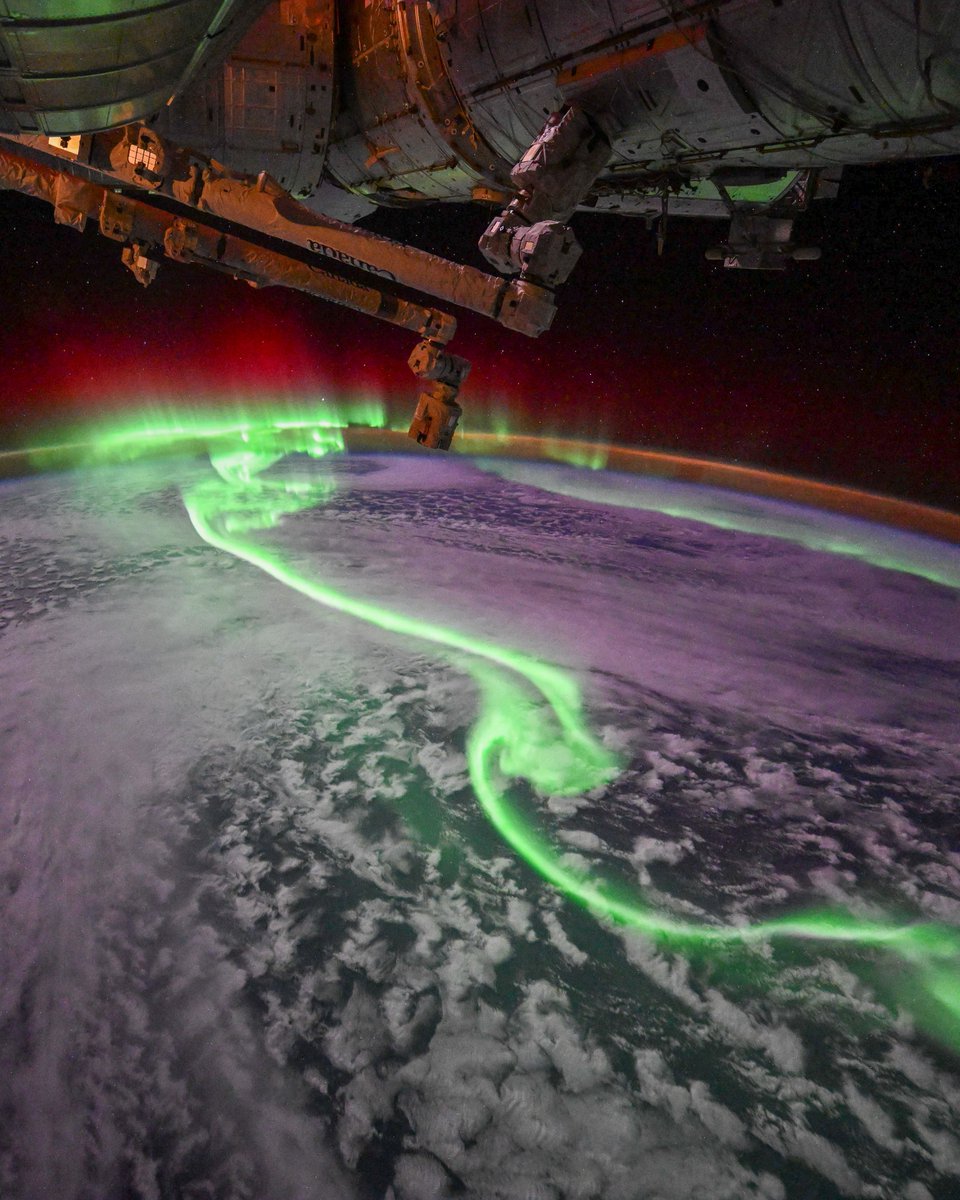
Jour 127, orbite 1968 – Cette aurore était absolument spectaculaire… Elle ondulait et dansait sous nos pieds, à perte de vue, et sa lumière était si intense qu’elle illuminait toute la Station de reflets verts 💚.
Nous avons eu la joie d’en observer plusieurs depuis le début de la mission, mais celle‑ci – bien trop lumineuse pour mes réglages habituels de photos d’aurores – nous a tous émerveillés !
Des moments comme celui‑ci ne perdent jamais de leur magie, même ici, et tout l’équipage se retrouve à chercher la meilleure place près d’un hublot 😊
📸 @esa / @NASA – S. Adenot
#εpsilon • @esaspaceflight • @esaspaceweather • @ESA_fr • @Space_Station • @NASAJohnson • @CNES
Prepare for takeoff. ✈️ Flight simulator is now available globally on web to all users. https://t.co/hQP0No142P
We've recently added many our most powerful professional desktop features to web. Elevation profiles, new import types, but there's always been one other feature you've been asking us to add to the web version of Google Earth, just for fun...
Where will you fly? Share your best maneuvers, views, and flyovers with us!
As a result of a US government directive, we are suspending access to Claude Fable 5 for all users. You can continue to use all other Claude models.
Here’s what this means for you:
Across Claude products, new sessions will run on your selected default model or Opus 4.8, and existing Fable 5 sessions will end with an error.
On the Claude Platform, requests to Fable 5 will also return an error. Please update your integrations to other Claude models.
We know this is a disruption to your workflows; we appreciate your patience and support.
Ingeniero de anthropic:
“No se trata de que tú le hagas prompt a Claude, se trata de que construyas un sistema que se haga prompt a sí mismo.”
Este es, sin duda, uno de los workflows más potentes que he visto en mucho tiempo.
En el video desmonta exactamente cómo la mayoría está usando Claude mal:
- El 14% que pierdes en CLAUDE.md antes de escribir una sola palabra
- Los plugins que el 95% de la gente ni siquiera ha instalado
- El setup de caching que mantiene un 95% de hit rate y lo hace casi gratis
- Por qué empezar cada chat desde cero es la forma más lenta de usar Claude
Si llevas más de un mes usando Claude y nunca has salido de la ventana de chat, estás usando un solo proyecto cuando podrías estar dirigiendo un equipo entero de ellos.
En vez de ver otro capítulo de una serie, mira esto.
Guárdalo ya, antes de que se pierda en el feed.
fun fact: tijdens de keynote hakt Apple een stukje 3k, 4k, 5k en 6kHz eruit wanneer ze "Siri" zeggen, zodat niet iedereens HomePods terug beginnen te praten 🗣️🚫