On the Treasury Budget for Ecosystem Stablecoin Liquidity
🧵1
I have a lot of respect for what what @ElderM is doing and I think that the use of treasury funds to provide stablecoin liquidity is a great “decentralized” alternative to VC that other chains employ.
There’s nothing really left here for me anymore. The majority of people/bots are only here to trying and sell you something. Stay safe and use your heads.
@rvcas@phil_uplc@Quantumplation I’m arguing that’s what Phil is doing. Saying that he thinks people in Tehran’s lives were saved due to insiders betting on Polymarket is a middle school level debate argument that’s a silver lining at best. Betting markets are a tool. People will abuse tools if they can profit
@phil_uplc@Quantumplation@rvcas future profit. For example, if people take them for face value then it could be cheaper to place a large bets that a given city will be a safe haven, lead people to flee to that area and then launch a strike on that city. Money lost on bets would be made up in warfare/time cost.
@phil_uplc@Quantumplation@rvcas Seems like a pretty ludicrous view. Saying the “gamblers would have lost their money” anyway isn’t true and ignores the fact that making gambling platforms ubiquitous/accessible adds to that issue.
Predictions markets don’t indicate future truth to a high accuracy, they indicate
@Quantumplation@rvcas@phil_uplc I’d agree with this. Phil’s take just seems like weird mental gymnastics to justify why insider trading should be legal and they should be able to exploit others for profit because that “prediction” then becomes public and somehow benefits everyone?
https://t.co/lvsCy1j0Nb
We are NGMI, vast majority of retail users, even crypto native users, don’t understand how prediction markets equalize information access between the general public and the elite.
Before prediction markets the only time the general public would know that an event would happen would be once it has already happened and been reported on by major news outlets. Now, in any given domain, or industry, if I want to know if something will happen I can simply check the end range of the prediction market odds for large participants and I am able to know with a high degree of certainty whether the event will happen.
This is because insiders now have a massive incentive to share the information with the general public to profit from the market. If they want to profit, they must put money behind their position on the prediction market, thus making their prediction (insider information) public and accessible to the general public.
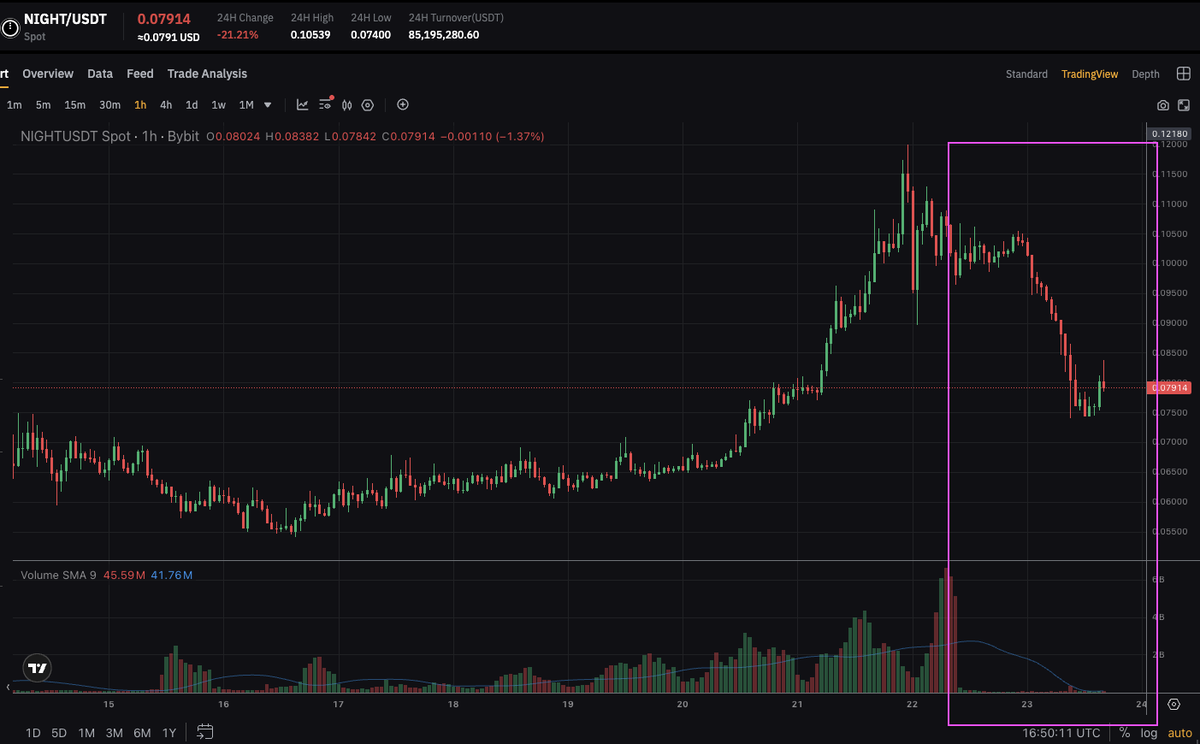
🚨 The $NIGHT token launch looks to be a masterclass in market maker manipulation. And we may have just watched the MM get blown up in real time.
Let me show you how billions in fake volume got exposed by one real move.
🧵👇
a) ~12.5m $NIGHT "thaw" per day
b) 1 token ~= $0.05
c) 10 days later, ~120m tokens in user hands, ~$6m of value
d) $3.7billion / $6m = if EVERY token is involved, they are all changing hands ~600 times per day (if only half of tokens are involved 1200, etc)
when you're washtrading, try to set reasonable levels of believable activity.
Split a single user across 500 different accounts and have them trade against each other on the open market with a targeted net buy/sell amount. Now where have I seen this before? Oh yea, the excellent BrainTruffle video on market manipulation!
https://t.co/V4YQSp5On7
Very valid perspective. Why should founding entities be treated like “just any other proposer” when it comes to receiving funding when they haven’t even spent the vast sum of funds pre-allocated to them? Wasn’t this meant to fund development, growth, and maintenance?
The probability of a founder exit is a design question.
Some blockchains are architected to become autonomous. Others are structurally tied to their founding companies forever. Technology decides, not marketing.
Polkadot
High probability.
On-chain governance controls upgrades, treasury and parameters. Founders can already be overruled and Gavin Wood stepped back multiple times. The system is intentionally built so the team becomes irrelevant.
ICP
Medium to high probability.
The NNS can outvote Dfinity and there are no perpetual founder rewards. Architecturally, ICP can become fully autonomous. Socially, many neurons still follow the Dfinity neuron, so decentralization is progressing but not complete.
Avalanche
Medium probability.
The protocol is strong and subnets decentralize development. Avalanche Labs still influences clients and roadmap. The architecture allows a future exit, but it requires ecosystem maturity.
Solana
Low probability.
Solana Labs is central to client performance, roadmap and network optimization. Hardware requirements reinforce centralization. A founder exit is technically possible but socially unrealistic.
Aptos
Very low probability.
Team-centric control, VC-driven structure and no mechanism for autonomous evolution. The architecture does not aim for founder independence.
Cardano
Extremely low probability.
The founding entities (IOG, CF, EMURGO) control large initial allocations and receive ongoing staking rewards. They participate in governance with concentrated voting power and rely on the chain’s economics. The architecture does not provide a path to independence. The system depends structurally on its founders.
Conclusion
Founder decentralization is not a wish. It is a design property.
Only blockchains architected for autonomy can ever replace their creators.
Most systems are built around their founders, not beyond them.
Below you will find my write-up as an independent after action report for the issue impacting Cardano late last week, along with things I learned, why I was impressed, and what I think we can do better at in the future.
I try to strike the balance between confronting the seriousness of the issue, while defusing most of the over-stated positions from talking heads on Twitter. This is an adult conversation, not whatever the children are engaging in on Twitter this week.
I don't think it's productive to get into debates of what constitutes "downtime" or not; Instead, I tried to equip you with a framework where you, dear reader, can think about these things for yourself, and decide what you want to call it.
I just ask that you make that decision for yourself, or allow your audience to do so, rather than parroting some pre-decided talking points.
More informed discussion leads to a higher quality industry overall.
https://t.co/gPHc8lNT2U
@Quantumplation Awesome write up and analysis! So, hypothetically, if Cardano had a 2-3x higher block production rate (7-10s between blocks vs 20s) then the pig chain could have become immutable without allowing enough time for information to spread and a “reactionary consensus” to be formed?
It made me chuckle. Partly because it’s funny and partly because both Solana and Charles have made some pretty off-color comments before so it’s bigots mocking bigots.
As of today, I’m stepping down from the PWG. I suspect that something might come be coming down the pipes looking for a replacement. There are many here who would have Indigo’s long term goals at heart. If you’re interested please reach out to the PWG to discuss a nomination.
@LLAMA_Chakra@Chakra_Agents Why?! Why would you do this? @Quantumplation and others have mentioned multiple times to NOT do this and suggested alternatives that would still allow you to migrate the liquidity in the event of a platform upgrade.
💰 Get these lucrative APRs on #Cardano!
🔹 $BTC–iBTC: 17%
🔹 $ETH–iETH: 12%
🔹 $USDC–iUSD: 22%
🔹 $USDT–iUSD: 24%
It's easy:
1️⃣ Bridge your assets to Cardano via https://t.co/SFaBxQwW4B
2️⃣ Add liquidity on @MinswapDEX
3️⃣ Earn dual rewards from #Wanchain & @Indigo_protocol
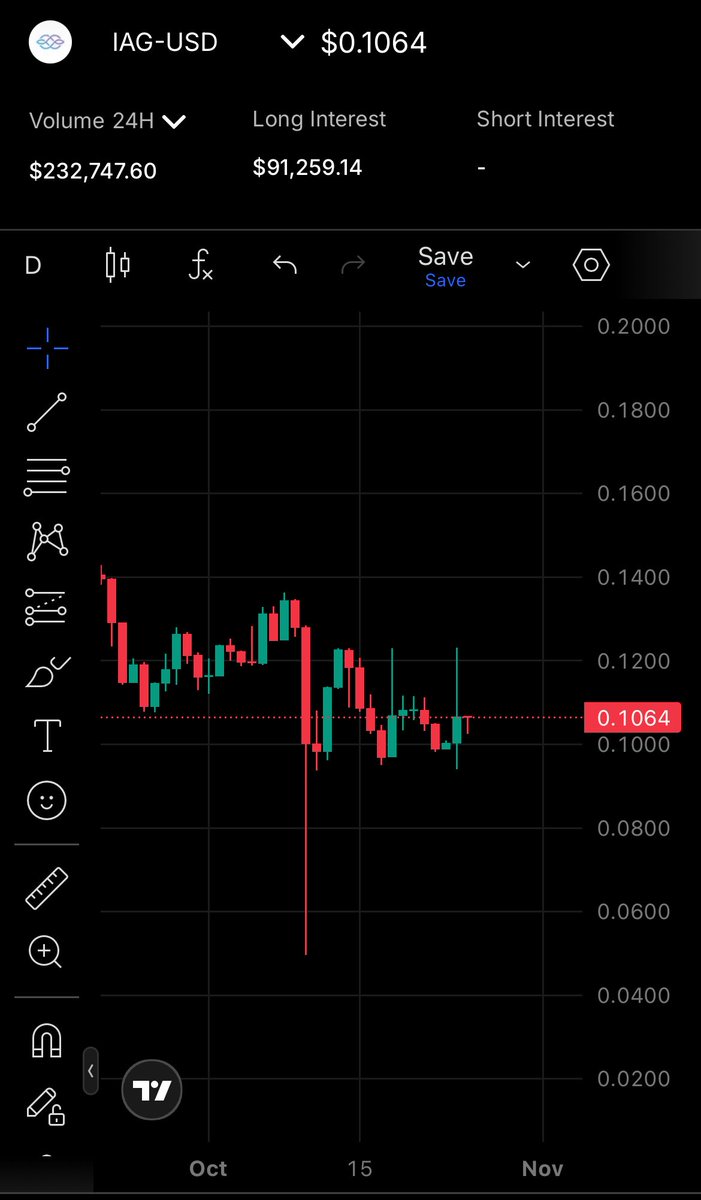
@OzDefi@strikecardano@IagonOfficial But if you LP Iagon on Strike then you’re the counter to the longs, so why would you do that if you’re bullish on it? Why wouldn’t you take a leveraged long position yourself? I think the reason the APR is so high is because Iagon has fallen.