@Berengario85 Ma io neanche perdo più fiato con gente che la pensa così. Solo chi vive quotidianamente la scuola sa che cosa significa essere insegnante (e non parlo di chi aveva la madre insegnante in pensione ormai da 10 anni, tutta un'altra storia)...
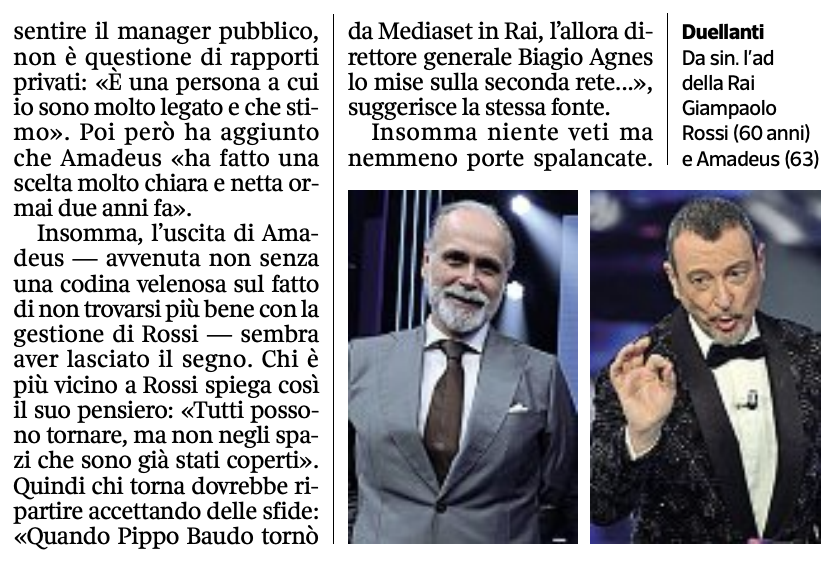
#Amadeus. Secondo il Corriere della Sera, fonti vicine all'AD Rai Giampolo Rossi aggiungono: «Tutti possono tornare, ma non negli spazi che sono già stati coperti. Quando Pippo Baudo tornò da Mediaset in Rai, ripartì dalla seconda rete».
Niente veti, ma nemmeno porte spalancate.
@MalmosTizy Troppo dolci per te? Quando ero piccola mi piacevano, adesso invece preferisco le profumazioni più intense, anche leggermente pungenti... Però, non so come sia successo, ma l'anno scorso ho ceduto allo spray per capelli allo zucchero filato 😅
Io non capisco... Io proprio non lo capisco... Ma ho detto che gli avrei dato fino al 29 giugno, poi mentalmente basta, devo andare avanti altrimenti non ne esco più...
Io provo a non farmi troppe illusioni con lui, giuro, però poi ha dei modi e comportamenti così gentili... Mi vede mentre parla con altre persone e lui subito "ciao Sere", era con i suoi alunni (che avevo io l'anno scorso) e lui, davanti a loro, "c'è la maestra Serena, che bello"
Nights In White Satin was written by Justin Hayward when he was just 19 after a show.
The track is part of the concept album Days of Future Passed (1967), which pioneered symphonic rock by mixing the sound of The Moody Blues with the London Festival Orchestra (a fictitious name for studio musicians).
The album version is 5:38 and ends with the spoken poem "Late Lament," written by drummer Graeme Edge and recited by Mike Pinder.
Released as a single in November 1967, it reached #19 in the UK and #103 in the US. But on the 1972 reissue (after the success of long tracks like "Hey Jude" and "Layla") it was much more successful: it spent two weeks at #2 on the Billboard Hot 100 (behind "I Can See Clearly Now"), #1 on the Cash Box, #9 on the UK and became the biggest hit of the band's career. It re-entered the British chart in 1979 (#14).