startup idea for you
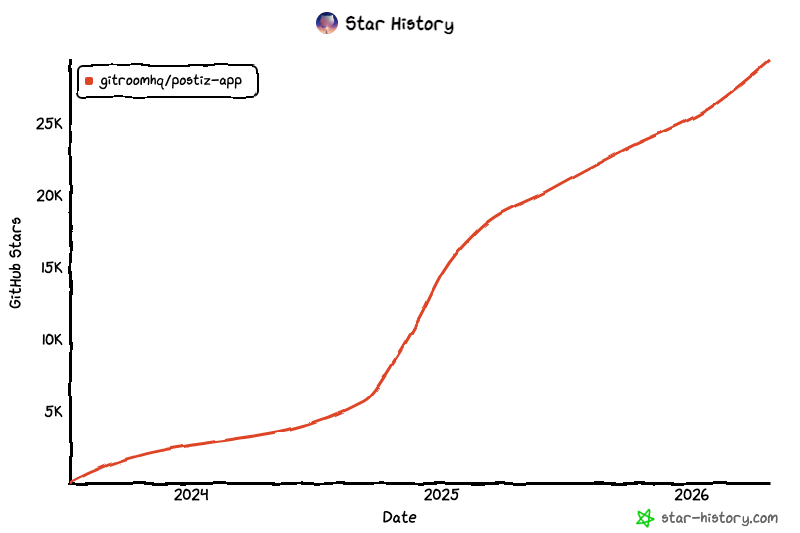
use postiz (20k+ github stars project) to sell AI social media content/management to 1 niche of SMBs.
what's postiz? it's an open source social media scheduler with AI built in. basically buffer + AI and free to download.
1. self-host postiz. use codex/claude code to help you figure this out in an afternoon.
2. pick one niche. dentists, realtors, lawyers. can even go a subniche like orthodentists vs dentists. family law over of lawyers.
2. wrap it in their language. "AI social media for dental practices"
3. add "we write your captions with AI" as the hook. that's what they're actually paying for.
4. plug it into n8n, make, or zapier so posting, scheduling, and approvals run on autopilot. the client approves with one tap. everything else is handled.
5. charge $50/mo-$100 per seat. that's nothing to a business paying $2,000/mo for a social media freelancer. you're 25x cheaper and 10x more reliable because the system runs whether you're awake or not. win-win for everyone.
6. build one landing page. run one onboarding call. that's the whole sales motion.
7. build media to attract customers. post tips for that niche on X, tiktok, youtube. become the "social media for dentists" person.
8. reinvest profits to build other tools that serve that same niche. scheduling, reviews, patient intake. build those tools or plug in more open source projects. now you own the vertical.
these businesses KNOW they need to post. they hate doing it. they will never find postiz on github. they will google "someone please handle my social media." that's you
open source is the new wholesale. the code is free. the customer relationship is where the margin lives.
you can do this as one person. you can do this as a two person team. you don't need funding. you don't need an office. you need a laptop, a niche, and the willingness to start.
someone is going to do this. might as well be you.
what is agent looping
for the last two years we prompted agents one task at a time. that is starting to change
instead of asking an agent to build the landing page and then driving every step yourself, you set up a loop that handles discovery, planning, the work, checking, and iterating until the goal is met
looping is a setup you build. almost any agent harness can run it, it just depends on how you wire it up
at its simplest, looping is one agent working on itself:
> researches
> drafts
> checks the draft against a goal
> fixes what is weak
> runs that cycle again until the work clears the requirements
you are not prompting each step anymore. the agent repeats the cycle for you
the bigger version is a fleet looping. you give an orchestrator agent a goal, it breaks the goal into pieces, hands each piece to a specialist agent, and those specialists hand smaller jobs to their own subagents
the whole tree keeps looping through discovery, planning, execution, and verification until the goal is met
one agent looping is like a person redoing their own draft. a fleet looping is a whole team running a project end-to-end
you create a goal, and the system runs the loop until it finishes within the reqs you set
open and closed looping:
OPEN LOOPING is exploratory. it still has conditions and a goal, but you give the agent or the fleet a wide space to move in. it can try different paths, discover things, build something you did not fully spec out
this is the exciting end, it is what Peter and others are doing, and tbh it is where I want to spend more time
the catch is cost, an open loop with real room to explore burns an insane amount of tokens. for the 90 percent of people without an unlimited budget it is not runnable yet, and pointed at projects with a loose standard it turns into a slop machine
CLOSED LOOPING is bounded. a human designs the end-to-end path first:
> clear goal
> defined steps
> an eval at each step
> a point where it stops or hands back to you (and feeds back performance data)
the agents still loop, but inside framework you built. it gets better every run because each pass feeds the next, and it runs on a normal budget because the path is tight.
for most marketing work, closed is the one that pays off today.
> the orchestrator owns the goal
> the specialists own the steps
> the subagents do the narrow work
> an eval gate make sure its not slop
“OpenClaw重构时,团队在极短时间内完成了2700次提交,变更了近百万行代码,重构范围覆盖了82%的核心代码库。”
在 AI Engineer 大会上,OpenClaw 项目的首席架构师 Vincent Koc发表了题为《Dark Factory: OpenClaw Ships Faster Than You Can Read the Diff》的演讲。他结合自己与OpenAI工程师Peter共同维护OpenClaw的实践,深入探讨了由Agent矩阵驱动的“黑灯工厂”(Dark Factory)开发模式。在这种模式下,代码迭代的速度远超人类阅读Pull Request中差异(Diff)的极限,这不仅彻底改变了传统的代码提交频率,也重塑了软件开发的协作与管理流程。
从代码劳动者到工厂管理者
Vincent Koc指出,生产力的提升正在改变软件生产的本质。在过去,程序员的角色类似于工业革命初期的传统织布工,代码的产出速度严格受限于双手敲击键盘的速度。而在大模型与自动化工具普及的今天,工程师正在转变为“工厂管理者”。开发的瓶颈不再是编写代码的技术熟练度,而是对系统架构的宏观判断力与审美。
这种由自动化驱动的高速开发已经在行业中悄然蔓延。例如,Anthropic开始利用Agent构建新型C编译器,Spotify也在大幅减少手动编写代码的比例。在OpenClaw项目的开发高峰期,由10到15名拥有全职工作的核心维护者组成的团队,在Agent集群的协助下,实现了单日最高800次的代码提交。在特定高强度开发阶段,Vincent Koc个人的代码库单日提交量甚至接近3000次,这种开发效率在传统模式下是无法想象的。
深夜重构:60个Agent协同与百万行代码变更
这种由Agent矩阵叠加出的开发效能,在OpenClaw的一次大规模架构重构中得到了集中体现。在与NVIDIA团队合作开发Nemo Claw期间,Vincent Koc与Peter在有限的办公空间内,通过各自的电脑连接到远程服务器,同时运行了约15个Codec会话。如果算上底层的子Agent,当时整个开发环境中有多达60至70个Agent在并行运作。
面对功能冗余和代码膨胀的挑战,团队在凌晨两点决定对整个项目进行彻底的插件化重构。在Agent集群的高效协作下,团队在极短时间内完成了2700次提交,变更了近百万行代码,重构范围覆盖了82%的核心代码库。尽管重构过程中一度面临测试无法通过的困境,但由AI此前生成的密集单元测试意外充当了安全网。这些高度拟合的测试用例虽然在日常开发中显得冗余,但在整体架构拆解时,却成为了验证代码逻辑连续性的有效度量工具。
Agent工厂的工程化架构与泳道管理
为了让数十个Agent在不相互冲突的前提下协同工作,Vincent Koc设计了一套类似于现代工厂流水线的泳道管理机制。
在这套架构中,不同的泳道承担着不同确定性的任务。例如,第一和第二泳道专门负责相对平稳的测试代码重构,不需要人类频繁介入,只需让Agent持续运行并确保测试通过即可;第三和第四泳道则聚焦于具体的功能开发或技术痛点,如Docker配置或特定通信通道,管理者需要在此与Agent进行深度的交互和对齐;第五泳道则接入了GitHub和Discord等外部数据源,专门监控发布周期内发生的关键变更,以便团队随时调整策略。
在工程实施层面,频繁的并行开发会导致传统的Git分支管理面临挑战。Vincent Koc曾尝试使用Git工作树(Work Trees)来应对多任务并行,但大量的活跃工作树极易耗尽本地机器的计算资源。因此,更务实的做法是直接克隆多个代码库副本,并将不同的Agent会话分别指向这些独立的目录。
管理直觉与Token效率的演进
随着开发工具从单一的模型调用走向复杂的Agent集群,工程师面对的挑战不再是Token的获取门槛,而是自身的认知负载和管理带宽。
Vincent Koc认为,管理10个以上的Agent与在传统企业中管理10名以上的员工有着本质上的共通性,这非常考验工程师的软实力。在长期的高强度协作中,管理者能够培养出一种对Reasoning Token的直觉。例如,通过观察Agent在日志中的表达方式、解释逻辑以及是否出现无意义的堆砌辞藻,就能敏锐地判断出Agent是否在编造事实或陷入了逻辑死循环。一旦发现Agent的执行方向偏离预期,最有效的手段是直接结束该会话并重新审视逻辑,而不是无休止地消耗Token。
2026年,软件工程的核心命题已经从对Token消耗量的盲目追求,演变为提高Token效率、优化Agent在环(Agent in the Loop)的协作流程,以及如何精细化地沉淀和管理Agent的技能库。